










1 / 10 Questions
0 Points

What were Corn Flakes originally created to be?

Animal feed

Soup thickener

Bread crumbs

Health food for sanitarium patients

Points won
0
Correct score
0%

More Articles

Did You Know? 15 Secrets About the Great Pyramids

Did You Know? 15 Secrets About the Great Pyramids

⏱️ 5 min read

Did You Know? 15 Secrets About the Great Pyramids

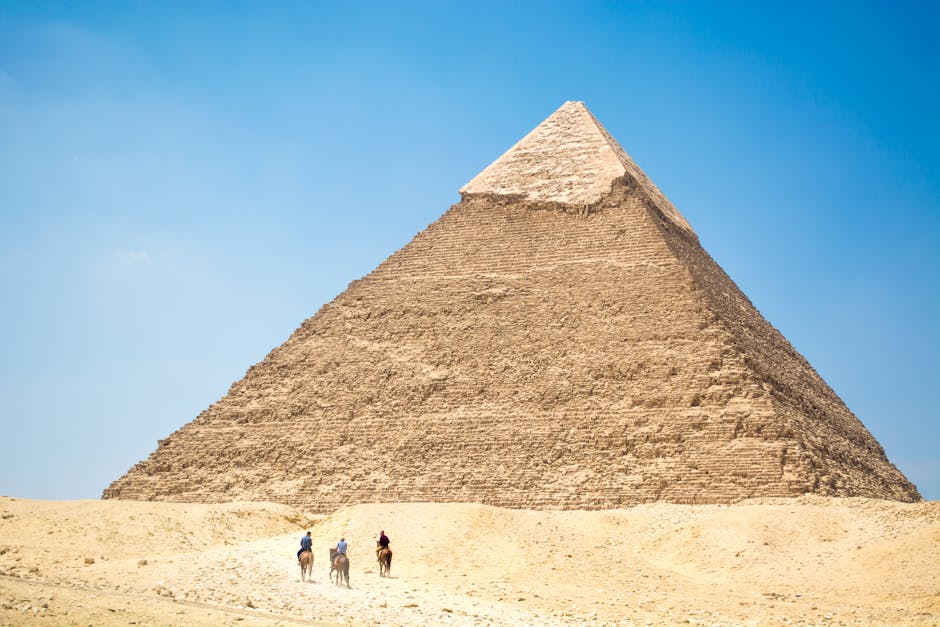
The Great Pyramids of Giza stand as enduring monuments to ancient Egyptian civilization, captivating humanity for millennia. While these architectural marvels are among the most studied structures in the world, they continue to harbor surprising secrets that challenge our understanding of ancient technology, culture, and ambition. From construction techniques to astronomical alignments, here are 15 fascinating secrets about the Great Pyramids that reveal just how extraordinary these ancient wonders truly are.

1. They Were Originally Covered in White Limestone

The pyramids once gleamed brilliantly in the desert sun, covered entirely in polished white Tura limestone. This reflective casing made them shine like jewels and could be seen from miles away. Most of this casing was stripped away over centuries and repurposed for building projects in Cairo, leaving only the rough inner core we see today.

2. The Great Pyramid Was the Tallest Man-Made Structure for Nearly 4,000 Years

Standing at an original height of 481 feet, the Great Pyramid of Khufu held the record as the world's tallest man-made structure until the Lincoln Cathedral was completed in England in 1311 CE. This remarkable achievement in engineering remained unsurpassed for approximately 3,800 years.

3. The Pyramids Are Precisely Aligned With Cardinal Directions

The Great Pyramid's sides are aligned to true north, south, east, and west with remarkable accuracy, deviating by only 3/60th of a single degree. This precision suggests the ancient Egyptians possessed sophisticated astronomical knowledge and surveying techniques that continue to impress modern engineers.

4. No Slaves Built the Pyramids

Contrary to popular belief perpetuated by Hollywood films, archaeological evidence strongly suggests that skilled laborers and paid workers, not slaves, built the pyramids. Worker villages discovered near the pyramids show that these builders were well-fed, received medical care, and were given proper burials, indicating they were valued members of society.

5. The Temperature Inside Remains Constant

Regardless of external desert temperature fluctuations, the interior of the Great Pyramid maintains a constant temperature of approximately 68 degrees Fahrenheit (20 degrees Celsius), equal to the average temperature of the Earth. This natural climate control is a result of the pyramid's massive thermal mass and design.

6. The Pyramids Were Built With Approximately 2.3 Million Stone Blocks

The Great Pyramid alone contains an estimated 2.3 million limestone blocks, each weighing between 2.5 and 15 tons. Some granite blocks in the King's Chamber weigh as much as 80 tons. Transporting and precisely placing these massive stones remains an impressive feat of ancient engineering.

7. They Used a Sophisticated Ramp System

While the exact construction method remains debated, evidence suggests the Egyptians used a combination of straight and spiral ramps to move the massive blocks into place. Recent discoveries of ramp remnants at other pyramid sites have provided clues about these ingenious construction techniques.

8. The Pyramids Contain Hidden Chambers

Modern scanning technology has revealed previously unknown voids and chambers within the Great Pyramid. In 2017, scientists announced the discovery of a large void above the Grand Gallery, demonstrating that these ancient structures still hold secrets waiting to be uncovered.

9. Mortar Stronger Than the Stone Itself

The mortar used between the pyramid blocks is incredibly strong and durable. Chemical analysis has identified its composition, but scientists still cannot fully replicate its exact formula. In many places, this ancient mortar remains stronger than the limestone blocks it binds together.

10. The Pyramids Were Built During Egypt's Flood Season

Construction likely occurred primarily during the Nile's annual flood season when agricultural work was impossible and farmers were available for labor. The flooding also facilitated transportation of heavy stone blocks via boat closer to the construction site.

11. They Function as Astronomical Observatories

The pyramid complex aligns with various astronomical phenomena. The southern shaft in the King's Chamber pointed toward the belt of Orion, which the Egyptians associated with Osiris, god of the afterlife. This celestial alignment held deep religious significance.

12. The Pyramids Sit on Remarkably Level Foundations

Despite covering 13 acres, the Great Pyramid's base is level to within just 2.1 centimeters. This incredible precision was achieved without modern surveying equipment and demonstrates the ancient Egyptians' exceptional engineering capabilities and attention to detail.

13. Eight Sides, Not Four

The Great Pyramid actually has eight sides, not four. Each face is slightly indented at the center, creating a subtle concavity visible only from the air and during specific lighting conditions at dawn and sunset during the spring and autumn equinoxes. The purpose of this feature remains mysterious.

14. Construction Took Only About 20 Years

Despite their massive scale, the Great Pyramid was likely completed in approximately 20 years during Pharaoh Khufu's reign. This timeline would have required placing roughly one block every two minutes during a ten-hour workday, indicating a highly organized and efficient workforce.

15. They Were Part of a Vast Complex

The pyramids were not standalone structures but rather central components of extensive funerary complexes. These included temples, causeways, smaller subsidiary pyramids, and elaborate burial sites for nobles and officials. The entire Giza plateau functioned as a massive necropolis dedicated to the afterlife.

Conclusion

These 15 secrets about the Great Pyramids reveal that there is far more to these ancient wonders than meets the eye. From their hidden chambers and astronomical alignments to their sophisticated construction techniques and surprising eight-sided design, the pyramids continue to challenge and expand our understanding of ancient Egyptian civilization. Despite millennia of study, these magnificent structures still guard mysteries that inspire awe and curiosity. They stand not merely as tombs for ancient pharaohs, but as testaments to human ingenuity, determination, and the timeless desire to create something that transcends mortality itself. As modern technology unveils new discoveries, we can be certain that the Great Pyramids will continue to reveal secrets for generations to come.


Did You Know? 12 Things Invented by Accident

Did You Know? 12 Things Invented by Accident

⏱️ 6 min read

Did You Know? 12 Things Invented by Accident

Throughout history, some of humanity's most revolutionary inventions have emerged not from careful planning and deliberate experimentation, but from pure chance, mistakes, and unexpected observations. These serendipitous discoveries have transformed industries, changed daily life, and even saved countless lives. The following twelve inventions demonstrate that sometimes the best innovations come from happy accidents, proving that scientific curiosity and an observant mind can turn mistakes into world-changing breakthroughs.

1. Penicillin

Perhaps the most famous accidental discovery in medical history, penicillin was discovered by Alexander Fleming in 1928. Fleming returned from vacation to find that a petri dish containing Staphylococcus bacteria had been contaminated by mold. Rather than simply discarding the ruined experiment, he noticed that the bacteria surrounding the mold had been killed. This observation led to the development of the first widely used antibiotic, which has since saved millions of lives and revolutionized modern medicine.

2. Microwave Ovens

In 1945, engineer Percy Spencer was working on radar technology for Raytheon when he noticed something peculiar. While standing near a magnetron, a device that generates microwaves, the chocolate bar in his pocket melted. Intrigued by this phenomenon, Spencer began experimenting with other foods, including popcorn kernels and eggs. His curiosity led to the development of the microwave oven, which would eventually become a kitchen staple in households worldwide.

3. Post-it Notes

In 1968, scientist Spencer Silver at 3M was attempting to create an extremely strong adhesive but instead developed a weak, pressure-sensitive adhesive that could be easily removed without leaving residue. For years, this seemed like a failed experiment with no practical application. However, in 1974, colleague Art Fry used the adhesive to anchor his bookmark in his hymnal, and the iconic Post-it Note was born, becoming one of the most widely used office supplies globally.

4. Chocolate Chip Cookies

Ruth Wakefield, owner of the Toll House Inn in Massachusetts, was preparing chocolate cookies in 1938 when she ran out of baker's chocolate. She substituted broken pieces of Nestlé semi-sweet chocolate, expecting them to melt and blend into the dough. Instead, the chocolate pieces retained their shape, creating the first chocolate chip cookie. This accidental creation became an American classic and remains one of the most popular cookie varieties worldwide.

5. Saccharin

The first artificial sweetener was discovered in 1879 by chemist Constantin Fahlberg, who was researching coal tar derivatives. After a long day in the laboratory, Fahlberg forgot to wash his hands before dinner and noticed that his food tasted unusually sweet. Tracing the sweetness back to a compound he had synthesized earlier, he discovered saccharin, which would become particularly important during sugar shortages in both World Wars.

6. Safety Glass

French scientist Édouard Bénédictus accidentally knocked a glass flask off a shelf in 1903. He was surprised to find that while the glass shattered, it did not break into dangerous shards. Upon investigation, he discovered that the flask had previously contained plastic cellulose nitrate, which had coated the inside and held the fragments together. This accident led to the invention of laminated safety glass, now essential in automobile windshields and protective equipment.

7. Vulcanized Rubber

Charles Goodyear spent years trying to make rubber more durable and weather-resistant. In 1839, he accidentally dropped a mixture of rubber and sulfur onto a hot stove. Instead of melting as expected, the rubber charred like leather while remaining flexible and strong. This process, called vulcanization, made rubber practical for countless applications, from tires to industrial equipment, fundamentally changing manufacturing and transportation.

8. Stainless Steel

In 1913, metallurgist Harry Brearley was attempting to develop a metal that could resist erosion in gun barrels. During his experiments, he created a steel alloy containing chromium that seemed unsuitable for his original purpose and discarded it in a scrap pile. Weeks later, he noticed that while other metals had rusted, his chromium-steel alloy remained shiny and untarnished. This discovery of stainless steel revolutionized cutlery, medical instruments, and construction materials.

9. Super Glue

Cyanoacrylate, commonly known as super glue, was accidentally discovered twice by Dr. Harry Coover. First in 1942 while attempting to make clear plastic gun sights during World War II, and again in 1951 while working on heat-resistant airplane canopies. Both times, he initially dismissed the extremely sticky substance as useless. Eventually recognizing its potential, Coover developed it into the powerful adhesive that has become indispensable in homes, industries, and even medical applications.

10. Corn Flakes

Brothers Dr. John Harvey Kellogg and Will Keith Kellogg accidentally invented corn flakes in 1894 while trying to create a nutritious bread substitute for patients at a sanitarium. They left boiled wheat sitting out too long, and when they attempted to roll it, it broke into flakes. After toasting these flakes, they discovered a crunchy, tasty product. Later experiments with corn led to the breakfast cereal that would launch the Kellogg Company and transform morning meals globally.

11. Silly Putty

During World War II, engineer James Wright was attempting to create a rubber substitute for the war effort. In 1943, he accidentally combined boric acid with silicone oil, creating a polymerized substance with unusual properties—it bounced, stretched, and could copy newsprint. While it proved useless for military purposes, toy store owner Ruth Fallgatter recognized its entertainment value, and Silly Putty became a beloved toy that has delighted children for generations.

12. Coca-Cola

Pharmacist John Pemberton created Coca-Cola in 1886 while attempting to develop a cure for headaches and fatigue. His original concoction was meant to be mixed with water, but when a customer at his pharmacy asked for the mixture, the server accidentally used carbonated water instead of regular water. The resulting fizzy beverage tasted so good that it became the standard preparation, launching one of the world's most recognized brands and the modern soft drink industry.

Conclusion

These twelve accidental inventions remind us that innovation doesn't always follow a predictable path. From life-saving antibiotics to everyday conveniences, many of the products and technologies we take for granted emerged from mistakes, coincidences, and unexpected observations. What sets these discoveries apart is not the accidents themselves, but the curiosity and insight of individuals who recognized potential where others might have seen only failure. These stories encourage us to remain observant, question unexpected results, and understand that sometimes the greatest breakthroughs come from embracing the unexpected rather than discarding it.