
⏱️ 7 min read
Top 10 Lost Cities and Civilizations
Throughout human history, countless civilizations have risen to great heights only to vanish into obscurity, leaving behind tantalizing clues of their existence. These lost cities and civilizations continue to captivate archaeologists, historians, and the public imagination alike. From ancient metropolises swallowed by jungles to sophisticated societies that mysteriously disappeared, these ten remarkable examples remind us of the impermanence of even the mightiest human achievements and the enduring mysteries that still puzzle researchers today.
1. Atlantis
Perhaps the most famous lost civilization in history, Atlantis was first described by the Greek philosopher Plato around 360 BCE. According to his dialogues, Atlantis was a powerful and advanced island nation that existed approximately 9,000 years before his time. The civilization allegedly possessed superior technology and military might before sinking into the ocean in a single catastrophic day and night. While many historians believe Atlantis was purely allegorical, created by Plato to illustrate philosophical points about hubris and divine punishment, countless explorers and researchers have searched for physical evidence of its existence. The legend has inspired numerous theories placing Atlantis everywhere from the Mediterranean to Antarctica, making it the quintessential lost civilization.
2. Pompeii
Unlike mythical Atlantis, Pompeii was undeniably real and offers one of history’s most complete snapshots of ancient Roman life. This thriving city near modern Naples, Italy, was buried under approximately 20 feet of volcanic ash and pumice when Mount Vesuvius erupted in 79 CE. The catastrophic eruption killed an estimated 2,000 residents and perfectly preserved the city for nearly 1,700 years. When excavations began in 1748, archaeologists discovered an intact Roman city complete with buildings, artifacts, and even the preserved remains of victims frozen in their final moments. Pompeii provides invaluable insights into Roman urban planning, architecture, art, and daily life, making it one of the most significant archaeological sites in the world.
3. Machu Picchu
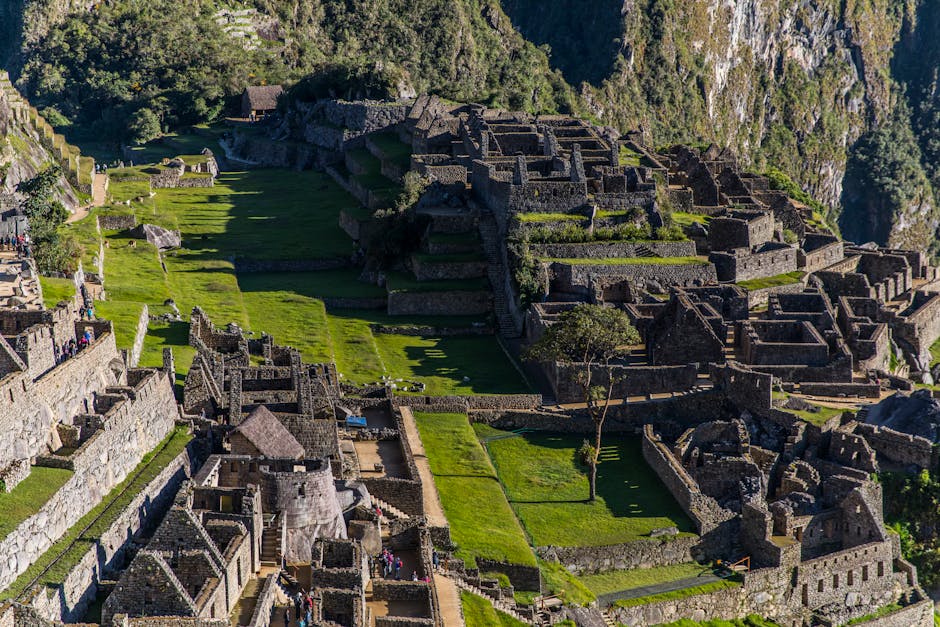
High in the Peruvian Andes, the ancient Incan city of Machu Picchu remained hidden from the outside world until American historian Hiram Bingham brought it to international attention in 1911. Built in the 15th century during the reign of Inca emperor Pachacuti, this sophisticated mountaintop settlement features remarkable stone construction, agricultural terraces, and astronomical observations. The city was likely abandoned around the time of the Spanish conquest, though the conquistadors never found it. The purpose of Machu Picchu remains debated, with theories ranging from a royal estate to a sacred religious site. Its remote location and stunning architecture make it one of the most iconic archaeological wonders and a testament to Incan engineering prowess.
4. The Maya Civilization
The ancient Maya civilization flourished in Central America from approximately 2000 BCE until the Spanish conquest in the 16th century, though the civilization’s “collapse” occurred centuries earlier. At their peak, the Maya built magnificent cities such as Tikal, Palenque, and Chichen Itza, developing sophisticated writing systems, mathematics, astronomy, and art. The mysterious decline of Maya civilization during the 8th and 9th centuries has puzzled researchers for decades. Major cities were abandoned, and the population dramatically decreased. Current theories suggest a combination of factors including prolonged drought, environmental degradation, warfare, and sociopolitical disruption led to the civilization’s collapse. Many Maya cities were reclaimed by jungle and remained lost until modern archaeological expeditions rediscovered them.
5. Angkor
The capital of the Khmer Empire, Angkor in modern-day Cambodia was one of the largest pre-industrial cities in the world, supporting a population of nearly one million people at its height between the 9th and 15th centuries. The city complex spans over 150 square miles and includes the world-famous temple of Angkor Wat, the largest religious monument on Earth. After the Khmer Empire’s decline in the 15th century, Angkor was largely abandoned and consumed by jungle. While local populations never completely forgot the site, it remained relatively unknown to the Western world until French explorer Henri Mouhot published accounts of the ruins in the 1860s. The rediscovery revealed extraordinary hydraulic engineering, urban planning, and architectural achievement.
6. Troy
For centuries, the ancient city of Troy was considered purely legendary, known only from Homer’s epic poems, the Iliad and the Odyssey. However, in the 1870s, German archaeologist Heinrich Schliemann discovered the ruins of an ancient city in northwestern Turkey that matched Homer’s descriptions. Subsequent excavations revealed that the site actually contained the remains of multiple cities built atop one another over millennia. While debate continues about which layer, if any, corresponds to Homer’s Troy, the discovery proved that a significant Bronze Age city existed at this strategic location near the Dardanelles. The archaeological site has provided crucial insights into Bronze Age civilizations in the Aegean region and the historicity of ancient Greek legends.
7. Petra
The ancient city of Petra, carved directly into rose-colored sandstone cliffs in modern Jordan, served as the capital of the Nabataean Kingdom from approximately the 4th century BCE. This remarkable civilization controlled important trade routes and accumulated great wealth, which they used to create one of the ancient world’s most stunning architectural achievements. Petra features elaborate temples, tombs, and monuments carved into solid rock faces, including the famous Treasury building. After the Roman Empire annexed the Nabataean Kingdom in 106 CE, Petra gradually declined. The city was largely forgotten by the Western world until Swiss explorer Johann Ludwig Burckhardt rediscovered it in 1812, revealing an extraordinary example of ancient engineering and artistry.
8. The Indus Valley Civilization
One of the world’s oldest civilizations, the Indus Valley Civilization flourished in present-day Pakistan and northwestern India from approximately 3300 to 1300 BCE. Major cities including Harappa and Mohenjo-daro featured remarkably advanced urban planning, with grid-pattern streets, sophisticated drainage systems, and standardized fired-brick construction. Despite its technological sophistication and vast territory, this Bronze Age civilization remains enigmatic because its writing system has never been deciphered. The civilization mysteriously declined around 1900 BCE, with cities gradually abandoned. Theories for the collapse include climate change, shifting river patterns, and possible invasion. The ruins remained buried and forgotten until excavations in the 1920s revealed this lost chapter of human history.
9. Great Zimbabwe
In southeastern Africa, the medieval city of Great Zimbabwe served as the capital of the Kingdom of Zimbabwe during the Late Iron Age. Flourishing between the 11th and 15th centuries, this sophisticated civilization controlled trade routes connecting the African interior with coastal ports. The site features massive stone structures, including walls up to 36 feet high built without mortar, demonstrating advanced architectural knowledge. At its peak, Great Zimbabwe housed approximately 18,000 people and served as a major trading hub for gold, ivory, and other valuable commodities. The city was mysteriously abandoned in the 15th century, possibly due to resource depletion, political instability, or trade route changes. European colonizers initially refused to believe Africans built these impressive structures, but archaeological evidence definitively established indigenous construction.
10. Çatalhöyük
Located in southern Turkey, Çatalhöyük represents one of the world’s oldest known urban settlements, dating from approximately 7500 to 5700 BCE. This Neolithic proto-city housed between 3,000 and 8,000 people living in mud-brick houses clustered together so tightly that residents entered their homes through holes in the roof. The settlement provides crucial evidence about the transition from nomadic hunter-gatherer societies to settled agricultural communities. Çatalhöyük features sophisticated artwork, religious symbolism, and social organization that challenge assumptions about prehistoric capabilities. The site was abandoned around 5700 BCE for unknown reasons and remained buried until British archaeologist James Mellaart began excavations in 1958, revealing unprecedented insights into early human civilization.
Conclusion
These ten lost cities and civilizations represent just a fraction of human societies that have risen, flourished, and ultimately faded into history. From the legendary Atlantis to the very real settlements of Çatalhöyük and Pompeii, each offers unique insights into human ingenuity, ambition, and vulnerability. Whether abandoned due to natural disasters, environmental changes, warfare, or mysterious circumstances, these lost civilizations remind us that no society is permanent. Yet through archaeology and historical research, we continue to rediscover and learn from these vanished worlds, piecing together the complex tapestry of human history and gaining perspective on our own civilization’s place in the grand sweep of time.
