
⏱️ 7 min read
Top 10 Fun Facts About Ancient Writing Systems
Ancient writing systems represent one of humanity’s most revolutionary achievements, transforming how civilizations communicated, governed, and preserved knowledge across generations. From the wedge-shaped marks pressed into clay tablets to the elegant hieroglyphs adorning Egyptian monuments, these early systems of written communication reveal fascinating insights into our ancestors’ ingenuity and creativity. The development of writing marked the transition from prehistory to recorded history, fundamentally changing the course of human civilization. This article explores ten captivating facts about ancient writing systems that demonstrate their complexity, diversity, and lasting influence on modern communication.
1. Cuneiform Was Written on Wet Clay
Cuneiform, one of the earliest writing systems developed by the Sumerians around 3400 BCE in ancient Mesopotamia, was created by pressing a reed stylus into soft clay tablets. The word “cuneiform” comes from the Latin “cuneus,” meaning wedge, referring to the distinctive wedge-shaped marks. What makes this particularly remarkable is that scribes had to work quickly before the clay dried, requiring exceptional skill and memorization of thousands of signs. These clay tablets proved incredibly durable, surviving fires that would have destroyed papyrus or paper documents, providing modern scholars with an extensive archaeological record spanning millennia.
2. Egyptian Hieroglyphs Could Be Read Multiple Ways
Ancient Egyptian hieroglyphic writing was remarkably flexible in its presentation. The symbols could be written from left to right, right to left, or even vertically, depending on artistic and spatial considerations. Readers could determine the correct direction by observing which way the human and animal figures faced—they always looked toward the beginning of the line. Additionally, hieroglyphs operated on three levels simultaneously: some signs represented sounds (phonograms), others represented entire words (logograms), and some served as determinatives that clarified meaning without being pronounced. This sophisticated system remained in use for over 3,500 years.
3. The Rosetta Stone Unlocked an Ancient Mystery
Discovered in 1799 by French soldiers in Egypt, the Rosetta Stone proved instrumental in deciphering Egyptian hieroglyphs. The stone contained the same decree written in three scripts: hieroglyphic, Demotic (a later Egyptian script), and ancient Greek. Since scholars could read ancient Greek, they used it as the key to unlock the meaning of hieroglyphs, which had been lost for nearly 1,500 years. French scholar Jean-François Champollion finally cracked the code in 1822, revealing that hieroglyphs represented both sounds and concepts, revolutionizing our understanding of ancient Egyptian civilization.
4. Chinese Characters Have Been Used for Over 3,000 Years
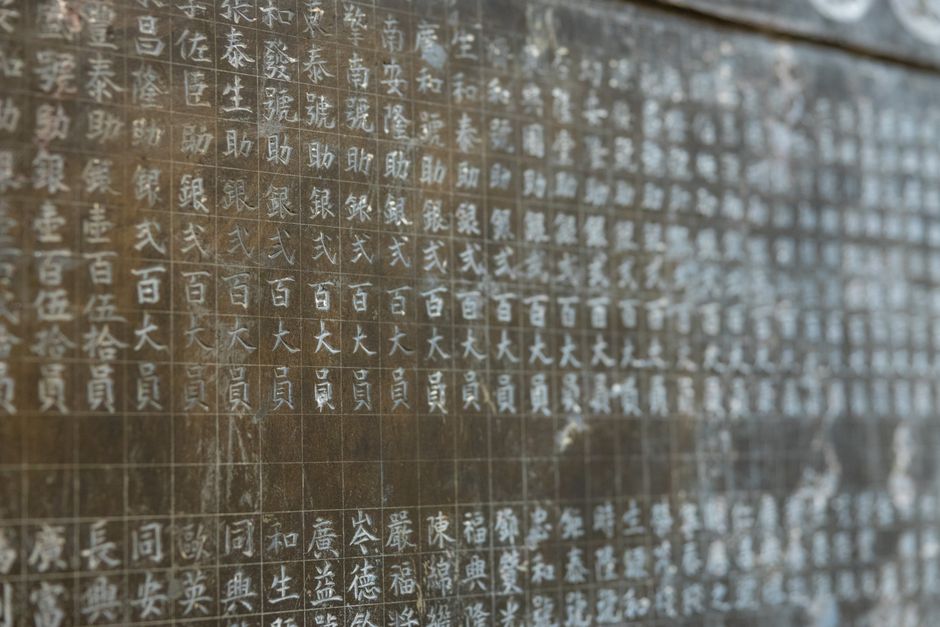
The Chinese writing system is the oldest continuously used writing system in the world, with its origins traced back to oracle bone inscriptions from the Shang Dynasty around 1200 BCE. Unlike alphabetic systems, Chinese uses logographic characters where each symbol represents a word or meaningful unit. Ancient Chinese divination practices involved inscribing questions on animal bones or turtle shells, heating them until they cracked, and interpreting the cracks as answers from ancestors or deities. Many modern Chinese characters still bear recognizable resemblance to their ancient counterparts, demonstrating remarkable continuity across three millennia.
5. The Phoenician Alphabet Was the Ancestor of Most Modern Scripts
The Phoenician alphabet, developed around 1050 BCE, revolutionized writing by creating one of the first purely phonetic alphabets with just 22 consonant symbols. This streamlined system was far simpler than earlier syllabic or logographic systems, making literacy more accessible. Phoenician traders spread their alphabet throughout the Mediterranean, where it was adopted and modified by the Greeks, who added vowels. The Greek alphabet subsequently evolved into Latin, Cyrillic, and numerous other scripts. This means that the Phoenician system is the direct ancestor of most alphabets used today, including English, Russian, Arabic, and Hebrew.
6. Maya Writing Was the Most Advanced in the Ancient Americas
The Maya civilization developed the most sophisticated writing system in pre-Columbian America, combining logographic and syllabic elements. Maya script could represent ideas with single symbols or spell out words phonetically using multiple syllables, giving scribes considerable creative flexibility. The system included approximately 800 distinct signs, and skilled scribes were highly respected members of Maya society. Tragically, Spanish conquistadors and missionaries destroyed thousands of Maya books, or codices, during the colonial period, considering them works of paganism. Only four complete Maya codices survive today, making archaeological inscriptions on stone monuments invaluable for understanding Maya civilization.
7. Linear B Recorded Ancient Greek on Clay Tablets
Linear B, used by the Mycenaean civilization from approximately 1450 to 1200 BCE, represents the earliest known form of written Greek. Unlike the later Greek alphabet, Linear B was a syllabic script with about 87 symbols, each representing a syllable. The script was deciphered in 1952 by English architect Michael Ventris, revealing that these ancient tablets recorded not epic poetry or religious texts, but mundane administrative records—inventories of grain, livestock, and military equipment. This discovery provided unprecedented insights into Bronze Age Greek economic and social organization, though the script mysteriously disappeared during the Bronze Age collapse and wasn’t replaced until the adoption of the Phoenician-derived Greek alphabet centuries later.
8. The Indus Valley Script Remains Undeciphered
The Indus Valley Civilization, which flourished around 2600-1900 BCE in modern-day Pakistan and northwestern India, developed a sophisticated script that remains one of archaeology’s greatest mysteries. Found on seals, pottery, and tablets, these inscriptions typically consist of short sequences of symbols, with over 400 distinct signs identified. Despite decades of scholarly effort and computer analysis, the script has not been conclusively deciphered, partly because the inscriptions are brief and no bilingual texts like the Rosetta Stone have been discovered. The undeciphered nature of this script means that much about this advanced ancient civilization remains frustratingly unknown.
9. Runes Were Associated with Magic and Divination
The runic alphabets used by Germanic peoples from approximately 150 CE carried mystical significance beyond mere communication. The word “rune” itself comes from Old Norse “rún,” meaning “secret” or “mystery.” Each rune symbol had a name and was associated with specific concepts, powers, or deities. Ancient Germanic and Scandinavian peoples believed runes possessed magical properties and used them for divination, protection, and casting spells. While runes were certainly used for practical purposes like inscriptions on stones, weapons, and everyday objects, their mystical associations remained powerful throughout their use, distinguishing them from purely utilitarian writing systems.
10. Ancient Writing Systems Required Professional Scribes
In virtually all ancient civilizations, literacy was limited to a small professional class of scribes who underwent years of rigorous training. Becoming a scribe in ancient Egypt, Mesopotamia, or China required memorizing thousands of symbols and mastering complex writing techniques. Scribes held elevated social positions because their skills were essential for administration, record-keeping, religious texts, and official correspondence. In ancient Mesopotamia, scribal schools called “tablet houses” trained young students, primarily from wealthy families. The complexity of ancient writing systems created an information monopoly that concentrated power in the hands of literate elites, a dynamic that persisted until alphabetic systems and later technologies democratized access to written communication.
Conclusion
These ten fascinating facts about ancient writing systems reveal the remarkable diversity, complexity, and ingenuity of early human communication. From the clay tablets of Mesopotamia to the mysterious symbols of the Indus Valley, from the flexible hieroglyphs of Egypt to the magical runes of Germanic peoples, ancient writing systems reflect the unique needs, beliefs, and creative solutions of the civilizations that developed them. These systems not only facilitated practical administration and commerce but also enabled the preservation of literature, religious beliefs, scientific knowledge, and historical records that continue to illuminate our understanding of the ancient world. The evolution of writing from pictographic representations to phonetic alphabets represents one of humanity’s most transformative intellectual achievements, fundamentally shaping civilization and laying the groundwork for all modern communication systems we use today.
