
⏱️ 7 min read
16 Amazing Facts About the Egyptian Pharaohs
The pharaohs of ancient Egypt ruled one of the most remarkable civilizations in human history for over three millennia. These god-kings left behind monuments that continue to astound the world and established traditions that shaped the course of human civilization. From their divine status to their mysterious burial practices, the pharaohs embodied power, innovation, and cultural sophistication. This article explores sixteen fascinating facts about these legendary rulers that reveal the complexity and grandeur of ancient Egyptian society.
1. Pharaohs Were Considered Living Gods
The pharaohs were not merely political leaders but were believed to be living incarnations of the god Horus and the earthly representatives of the sun god Ra. This divine status meant that every action they took was considered sacred, and their word was literally law. Upon death, pharaohs were believed to merge with Osiris, the god of the afterlife, ensuring the continuation of cosmic order and the prosperity of Egypt.
2. The Term “Pharaoh” Originally Meant “Great House”
The word “pharaoh” derives from the Egyptian phrase “per-aa,” which literally translates to “great house” or “palace.” Initially, this term referred to the royal palace itself rather than the king. Only during the New Kingdom period, around 1500 BCE, did it become common to use this term as a title for the ruler himself, eventually becoming synonymous with the Egyptian monarch.
3. Female Pharaohs Ruled Ancient Egypt
While ancient Egypt was predominantly patriarchal, several women successfully ruled as pharaohs. The most famous is Hatshepsut, who reigned for over twenty years during the 18th Dynasty. She often depicted herself wearing the traditional false beard and male regalia of a pharaoh to legitimize her rule. Cleopatra VII, though ruling much later, became perhaps the most internationally recognized female pharaoh in history.
4. Tutankhamun Became Pharaoh at Age Nine
King Tutankhamun, one of the most famous pharaohs today, ascended to the throne as a mere child of approximately nine years old. He ruled during the 18th Dynasty for about ten years before dying at roughly nineteen years of age. Despite his brief and relatively unimportant reign, his tomb’s discovery in 1922 by Howard Carter made him a household name worldwide due to its incredible treasures and rare intact state.
5. Pharaohs Practiced Royal Incest
To maintain the purity of the royal bloodline and consolidate power, pharaohs frequently married within their immediate family, including siblings, half-siblings, and occasionally even their own daughters. This practice was believed to preserve their divine essence and prevent the dilution of royal blood. However, modern analysis of royal mummies suggests this tradition may have contributed to genetic disorders and health problems among royal family members.
6. The False Beard Was a Symbol of Divine Authority
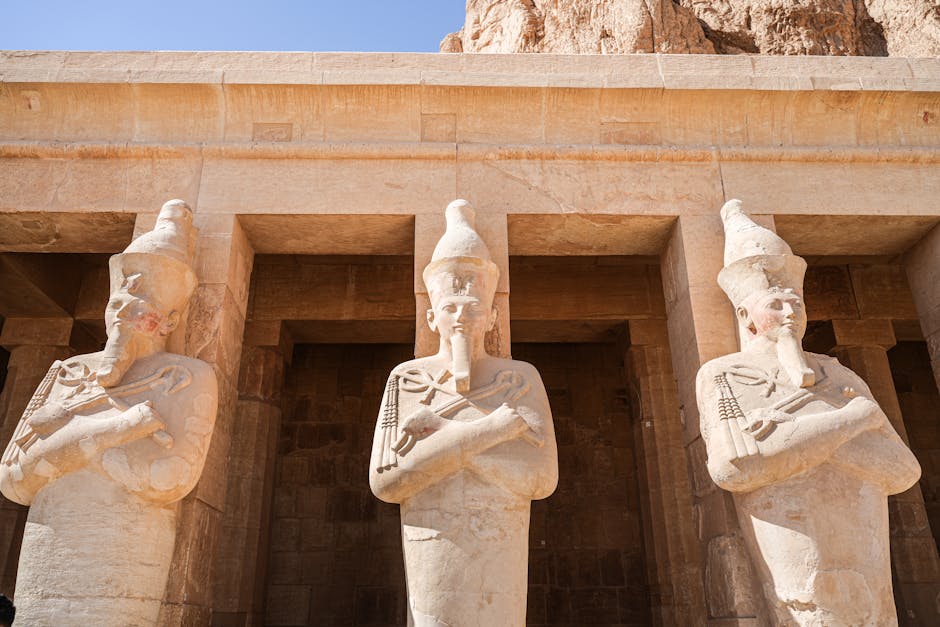
Pharaohs, regardless of their actual facial hair, wore artificial ceremonial beards as a symbol of their divine status and connection to the gods. These false beards were typically made of metal or wood and were attached with straps. Even female pharaohs like Hatshepsut wore these artificial beards during official ceremonies to demonstrate their legitimate claim to divine kingship.
7. Ramses II Fathered Over 100 Children
Ramses II, also known as Ramses the Great, who ruled for sixty-six years during the 19th Dynasty, is believed to have fathered between 80 and 100 children with his various wives and concubines. His extraordinarily long reign and numerous offspring made him one of ancient Egypt’s most prolific pharaohs. Many of his children predeceased him due to his exceptional longevity, as he lived into his nineties.
8. Pharaohs Had Five Different Names
Each pharaoh possessed five official names as part of their royal titulary, established during their coronation. These included the Horus name, the Nebty name, the Golden Horus name, the prenomen, and the nomen. Each name emphasized different aspects of the pharaoh’s divine role and relationship with the gods. The prenomen and nomen were typically enclosed in cartouches and are the names most commonly known today.
9. The Youngest Pharaoh May Have Been Only Six
While Tutankhamun became pharaoh at nine, some Egyptologists believe that Pepi II of the 6th Dynasty may have ascended to the throne at only six years old. Ancient records suggest he ruled for an astounding ninety-four years, making his reign the longest in Egyptian history if accurate. During his childhood, his mother and uncle likely served as regents, handling the actual governance of Egypt.
10. Pharaohs Wore Distinctive Crowns for Different Regions
Egyptian pharaohs wore different crowns to symbolize their rule over different parts of Egypt. The white crown, or Hedjet, represented Upper Egypt, while the red crown, or Deshret, symbolized Lower Egypt. When unified, these became the double crown, or Pschent, representing the pharaoh’s dominion over all of Egypt. Other crowns included the blue war crown, or Khepresh, worn during military campaigns and ceremonies.
11. Many Pharaohs Were Erased from History
Several pharaohs faced intentional erasure from historical records through a practice called damnatio memoriae. Hatshepsut’s successor, Thutmose III, attempted to remove evidence of her reign by defacing her monuments and removing her name from king lists. Similarly, Akhenaten, who radically reformed Egyptian religion, was deliberately excluded from official king lists by his successors who sought to restore traditional religious practices.
12. Pharaohs Led Their Armies into Battle
Contrary to the image of passive rulers, many pharaohs personally led their armies into combat, demonstrating courage and military prowess. Ramses II famously fought at the Battle of Kadesh, while Thutmose III conducted at least seventeen military campaigns, earning him recognition as one of history’s great military strategists. This warrior tradition reinforced the pharaoh’s role as Egypt’s ultimate protector.
13. The Crook and Flail Represented Royal Authority
Among the most recognizable symbols of pharaonic power were the crook and flail, ceremonial objects carried during important rituals and depicted in royal iconography. The crook, resembling a shepherd’s staff, symbolized the pharaoh’s role as shepherd of his people, while the flail, a whip-like tool, represented the pharaoh’s authority to provide sustenance and maintain order. These symbols connected the pharaoh to Osiris, who also wielded them.
14. Some Pharaohs Were Foreign-Born
Not all pharaohs were ethnically Egyptian. During periods of foreign domination, rulers from other lands claimed the title of pharaoh. The 25th Dynasty consisted of Nubian pharaohs from the Kingdom of Kush who ruled Egypt for nearly a century. Later, the Ptolemaic Dynasty, founded by one of Alexander the Great’s generals, ruled Egypt for three centuries, with Cleopatra VII being the last of this Greek-descended line.
15. Pharaohs Underwent Elaborate Mummification
The mummification process for pharaohs was extraordinarily complex, taking approximately seventy days to complete. Embalmers removed internal organs, preserved them in canopic jars, and treated the body with natron salt to desiccate it. The brain was removed through the nose, while the heart was left in place, as it was believed necessary for the afterlife. The preserved body was then wrapped in hundreds of yards of linen, accompanied by amulets and prayers to ensure safe passage to the afterlife.
16. The Last Pharaoh Died Over 2,000 Years Ago
Cleopatra VII, who died in 30 BCE, is recognized as the last true pharaoh of Egypt. Her death marked the end of the Ptolemaic Dynasty and Egypt’s absorption into the Roman Empire as a province. With her passing, three thousand years of pharaonic civilization came to an end, closing one of history’s most remarkable chapters. Though Roman and later rulers of Egypt occasionally adopted pharaonic titles and iconography, none possessed the legitimacy or cultural continuity of the ancient pharaohs.
Conclusion
These sixteen facts illuminate the extraordinary world of the Egyptian pharaohs, revealing rulers who were simultaneously political leaders, military commanders, religious figures, and living gods. From their divine status and elaborate regalia to their complex family relationships and monumental legacies, the pharaohs created a civilization that continues to captivate humanity thousands of years after their passing. Their achievements in architecture, governance, and culture established foundations that influenced subsequent civilizations and left an indelible mark on human history. Understanding these remarkable rulers provides insight into one of humanity’s greatest civilizations and reminds us of the enduring power of ancient Egypt’s cultural legacy.
