
⏱️ 6 min read
10 Fun Facts About the History of Writing
Writing stands as one of humanity’s most revolutionary inventions, transforming civilization by enabling the preservation and transmission of knowledge across generations. From ancient clay tablets to modern digital keyboards, the evolution of writing systems reveals fascinating insights into human creativity, cultural development, and communication needs. The following ten fun facts illuminate the surprising, remarkable, and sometimes quirky aspects of writing’s historical journey.
1. The Oldest Known Writing System Is Over 5,000 Years Old
Cuneiform script, developed by the ancient Sumerians in Mesopotamia around 3400 BCE, represents the earliest known full writing system. Initially created for accounting purposes to track goods and livestock, this wedge-shaped script was pressed into soft clay tablets using reed styluses. What began as simple pictographic symbols evolved into a sophisticated system capable of expressing complex ideas, laws, and literature. The Epic of Gilgamesh, one of humanity’s oldest surviving literary works, was written in cuneiform, demonstrating how this accounting tool transformed into a vehicle for storytelling and cultural expression.
2. Ancient Egyptians Had Three Different Writing Systems Simultaneously
While hieroglyphics remain the most famous Egyptian script, ancient Egypt actually employed three distinct writing systems concurrently. Hieroglyphics served primarily for religious texts and monumental inscriptions, featuring elaborate pictorial symbols. Hieratic script, a cursive simplification of hieroglyphics, was used for everyday religious and administrative documents. Demotic, the most abbreviated form, became the common script for business and literary texts. This multilayered approach to writing reflected social stratification and functional specialization, with different scripts signifying different contexts and audiences.
3. The Alphabet Was Invented Only Once
Despite the diversity of alphabetic systems worldwide, linguistic scholars believe that all alphabets derive from a single source: the Proto-Sinaitic script developed by Semitic workers in Egypt around 2000 BCE. This revolutionary system reduced thousands of symbols to fewer than thirty signs representing individual sounds rather than complete words or syllables. The Phoenicians refined this concept, creating an alphabet that spread throughout the Mediterranean, eventually evolving into Greek, Latin, Arabic, Hebrew, and countless other alphabetic systems. This singular innovation fundamentally changed human communication, making literacy more accessible than logographic systems requiring memorization of thousands of characters.
4. Paper Wasn’t Always Made From Trees
Before wood pulp became the standard material for paper production in the 19th century, civilizations created writing surfaces from diverse materials. The ancient Egyptians manufactured papyrus from the pith of papyrus plants growing along the Nile, pressing layers of plant fibers into sheets. Parchment and vellum, made from treated animal skins, dominated European manuscript production during the Middle Ages. The Chinese invented true paper around 105 CE using hemp, bark, and rags, a technology that eventually revolutionized written communication globally. These varied materials influenced writing styles, preservation methods, and the accessibility of written knowledge throughout different cultures and eras.
5. The Printing Press Wasn’t a Completely Original Invention
While Johannes Gutenberg receives credit for inventing the printing press around 1440, printing technology existed centuries earlier in Asia. Chinese and Korean printers used woodblock printing as early as the 7th century, and Korean craftsmen created movable metal type in the 13th century. Gutenberg’s revolutionary contribution was adapting and refining these concepts for European languages, developing durable metal type, oil-based inks, and an efficient press mechanism inspired by wine presses. His innovations made mass production of books economically viable in Europe, catalyzing the spread of literacy, the Protestant Reformation, and the Scientific Revolution.
6. Ancient Writing Wasn’t Always Left-to-Right
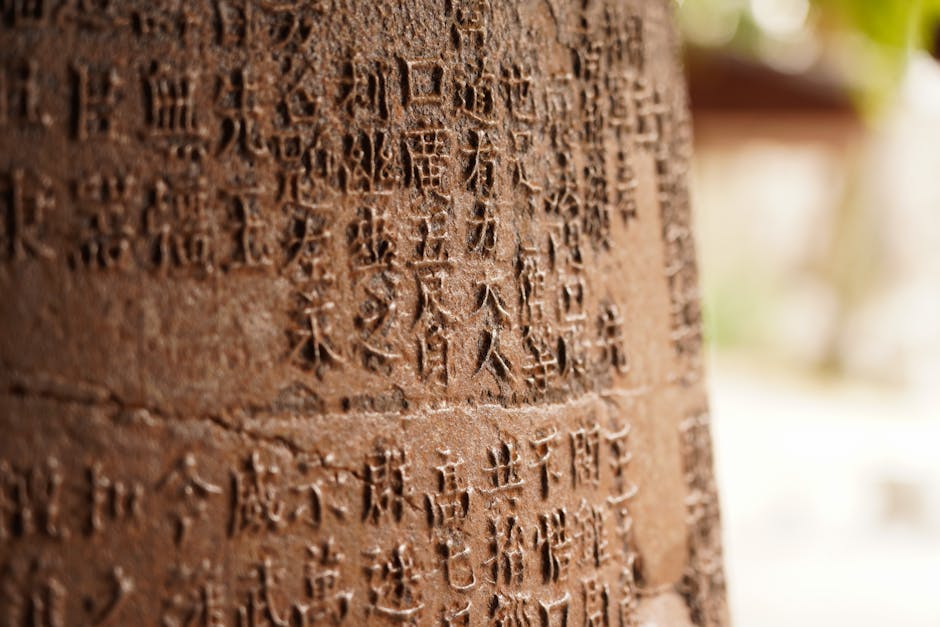
Modern English readers take left-to-right reading direction for granted, but historical writing systems employed various directional patterns. Some ancient Greek texts used boustrophedon writing, meaning “as the ox plows,” alternating direction with each line—left-to-right, then right-to-left, then left-to-right again. Traditional Chinese and Japanese texts flowed vertically from top to bottom, with columns progressing right to left. Arabic and Hebrew script runs right to left. These different directionalities reflect independent development of writing systems and demonstrate that no single “natural” direction exists for written communication.
7. The Rosetta Stone Unlocked an Ancient Mystery
Discovered in 1799 by French soldiers in Egypt, the Rosetta Stone contained the same decree written in three scripts: hieroglyphics, Demotic, and ancient Greek. Since scholars could read Greek, this trilingual inscription provided the crucial key to deciphering Egyptian hieroglyphics, which had remained unintelligible for over 1,400 years. French scholar Jean-François Champollion achieved the breakthrough in 1822, opening windows into ancient Egyptian civilization and demonstrating how writing serves as a bridge across millennia, preserving voices that would otherwise be lost to time.
8. Punctuation Marks Are Relatively Recent Innovations
Ancient texts typically lacked punctuation, spacing between words, or even separation between sentences, making reading a challenging interpretive exercise. Roman texts occasionally used interpuncts (middle dots) to separate words, but systematic punctuation developed gradually during the Middle Ages as monks sought to clarify religious texts for reading aloud. The question mark emerged around the 9th century, the semicolon appeared in the 15th century, and the exclamation point developed around the same period. These marks fundamentally transformed reading from a primarily oral, performative activity into a silent, individual experience, changing how people processed written information.
9. Writing Systems Have Gone Extinct
Many writing systems have disappeared completely, taking their knowledge with them. Linear A, used by the Minoan civilization on Crete, remains undeciphered despite numerous attempts. The Indus Valley script, appearing on thousands of seals and tablets from one of the world’s earliest urban civilizations, continues to puzzle researchers. The Rongorongo script of Easter Island and various Mesoamerican writing systems have also vanished, sometimes due to conquest, cultural disruption, or simply the passage of time. These extinct scripts remind us that writing, despite its power to preserve information, remains vulnerable to historical forces.
10. The Pencil Revolutionized Writing as Much as Digital Technology
Before the modern pencil’s development in the 16th century following the discovery of large graphite deposits in England, writing required ink, quills, and considerable skill. The pencil democratized writing by making it portable, erasable, and accessible. This seemingly simple tool enabled note-taking, sketching, drafting, and casual writing in ways previously impossible. The mechanical pencil, perfected in the 19th century, further enhanced convenience. Just as computers and smartphones have transformed contemporary writing practices, the humble pencil represented an equally significant technological leap, fundamentally changing who could write, where, and under what circumstances.
Conclusion
The history of writing encompasses far more than the simple transcription of speech into visible symbols. These ten facts reveal writing as a dynamic, evolving technology shaped by cultural needs, materials, trade routes, and human ingenuity. From cuneiform’s accounting origins to the alphabet’s singular invention, from extinct scripts to the revolutionary pencil, writing’s development reflects humanity’s persistent drive to communicate, preserve, and share knowledge across time and space. Understanding writing’s rich history deepens appreciation for the extraordinary privilege of literacy and the remarkable journey that enables modern readers to access ideas, stories, and information with unprecedented ease.
