
⏱️ 5 min read
Did You Know The First Olympics Were Held in 776 BC?
The Olympic Games stand as one of humanity’s most enduring traditions, captivating billions of spectators worldwide every four years. While modern audiences are familiar with the spectacle of contemporary Olympics, few realize that this celebrated competition traces its origins back nearly three millennia to ancient Greece. The first recorded Olympic Games took place in 776 BC in Olympia, marking the beginning of a tradition that would profoundly influence Western civilization and athletic competition for centuries to come.
The Birth of the Ancient Olympics
The year 776 BC represents a pivotal moment in athletic history, as it marks the first documented Olympic Games held in Olympia, a sanctuary site in the western Peloponnese region of Greece. While athletic competitions likely existed before this date, 776 BC is significant because it represents the first Olympics for which we have written records. The ancient Greeks began using Olympiads, the four-year periods between games, as a method of dating events, demonstrating the cultural importance of these competitions.
According to ancient records, the first Olympic champion was Coroebus, a cook from the city-state of Elis, who won the stadion race, a sprint of approximately 192 meters. This single footrace constituted the entire athletic program for the first thirteen Olympic festivals, reflecting the simplicity of the early games compared to the elaborate multi-sport events we recognize today.
Religious and Cultural Significance
The ancient Olympic Games were far more than mere athletic competitions; they represented a crucial religious festival honoring Zeus, the king of the Greek gods. Olympia itself was a sacred sanctuary, home to magnificent temples and religious monuments, including the famous Statue of Zeus, one of the Seven Wonders of the Ancient World. The games formed part of a religious ceremony that included sacrifices, prayers, and offerings to the gods.
Every four years, Greek city-states would observe the Olympic Truce, known as “ekecheiria,” which guaranteed safe passage for athletes and spectators traveling to Olympia. This sacred truce suspended all hostilities between the perpetually warring Greek states, allowing competitors and visitors to journey safely to and from the games. This tradition underscored the unifying power of the Olympics in ancient Greek society.
Evolution of the Ancient Games
While the first Olympics featured only a single running event, the games gradually expanded over subsequent centuries to include a diverse array of athletic competitions. By 724 BC, a second race called the diaulos, approximately 400 meters, was added to the program. The evolution continued with the following additions:
- 720 BC: Introduction of the long-distance race (dolichos)
- 708 BC: Addition of pentathlon and wrestling
- 688 BC: Inclusion of boxing
- 680 BC: Introduction of chariot racing
- 648 BC: Addition of pankration, a combination of boxing and wrestling
At their peak, the ancient Olympic Games lasted five days and featured numerous athletic events, religious ceremonies, and cultural celebrations. The expanded program attracted competitors and spectators from across the Greek world, transforming Olympia into a center of Hellenic culture and identity.
Participants and Competition Rules
The ancient Olympics maintained strict participation requirements that reflected the values and social structures of Greek society. Only free-born Greek men were permitted to compete, excluding women, slaves, and non-Greeks, whom the Greeks referred to as barbarians. Married women were even prohibited from attending as spectators, though unmarried women could watch the competitions.
Athletes competed in the nude, a practice called “gymnos,” from which we derive the word gymnasium. This custom celebrated the human form and distinguished Greek culture from their neighbors, who considered such practices barbaric. Competitors trained rigorously for months before the games, and winners received olive wreaths cut from the sacred olive tree near the Temple of Zeus, along with tremendous honor and prestige in their home cities.
The End of an Era
The ancient Olympic Games continued for nearly twelve centuries, surviving political upheavals, wars, and the Roman conquest of Greece. However, as Christianity spread throughout the Roman Empire, pagan religious festivals fell out of favor. In 393 AD, Roman Emperor Theodosius I, a Christian, issued a decree abolishing the Olympic Games as part of a broader campaign to suppress pagan practices. The games had endured for 1,170 years, hosting 293 Olympiads before their cessation.
Following their abolition, the sanctuary at Olympia fell into decline. Earthquakes, floods, and invasions buried the site under layers of mud and debris, and the exact location of ancient Olympia was eventually forgotten, remaining lost for over a millennium.
Rediscovery and Modern Revival
The ruins of ancient Olympia were rediscovered in the 18th century, and systematic excavations began in the 19th century, revealing the magnificent temples, athletic facilities, and monuments that once graced the sanctuary. These archaeological discoveries rekindled interest in the Olympic tradition and inspired the modern Olympic movement.
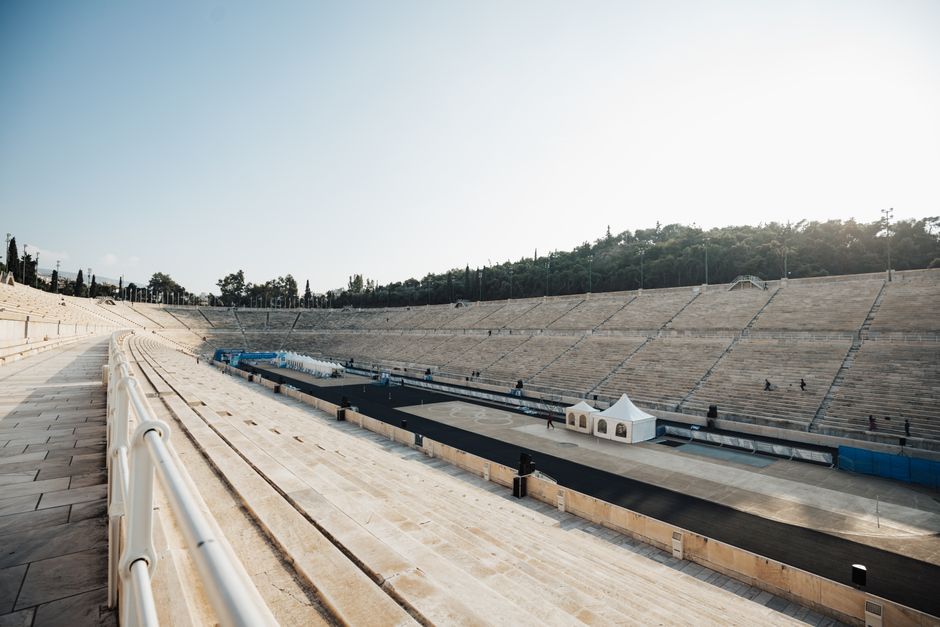
In 1896, Baron Pierre de Coubertin successfully revived the Olympic Games in Athens, Greece, establishing the modern Olympics. While contemporary games differ significantly from their ancient predecessor in scope, participants, and organization, they continue to embody the ancient Olympic ideals of peaceful competition, excellence, and international unity.
Legacy and Lasting Impact
The ancient Olympic Games that began in 776 BC left an indelible mark on human civilization. They established traditions and ideals that continue to resonate in modern athletics, including the concepts of fair play, athletic excellence, and the power of sport to unite diverse peoples. The four-year Olympic cycle, the lighting of the Olympic flame at Olympia, and the fundamental spirit of international competition all trace their origins to those first games held nearly 2,800 years ago in ancient Greece.
