
⏱️ 5 min read
Did You Know The Eiffel Tower Was Supposed to Be Temporary?
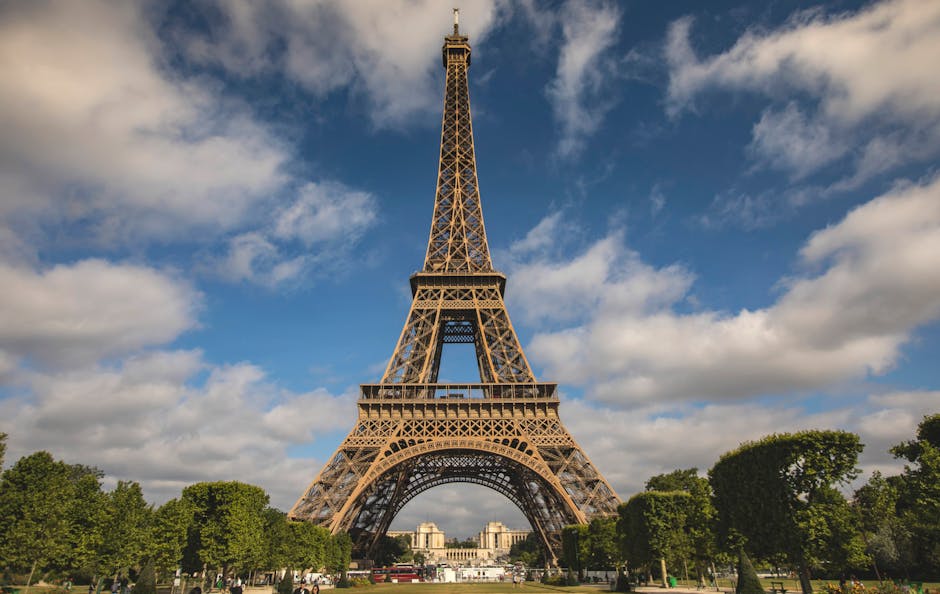
The Eiffel Tower stands today as an iconic symbol of France, recognized worldwide as one of the most visited monuments on Earth. However, few people realize that this magnificent iron structure, which now defines the Parisian skyline, was never intended to be permanent. Originally designed as a temporary installation for the 1889 World’s Fair, the Eiffel Tower was slated for demolition just 20 years after its construction. The fascinating story of how this “temporary” structure became a permanent fixture reveals a tale of controversy, ingenuity, and unexpected utility.
The Origins of a Controversial Project
In 1886, the French government announced a competition to design a centerpiece for the upcoming Exposition Universelle, the World’s Fair celebrating the centennial of the French Revolution. From over 100 submissions, the committee selected a bold proposal by engineer Gustave Eiffel and his team, including engineers Maurice Koechlin and Émile Nouguier, along with architect Stephen Sauvestre.
The design called for an iron lattice tower reaching approximately 300 meters in height, which would make it the tallest man-made structure in the world at the time. The construction permit explicitly stated that the tower would be granted only temporary status, with a planned demolition date set for 1909, exactly 20 years after the fair’s opening. This temporary designation was partly due to the experimental nature of the structure and partly a response to significant public opposition.
A Storm of Criticism
Before construction even began, the project faced fierce resistance from Parisian intellectuals, artists, and citizens. In February 1887, a group of prominent figures, including renowned writer Guy de Maupassant and composer Charles Gounod, published a scathing protest letter in the newspaper Le Temps. They described the proposed tower as a “metal monstrosity” and a “gigantic black smokestack” that would overshadow Paris’s classic architecture.
The protesters argued that the tower would:
- Destroy the aesthetic harmony of historic Paris
- Dwarf beloved monuments like Notre-Dame Cathedral and the Arc de Triomphe
- Represent an industrial eyesore incompatible with French artistic heritage
- Create a dangerous precedent for commercialization of the city’s skyline
Despite this vocal opposition, construction proceeded as planned, beginning in January 1887.
An Engineering Marvel
The construction of the Eiffel Tower represented a remarkable achievement in 19th-century engineering. Over 300 workers labored for approximately two years, assembling more than 18,000 individual iron pieces held together by 2.5 million rivets. The precision of the construction was extraordinary, with components manufactured off-site to tolerances of one-tenth of a millimeter.
The tower was completed in March 1889, just in time for the World’s Fair opening on March 31. Standing at 300 meters (324 meters including the antenna added later), it surpassed the Washington Monument to become the world’s tallest structure, a title it would hold for 41 years until the completion of the Chrysler Building in New York City.
The Fight for Survival
As the scheduled 1909 demolition date approached, Gustave Eiffel fought vigorously to save his creation. He had initially secured the construction permit by personally financing a portion of the project in exchange for operating rights for 20 years, with revenues from visitor admissions and commercial leases helping to recoup his investment.
Eiffel recognized that demonstrating practical utility would be crucial to the tower’s survival. He actively promoted scientific applications for the structure, establishing a meteorological station, an astronomical observatory, and a physics laboratory within the tower. He conducted his own experiments on air resistance and aerodynamics, dropping objects from the tower to study their descent.
The Unexpected Savior: Wireless Telegraphy
The technology that ultimately saved the Eiffel Tower was wireless telegraphy, the precursor to modern radio communications. As early as 1898, Eiffel permitted experiments in wireless transmission from the tower. By 1903, the structure was being used for military wireless telegraphy communications, proving invaluable for transmitting messages across significant distances.
The tower’s height made it an ideal location for antenna installation, and its strategic importance grew rapidly. During World War I, the tower’s radio capabilities proved critical for military communications, including the interception of enemy messages. Most notably, the tower’s wireless station intercepted communications that helped French forces during the First Battle of the Marne in 1914.
This military and communications utility made demolition unthinkable. The French government recognized the tower’s strategic value and granted it permanent status, officially ending discussions of its removal.
From Condemned to Celebrated
The transformation of public opinion regarding the Eiffel Tower occurred gradually but decisively. What was once derided as an industrial monstrosity became celebrated as a symbol of innovation, progress, and French engineering prowess. The structure that critics claimed would mar the Parisian landscape became its most recognizable feature.
Today, the Eiffel Tower attracts nearly seven million visitors annually, making it the most visited paid monument in the world. It has appeared in countless films, photographs, and artistic works, becoming synonymous with Paris itself. The tower’s image is used commercially worldwide, representing not just France but concepts of romance, sophistication, and architectural ambition.
Legacy and Lessons
The story of the Eiffel Tower’s transformation from temporary exhibition piece to permanent icon offers valuable lessons about architecture, public opinion, and cultural landmarks. It demonstrates how initial resistance to bold architectural projects can give way to acceptance and even celebration when structures prove their worth over time.
The tower’s survival also highlights the importance of adaptability and finding new purposes for existing structures. Gustave Eiffel’s foresight in promoting scientific and practical applications for his tower ultimately ensured its preservation, showing that utility can be as important as beauty in determining a structure’s fate.
What began as a temporary attraction for a six-month exhibition has now stood for over 130 years, outliving its critics and becoming one of humanity’s most enduring architectural achievements. The Eiffel Tower serves as a powerful reminder that today’s controversial innovations may become tomorrow’s beloved landmarks.
