
⏱️ 6 min read
Did You Know? 12 Secrets of the Great Wall of China
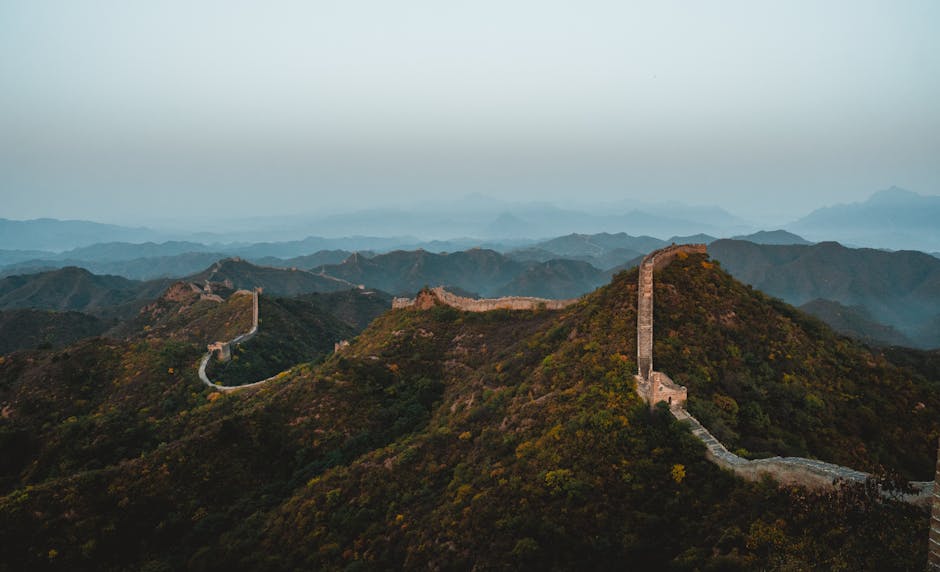
The Great Wall of China stands as one of humanity’s most impressive architectural achievements, stretching across thousands of miles of Chinese landscape. While millions of tourists visit this ancient wonder each year, many fascinating secrets and lesser-known facts remain hidden within its stones and history. From its construction methods to its true purpose, these twelve remarkable secrets reveal the Great Wall in an entirely new light.
1. It’s Not One Continuous Wall
Contrary to popular belief, the Great Wall is not a single, unbroken structure. Instead, it consists of multiple walls built by different dynasties over approximately 2,000 years. These various sections were constructed, rebuilt, and connected by successive Chinese states and dynasties. Some segments run parallel to each other, while others remain completely disconnected. The total length of all these walls combined exceeds 13,000 miles when including all branches and sections.
2. Sticky Rice Was a Secret Ingredient
One of the most surprising construction secrets involves an everyday food item: sticky rice. During the Ming Dynasty, builders discovered that mixing sticky rice flour into the mortar created an incredibly strong binding material. This organic compound made the mortar more resistant to weathering and actually stronger than pure lime mortar. Modern scientists have confirmed that this ancient technique produced a mortar so durable that in many places, it’s harder than the bricks themselves and has helped sections survive for centuries.
3. The Wall Was Built on Human Sacrifice
The construction of the Great Wall came at a tremendous human cost. Historical records suggest that hundreds of thousands of workers died during its construction over the centuries. According to some estimates, approximately 400,000 people perished building the wall during the Qin Dynasty alone. Many of these workers were buried within or near the wall itself, leading to its grim nickname as “the longest cemetery on Earth.” This dark aspect of the wall’s history is often overlooked in modern tourist presentations.
4. It Was Not Always Effective at Defense
Despite its imposing appearance, the Great Wall was breached multiple times throughout history. The Mongols managed to pass through it in the 13th century, and the Manchus crossed it in 1644, leading to the fall of the Ming Dynasty. The wall’s effectiveness depended heavily on the troop presence and vigilance of guards stationed along it. Without adequate military manning, the wall was simply a massive stone barrier that determined invaders could navigate around or through via bribes to guards at the gates.
5. Watchtowers Served as Ancient Communication Networks
The approximately 25,000 watchtowers along the Great Wall functioned as an sophisticated ancient communication system. Guards used smoke signals during the day and fire signals at night to transmit messages along the wall. This system could relay information about invasions across hundreds of miles in just a few hours. Different numbers and colors of smoke signals conveyed specific messages about the size and nature of approaching threats, creating an early warning system that was remarkably advanced for its time.
6. The Wall Features Sophisticated Drainage Systems
Ancient engineers incorporated remarkably advanced drainage systems into the wall’s design. They installed drainage holes, channels, and gutters at regular intervals to prevent water accumulation that could damage the structure. These features demonstrate the sophisticated understanding of hydraulic engineering possessed by ancient Chinese builders. The drainage systems were crucial for the wall’s longevity, particularly in regions with heavy rainfall, and many of these systems still function effectively today.
7. Different Sections Used Dramatically Different Materials
The Great Wall’s construction materials varied significantly depending on what was locally available. In mountainous areas, builders used stone from nearby quarries. In plains regions, they utilized rammed earth and wood. Desert sections incorporated materials like tamarisk branches and even reeds. Some sections in more developed areas feature sophisticated brick construction. This adaptation to local resources demonstrates the pragmatic and resourceful approach Chinese builders took across different geographical regions and time periods.
8. The Wall Cannot Actually Be Seen from Space
One of the most persistent myths about the Great Wall is that it’s visible from space with the naked eye. Astronauts and scientists have repeatedly debunked this claim. While the wall is long, it’s relatively narrow—typically about 15 to 30 feet wide—making it impossible to distinguish from orbit without magnification. This myth likely originated from exaggerated claims made long before space travel was possible and has been perpetuated despite factual correction.
9. Ming Dynasty Sections Featured an Early Form of Standardization
During the Ming Dynasty reconstruction, builders implemented standardized brick sizes and construction methods across different sections. This early form of industrial standardization allowed for more efficient construction and repairs. The standard Ming brick measured approximately 15 by 7 by 3.5 inches, and millions of these uniform bricks were produced in kilns specifically dedicated to wall construction. This standardization represented a sophisticated approach to large-scale infrastructure projects.
10. The Wall Housed Entire Military Communities
The Great Wall wasn’t merely a defensive barrier but a complex military infrastructure that housed entire communities. Garrison stations along the wall included barracks, stables, armories, and even temples. Some larger fortress complexes contained everything needed for hundreds of soldiers to live for extended periods, including granaries, wells, and administrative buildings. These military cities along the wall represented significant population centers and played crucial roles in regional administration and trade control.
11. Modern Sections Are Heavily Restored
Most sections of the Great Wall that tourists visit today are heavily restored or completely reconstructed. The popular Badaling section near Beijing, which receives millions of visitors annually, was extensively renovated in the 1950s and 1980s. Many “ancient” sections tourists photograph are actually modern reconstructions. Meanwhile, large portions of the original wall lie in ruins, crumbling in remote areas. Only about 8% of the original Ming Dynasty wall remains in good condition, with approximately 30% having disappeared entirely.
12. The Wall Influenced Chinese Settlement Patterns
The Great Wall’s construction and presence significantly influenced Chinese settlement patterns and cultural identity. It represented a physical and psychological boundary between Chinese civilization and the “barbarian” lands beyond. Communities developed along the wall, creating a unique border culture. The wall also affected trade routes, agricultural patterns, and regional dialects. Even today, the wall’s historical presence continues to influence how Chinese people conceptualize their nation’s boundaries and cultural identity.
Conclusion
These twelve secrets reveal that the Great Wall of China is far more complex and fascinating than its reputation as merely an ancient defensive structure. From its construction using sticky rice mortar to its role as a communication network and military infrastructure, the wall represents centuries of innovation, sacrifice, and cultural development. Understanding these hidden aspects provides deeper appreciation for this remarkable achievement and the civilizations that built and maintained it. The Great Wall stands not just as a testament to ancient engineering but as a symbol of human ambition, adaptability, and the complex relationship between societies and their borders throughout history.
