
⏱️ 5 min read
Did You Know? 12 Amazing Facts About Animal Intelligence
The animal kingdom never ceases to amaze us with displays of remarkable intelligence that challenge our understanding of cognitive abilities beyond human minds. From problem-solving prowess to emotional depth, animals demonstrate mental capacities that rival and sometimes surpass our own in specific domains. These twelve fascinating facts reveal just how sophisticated animal intelligence truly is, offering a glimpse into the rich mental lives of creatures sharing our planet.
1. Crows Can Create and Use Complex Tools
New Caledonian crows possess an extraordinary ability to fashion tools from various materials. These birds don’t simply use found objects; they actively modify sticks, leaves, and other materials to create hooks and probes for extracting insects from tree bark. Even more impressive, they can solve multi-step puzzles requiring the use of one tool to obtain another, demonstrating an understanding of cause and effect that was once thought unique to primates.
2. Octopuses Exhibit Individual Personalities and Problem-Solving Skills
Despite having a completely different evolutionary path from mammals, octopuses display remarkable intelligence and distinct personalities. They can navigate mazes, open jars to reach food inside, and even learn by watching other octopuses. Some individuals show boldness while others demonstrate shyness, and they can recognize individual human caretakers, responding differently to people based on past interactions.
3. Elephants Demonstrate Self-Awareness and Empathy
Elephants are among the few animals that can recognize themselves in mirrors, a key indicator of self-awareness. They also show profound empathy, mourning their dead, helping injured herd members, and even appearing to comfort distressed companions. Elephants have been observed covering deceased family members with branches and returning to burial sites years later, suggesting complex emotional processing and long-term memory.
4. Dolphins Use Signature Whistles as Names
Bottlenose dolphins develop unique whistles that function essentially as names, allowing them to call to specific individuals across distances. Research has shown that dolphins respond preferentially to their own signature whistle and can remember the whistles of companions they haven’t seen in over twenty years. This naming system demonstrates abstract thinking and complex social cognition.
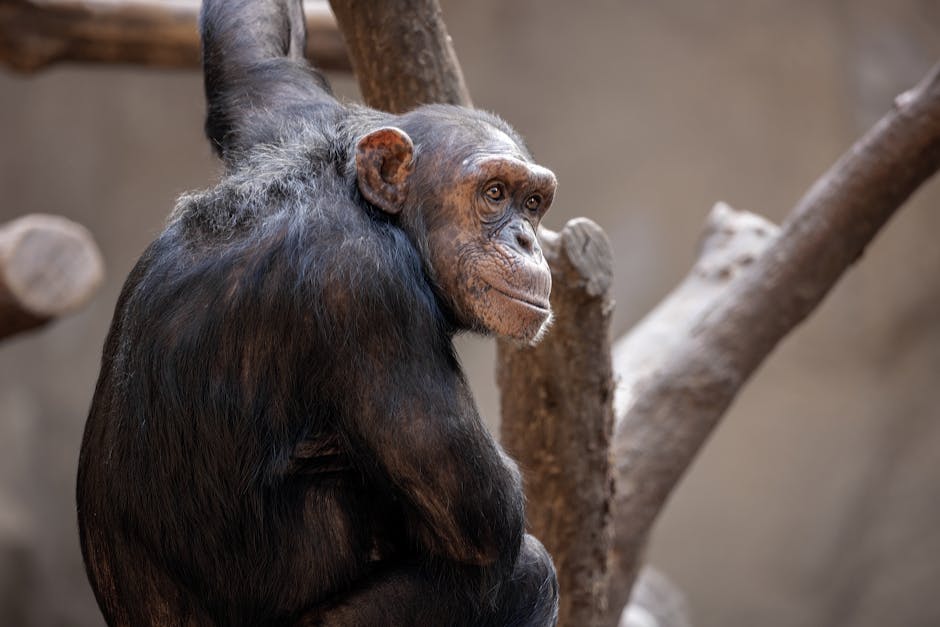
5. Chimpanzees Outperform Humans in Specific Memory Tasks
Young chimpanzees have demonstrated superior performance to adult humans in short-term memory tasks, particularly those involving number sequences. In experiments at Kyoto University, chimps could memorize and recall the position of numbers flashed briefly on a screen with greater accuracy than human participants, suggesting that photographic memory capabilities may be more developed in some primate species.
6. Bees Communicate Through Symbolic Dance Language
Honeybees perform elaborate “waggle dances” to communicate the location of food sources to their hive mates. The angle of the dance relative to the sun indicates direction, while the duration conveys distance. This sophisticated symbolic communication system allows bees to share precise information about resources up to several kilometers away, demonstrating abstract representation and information transfer.
7. Border Collies Can Learn Over 1,000 Words
The border collie named Chaser learned to identify and retrieve 1,022 distinct toys by name, demonstrating vocabulary comprehension comparable to a human toddler. More remarkably, Chaser could learn new words through inference and exclusion, showing that she understood words as symbols representing specific objects rather than simply responding to auditory cues.
8. Archerfish Calculate Physics to Hunt
Archerfish shoot down insect prey with precisely aimed jets of water, accounting for light refraction at the water’s surface, the distance to the target, and the force needed. Research shows these fish make these complex calculations instinctively, adjusting their shots based on prey size and location, demonstrating an intuitive understanding of physics that allows them to hunt with remarkable accuracy.
9. Rats Show Empathy and Altruism
Laboratory studies have revealed that rats will free trapped companions even when there’s no benefit to themselves. In experiments, rats learned to open restrainers to release distressed cage mates and would even save portions of chocolate for the freed rat rather than consuming it all themselves. This behavior suggests genuine empathy and concern for the welfare of others.
10. African Grey Parrots Understand Abstract Concepts
The famous African grey parrot Alex could identify colors, shapes, and quantities, and understood concepts like “same” and “different.” He could answer questions about objects, requesting specific items and even expressing boredom or frustration. Alex’s abilities demonstrated that avian intelligence includes abstract reasoning and concept formation previously attributed only to primates.
11. Ants Use Sophisticated Navigation and Teaching
Desert ants can travel hundreds of meters from their nests and return via the most direct route, using a process called path integration that accounts for every twist and turn. Additionally, some ant species engage in “tandem running,” where experienced ants teach newcomers the route to food sources, slowing their pace to allow the learner to memorize landmarks—one of the few documented examples of teaching in insects.
12. Gorillas Can Learn and Use Sign Language
Koko the gorilla learned more than 1,000 signs in American Sign Language and understood approximately 2,000 words of spoken English. She could combine signs to create new meanings, such as describing a ring as a “finger bracelet.” Koko also demonstrated emotional depth, expressing grief, humor, and nurturing behavior toward pets, challenging the boundaries between human and animal communication.
Conclusion
These twelve remarkable facts merely scratch the surface of animal intelligence, revealing a world where cognitive sophistication takes many forms across species. From the tool-using crows to the empathetic elephants, from the linguistic dolphins to the mathematical archerfish, animals continue to surprise researchers with their mental capabilities. These discoveries not only expand our understanding of intelligence itself but also remind us of our responsibility to protect and respect the diverse minds with whom we share the Earth. As research continues, we can expect even more revelations about the extraordinary cognitive abilities present throughout the animal kingdom.
