
⏱️ 5 min read
Did You Know The Pyramids Were Originally White?
The Great Pyramids of Giza stand as one of the most recognizable monuments of ancient civilization, their weathered golden-brown limestone blocks defining the Egyptian landscape for millennia. However, these magnificent structures appeared vastly different when they were first completed over 4,500 years ago. The pyramids were originally covered in brilliant white casing stones that gleamed in the desert sun, creating a spectacle that would have been visible for miles across the ancient landscape.
The Original Casing Stones
When the pyramids were constructed during Egypt’s Old Kingdom period, their outer surfaces were covered with highly polished Tura limestone casing stones. These white limestone blocks were quarried from Tura, located on the eastern bank of the Nile River, approximately 13 kilometers south of modern-day Cairo. The Tura quarries were renowned throughout ancient Egypt for producing the finest quality white limestone available, prized for its fine grain, bright color, and ability to take an exceptional polish.
The casing stones were cut with remarkable precision, fitted together so tightly that a knife blade could not be inserted between them. Ancient Egyptian craftsmen smoothed and polished these outer blocks to create a seamless, reflective surface. Historical accounts and archaeological evidence suggest that these polished white stones would have reflected the intense Egyptian sunlight, causing the pyramids to shine brilliantly and be visible from great distances across the desert plateau.
The Appearance of Ancient Pyramids
Contemporary descriptions from ancient historians provide valuable insights into how the pyramids appeared in their original state. The Greek historian Herodotus, who visited Egypt around 450 BCE, described monuments of extraordinary brilliance. While the casing stones had already begun to deteriorate by his time, enough remained for him to marvel at their construction and appearance.
The Great Pyramid of Khufu, the largest of the three pyramids at Giza, was completely encased in these white limestone blocks, estimated to have required approximately 115,000 casing stones covering 21 acres of surface area. The pyramid’s capstone, or pyramidion, may have been covered in gold or electrum, an alloy of gold and silver, which would have created a dazzling crown visible for miles.
The Pyramidion and Peak Design
The apex of each pyramid featured a pyramidion, a specially crafted capstone that completed the structure. While the original pyramidia of the Giza pyramids have been lost to history, evidence from other pyramids suggests these were often covered in precious metals or carved from special stone. The combination of the gleaming white sides and the golden peak would have created a structure of extraordinary visual impact, symbolizing the pharaoh’s connection to the sun god Ra and serving as a powerful statement of royal authority and divine power.
What Happened to the White Casing Stones?
The disappearance of the pyramids’ white outer covering occurred gradually over thousands of years, with several significant events contributing to their removal:
- Natural weathering and erosion over millennia loosened some casing stones
- Earthquakes, particularly a major one in 1303 CE, dislodged many of the remaining blocks
- Systematic removal by later rulers and builders who repurposed the fine limestone for construction projects
- The building of medieval Cairo required massive amounts of cut stone, making the pyramids a convenient quarry
The most significant loss occurred during the 14th century when Sultan An-Nasir Nasir-ad-Din al-Hasan ordered the removal of casing stones to build mosques and fortresses in Cairo, including the construction of the Cairo Citadel. This readily available source of pre-cut, high-quality limestone proved irresistible to builders throughout the medieval period. By the time European explorers and archaeologists began studying the pyramids in detail during the 18th and 19th centuries, almost all of the white casing stones had been stripped away.
Evidence of the Original Appearance
Despite the loss of most casing stones, evidence of the pyramids’ original white appearance remains. At the base of the Great Pyramid, several casing stones remain in place, allowing researchers and visitors to see examples of the original outer surface. These surviving blocks display the precision cutting and smooth finishing that characterized the entire outer surface.
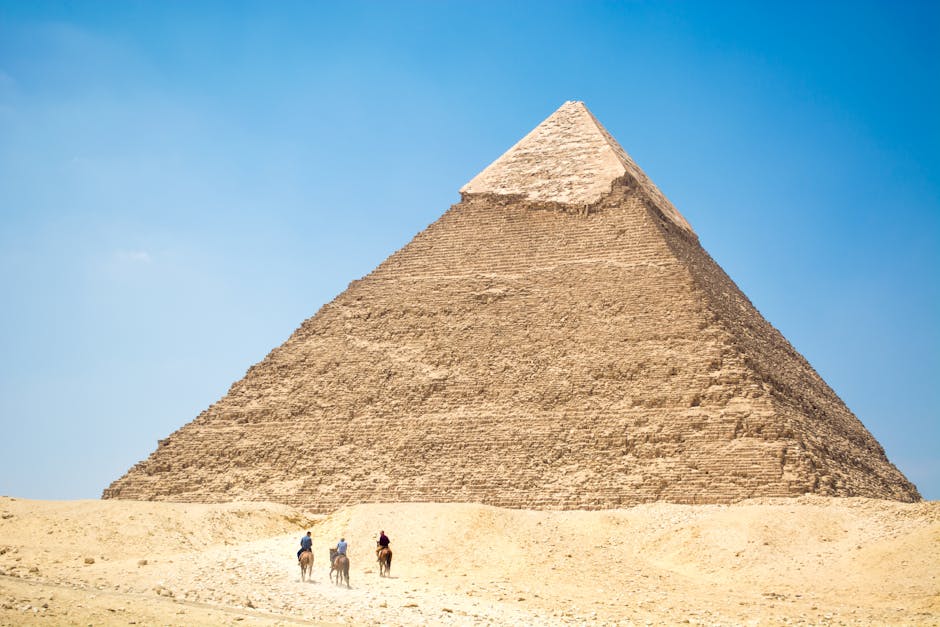
The Pyramid of Khafre, the second-largest pyramid at Giza, retains a cap of casing stones near its apex, providing clear visual evidence of how all three pyramids once appeared. This preserved section of white limestone stands in stark contrast to the exposed golden-brown core blocks that form the majority of the visible surface today.
Archaeological and Historical Significance
Understanding the original appearance of the pyramids provides crucial insights into ancient Egyptian architecture, engineering, and cultural values. The enormous effort required to quarry, transport, cut, and polish millions of blocks of white limestone demonstrates the sophisticated organizational capabilities of Old Kingdom Egypt. The choice of brilliant white casing stones reflected religious symbolism, with the color white associated with purity and the divine in ancient Egyptian culture.
The transformation of the pyramids from gleaming white monuments to the weathered structures visible today serves as a powerful reminder of how time and human activity reshape even the most enduring monuments. While the pyramids remain impressive architectural achievements, recognizing their original appearance helps modern observers appreciate the full scope of ancient Egyptian artistic and engineering vision.
Conclusion
The revelation that the pyramids were originally white fundamentally changes our perception of these ancient wonders. Rather than the earthen, time-worn monuments familiar to modern eyes, the pyramids once stood as brilliant white beacons, their polished surfaces reflecting the desert sun and proclaiming the power and sophistication of ancient Egyptian civilization. This lost grandeur reminds us that our understanding of history must account for the dramatic changes time brings to even the most permanent human creations.
