
⏱️ 6 min read
Did You Know? 12 Facts About Ancient Greece You Didn’t Learn in School
Ancient Greece stands as one of the most influential civilizations in human history, credited with developing democracy, philosophy, and theatrical arts. While most people are familiar with the Parthenon, Socrates, and the Olympic Games, countless fascinating aspects of Greek civilization remain hidden from standard history curricula. The following twelve facts reveal the lesser-known but equally compelling realities of life in ancient Greece, offering a more complete picture of this remarkable culture that shaped Western civilization.
1. Ancient Greeks Didn’t Wear All White
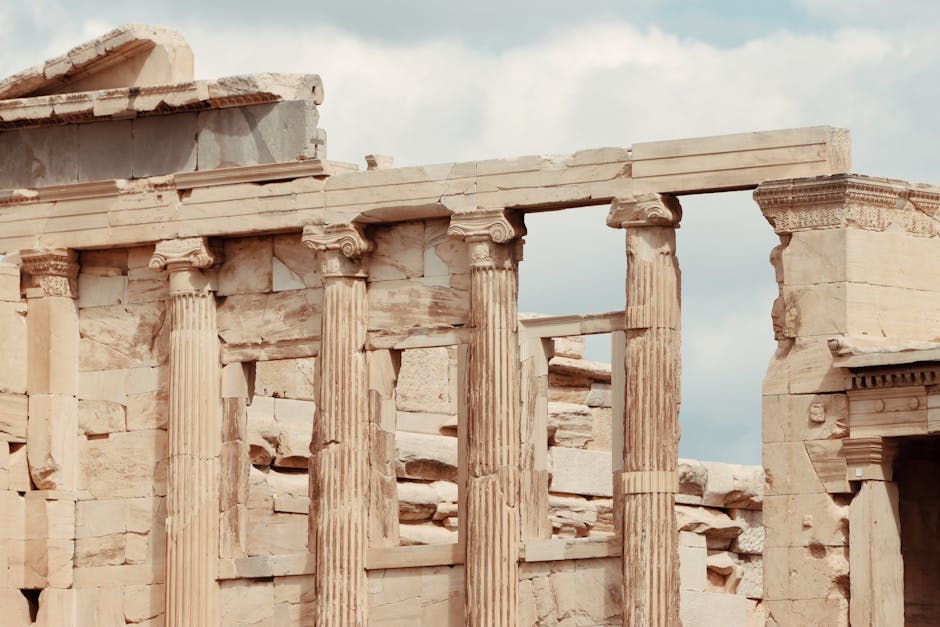
Contrary to the pristine white marble statues we see in museums today, ancient Greek architecture and sculpture were originally painted in vibrant, bold colors. Greeks decorated their temples, statues, and public buildings with bright reds, blues, yellows, and greens. Over millennia, these pigments faded or were worn away, leaving behind the white marble that became mistakenly associated with classical aesthetics. This misconception influenced Renaissance and Neoclassical art, perpetuating the myth of colorless Greek culture.
2. Women Ran Their Own Olympics
While women were famously excluded from competing in or even attending the Olympic Games, they held their own athletic competition called the Heraean Games. Dedicated to the goddess Hera, these games featured footraces for unmarried women of different age groups. Winners received olive crowns and portions of a cow sacrificed to Hera, along with the privilege of having their names inscribed in the temple and their portraits displayed publicly.
3. The Ancient Greek Diet Was Surprisingly Modern
The ancient Greek diet closely resembled what nutritionists today call the Mediterranean diet. Greeks consumed primarily bread, olives, olive oil, vegetables, legumes, cheese, fish, and moderate amounts of wine. Meat was a luxury reserved for religious festivals and special occasions. This diet, rich in healthy fats and plant-based proteins, contributed to the overall health and longevity of the population, particularly among the wealthy who could afford quality ingredients.
4. Spartans Weren’t the Only Warriors
While Sparta receives most attention for its military culture, the city-state of Thebes developed the Sacred Band, an elite fighting force composed of 150 pairs of male lovers. The theory held that men would fight more fiercely alongside their beloved companions. This unit remained undefeated for 33 years and was considered the most formidable fighting force in Greece until Philip II of Macedon defeated them at the Battle of Chaeronea in 338 BCE.
5. Democracy Was More Limited Than We Think
Athenian democracy, often celebrated as the birthplace of democratic governance, was actually quite exclusive. Only adult male citizens could participate in the democratic process, excluding women, slaves, and foreigners—collectively representing about 70-80% of the population. Additionally, citizenship was restricted to those whose parents were both Athenian citizens, further limiting political participation to a small elite minority.
6. Ancient Greeks Invented the First Computer
The Antikythera mechanism, discovered in a shipwreck off the Greek island of Antikythera in 1901, is considered the world’s first analog computer. Dating to approximately 100 BCE, this sophisticated bronze device used a complex system of gears to predict astronomical positions and eclipses decades in advance. Its technological complexity wouldn’t be matched for another thousand years, demonstrating the advanced scientific knowledge of ancient Greek engineers.
7. Greek Fire Fighters Were Slaves
Ancient Athens maintained a police force and fire brigade composed entirely of Scythian slaves, typically numbering around 300 men. These slaves lived in tents on the Acropolis and served multiple functions: maintaining order at public assemblies, pursuing criminals, and fighting fires. Their foreign origin was intentional, as authorities believed they would remain neutral in local political disputes and execute orders without bias.
8. Philosophers Were Often Considered Troublemakers
Far from being universally respected, many ancient Greek philosophers were viewed with suspicion and hostility by their contemporaries. Socrates was executed for “corrupting the youth,” while Aristotle fled Athens to avoid prosecution. Diogenes lived in a barrel and deliberately flouted social conventions to challenge societal norms. Philosophy was often seen as a dangerous and destabilizing force rather than the noble pursuit modern culture celebrates.
9. Ancient Greeks Practiced Ostracism
Athens employed a unique democratic safeguard called ostracism, where citizens could vote once a year to exile any individual they deemed a threat to the state for ten years. Voters scratched names onto pottery shards called ostraka. If at least 6,000 votes were cast and one person received a plurality, that individual had ten days to leave Athens. Remarkably, ostracized citizens retained their property and citizenship, and could return after their decade of exile.
10. Greek Mathematics Had a Dark Secret
When Pythagoras’s follower Hippasus discovered irrational numbers—numbers that cannot be expressed as simple fractions—it contradicted the Pythagorean belief that all reality could be explained through whole numbers and their ratios. Legend suggests the Pythagoreans were so disturbed by this discovery that they drowned Hippasus at sea to silence him, though historical verification of this account remains uncertain.
11. Coins Were Used as Propaganda
Ancient Greek city-states used coins not merely for commerce but as powerful propaganda tools. Each city-state minted coins featuring symbols, deities, or images representing their identity and values. Athens displayed its patron goddess Athena and her sacred owl, while other cities used coins to commemorate military victories, advertise resources, or assert political legitimacy. These coins circulated widely, spreading the city’s reputation throughout the Mediterranean world.
12. The Greeks Had a Word for Throwing Someone Out a Window
The ancient Greek language contained the word “defenestrate,” demonstrating that throwing people out of windows was apparently common enough to warrant specific terminology. This linguistic detail reveals aspects of ancient Greek violence and conflict resolution that rarely appear in sanitized historical accounts. The richness and specificity of ancient Greek vocabulary reflected the complexity and sometimes brutal realities of their society.
Conclusion
These twelve facts illuminate the vast difference between the idealized vision of ancient Greece presented in basic education and the complex, multifaceted reality of Greek civilization. From colorful architecture and female athletics to technological innovation and political exclusion, ancient Greece was far more nuanced than the simplified narratives suggest. Understanding these lesser-known aspects provides a richer, more accurate appreciation of how the Greeks lived, thought, and influenced the trajectory of human civilization. The legacy of ancient Greece extends far beyond philosophy and democracy, encompassing scientific achievement, social complexity, and cultural practices that continue to fascinate and inform our understanding of the ancient world.
