









1 / 10 Questions
0 Points
Points won
0
Correct score
0%

More Articles

Top 10 Fun Facts About Broadway

Top 10 Fun Facts About Broadway

⏱️ 6 min read

Top 10 Fun Facts About Broadway

Broadway represents the pinnacle of American theater, drawing millions of visitors to New York City each year to experience world-class performances. This iconic entertainment district has a rich history filled with fascinating stories, traditions, and milestones that have shaped the theatrical landscape. From its humble beginnings to its current status as a cultural phenomenon, Broadway continues to captivate audiences with its magic and grandeur. Here are ten entertaining and enlightening facts about Broadway that showcase why it remains one of the most celebrated entertainment destinations in the world.

1. The Great White Way Got Its Name from Electric Lights

Broadway earned its famous nickname "The Great White Way" in the early 1900s when it became one of the first streets in the United States to be lit by electric lights. The brilliant illumination from thousands of light bulbs on theater marquees and advertising billboards created such a spectacular glow that the street could be seen from miles away. This technological marvel transformed the theater district into a beacon of entertainment and modernity, establishing a tradition of dazzling displays that continues today with the massive digital billboards and neon signs that define Times Square.

2. Only 41 Theaters Are Actually Considered Broadway Theaters

Despite the term "Broadway" being synonymous with New York theater, only 41 venues currently qualify as official Broadway theaters. To be designated as a Broadway theater, a venue must have 500 or more seats and be located in the Theater District of Manhattan. Interestingly, many of these theaters aren't actually on Broadway Avenue itself—they're scattered throughout the area between 41st and 54th Streets and between Sixth and Ninth Avenues. These theaters range from intimate houses to grand palaces, each with its own unique character and history.

3. The Longest-Running Broadway Show Lasted Over 35 Years

"The Phantom of the Opera" holds the record as the longest-running show in Broadway history, with an astounding run of 35 years before closing in April 2023. The Andrew Lloyd Webber masterpiece performed over 13,900 shows and was seen by more than 19 million people during its remarkable tenure. This surpassed the previous record holder, "Cats," which was also composed by Lloyd Webber. The show's longevity demonstrates the enduring appeal of spectacular production values combined with memorable music and compelling storytelling.

4. The Tony Awards Are Named After a Legendary Actress

The prestigious Tony Awards, Broadway's equivalent of the Oscars, are named after Antoinette "Tony" Perry, a respected actress, director, and producer who was instrumental in founding the American Theatre Wing. The awards were established in 1947, one year after Perry's death, to honor her contributions to theater and to celebrate excellence in Broadway productions. The iconic Tony medallion features the masks of comedy and tragedy on one side and a profile of Antoinette Perry on the other, ensuring her legacy lives on with every presentation.

5. Broadway Goes Dark Every Monday

Most Broadway shows are dark on Mondays, meaning they don't have performances scheduled. This tradition allows cast and crew members to have a consistent day off each week to rest and recuperate from the demanding eight-show-per-week schedule. The practice also provides time for theater maintenance and gives touring groups or special events opportunities to use the venues. While some shows occasionally schedule Monday performances, particularly during busy holiday periods, the Monday dark day remains a cherished Broadway tradition that helps prevent performer burnout.

6. The First Broadway Show Premiered in 1866

The birth of Broadway theater is generally traced back to September 12, 1866, when "The Black Crook" opened at Niblo's Garden. This five-and-a-half-hour extravaganza combined elements of romantic ballet, melodrama, and spectacle, featuring elaborate sets, special effects, and a cast of over 100 performers. While controversial at the time for its scantily clad dancers, the production ran for an unprecedented 474 performances and established many conventions that would define Broadway entertainment. The show's commercial success proved that theater could be both an art form and a profitable business venture.

7. Broadway Generates Billions in Economic Impact

Broadway is not just a cultural institution; it's an economic powerhouse that contributes significantly to New York City's economy. In peak seasons, Broadway shows generate over $1.8 billion in ticket sales alone, with the ripple effect on restaurants, hotels, transportation, and other businesses bringing the total economic impact to approximately $14.7 billion annually. The industry employs tens of thousands of people, from performers and musicians to stagehands, ushers, and box office personnel, making it a vital component of the city's employment landscape.

8. The Shortest Broadway Run Lasted Only One Performance

While some shows enjoy decades-long runs, others have spectacularly short lives. Several productions have closed after just one performance, earning the dubious distinction of the shortest Broadway runs in history. Notable examples include "Moose Murders" in 1983 and "Breakfast at Tiffany's" in 1966, which closed during previews. These quick closures, while disappointing for creators, demonstrate the high stakes and competitive nature of Broadway, where critical reception and audience response can make or break a production overnight, despite months or years of preparation.

9. Broadway Has Its Own Theatrical Superstitions

The theater world is notoriously superstitious, and Broadway has its share of quirky traditions. Perhaps the most famous is the belief that saying "Macbeth" inside a theater brings bad luck—instead, actors refer to it as "The Scottish Play." Other superstitions include the tradition of leaving a "ghost light" on stage when the theater is empty, never wishing someone "good luck" before a performance (instead saying "break a leg"), and avoiding wearing peacock feathers or real flowers on stage. These traditions create a sense of community and continuity among theater professionals.

10. The Broadway League Tracks Every Statistic Imaginable

The Broadway League, the national trade association for the Broadway industry, meticulously tracks attendance, revenue, and demographic data for every performance. These statistics reveal fascinating trends, such as the fact that approximately 65% of Broadway audiences are tourists, with visitors coming from all 50 states and over 80 countries. The data also shows that Broadway audiences are increasingly diverse in age, with strong attendance among both younger millennials and older generations. This wealth of information helps producers make informed decisions about marketing, pricing, and programming.

Conclusion

These ten fascinating facts merely scratch the surface of Broadway's rich tapestry of history, tradition, and cultural significance. From its illuminated origins as the Great White Way to its current status as a multi-billion-dollar industry, Broadway continues to evolve while maintaining the traditions that make it special. Whether it's the superstitions that actors hold dear, the prestigious Tony Awards that celebrate excellence, or the economic impact that extends far beyond the theater district, Broadway remains an irreplaceable part of American culture. The next time you attend a Broadway show, you'll appreciate not just the performance on stage, but the incredible legacy and fascinating facts that make this entertainment institution truly one of a kind.
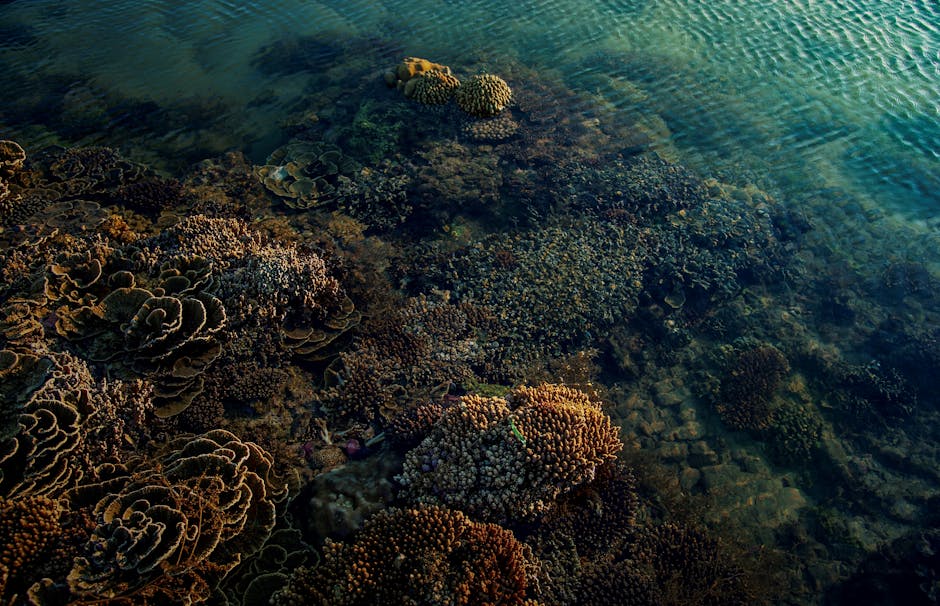

Did You Know? 15 Facts About Coral Reefs

Did You Know? 15 Facts About Coral Reefs

⏱️ 6 min read

Did You Know? 15 Fascinating Facts About Coral Reefs

Coral reefs are among the most spectacular and vital ecosystems on our planet, often referred to as the "rainforests of the sea." These underwater wonderlands support an incredible diversity of marine life and provide essential services to both oceanic ecosystems and human populations. Despite covering less than one percent of the ocean floor, coral reefs are home to approximately 25 percent of all marine species. This article explores fifteen remarkable facts about these magnificent natural structures that will deepen your appreciation for their beauty, complexity, and importance.

1. Corals Are Animals, Not Plants

One of the most common misconceptions is that corals are plants or rocks. In reality, corals are marine invertebrates belonging to the class Anthozoa within the phylum Cnidaria. Each coral structure is composed of thousands of tiny individual animals called polyps, which are related to jellyfish and sea anemones. These polyps have a soft body enclosed in a hard calcium carbonate skeleton that they secrete themselves.

2. Coral Reefs Are Ancient Ecosystems

Coral reefs have existed on Earth for approximately 500 million years, making them one of the oldest ecosystems on the planet. While individual coral colonies may live for hundreds or even thousands of years, the reef structures themselves have evolved and adapted through numerous geological periods, surviving multiple mass extinction events throughout Earth's history.

3. The Great Barrier Reef Is Visible From Space

Australia's Great Barrier Reef is the world's largest coral reef system, stretching over 2,300 kilometers along the Queensland coast. This magnificent structure is so massive that it can be seen from outer space, making it the largest living structure on Earth. The reef system comprises approximately 2,900 individual reefs and 900 islands.

4. Coral Reefs Support Over One Million Species

Despite occupying less than 0.1 percent of the ocean's surface, coral reefs support an estimated one to nine million species of fish, invertebrates, and algae. This incredible biodiversity includes approximately 4,000 species of fish, 800 species of hard corals, and countless other organisms, making reefs some of the most biodiverse ecosystems on the planet, rivaling tropical rainforests in species density.

5. Symbiotic Relationships Are Essential

Most reef-building corals have a symbiotic relationship with microscopic algae called zooxanthellae that live within their tissues. These algae perform photosynthesis and provide up to 90 percent of the coral's energy needs through the sugars they produce. In return, the coral provides the algae with protection and access to sunlight. This relationship is so vital that without these algae, most corals cannot survive.

6. Coral Reefs Grow Extremely Slowly

The formation of coral reefs is an extraordinarily slow process. Depending on the species and environmental conditions, coral reefs typically grow between 0.3 to 2 centimeters per year for branching corals and even slower for massive coral formations. Some of the large coral structures we see today may have taken thousands of years to develop to their current size.

7. Reefs Protect Coastlines From Erosion

Coral reefs serve as natural barriers that protect coastal communities from the destructive forces of waves, storms, and erosion. They absorb approximately 97 percent of wave energy, reducing the impact on shorelines. This protection becomes increasingly valuable as climate change intensifies storm activity and raises sea levels, potentially saving billions of dollars in coastal damage prevention.

8. Half a Billion People Depend on Coral Reefs

Approximately 500 million people worldwide rely directly on coral reefs for their livelihoods, food security, and coastal protection. These ecosystems support fisheries that provide protein for millions of people, generate billions of dollars in tourism revenue annually, and offer materials for medical research and pharmaceutical development.

9. Corals Reproduce in Multiple Ways

Corals have fascinating reproductive strategies, including both sexual and asexual reproduction. Many species participate in spectacular mass spawning events, where colonies simultaneously release eggs and sperm into the water, often synchronized with lunar cycles. Corals can also reproduce asexually through fragmentation, where broken pieces can develop into new colonies.

10. Coral Bleaching Is a Stress Response

When corals experience environmental stress, particularly elevated water temperatures, they expel their symbiotic zooxanthellae, causing them to turn white in a process called coral bleaching. While bleached corals are still alive, they are severely weakened and more susceptible to disease and death. If conditions improve quickly, corals can recover, but prolonged bleaching events often result in widespread mortality.

11. Deep-Sea Coral Reefs Exist in Cold Waters

Not all coral reefs are found in warm, shallow tropical waters. Deep-sea or cold-water corals thrive in dark, cold environments at depths ranging from 50 to over 3,000 meters. These corals do not rely on symbiotic algae and instead feed entirely on plankton and organic matter. These ecosystems are less studied but equally important for marine biodiversity.

12. Reefs Have Significant Medical Value

Coral reef organisms have provided numerous compounds used in medical treatments and research. Scientists have developed medications for cardiovascular diseases, cancer treatments, and pain relievers from reef organisms. The unique chemical compounds produced by reef species continue to offer promising avenues for developing new pharmaceuticals and medical treatments.

13. Climate Change Poses the Greatest Threat

Climate change represents the most significant threat to coral reefs worldwide. Rising ocean temperatures, ocean acidification, and changing weather patterns are devastating reef systems globally. Scientists estimate that without significant action to reduce greenhouse gas emissions, up to 90 percent of coral reefs could be lost by 2050, representing an unprecedented ecological catastrophe.

14. Some Corals Are Fluorescent

Many coral species exhibit remarkable fluorescence, producing vibrant colors that glow under ultraviolet light. Scientists believe these fluorescent proteins may serve multiple purposes, including protecting corals from excessive sunlight, attracting symbiotic algae, or even acting as a stress response. This phenomenon creates some of the most spectacular underwater displays in nature.

15. Coral Restoration Efforts Are Expanding

In response to global reef decline, scientists and conservation organizations have developed innovative coral restoration techniques. These include coral gardening, where fragments are grown in nurseries before being transplanted onto damaged reefs, and assisted evolution projects that aim to develop heat-resistant coral strains. While these efforts show promise, they must be combined with broader climate action to ensure long-term reef survival.

Conclusion

These fifteen facts illustrate the extraordinary nature of coral reefs and their critical importance to marine ecosystems and human societies. From their ancient origins and remarkable biodiversity to their vital role in coastal protection and medical research, coral reefs represent irreplaceable natural treasures. Understanding these fascinating facts helps us appreciate why protecting and restoring coral reefs must remain a global priority. As these ecosystems face unprecedented threats from climate change and human activities, increased awareness and urgent conservation action are essential to preserve these magnificent underwater worlds for future generations.