







1 / 10 Questions
0 Points

Which of these animals is real?

Platypus

Unicorn

Dragon

Phoenix

Points won
0
Correct score
0%

More Articles

Did You Know? 12 Predictions About the Future That Came True

Did You Know? 12 Predictions About the Future That Came True

⏱️ 6 min read

Did You Know? 12 Predictions About the Future That Came True

Throughout history, visionaries, writers, and inventors have gazed into the future and made bold predictions about what was to come. While many forecasts have missed the mark entirely, some have proven remarkably accurate. These prescient individuals imagined technologies and societal changes that seemed impossible in their time, yet have become integral parts of our modern world. From science fiction authors to pioneering scientists, their ability to anticipate the future continues to astonish us. Here are twelve extraordinary predictions that transformed from fantasy into reality.

1. Credit Cards (Edward Bellamy, 1888)

In his utopian novel "Looking Backward," Edward Bellamy described a system where people would use cards to make purchases instead of cash. Written more than a century before credit cards became commonplace, Bellamy envisioned a cashless society where citizens carried cards linked to their credit accounts. The first universal credit card appeared in 1950 with Diners Club, and today, digital payments and credit cards dominate global commerce, making Bellamy's vision a fundamental aspect of modern economic life.

2. The Internet (Nikola Tesla, 1926)

The brilliant inventor Nikola Tesla predicted a global wireless communication system that would allow people to communicate instantly across vast distances. In a 1926 interview, Tesla described a device that would fit in one's pocket and enable worldwide connectivity. His vision of a "world wireless system" remarkably foreshadowed the internet and mobile technology that emerged decades later, fundamentally transforming how humanity shares information and connects with one another.

3. Atomic Energy (H.G. Wells, 1914)

Science fiction pioneer H.G. Wells predicted the use of atomic energy in his novel "The World Set Free." Wells described atomic bombs and the release of enormous energy from splitting atoms, written three decades before the Manhattan Project. His novel even anticipated the moral dilemmas and devastating power of nuclear weapons, making it one of the most prophetic works regarding technological warfare and energy production.

4. Video Calls (AT&T Picturephone Concept, 1960s)

While video communication was imagined by many, AT&T's specific prediction in the 1960s about videophone technology becoming commonplace proved accurate. Though their initial Picturephone service failed commercially, they correctly anticipated that future generations would routinely communicate through video. Today, platforms like Zoom, FaceTime, and Skype have made video calling an everyday reality, especially accelerated by global events requiring remote communication.

5. Lunar Landing (Jules Verne, 1865)

French author Jules Verne's novel "From the Earth to the Moon" predicted numerous details about space travel with stunning accuracy. He correctly estimated the size of the space capsule, the location of the launch site in Florida, the number of crew members (three), and even the splashdown in the ocean. Written over a century before the Apollo 11 mission, Verne's mathematical calculations and scientific approach to fiction proved remarkably prescient about humanity's first journey to the moon.

6. Earbuds and Headphones (Ray Bradbury, 1953)

In his dystopian novel "Fahrenheit 451," Ray Bradbury described "little Seashells" and "thimble radios" that fit in people's ears, allowing them to listen to music and broadcasts privately. This description perfectly matches modern earbuds and Bluetooth headphones. Bradbury also noted how this technology could isolate people from their surroundings, a social commentary that remains relevant as wireless earbuds have become ubiquitous in contemporary society.

7. Tank Warfare (H.G. Wells, 1903)

H.G. Wells predicted armored combat vehicles in his short story "The Land Ironclads," published more than a decade before tanks appeared on World War I battlefields. Wells described massive, fortified vehicles that could traverse rough terrain and revolutionize warfare. His vision influenced military thinking, and by 1916, British tanks were deployed in combat, forever changing the nature of ground warfare just as Wells had imagined.

8. Solar Energy (Augustin Mouchot, 1860s)

French inventor Augustin Mouchot not only predicted that solar energy would become essential but also demonstrated early solar-powered devices. He warned that coal supplies would eventually deplete and that humanity would need to harness the sun's power. Today, solar energy represents one of the fastest-growing renewable energy sources worldwide, validating Mouchot's foresight about sustainable power generation becoming crucial for civilization's future.

9. Genetic Engineering (Aldous Huxley, 1932)

Aldous Huxley's "Brave New World" predicted genetic manipulation and designer babies long before DNA's structure was discovered. His novel explored a society where humans were genetically engineered for specific purposes. Decades later, technologies like CRISPR gene editing have made genetic modification possible, raising the same ethical questions Huxley posed about human enhancement and the consequences of controlling heredity.

10. Submarine Warfare (Jules Verne, 1870)

Jules Verne's "Twenty Thousand Leagues Under the Sea" detailed sophisticated submarine technology and underwater exploration decades before practical submarines existed. His fictional Nautilus featured electric power, advanced life support systems, and the capability for extended underwater voyages. Modern nuclear submarines mirror many of Verne's imagined features, and his vision helped inspire actual submarine development in naval engineering.

11. Smart Homes (Ray Bradbury, 1950)

Ray Bradbury's short story "There Will Come Soft Rains" depicted an automated house that controlled lighting, temperature, security, and even prepared meals without human intervention. This vision of smart home technology seemed fantastical in 1950 but accurately predicted today's IoT-enabled homes with automated systems, voice assistants, and interconnected appliances that manage household functions through intelligent programming.

12. Online Shopping and Same-Day Delivery (Arthur C. Clarke, 1960s)

Science fiction author Arthur C. Clarke predicted that people would eventually shop from home using computer networks and receive rapid delivery of goods. He envisioned a world where physical stores would become obsolete as electronic commerce dominated retail. With e-commerce giants offering same-day delivery and virtual shopping experiences, Clarke's prediction has materialized, fundamentally transforming the retail industry and consumer behavior worldwide.

Conclusion

These twelve predictions demonstrate humanity's remarkable ability to envision future possibilities through imagination, scientific reasoning, and careful observation of technological trends. From credit cards to genetic engineering, these once-fantastical concepts have become everyday realities. What makes these predictions particularly fascinating is not just their accuracy but how they influenced the very innovations they foresaw. Many scientists and inventors drew inspiration from these visionary works, turning fiction into fact. As we continue advancing technologically, today's science fiction may well become tomorrow's science fact, reminding us that the boundaries between imagination and reality are often more fluid than we realize. These prescient predictions encourage us to think boldly about our own future and consider which contemporary forecasts might seem equally obvious to future generations.
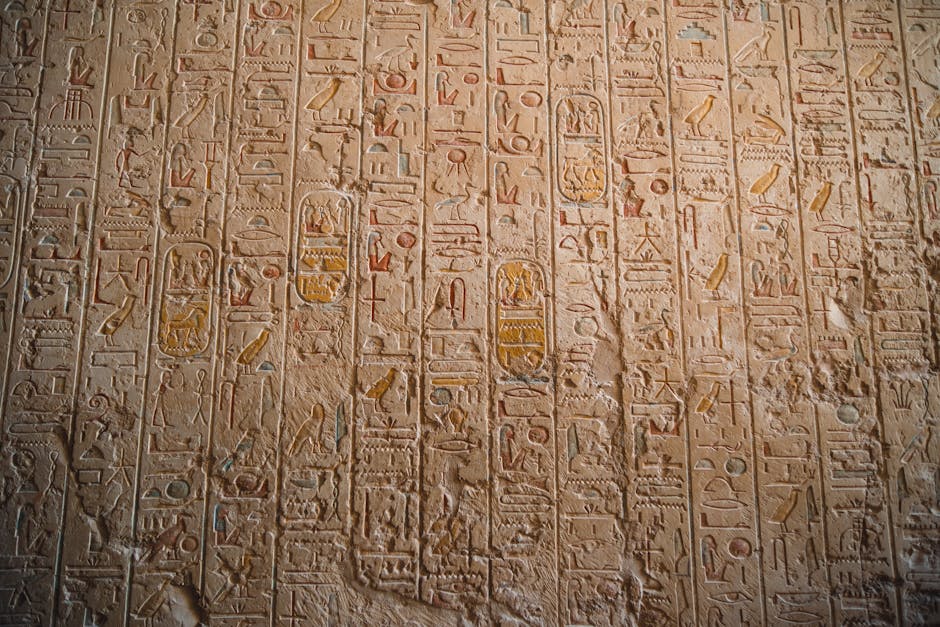

Did You Know? 12 Facts About Ancient Egypt

Did You Know? 12 Facts About Ancient Egypt

⏱️ 6 min read

Did You Know? 12 Facts About Ancient Egypt

Ancient Egypt stands as one of history's most fascinating civilizations, captivating the imagination of people worldwide for centuries. From the towering pyramids to the mysterious hieroglyphics, this remarkable society left behind a legacy that continues to influence modern culture. While many are familiar with basic facts about pharaohs and mummies, the depth of Egyptian innovation, culture, and daily life reveals a civilization far more complex and advanced than commonly understood. Here are twelve intriguing facts about Ancient Egypt that showcase the ingenuity and uniqueness of this extraordinary civilization.

1. Egyptian Workers Were Not Slaves

Contrary to popular belief, the pyramids were not built by slaves. Archaeological evidence reveals that the Great Pyramid of Giza was constructed by paid laborers who worked in rotating shifts. These workers received wages, medical care, and were even buried with honor near the pyramids they helped build. Records show they were fed well, including meat and bread, and lived in purpose-built villages near the construction sites. This challenges the long-held Hollywood depiction of enslaved masses toiling under harsh conditions.

2. Ancient Egyptians Invented Toothpaste

The ancient Egyptians were pioneers in dental hygiene, creating the world's first toothpaste around 5000 BCE. Their formula included crushed rock salt, mint, dried iris flowers, and pepper. While effective at cleaning teeth, this abrasive mixture could damage tooth enamel. They also invented breath mints made from frankincense, myrrh, and cinnamon to combat bad breath, demonstrating their concern for personal hygiene and social presentation.

3. Women Had Remarkable Rights and Status

Ancient Egyptian women enjoyed rights and freedoms that would not be matched in Western civilizations for thousands of years. Women could own property, initiate divorce, conduct business, serve as witnesses in court, and inherit assets. They could become doctors, priests, and even pharaohs. Hatshepsut, one of Egypt's most successful pharaohs, ruled for over twenty years and commissioned numerous building projects. This level of gender equality was exceptionally progressive for the ancient world.

4. They Practiced Advanced Medicine

Ancient Egyptian physicians were remarkably skilled, with specialized doctors focusing on specific body parts or ailments. They performed complex surgeries, including brain surgery, and used antibiotics derived from moldy bread to treat infections. Medical papyri reveal detailed knowledge of anatomy, likely gained through mummification practices. They created splints, used sutures, and understood the importance of setting broken bones properly. Their medical knowledge was so respected that Greek physicians traveled to Egypt to study.

5. Children Wore Unusual Hairstyles

Egyptian children, both boys and girls, had their heads shaved except for a single long braid worn on the side of the head. This distinctive hairstyle, called the "side-lock of youth," served practical purposes in the hot climate and helped prevent lice infestations. Once children reached puberty, the braid was ceremonially cut off, marking their transition into adulthood. Adults typically wore wigs made from human hair or plant fibers for special occasions.

6. The Pyramids Were Originally White and Shiny

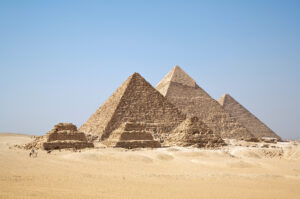
The pyramids we see today as sandy stone structures were once dramatically different in appearance. Originally, they were covered in highly polished white limestone casing stones that reflected the sun's light, making them shine brilliantly and visible from great distances. The pyramid's capstone was often covered in gold or electrum. Over centuries, earthquakes and stone robbers removed most of these outer casings, which were repurposed for other building projects in Cairo.

7. Egyptians Made Peace Treaties

The ancient Egyptians were diplomatic as well as militaristic. The Treaty of Kadesh, signed around 1259 BCE between Egyptian Pharaoh Ramesses II and Hittite King Hattusili III, is the oldest known surviving peace treaty in world history. Copies were written in both Egyptian hieroglyphics and Akkadian cuneiform. A reproduction of this treaty hangs in the United Nations headquarters, symbolizing humanity's long history of seeking peaceful resolutions to conflicts.

8. They Invented a Form of Bowling

Ancient Egyptians enjoyed leisure activities, including an early version of bowling. Archaeological discoveries in Egyptian tombs dating to 3200 BCE revealed rooms with lanes and balls, suggesting a game similar to modern bowling. They also played board games, with Senet being the most popular. These games were not merely entertainment; they held religious significance and were believed to influence one's journey in the afterlife.

9. Egyptian Makeup Served Multiple Purposes

The iconic eye makeup worn by ancient Egyptians was not purely cosmetic. Both men and women wore thick eyeliner made from malachite (green) and galena (black). Modern analysis reveals these cosmetics contained lead-based compounds that actually helped prevent eye infections by boosting immune response. The dark makeup also reduced sun glare, functioning like modern sunglasses in the harsh desert environment.

10. They Used Antibiotics Before Modern Medicine

Ancient Egyptians unknowingly used antibiotics thousands of years before Alexander Fleming discovered penicillin. They applied moldy bread to infected wounds, and the naturally occurring penicillin in the bread mold helped fight bacterial infections. They also used honey, which has natural antibacterial properties, to treat wounds and promote healing. This practical medical knowledge was preserved in their extensive medical texts.

11. Cleopatra Was Not Egyptian by Blood

Cleopatra VII, Egypt's most famous queen, was actually of Macedonian Greek descent. She belonged to the Ptolemaic dynasty, which began when Ptolemy I, one of Alexander the Great's generals, took control of Egypt after Alexander's death. Despite this heritage, Cleopatra was the first in her dynasty to learn the Egyptian language and embraced Egyptian culture and religion, positioning herself as the reincarnation of the goddess Isis.

12. Ancient Egyptians Loved Their Pets

Egyptians were devoted pet owners who kept cats, dogs, monkeys, gazelles, and even baboons as companions. Cats were especially revered, associated with the goddess Bastet. When a pet cat died, family members would shave their eyebrows in mourning. Pets were often mummified and buried with their owners or in dedicated animal cemeteries. Killing a cat, even accidentally, could result in the death penalty, demonstrating the sacred status these animals held in Egyptian society.

Conclusion

These twelve facts reveal that ancient Egypt was far more than pyramids and pharaohs. This civilization demonstrated remarkable advances in medicine, engineering, social structure, and daily life that were revolutionary for their time. From progressive women's rights to advanced medical procedures, from diplomatic peace treaties to beloved household pets, the ancient Egyptians created a sophisticated society that laid foundations for many aspects of modern civilization. Their innovations in hygiene, entertainment, cosmetics, and governance show a people deeply concerned with quality of life, both in the present world and the afterlife. Understanding these lesser-known facts helps us appreciate the complexity and humanity of this ancient civilization, reminding us that the people of ancient Egypt were innovative thinkers who continue to influence our world thousands of years after their civilization flourished along the Nile.