





1 / 10 Questions
0 Points

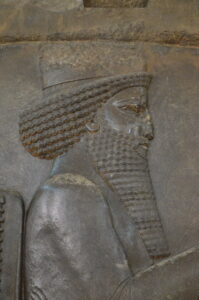
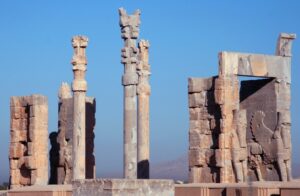
Which Persian king freed the Jews from Babylonian captivity?

Xerxes I

Artaxerxes II

Darius III

Cyrus the Great

Points won
0
Correct score
0%

More Articles

Did You Know? 10 Film Locations You Can Visit Today

Did You Know? 10 Film Locations You Can Visit Today

⏱️ 6 min read

Did You Know? 10 Film Locations You Can Visit Today

The magic of cinema often transports audiences to extraordinary places, from fantastical worlds to breathtaking real-world destinations. While some movie settings are created entirely on soundstages, many iconic scenes were filmed at actual locations that fans can visit today. These sites offer movie enthusiasts the unique opportunity to walk in the footsteps of their favorite characters and experience the atmosphere that made these films unforgettable. From grand architectural landmarks to remote natural wonders, here are ten remarkable film locations that remain accessible to visitors around the world.

1. The Grand Budapest Hotel - Görlitz, Germany

Wes Anderson's visually stunning masterpiece "The Grand Budapest Hotel" utilized the charming German town of Görlitz as its primary filming location. The town's Görlitzer Warenhaus, a beautifully preserved Art Nouveau department store, served as the hotel's iconic lobby. Visitors can explore this architectural gem and wander through the cobblestone streets that provided the backdrop for this Academy Award-winning film. The entire town maintains its historic character, making it feel like stepping directly into Anderson's meticulously crafted world.

2. Hobbiton - Matamata, New Zealand

Perhaps one of the most beloved film locations in recent decades, Hobbiton from "The Lord of the Rings" and "The Hobbit" trilogies remains a fully preserved movie set in the lush farmland of New Zealand's North Island. The Hobbit holes built into the hillside, the Party Tree, and the Green Dragon Inn are all maintained as permanent fixtures. Visitors can take guided tours through the Shire, experiencing the same magical landscape that Frodo and Bilbo called home. The attention to detail, from the gardens to the authentic-looking doors, makes this location a must-visit for Tolkien fans.

3. Skellig Michael - County Kerry, Ireland

This dramatic rocky island off Ireland's southwestern coast gained renewed fame as the location of Luke Skywalker's exile in "Star Wars: The Force Awakens" and "The Last Jedi." However, Skellig Michael's appeal extends far beyond its cinematic role. The island features an ancient monastery dating back to the 6th century, with stone beehive huts perched precariously on the cliff edge. Access is limited and weather-dependent, making a successful visit all the more rewarding. The challenging climb of over 600 steps leads to one of the most spectacular and spiritually significant sites in Ireland.

4. Platform 9¾ - King's Cross Station, London, England

Harry Potter fans flock to London's King's Cross Station to visit the famous Platform 9¾, where young wizards board the Hogwarts Express. While the actual filming took place between platforms 4 and 5, the station has installed a permanent photo opportunity complete with a luggage trolley seemingly disappearing into the wall. A dedicated Harry Potter shop sits adjacent to the platform, offering official merchandise. The station itself maintains its Victorian grandeur and serves as a gateway to exploring other Potter-related locations throughout London.

5. The Trevi Fountain - Rome, Italy

This baroque masterpiece achieved cinematic immortality in Federico Fellini's "La Dolce Vita," particularly in the iconic scene featuring Anita Ekberg wading into its waters. The fountain remains one of Rome's most visited attractions, where tourists can toss coins and admire the intricate sculptural work depicting Neptune and his sea horses. While wading into the fountain is now prohibited and heavily fined, visitors can still experience the romance and grandeur that made this location perfect for one of cinema's most memorable moments.

6. The Monastery of Montserrat - Barcelona, Spain

The spectacular mountain monastery of Montserrat provided inspiration and filming locations for the Holy Grail castle in "Monty Python and the Holy Grail." Perched high in the Catalan mountains, this working monastery features stunning views, religious artifacts, and hiking trails through otherworldly rock formations. Visitors can reach the monastery by cable car or rack railway, both offering spectacular vistas. The site combines spiritual significance with natural beauty and comedic film history in a truly unique way.

7. Central Park - New York City, USA

Perhaps no location has appeared in more films than New York's Central Park, featuring in countless productions from "When Harry Met Sally" to "The Avengers." Visitors can locate specific filming sites including Bethesda Terrace, Bow Bridge, and the Mall, each recognizable from numerous beloved films. The park offers free access year-round, allowing movie fans to recreate iconic scenes or simply enjoy the same landscapes that have provided backdrops for romance, action, and drama across decades of cinema. Guided movie location tours are available for those wanting to explore the park's extensive film history.

8. Petra - Jordan

The ancient Nabataean city of Petra gained worldwide recognition when it appeared as the location of the Holy Grail in "Indiana Jones and the Last Crusade." The Treasury, carved directly into rose-colored rock faces, is one of the world's most stunning archaeological sites. Visitors can explore the extensive ancient city, including temples, tombs, and the monastery, all carved into the desert cliffs. The journey through the narrow Siq canyon leading to the Treasury recreates the sense of discovery that made the film sequence so memorable.

9. The American Museum of Natural History - New York City, USA

This world-renowned institution served as the primary setting for the "Night at the Museum" franchise. Visitors can explore the actual halls where Ben Stiller's character worked, including the iconic dinosaur exhibits and the Hall of African Mammals. While the exhibits don't actually come to life after dark, the museum offers special overnight programs for children. The grandeur and extensive collections that made it perfect for the films make it equally compelling for regular visitors interested in natural history and cinema alike.

10. Alnwick Castle - Northumberland, England

This medieval castle doubled as Hogwarts in several Harry Potter films, particularly for the outdoor scenes of Harry's first flying lessons. Beyond its film credentials, Alnwick Castle is Britain's second-largest inhabited castle and has been home to the Percy family for over 700 years. Visitors can take broomstick training lessons on the same courtyard where Harry and his classmates learned to fly, explore the State Rooms, and wander the extensive gardens. The castle continues to be used as a filming location for various productions while remaining open to the public.

Conclusion

These ten remarkable locations demonstrate how film and reality intersect, creating destinations that hold significance both as cultural landmarks and as portals into beloved cinematic worlds. Whether exploring ancient archaeological sites that doubled as fictional treasure locations, wandering through preserved movie sets, or visiting working institutions that served as backdrops for fantasy adventures, these destinations offer something beyond typical tourism. They provide tangible connections to the stories and characters that have entertained and inspired audiences worldwide. For film enthusiasts and travelers alike, visiting these locations offers the rare opportunity to step from the audience into the frame, experiencing firsthand the places where movie magic was made.

Did You Know? 12 Amazing Facts About Space Exploration

Did You Know? 12 Amazing Facts About Space Exploration

⏱️ 6 min read

Did You Know? 12 Amazing Facts About Space Exploration

Space exploration has captivated humanity for decades, pushing the boundaries of what we thought possible and revealing the mysteries of the cosmos. From the first satellite launch to plans for Mars colonization, our journey into space has been filled with remarkable achievements and surprising discoveries. Here are twelve amazing facts about space exploration that showcase the ingenuity, perseverance, and curiosity that drive us to explore the final frontier.

1. The First Human-Made Object in Space Was Launched by the Soviet Union

On October 4, 1957, the Soviet Union launched Sputnik 1, the first artificial satellite to orbit Earth. This beach ball-sized sphere, weighing just 83.6 kilograms, transmitted radio signals back to Earth for three weeks before its batteries died. Sputnik 1 remained in orbit for three months before burning up in Earth's atmosphere. This historic launch marked the beginning of the Space Age and sparked the intense space race between the United States and the Soviet Union.

2. Footprints on the Moon Will Last Millions of Years

The footprints left by Apollo astronauts on the lunar surface will remain virtually unchanged for millions of years. Unlike Earth, the Moon has no atmosphere, meaning there is no wind or water erosion to disturb these marks. Only micrometeorite impacts and the effects of solar radiation will gradually alter them over astronomical timescales, making these human impressions some of the longest-lasting artifacts ever created.

3. The International Space Station Travels at 28,000 Kilometers Per Hour

The International Space Station orbits Earth at an astounding speed of approximately 28,000 kilometers per hour, or about 17,500 miles per hour. At this velocity, the ISS completes a full orbit around Earth every 90 minutes, meaning astronauts aboard experience roughly 16 sunrises and sunsets every 24 hours. This incredible speed is necessary to maintain orbit and counteract Earth's gravitational pull.

4. Astronauts Grow Taller in Space

Without the constant pull of gravity compressing their spines, astronauts can grow up to 5 centimeters taller during extended stays in space. The intervertebral discs in the spine expand in the microgravity environment, causing this temporary height increase. However, astronauts return to their normal height shortly after returning to Earth, as gravity once again compresses their spines.

5. More Than 500 People Have Traveled to Space

Since Yuri Gagarin became the first human in space in 1961, more than 500 people from over 40 countries have traveled beyond Earth's atmosphere. This includes astronauts, cosmonauts, and space tourists. The increasing accessibility of space travel, with commercial spaceflight companies entering the field, suggests this number will grow significantly in the coming decades.

6. The Hubble Space Telescope Has Made Over 1.5 Million Observations

Since its launch in 1990, the Hubble Space Telescope has revolutionized our understanding of the universe by making more than 1.5 million observations. It has captured breathtaking images of distant galaxies, nebulae, and planets, helping scientists determine the age of the universe, discover dark energy, and observe the formation of stars. Hubble orbits Earth at an altitude of about 547 kilometers and continues to provide invaluable data to astronomers worldwide.

7. Venus Has Been Visited by More Spacecraft Than Any Other Planet

Surprisingly, Venus, not Mars, holds the record for the most spacecraft visits from Earth. More than 40 spacecraft have explored Venus since the early 1960s, including Soviet Venera missions that successfully landed probes on its hostile surface. Despite surface temperatures hot enough to melt lead and atmospheric pressure 90 times greater than Earth's, these missions have provided crucial information about our neighboring planet.

8. The Longest Single Spaceflight Lasted 437 Days

Russian cosmonaut Valeri Polyakov holds the record for the longest single spaceflight, spending 437 consecutive days aboard the Mir space station from January 1994 to March 1995. This mission provided valuable data about the long-term effects of spaceflight on the human body, information that remains crucial for planning future missions to Mars and other distant destinations.

9. Space Suits Cost Approximately 12 Million Dollars

Modern space suits are marvels of engineering that cost around 12 million dollars each to produce. These complex garments must protect astronauts from extreme temperatures ranging from minus 156 degrees Celsius in shade to 121 degrees Celsius in sunlight, provide oxygen, remove carbon dioxide, maintain pressure, and shield against radiation and micrometeorite impacts. The suits are essentially miniature spacecraft designed for human occupancy.

10. Voyager 1 Is the Most Distant Human-Made Object

Launched in 1977, Voyager 1 is currently more than 23 billion kilometers from Earth, making it the most distant human-made object in existence. It entered interstellar space in 2012, becoming the first spacecraft to leave our solar system. Despite its incredible distance, Voyager 1 still communicates with Earth, though its signals take over 21 hours to reach us. The spacecraft carries a golden record containing sounds and images of Earth, intended for any intelligent life that might encounter it.

11. Space Smells Like Burnt Steak and Hot Metal

Astronauts who have performed spacewalks report that space has a distinctive smell, often described as similar to burnt steak, hot metal, or welding fumes. This odor clings to their space suits and equipment when they return from extravehicular activities. Scientists believe this smell comes from dying stars and the byproducts of high-energy vibrations in particles brought back into the airlock.

12. China Landed on the Far Side of the Moon

In January 2019, China's Chang'e 4 mission achieved a historic first by successfully landing a spacecraft on the far side of the Moon, the hemisphere that never faces Earth. This remarkable achievement required the deployment of a relay satellite to maintain communication with Earth, as direct communication with the far side is impossible. The mission has provided unprecedented insights into this mysterious region of our closest celestial neighbor.

Conclusion

These twelve amazing facts about space exploration demonstrate humanity's remarkable progress in understanding and venturing into the cosmos. From the early days of Sputnik to modern achievements like landing on the Moon's far side, space exploration continues to push technological boundaries and expand our knowledge of the universe. As commercial spaceflight develops and plans for Mars missions advance, the next decades promise even more extraordinary achievements and discoveries. The ongoing exploration of space not only satisfies our innate curiosity but also drives innovation, international cooperation, and inspires future generations to reach for the stars.