


















1 / 20 Questions
0 Points

What color is the universal symbol for biohazard?

Red

Yellow

Orange

Black

Points won
0
Correct score
0%

More Articles

Did You Know? 15 Facts About Streaming Platforms

Did You Know? 15 Facts About Streaming Platforms

⏱️ 5 min read

Did You Know? 15 Facts About Streaming Platforms

Streaming platforms have revolutionized the entertainment industry, transforming how millions of people consume movies, television shows, music, and other digital content. From the early days of buffering videos to today's sophisticated recommendation algorithms, these services have become an integral part of modern life. Whether you're a casual viewer or a dedicated binge-watcher, there's always something new to learn about the streaming world. Here are 15 fascinating facts about streaming platforms that might surprise you.

1. Netflix Started as a DVD Rental Service

Before becoming the streaming giant we know today, Netflix was founded in 1997 as a DVD-by-mail rental service. The company didn't launch its streaming service until 2007, a full decade after its inception. This pivot to streaming would eventually redefine the entire entertainment industry and make Netflix a household name worldwide.

2. The Term "Binge-Watching" Became Popular Thanks to Streaming

While people have always been capable of watching multiple episodes consecutively, the term "binge-watching" gained mainstream popularity with the rise of streaming platforms. Netflix's decision to release entire seasons at once, starting with "House of Cards" in 2013, accelerated this cultural phenomenon and changed viewing habits forever.

3. Streaming Platforms Use Massive Amounts of Internet Bandwidth

Video streaming accounts for a significant portion of global internet traffic. Netflix alone has been reported to consume up to 15% of worldwide bandwidth at peak times. During the COVID-19 pandemic, streaming services temporarily reduced video quality in some regions to prevent internet infrastructure from becoming overwhelmed.

4. Recommendation Algorithms Are Worth Billions

Netflix has stated that its recommendation algorithm is worth approximately $1 billion annually in customer retention. These sophisticated systems analyze viewing habits, ratings, and even the time of day you watch to suggest content tailored to individual preferences, keeping subscribers engaged and reducing cancellation rates.

5. Disney+ Reached 50 Million Subscribers in Just Five Months

When Disney+ launched in November 2019, it achieved remarkable growth, reaching 50 million subscribers within five months. This feat took Netflix seven years to accomplish, demonstrating the power of established brand recognition and beloved intellectual properties in the streaming wars.

6. Streaming Services Produce Award-Winning Original Content

Streaming platforms have legitimized themselves in the entertainment industry by producing critically acclaimed original content. Netflix's "Roma" became the first streaming film to win the Academy Award for Best Foreign Language Film in 2019, while Amazon Prime's "The Marvelous Mrs. Maisel" and Apple TV+'s "Ted Lasso" have collected numerous Emmy Awards.

7. The Average Household Subscribes to Multiple Platforms

Research indicates that the average streaming household in the United States subscribes to approximately four different streaming services. This fragmentation of content across platforms has led some to call the phenomenon "subscription fatigue," as consumers struggle to manage multiple monthly payments and navigate different interfaces.

8. Streaming Has Changed Production Schedules

Traditional television followed a weekly release schedule, but streaming platforms experimented with various release strategies. While Netflix popularized the all-at-once model, services like Disney+ and Apple TV+ have returned to weekly releases for some shows to maintain subscriber engagement and generate sustained social media buzz.

9. Global Content Has Found New Audiences

Streaming platforms have made international content more accessible than ever before. Shows like "Squid Game" from South Korea, "Money Heist" from Spain, and "Lupin" from France have become global phenomena, breaking down language barriers and introducing audiences to diverse storytelling traditions.

10. Streaming Platforms Invest Billions in Content

The competition for subscribers has led to astronomical content budgets. Netflix reportedly spent over $17 billion on content in 2021, while Amazon, Apple, and Disney have committed similar massive investments. This arms race for quality programming shows no signs of slowing down.

11. Password Sharing Is a Multi-Billion Dollar Issue

Password sharing has become a significant concern for streaming services. Estimates suggest that Netflix alone loses billions in potential revenue from shared accounts. In response, platforms have begun implementing measures to crack down on sharing while trying not to alienate their user base.

12. Streaming Has Disrupted Traditional Television Ratings

The traditional Nielsen ratings system struggled to accurately measure streaming viewership initially. Streaming platforms often keep their viewing numbers private, releasing selective data only when it serves their interests. This opacity has changed how success is measured in the entertainment industry.

13. Live Sports Are Becoming a Streaming Battleground

Live sports represent the next frontier for streaming platforms. Services like Amazon Prime Video have secured exclusive rights to NFL Thursday Night Football, while Apple TV+ broadcasts Major League Baseball and Major League Soccer games. This shift threatens traditional cable television's last major stronghold.

14. The Technology Behind Streaming Is Constantly Evolving

Streaming platforms continuously improve their technology to deliver better quality with less bandwidth. Innovations in compression algorithms, adaptive bitrate streaming, and content delivery networks ensure smoother playback across varying internet speeds and devices, from smartphones to 4K televisions.

15. Ad-Supported Tiers Are Making a Comeback

After years of promoting ad-free viewing experiences, major streaming platforms are now introducing cheaper, ad-supported subscription tiers. Netflix, Disney+, and HBO Max have all launched or announced plans for advertising-supported options, acknowledging that not all consumers are willing to pay premium prices for ad-free content.

Conclusion

These 15 facts demonstrate how streaming platforms have fundamentally transformed the entertainment landscape in just a few short years. From changing how content is produced and distributed to influencing global culture and viewing habits, streaming services continue to evolve and shape the future of entertainment. As technology advances and competition intensifies, we can expect even more innovations and surprises from these platforms. Whether it's through improved personalization, enhanced viewing experiences, or groundbreaking original content, streaming services will undoubtedly continue to dominate our entertainment choices for years to come. Understanding these facts helps us appreciate not just what we watch, but how the entire ecosystem of modern entertainment operates behind the scenes.

Top 10 Fun Facts About the Film Editing Process

Top 10 Fun Facts About the Film Editing Process

⏱️ 7 min read

Top 10 Fun Facts About the Film Editing Process

Film editing is often called the "invisible art" of cinema—when done well, audiences never notice it, yet it's crucial to every great movie. Editors shape raw footage into compelling narratives, control pacing, build tension, and can even save troubled productions. While directors and actors typically receive most of the glory, editors work their magic behind the scenes, transforming hours of footage into cinematic masterpieces. Here are ten fascinating facts about the film editing process that reveal just how essential and intriguing this craft truly is.

1. Early Films Were Edited by Hand with Scissors and Glue

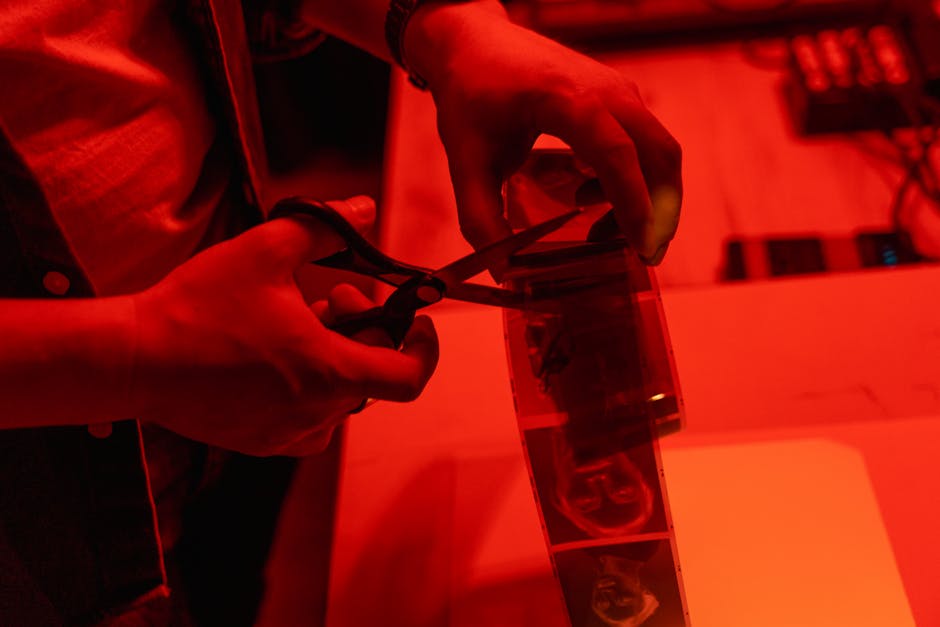
Before digital technology revolutionized the industry, film editors literally cut and spliced physical film strips. Using scissors or razor blades, editors would cut the celluloid film at precise frames and join pieces together with tape or cement. This painstaking process required extraordinary precision, as a cut just one frame off could disrupt the flow. Editors worked with reels of film hanging from bins and racks, manually threading footage through viewing machines called Moviolas. One wrong cut could permanently damage irreplaceable footage, making the job incredibly high-pressure. This tactile, hands-on approach to editing persisted for nearly a century until digital editing systems emerged in the 1990s.

2. The Average Feature Film Ratio is 20:1

For every minute that appears in the final cut of a film, approximately twenty minutes of footage are typically shot. This means a standard two-hour movie might be culled from forty or more hours of raw footage. Some directors shoot even more liberally—Stanley Kubrick was famous for demanding dozens of takes, creating massive amounts of material for his editors to sift through. This extensive shooting ratio gives editors enormous creative freedom but also presents a daunting challenge: finding the best performances, angles, and moments buried within mountains of footage. The editing process becomes as much about what to leave out as what to include.

3. Editors Can Completely Change a Film's Genre

The editing room holds remarkable power to transform a film's tone and genre entirely. The same footage can be cut as a drama, comedy, or thriller depending on pacing, music, and shot selection. A famous example is the fan-made recut of "The Shining" as a heartwarming family comedy, which demonstrates how editing shapes perception. Professional editors have rescued comedies from drama footage and vice versa. Test screenings sometimes reveal that a film isn't working in its intended genre, prompting editors to reimagine the entire approach. This transformative power makes editing one of the most creative stages of filmmaking, where a movie's true identity often emerges.

4. The "Kuleshov Effect" Proves Editing Creates Meaning

Soviet filmmaker Lev Kuleshov conducted a famous experiment in the 1910s that revealed how editing generates meaning. He intercut the same neutral shot of an actor's face with different images: a bowl of soup, a girl in a coffin, and a woman on a couch. Audiences praised the actor's nuanced expressions of hunger, grief, and desire—even though his expression never changed. The meaning came entirely from the juxtaposition of shots, not the performance itself. This "Kuleshov Effect" remains fundamental to film editing theory, demonstrating that the relationship between shots creates emotion and narrative. Editors leverage this principle constantly, crafting meaning through strategic shot combinations rather than relying solely on what was filmed.

5. Many Famous Directors Started as Editors

Some of cinema's most acclaimed directors honed their storytelling skills in the editing room before calling "action" on set. James Cameron edited "Piranha II" before directing "The Terminator." David Fincher worked as an editor and visual effects producer before helming "Seven." The Coen Brothers continue to edit their own films under the pseudonym "Roderick Jaynes." Robert Wise edited "Citizen Kane" before becoming a director. This career path makes sense—editing teaches filmmakers about pacing, structure, performance, and visual storytelling from an intimate perspective. Directors with editing experience often shoot more efficiently because they understand exactly what they'll need in post-production.

6. Editing Determines a Film's Rhythm and Pace

Beyond simply assembling scenes in order, editors function as the film's rhythmic architects. The length of each shot, the timing of cuts, and the pattern of edits create a subconscious tempo that audiences feel viscerally. Action sequences typically feature rapid cuts—sometimes changing shots multiple times per second—to generate excitement and urgency. Contemplative dramas employ longer takes and fewer cuts to allow moments to breathe. Master editors like Thelma Schoonmaker and Walter Murch describe their work almost musically, discussing the "beat" of a scene. Even within a single sequence, varying the editing rhythm can guide audience attention and emotion, accelerating during tense moments and slowing for emotional beats.

7. Continuity Errors Are Edited Around Constantly

During filming, countless continuity mistakes occur—actors' positions shift between takes, props move, wardrobe changes, and backgrounds differ. Editors spend considerable time finding creative solutions to these problems, often making cuts at strategic moments to hide discontinuities. They might use cutaway shots, change angles, or slightly adjust timing to mask errors. Sometimes editors request additional footage or "pickup shots" to bridge problematic transitions. The most skilled editors make these corrections invisibly, maintaining the illusion of continuous action even when shots were filmed hours or days apart. Remarkably, many "seamless" scenes that feel like single takes are actually dozens of shots cleverly stitched together to hide production imperfections.

8. The First Edit is Called the "Assembly Cut" or "Rough Cut"

The editing process follows several distinct stages, beginning with the assembly cut. This first version strings together all selected takes in script order without fine-tuning, often running significantly longer than the intended final length. Next comes the rough cut, where editors refine pacing and structure but haven't perfected every transition. The fine cut represents near-final form with polished timing and transitions. Finally, the final cut incorporates music, sound effects, color correction, and visual effects. Major studio films might go through ten or more complete revisions before locking the picture. This iterative process allows filmmakers to experiment, test different approaches, and gradually discover the best version of their story.

9. Sound Design Happens Simultaneously with Picture Editing

While editors work on visuals, sound editors create equally complex audio landscapes. However, picture editors often use temporary sound effects and music—called "temp tracks"—to establish mood during the editing process. These temporary elements help everyone visualize the final product, but they can create problems. Directors and studios sometimes become attached to temp music, making it difficult for composers to satisfy expectations with original scores. Additionally, picture editors make critical decisions about sound pacing—when dialogue should overlap, where silence creates impact, and how sound effects will synchronize with action. The collaboration between picture and sound editors ultimately determines the film's sensory totality.

10. Editing Can Save or Sink a Film

Post-production editing has rescued numerous troubled films and occasionally doomed otherwise solid projects. "Star Wars" became a cultural phenomenon partly because editor Marcia Lucas restructured the film's opening and improved its pacing dramatically—work that earned her an Academy Award. Conversely, studio-mandated re-edits have ruined films by removing essential context or disrupting narrative flow. Test screenings during the editing process can prompt major overhauls, including reshooting endings, eliminating characters, or completely reordering scenes. Some films remain in editing for over a year as filmmakers search for the right version. This extended creative phase represents the final opportunity to shape a film's destiny, making editors the last line of defense between a production and its audience.

Conclusion

Film editing represents a unique blend of technical skill, artistic vision, and storytelling intuition. From the physical cutting of celluloid strips to modern digital timelines, editors have always served as essential collaborators in the filmmaking process. These ten facts only scratch the surface of this complex craft—a discipline that can transform genres, create meaning through juxtaposition, establish rhythm, and ultimately determine whether a film succeeds or fails. The next time you watch a movie, pay attention to the cuts, the pacing, and the flow between scenes. You'll gain newfound appreciation for the invisible artists who shape the stories we love, one frame at a time. Great editing may go unnoticed, but cinema simply couldn't exist without it.