
⏱️ 6 min read
Top 10 Fun Facts About the Film Editing Process
Film editing is often described as the invisible art of cinema. While audiences marvel at stunning cinematography and powerful performances, the magic that happens in the editing room often goes unnoticed. Yet, editing is where films truly come to life, transforming hours of raw footage into cohesive, emotionally resonant stories. The editing process has evolved dramatically since cinema’s earliest days, developing its own fascinating history, techniques, and quirks. Here are ten compelling facts about film editing that reveal the complexity and creativity behind this essential craft.
1. Film Editing Was Invented by Accident
The concept of film editing emerged almost by chance in the late 1890s. According to cinema lore, pioneering filmmaker Georges Méliès discovered editing when his camera jammed while filming a Paris street scene. After fixing the camera and continuing to shoot, he later noticed that the developed film showed a bus transforming into a hearse. This accident revealed the potential for manipulating time and space through cuts, revolutionizing storytelling possibilities and giving birth to editing as we know it today.
2. The First Film Editors Were Women
In Hollywood’s early days, editing was considered clerical work, similar to sewing or threading, which led studios to assign it predominantly to women. Pioneering editors like Margaret Booth, Anne Bauchens, and Dorothy Arzner became industry titans, with some enjoying careers spanning decades. This gender dynamic shifted as editing gained recognition as a creative art form, though the field has seen renewed efforts toward gender balance in recent years.
3. Editors Use More Than 20 Hours of Footage for Every Minute of Film
The shooting ratio in modern filmmaking can be staggering. For every minute that appears in the final cut, editors may sift through twenty to fifty minutes of raw footage, sometimes even more. Action sequences and improvisational scenes can generate shooting ratios exceeding 100:1. This means that for a typical two-hour feature film, editors might review and organize between 240 to 600 hours of material, making their job as much about organization and decision-making as creative vision.
4. The “Kuleshov Effect” Proves Editing Creates Meaning
Soviet filmmaker Lev Kuleshov conducted groundbreaking experiments in the 1910s and 1920s that demonstrated how editing creates meaning. He intercut identical shots of an actor’s neutral expression with images of soup, a child in a coffin, and an attractive woman. Audiences praised the actor’s nuanced performance, perceiving hunger, grief, and desire respectively, even though the facial expression never changed. This phenomenon, now called the Kuleshov Effect, proves that meaning in film comes not from individual shots but from their juxtaposition.
5. Digital Editing Replaced Physical Film Cutting Only Recently
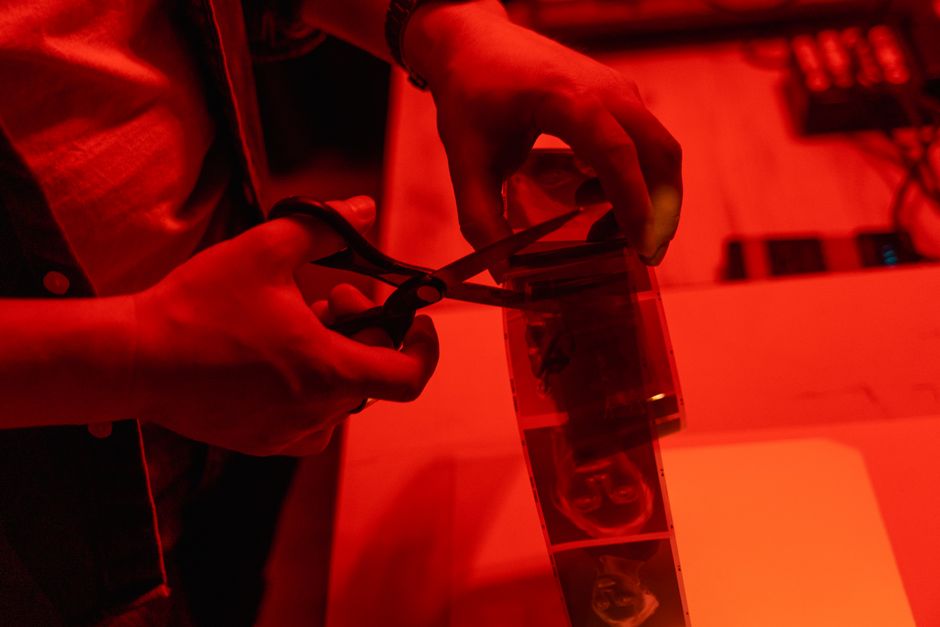
For most of cinema history, editing meant physically cutting celluloid film with razor blades and joining pieces with tape or cement. Editors worked with massive machines called Moviolas or flatbed editors, handling fragile film strips in darkened rooms. Digital non-linear editing systems only became industry standard in the late 1990s and early 2000s. The transition was remarkably quick; within a decade, practices that had existed for nearly a century became obsolete, though some filmmakers still prefer working with physical film.
6. Walter Murch Edited “Apocalypse Now” Without Seeing Most Footage First
Legendary editor Walter Murch employed an unconventional approach when editing Francis Ford Coppola’s “Apocalypse Now.” Rather than screening all 230 hours of footage, Murch listened to the audio tracks first, making selections based purely on sound quality and performance. He then examined only those selected takes visually. This audio-first methodology allowed him to focus on the emotional authenticity of performances without being influenced by visual distractions, revolutionizing editorial approaches.
7. The Average Hollywood Film Contains Between 1,000 and 2,000 Cuts
Modern feature films are heavily edited, with the average Hollywood production containing between 1,000 and 2,000 individual cuts. Action films and thrillers often far exceed this, with some containing over 3,000 cuts. For comparison, Alfred Hitchcock’s “Rope” (1948) was designed to appear as one continuous shot with only eleven cuts hidden by passing objects. This evolution reflects changing audience expectations and attention spans, as well as different storytelling philosophies across cinema history.
8. Editors Often Create Temporary Music Tracks Called “Temp Scores”
During the editing process, editors frequently add temporary music from existing films or commercial recordings to help establish pacing, emotion, and rhythm. These “temp scores” help filmmakers visualize the final product before the actual score is composed. However, this practice can create problems when directors become attached to temp music, sometimes requesting composers replicate existing works. Many famous film scores were influenced—sometimes controversially—by temp tracks that editors selected during post-production.
9. Some of Cinema’s Greatest Moments Were Created in the Editing Room
Numerous iconic movie moments were constructed during editing rather than on set. The shower scene in “Psycho” consists of 78 camera setups and 52 cuts compressed into 45 seconds of screen time. The famous baptism-assassination montage in “The Godfather” intercuts footage shot weeks apart. “Star Wars” was famously “saved” in the editing room, with editor Marcia Lucas and others restructuring the narrative and creating the film’s driving pace. These examples demonstrate that editing is not merely assembly but a form of filmmaking in itself.
10. Professional Film Editors Develop a Unique Psychological Skill Set
Film editing requires extraordinary patience, attention to detail, and the ability to maintain objectivity about material viewed hundreds of times. Editors must balance collaboration with directors while offering honest creative input, navigate studio politics, and sometimes work 14-hour days for months. They develop an almost musical sense of rhythm and timing, knowing instinctively when a shot should last two seconds versus three. This combination of technical expertise, artistic sensitivity, and emotional intelligence makes editing one of cinema’s most demanding yet rewarding crafts.
Conclusion
These ten facts reveal that film editing is far more complex and creative than simply cutting scenes together. From its accidental invention to the psychological demands it places on practitioners, editing has evolved into a sophisticated art form that fundamentally shapes how audiences experience stories. Whether working with razor blades and celluloid or digital timelines and software, editors remain the invisible architects of cinema, crafting the rhythm, emotion, and meaning that make movies memorable. The next time you watch a film, consider the countless decisions made in the editing room—decisions that guide your emotions, control your attention, and ultimately determine whether a collection of images becomes a masterpiece or fades into obscurity.
