


















1 / 20 Questions
0 Points

Who was the first Roman Emperor?

Julius Caesar

Augustus

Nero

Constantine

Points won
0
Correct score
0%

More Articles

Top 10 Great Women Who Changed History

Top 10 Great Women Who Changed History

⏱️ 7 min read

Top 10 Great Women Who Changed History

Throughout human history, remarkable women have shattered barriers, challenged conventions, and fundamentally transformed the world we live in today. Despite facing systemic discrimination and limited opportunities, these trailblazers made indelible marks in science, politics, civil rights, literature, and social reform. Their courage, intelligence, and determination not only changed their own circumstances but also paved the way for future generations. This article celebrates ten extraordinary women whose contributions have left lasting legacies that continue to shape our modern world.

1. Cleopatra VII (69-30 BCE)

The last active pharaoh of Ancient Egypt, Cleopatra VII was far more than the romantic figure often portrayed in popular culture. A brilliant political strategist and skilled diplomat, she spoke multiple languages and was the first Ptolemaic ruler to learn Egyptian. Cleopatra navigated the complex political landscape of the Roman Republic, forming strategic alliances with Julius Caesar and Mark Antony. Her reign represented the final chapter of Egyptian independence before Roman annexation, and she worked tirelessly to preserve her kingdom's sovereignty. Her intelligence, political acumen, and efforts to maintain Egyptian culture and power during turbulent times established her as one of history's most influential female rulers.

2. Joan of Arc (1412-1431)

At just seventeen years old, Joan of Arc led French forces to critical victories during the Hundred Years' War, claiming divine guidance motivated her actions. This peasant girl from Domrémy convinced the Dauphin of France to allow her to lead troops at the Siege of Orléans, which proved to be a turning point in the war. Her courage and military leadership inspired French resistance against English occupation and helped secure Charles VII's coronation. Though she was captured, tried for heresy, and burned at stake at age nineteen, her legacy endured. She was later canonized as a saint and remains a symbol of French unity, courage, and unwavering faith in one's convictions.

3. Queen Elizabeth I (1533-1603)

Elizabeth I's forty-five-year reign marked England's Golden Age, transforming a small island nation into a major European power. Ascending to the throne during religious turmoil, she established religious tolerance through the Elizabethan Religious Settlement, which helped stabilize the kingdom. Her strategic decision to remain unmarried allowed her to maintain political independence and use potential marriages as diplomatic tools. Under her rule, England defeated the Spanish Armada in 1588, establishing naval dominance. The Elizabethan Era saw unprecedented flourishing of English culture, particularly drama and literature, with William Shakespeare producing his greatest works during her reign. Her intelligent governance and strong leadership demonstrated that women could rule as effectively as men.

4. Harriet Tubman (1822-1913)

Born into slavery, Harriet Tubman escaped to freedom and then risked her life repeatedly to liberate others through the Underground Railroad. Over a decade, she made approximately thirteen missions to rescue approximately seventy enslaved people, including family members and friends. Her courage earned her the nickname "Moses" for leading her people to freedom. During the Civil War, Tubman served as a Union spy, scout, and nurse, becoming the first woman to lead an armed expedition when she guided the Combahee River Raid, liberating more than seven hundred slaves. After the war, she became an advocate for women's suffrage. Her extraordinary bravery and humanitarian work made her an iconic symbol of freedom and resistance against oppression.

5. Marie Curie (1867-1934)

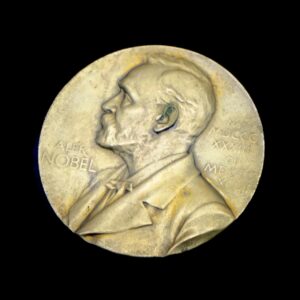
Marie Curie broke numerous barriers in science, becoming the first woman to win a Nobel Prize and the only person to win Nobel Prizes in two different scientific fields—Physics in 1903 and Chemistry in 1911. Her groundbreaking research on radioactivity, a term she coined, revolutionized our understanding of atomic structure and led to significant advances in medicine and physics. Despite facing discrimination as a woman in the male-dominated scientific community, she persevered, becoming the first female professor at the University of Paris. During World War I, she developed mobile radiography units to provide X-ray services to field hospitals. Her legacy extends beyond her discoveries; she proved that women could excel in scientific research at the highest levels.

6. Rosa Parks (1913-2005)

Rosa Parks' refusal to give up her bus seat to a white passenger in Montgomery, Alabama, on December 1, 1955, catalyzed the Montgomery Bus Boycott and became a pivotal moment in the American Civil Rights Movement. While often portrayed as a spontaneous act by a tired seamstress, Parks was actually a trained activist and secretary of the local NAACP chapter who understood the significance of her protest. The boycott lasted 381 days and led to a Supreme Court ruling that declared segregation on public buses unconstitutional. Her quiet courage inspired a generation of civil rights activists and demonstrated how individual acts of resistance could spark massive social change. Parks continued her activism throughout her life, working on issues of social justice and becoming an enduring symbol of dignity and strength.

7. Eleanor Roosevelt (1884-1962)

Eleanor Roosevelt redefined the role of First Lady and became one of the twentieth century's most influential human rights advocates. During her husband Franklin D. Roosevelt's presidency, she held press conferences, wrote a daily newspaper column, and traveled extensively to promote New Deal programs and civil rights. After her husband's death, she served as a delegate to the United Nations General Assembly and chaired the committee that drafted the Universal Declaration of Human Rights in 1948, a foundational document for international human rights law. Her advocacy for women's rights, racial equality, and social justice extended far beyond her years in the White House, establishing her as a powerful voice for humanitarian causes worldwide.

8. Malala Yousafzai (1997-present)

Malala Yousafzai became the world's youngest Nobel Prize laureate at age seventeen for her advocacy of girls' education in Pakistan. After the Taliban banned girls from attending school in her region, she began speaking out publicly about education rights at age eleven. In 2012, a Taliban gunman shot her in the head while she was riding a school bus, but she survived and continued her activism with even greater determination. Her courage brought global attention to the importance of girls' education and the threats faced by those who challenge extremism. Through the Malala Fund, she continues to advocate for girls' education worldwide, proving that age is no barrier to creating meaningful change and inspiring millions with her unwavering commitment to human rights.

9. Emmeline Pankhurst (1858-1928)

Emmeline Pankhurst founded the Women's Social and Political Union in 1903 and led the militant British suffragette movement that fought for women's voting rights. Frustrated by decades of peaceful campaigning that yielded no results, Pankhurst and her followers adopted the motto "Deeds, not words" and employed controversial tactics including hunger strikes, property destruction, and public demonstrations. She was imprisoned numerous times for her activism. Her relentless campaign helped secure partial voting rights for women in 1918 and full equality in 1928, shortly after her death. Pankhurst's militant approach, while controversial, proved instrumental in achieving political rights for women and demonstrated that sometimes systemic change requires disruptive action.

10. Simone de Beauvoir (1908-1986)

French writer and philosopher Simone de Beauvoir fundamentally changed how society understands gender with her groundbreaking 1949 book "The Second Sex." In this work, she analyzed women's oppression throughout history and introduced the revolutionary concept that "one is not born, but rather becomes, a woman," arguing that femininity is a social construct rather than a biological destiny. Her existentialist feminist philosophy laid the theoretical foundation for the modern women's movement and influenced feminist thought worldwide. Beyond her philosophical contributions, she was a prolific novelist, essayist, and political activist who advocated for women's rights, including reproductive freedom. Her intellectual legacy continues to shape contemporary discussions about gender, equality, and social justice.

Conclusion

These ten remarkable women represent just a fraction of the countless females who have shaped human history despite facing enormous obstacles. From ancient rulers to modern activists, from scientists to social reformers, they demonstrated extraordinary courage, intelligence, and determination. Their achievements span centuries and continents, touching every aspect of human endeavor—political leadership, scientific discovery, civil rights, education, and philosophical thought. Each woman challenged the limitations imposed by her society, refused to accept injustice, and fought for a better world. Their legacies remind us that progress often requires individuals willing to take risks, challenge conventions, and persist despite opposition. As we honor these trailblazers, we must also recognize that the fight for equality and justice continues, and their examples inspire new generations to carry forward the work of creating a more equitable world for all.

Did You Know? 12 Facts About the Evolution of Television

Did You Know? 12 Facts About the Evolution of Television

⏱️ 6 min read

Did You Know? 12 Facts About the Evolution of Television

Television has undergone a remarkable transformation since its inception, evolving from a revolutionary invention to an indispensable part of modern life. From mechanical systems to streaming platforms, the journey of television reflects technological innovation, cultural shifts, and changing viewer preferences. This article explores twelve fascinating facts about how television has evolved over the decades, revealing the milestones that shaped the way we consume entertainment today.

1. The Mechanical Television Came First

Before electronic television, mechanical television systems dominated the early experimental phase. In 1926, Scottish inventor John Logie Baird successfully demonstrated the first working television system using a mechanical scanning disk called the Nipkow disk. These early televisions produced grainy, low-resolution images with only 30 lines of resolution, but they proved that transmitting moving images was possible. Mechanical television remained in use until the late 1930s when electronic systems proved superior in image quality and reliability.

2. The First Electronic Television Was Invented by a Teenager

Philo Farnsworth, at just 21 years old, successfully transmitted the first electronic television image in 1927. His system used cathode ray tubes rather than mechanical parts, providing clearer images and greater potential for development. Farnsworth's invention laid the groundwork for modern television technology, though he spent much of his career fighting patent battles with larger corporations like RCA.

3. The First Television Broadcasts Were Experimental

Regular television broadcasting began in the 1930s, with the BBC launching the world's first regular high-definition television service in 1936. In the United States, NBC began regular broadcasts in 1939, coinciding with the opening of the New York World's Fair. These early broadcasts reached only a few hundred receivers, and programming was limited to just a few hours per day. World War II temporarily halted the expansion of television, but the medium exploded in popularity after the war ended.

4. Color Television Took Decades to Become Standard

While CBS demonstrated a color television system in 1940, it wasn't until 1954 that RCA's compatible color system became the U.S. standard. The transition from black-and-white to color television was gradual, taking nearly two decades. By 1972, more than half of American households owned a color television. The shift to color transformed entertainment programming, sports broadcasting, and advertising, making television a more vibrant and engaging medium.

5. The Remote Control Changed Viewing Habits

The wireless television remote control, invented by Zenith engineer Robert Adler in 1956, revolutionized how people interacted with their televisions. Called the "Space Command," this ultrasonic remote freed viewers from having to get up to change channels. The remote control's introduction led to phenomena like channel surfing and contributed to increased television viewing time. Modern smart remotes now include voice commands and touchscreens, continuing this evolution.

6. Cable Television Expanded Channel Options Dramatically

Cable television began in the 1940s as a solution for communities with poor broadcast reception, but it evolved into a content delivery system that transformed the industry. HBO, launched in 1972 as the first premium cable channel, demonstrated that audiences would pay for commercial-free content. By the 1980s and 1990s, cable networks like CNN, MTV, and ESPN created specialized programming that couldn't exist on traditional broadcast networks, fragmenting audiences but increasing content diversity.

7. VCRs Gave Viewers Control Over When to Watch

The introduction of affordable video cassette recorders in the 1970s fundamentally changed television consumption. Viewers could now record programs and watch them at their convenience, leading to the practice of "time-shifting." The VCR also enabled the home video market, allowing people to rent or purchase movies for home viewing. This technology challenged the traditional broadcast schedule model and paved the way for later on-demand viewing options.

8. High-Definition Television Enhanced Picture Quality

HDTV development began in Japan in the 1970s, but widespread adoption didn't occur until the 2000s. The transition from analog to digital broadcasting in the United States, completed in 2009, made high-definition the new standard. HDTV offered dramatically improved picture quality with widescreen formats, enhancing the viewing experience for sports, movies, and nature programming. This transition required consumers to upgrade their television sets, marking one of the most significant technological shifts in television history.

9. Flat-Screen Technology Revolutionized Television Design

The shift from bulky cathode ray tube televisions to flat-screen LCD, LED, and plasma displays in the 2000s transformed television from furniture to wall art. These new technologies allowed for larger screens in thinner packages, making home theater experiences more accessible. Modern flat-screen televisions now feature 4K and 8K resolution, HDR capabilities, and internet connectivity, continuing to push the boundaries of picture quality and functionality.

10. DVRs Made Time-Shifting Mainstream

Digital video recorders, particularly TiVo introduced in 1999, improved upon VCR technology with features like automatic recording, pause-live-TV, and program recommendations. DVRs made it easier than ever for viewers to watch programs on their own schedule and skip commercials, forcing the industry to reconsider traditional advertising models. The widespread adoption of DVR technology prepared audiences for the subscription-based, on-demand viewing that would follow.

11. Streaming Services Disrupted Traditional Broadcasting

Netflix's transition from DVD rentals to streaming in 2007 initiated the most significant disruption in television history. Streaming platforms like Netflix, Hulu, Amazon Prime Video, and later Disney+ and HBO Max fundamentally changed content distribution, production, and consumption. The "binge-watching" phenomenon emerged as entire seasons became available simultaneously. Streaming services also invested heavily in original content, competing directly with traditional networks and cable channels while giving viewers unprecedented control over what, when, and how they watch.

12. Smart TVs Integrated Television With the Internet

Modern smart televisions combine traditional broadcasting with internet connectivity, apps, and streaming services in a single device. These televisions can access social media, browse the web, play games, and serve as hubs for smart home devices. Voice control through assistants like Alexa and Google Assistant has made interaction more intuitive. Smart TVs represent the convergence of television, computers, and mobile technology, blurring the lines between different forms of media consumption.

Conclusion

The evolution of television from mechanical scanning disks to internet-connected smart displays represents more than a century of technological innovation. These twelve milestones illustrate how television has continuously adapted to meet viewer demands while driving cultural and social change. From the teenage inventor who created electronic television to the streaming services that have disrupted traditional broadcasting, each development has expanded possibilities for entertainment, information, and connection. As technology continues advancing with developments like 8K resolution, virtual reality integration, and artificial intelligence-powered recommendations, television's evolution shows no signs of slowing. Understanding this history helps us appreciate not only how far we've come but also anticipate where television might take us in the future.