








1 / 10 Questions
0 Points

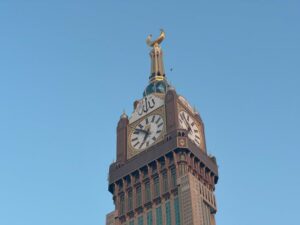
Which religious city in Saudi Arabia is forbidden to non-Muslims?

Dubai

Cairo

Jerusalem

Mecca

Points won
0
Correct score
0%

More Articles

Top 10 Unbelievable Facts About Time You Didn’t Know

Top 10 Unbelievable Facts About Time You Didn’t Know

⏱️ 6 min read

Top 10 Unbelievable Facts About Time You Didn't Know

Time is one of the most fundamental concepts in our universe, yet it remains one of the most mysterious and misunderstood phenomena. We organize our lives around it, measure it with precision instruments, and often feel like we don't have enough of it. However, beneath the surface of our everyday experience with time lies a world of fascinating scientific facts that challenge our basic understanding of reality. From the quirks of relativity to the peculiarities of timekeeping, these ten unbelievable facts about time will transform the way you think about the ticking of the clock.

1. Time Moves Slower When You're Moving Faster

According to Einstein's theory of special relativity, time is not absolute. When objects move at speeds approaching the speed of light, time actually slows down for them relative to stationary observers. This phenomenon, called time dilation, has been proven through experiments with atomic clocks on airplanes and satellites. GPS satellites must account for this effect to maintain accuracy, as they experience time differently than devices on Earth's surface. If you were to travel in a spacecraft at near-light speed for what seems like one year to you, decades or even centuries could pass on Earth.

2. Gravity Can Bend Time

Einstein's general relativity revealed that gravity doesn't just affect space—it affects time as well. The stronger the gravitational field, the slower time passes. This means that time moves slightly faster on a mountain top than at sea level. The difference is minuscule for everyday purposes, but it's measurable with atomic clocks. Near massive objects like black holes, this effect becomes extreme. At the event horizon of a black hole, time would appear to stand still from an outside observer's perspective, while someone falling into the black hole would experience time normally.

3. There's No Universal "Now"

One of the most mind-bending implications of relativity is that there is no universal present moment shared across the universe. What you consider "now" is different from what someone moving relative to you considers "now." Two events that appear simultaneous to one observer may occur at different times for another observer moving at a different velocity. This means that the concept of a single, universal present moment existing throughout the cosmos is an illusion. The universe doesn't have a synchronized clock.

4. Time May Have Had a Beginning

Before the Big Bang, approximately 13.8 billion years ago, time as we understand it may not have existed. According to current cosmological models, time itself began with the universe's birth. This means that asking what happened "before" the Big Bang may be a meaningless question—like asking what's north of the North Pole. Some physicists propose that time emerged from a timeless quantum state, while others suggest our universe may be part of a larger multiverse where time operates differently or exists in multiple dimensions.

5. A Day on Earth Is Getting Longer

Earth's rotation is gradually slowing down due to the gravitational interaction with the Moon, known as tidal friction. This means that days are getting progressively longer, though the change is incredibly small—about 1.7 milliseconds per century. Approximately 1.4 billion years ago, a day on Earth lasted only about 18 hours. In the distant future, Earth's day could stretch to match the lunar month, with one side of the planet permanently facing the Moon, much like how one side of the Moon always faces Earth.

6. Time Travel to the Future Is Scientifically Possible

While traveling backward in time remains highly speculative and problematic, traveling to the future is not only possible—it happens all the time, and we've already done it. Thanks to time dilation, astronauts aboard the International Space Station age slightly slower than people on Earth. Cosmonaut Sergei Krikalev, who spent 803 days in space, traveled approximately 0.02 seconds into the future compared to people on Earth. With sufficient velocity or proximity to a massive gravitational field, much more dramatic time travel into the future becomes theoretically possible.

7. Leap Seconds Keep Our Clocks Synchronized

Because Earth's rotation is irregular and gradually slowing, our ultra-precise atomic clocks occasionally drift out of sync with astronomical time based on Earth's rotation. To reconcile this difference, scientists occasionally add a "leap second" to Coordinated Universal Time (UTC). Since 1972, 27 leap seconds have been added, most recently in 2016. These adjustments ensure that our clocks remain aligned with the position of the Sun in the sky, preventing noon from gradually drifting to different times over centuries.

8. The Arrow of Time Might Be an Illusion

The laws of physics, at a fundamental level, don't distinguish between past and future—they work equally well in both directions. Yet we perceive time as flowing in only one direction, from past to future. This "arrow of time" appears to be linked to entropy, the tendency of systems to move from ordered to disordered states. Some physicists argue that the direction of time is not a fundamental property of the universe but rather an emergent phenomenon arising from the initial low-entropy state of the Big Bang. In theory, in regions of the universe or under certain conditions, time's arrow could point in different directions.

9. Time Perception Speeds Up as We Age

Many people report that time seems to pass more quickly as they get older, and there's scientific evidence supporting this subjective experience. Several theories explain this phenomenon: proportional theory suggests that a year represents a smaller fraction of your total life as you age; biological clock theory proposes that our metabolic rate slows with age, making external time seem faster; and the novelty theory suggests that when we experience fewer new things, we form fewer memories, making time periods seem shorter in retrospect. The way we process and remember experiences fundamentally affects our perception of time's passage.

10. Some Physicists Believe Time Doesn't Exist

Perhaps the most unbelievable fact about time is that some physicists question whether it exists at all as a fundamental property of reality. In certain formulations of quantum gravity, time disappears from the equations entirely. The "timeless" interpretation suggests that what we perceive as the flow of time is actually just our consciousness moving through a static, four-dimensional block universe where past, present, and future all exist simultaneously. According to this view, change and temporal flow are illusions created by our perception, and reality is fundamentally timeless.

Conclusion

These ten remarkable facts reveal that time is far stranger and more complex than our everyday experience suggests. From the malleability of time under extreme conditions to the possibility that it might not exist as we think it does, our understanding of time continues to evolve. Time dilation, gravitational effects, the absence of a universal now, the potential beginning of time with the Big Bang, Earth's lengthening days, practical time travel, leap seconds, the mysterious arrow of time, changing perception with age, and the radical idea that time might be an illusion all challenge our intuitive grasp of this fundamental aspect of reality. As science continues to probe the nature of time, we may discover even more unbelievable facts that further transform our understanding of the universe and our place within it.

Top 10 Movies with Hidden Meanings

Top 10 Movies with Hidden Meanings

⏱️ 7 min read

Top 10 Movies with Hidden Meanings

Cinema has always been more than just entertainment. Throughout film history, directors have embedded profound messages, social commentary, and symbolic narratives beneath the surface of their works. These hidden meanings transform ordinary viewing experiences into thought-provoking journeys that reward careful observation and analysis. The following ten films stand out as masterpieces of layered storytelling, each containing depths that extend far beyond their apparent plots.

1. The Matrix (1999)

The Wachowskis' groundbreaking science fiction epic operates on multiple philosophical levels. Beyond its exciting action sequences, The Matrix presents a modern allegory of Plato's Cave, questioning the nature of reality itself. The film explores themes of simulation theory, the hero's journey, and Buddhist concepts of enlightenment. Neo's red pill decision represents awakening to uncomfortable truths rather than accepting comfortable illusions. Religious symbolism pervades the narrative, with Neo as a Christ-like figure who dies and resurrects to save humanity. The film also critiques consumer culture and humanity's dependence on technology, presenting the Matrix as a metaphor for societal systems that keep people docile and controlled.

2. Fight Club (1999)

David Fincher's adaptation of Chuck Palahniuk's novel functions as a scathing critique of masculinity in late-stage capitalism. The unnamed narrator's creation of Tyler Durden represents a rebellion against emasculation through consumerism and corporate culture. The film examines how modern society has stripped men of traditional identity markers, leaving them searching for meaning in material possessions. Fight Club itself symbolizes the primal need for authenticity and physical experience in an increasingly digital, sanitized world. The Project Mayhem storyline warns against the dangers of fascism that can emerge from masculine frustration and the human desire for meaning through destruction rather than creation.

3. Get Out (2017)

Jordan Peele's horror masterpiece operates as a multilayered examination of racism in America, particularly the insidious nature of liberal racism. The Sunken Place represents the silencing of Black voices and the psychological trauma of systemic oppression. The film's antagonists represent white liberals who fetishize Black culture and bodies while denying Black people agency and humanity. The hypnosis scenes symbolize how society conditions Black individuals to suppress their authentic selves. The auction sequence reflects the historical commodification of Black bodies, brought into modern context. Peele brilliantly uses horror conventions to make audiences experience the terror of being Black in spaces that appear welcoming but harbor deep-seated prejudice.

4. Pan's Labyrinth (2006)

Guillermo del Toro's dark fantasy interweaves a coming-of-age fairy tale with the brutal reality of fascist Spain. The film presents dual interpretations: either Ofelia genuinely enters a magical realm, or she creates elaborate fantasies to cope with unbearable trauma. The faun represents moral ambiguity, neither wholly good nor evil. Captain Vidal embodies fascism's cruel adherence to order and patriarchal authority. The mandrake root sequence symbolizes fertility and life persisting despite oppression. The Pale Man represents the Church and complicit institutions that consume children while pretending blindness to atrocities. Ultimately, the film explores how imagination and storytelling help us survive inhumane circumstances while questioning whether physical survival matters more than preserving one's moral core.

5. 2001: A Space Odyssey (1968)

Stanley Kubrick's enigmatic masterpiece explores human evolution, artificial intelligence, and humanity's place in the cosmos. The mysterious monolith represents catalysts for evolutionary leaps, appearing at critical junctures in human development. HAL 9000 raises questions about consciousness, whether artificial intelligence can truly feel, and the dangers of creating systems more perfect than their flawed creators. The psychedelic Star Gate sequence depicts transcendence beyond human comprehension. The final hotel room scene represents a cosmic zoo where higher beings study humanity. The Star Child ending suggests humanity's next evolutionary phase, transcending physical limitations. Kubrick deliberately left interpretations open, creating a film that functions as a meditation on existence itself rather than providing easy answers.

6. Parasite (2019)

Bong Joon-ho's Palme d'Or winner dissects class warfare with surgical precision. The Kim family's infiltration of the Park household represents how the poor must parasitically attach to the wealthy for survival, while simultaneously showing how the rich parasitically depend on exploiting lower-class labor. The film's vertical geography—with families literally living above and below each other—visualizes class hierarchies. The basement represents capitalism's hidden foundation built on exploited labor. The scholar's rock symbolizes the false promise that education leads to upward mobility. The rainfall affecting the families differently illustrates how the same events have vastly different consequences based on class. The film ultimately argues that neither family is villainous; rather, the system forcing them into parasitic relationships is the true antagonist.

7. Eternal Sunshine of the Spotless Mind (2004)

Michel Gondry's romantic science fiction explores memory, identity, and whether painful experiences shape us essentially. The memory erasure procedure represents the human desire to escape suffering by forgetting rather than processing trauma. As Joel's memories dissolve, the film questions whether we are the sum of our experiences or something deeper. The cyclical structure suggests that people are drawn to certain relationship patterns regardless of memory. The deteriorating memories visualizing as crumbling environments represent how we reconstruct the past through subjective filters. The film ultimately argues that painful memories are inseparable from joyful ones, and erasing suffering means erasing the growth and depth that suffering produces. Love's imperfections and inevitable pain make it meaningful rather than diminishing its value.

8. The Truman Show (1998)

Peter Weir's prescient film predicted reality television's rise while exploring surveillance, free will, and authenticity. Truman's dome represents Plato's Cave, religion's conception of limited reality, and media-constructed worlds. Christof represents a god figure who creates and controls Truman's universe, raising questions about creator responsibility and benevolent tyranny. The show's viewers represent society's complicity in voyeurism and consumption of others' lives as entertainment. Truman's journey toward the wall symbolizes philosophical awakening and the terrifying freedom that accompanies rejecting comfortable illusions. The film critiques how media manufactures reality, questions whether authenticity exists in an observed life, and celebrates the human spirit's drive toward genuine experience despite security in familiar captivity.

9. Black Swan (2010)

Darren Aronofsky's psychological thriller examines perfectionism, repression, and the duality within human nature. Nina's transformation parallels the Swan Lake narrative she performs, with art and reality merging. The White Swan represents constraint, control, and technical perfection, while the Black Swan embodies sensuality, spontaneity, and emotional freedom. Nina's hallucinations represent her fracturing psyche under impossible pressure to embody contradictory ideals. Her relationship with her mother illustrates how stage parents project unfulfilled ambitions onto children, stunting their development. Lily serves as Nina's shadow self, representing everything Nina represses. The film explores how the pursuit of perfection in art requires accessing dark impulses and how complete artistic expression might require destroying the self in the process.

10. Shutter Island (2010)

Martin Scorsese's psychological thriller operates as both a mystery and a meditation on grief, guilt, and denial. The entire investigation represents an elaborate role-play therapy designed to break through Andrew Laeddis's delusions. The island symbolizes the mind's capacity to construct elaborate defensive narratives avoiding unbearable truths. The film questions reality's nature and whether we can trust perception and memory. Andrew's final line—"Which would be worse: to live as a monster, or to die as a good man?"—suggests he may have achieved sanity but chooses lobotomy over living with his actions. The film explores whether some truths are too painful to bear, whether ignorance might sometimes be preferable to awareness, and how trauma reshapes reality itself in the mind's desperate attempt at self-preservation.

Conclusion

These ten films demonstrate cinema's power to communicate complex ideas through narrative, symbolism, and visual metaphor. Each operates simultaneously as entertaining story and profound commentary on human existence, society, and consciousness. The hidden meanings within these works reward multiple viewings and analysis, revealing new layers with each encounter. They challenge audiences to think critically, question assumptions, and recognize that the most powerful art often conceals its deepest truths beneath accessible surfaces. By engaging with these hidden meanings, viewers transform from passive consumers into active participants in the ongoing dialogue between filmmaker and audience, discovering that the journey toward understanding these films' depths mirrors the characters' own journeys toward enlightenment, awareness, and truth.