














1 / 20 Questions
0 Points

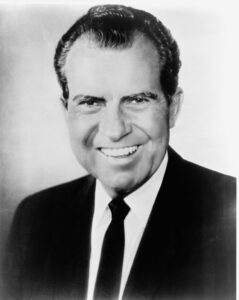
Which president gave the shortest inaugural address?

George Washington

Abraham Lincoln

George W. Bush

William Henry Harrison

Points won
0
Correct score
0%

More Articles

Did You Know? 12 Fascinating Facts About Numbers

Did You Know? 12 Fascinating Facts About Numbers

⏱️ 6 min read

Did You Know? 12 Fascinating Facts About Numbers

Numbers are far more than mere tools for counting and calculation. They possess remarkable properties, hidden patterns, and surprising connections that have fascinated mathematicians, scientists, and curious minds for millennia. From the peculiar behavior of prime numbers to the mysterious appearance of mathematical constants in nature, the world of numbers is filled with wonder and intrigue. This article explores twelve fascinating facts about numbers that reveal the beauty, complexity, and sometimes bizarre nature of mathematics.

1. Zero Was Not Always a Number

The concept of zero as a number is a relatively modern invention in human history. Ancient civilizations including the Greeks and Romans had no symbol for zero and did not consider it a number. The concept of zero as both a placeholder and a number in its own right was developed by Indian mathematicians around the 5th century CE. The mathematician Brahmagupta was among the first to establish rules for arithmetic operations involving zero. This revolutionary concept eventually spread to the Islamic world and then to Europe, transforming mathematics forever.

2. The Number 73 is Sheldon Cooper's Favorite for Good Reason

The number 73 holds unique mathematical properties that make it truly special. It is the 21st prime number, and remarkably, when you reverse these numbers, 21 is the product of 7 and 3. Additionally, when you reverse 73 itself, you get 37, which is the 12th prime number, and 21 reversed is 12. This mirror property makes 73 a prime number with exceptional symmetry in the mathematical universe.

3. Prime Numbers Become Increasingly Rare

Prime numbers—those divisible only by 1 and themselves—become progressively scarcer as numbers grow larger, yet they never stop appearing. Between 1 and 100, there are 25 prime numbers, but between 10,000 and 10,100, there are only 2. Despite this thinning distribution, mathematicians have proven that prime numbers continue infinitely. The largest known prime number, discovered in 2018, has over 24 million digits and would take weeks to write out longhand.

4. The Golden Ratio Appears Throughout Nature

The number phi (φ), approximately 1.618, known as the golden ratio, appears with stunning frequency in the natural world. This mathematical constant can be observed in the spiral arrangements of sunflower seeds, the branching of trees, the curve of nautilus shells, and even in the proportions of the human body. Ancient architects and artists recognized its aesthetic appeal, incorporating it into structures like the Parthenon and artworks throughout history.

5. Googol and Googolplex Are Real Numbers

A googol is the number 1 followed by 100 zeros, a term coined by nine-year-old Milton Sirotta in 1920. Even more mind-boggling is the googolplex, which is 10 to the power of a googol—essentially 1 followed by a googol of zeros. This number is so large that there isn't enough space in the observable universe to write it out in standard decimal notation, even if each digit were smaller than an atom.

6. The Number 6174 Has a Mysterious Property

Known as Kaprekar's constant, the number 6174 emerges from a peculiar mathematical operation. Take any four-digit number with at least two different digits, arrange the digits in descending order, then subtract the number formed by arranging them in ascending order. Repeat this process with the result, and within seven iterations, you will always arrive at 6174. Once you reach 6174, the process loops endlessly, returning 6174 each time.

7. Perfect Numbers Are Exceptionally Rare

A perfect number equals the sum of its proper divisors (excluding itself). The smallest perfect number is 6, as 1 + 2 + 3 = 6. The next is 28 (1 + 2 + 4 + 7 + 14 = 28). Only 51 perfect numbers have been discovered, and all known perfect numbers are even. Whether odd perfect numbers exist remains one of mathematics' oldest unsolved problems, pondered since ancient Greek times.

8. Pi Contains Potentially Every Possible Number Sequence

Pi (π), the ratio of a circle's circumference to its diameter, is an irrational number with decimal places that continue infinitely without repeating. Mathematicians believe pi is a "normal" number, meaning that every possible finite sequence of digits appears somewhere in its infinite expansion. Theoretically, your phone number, birth date, and every book ever written (when converted to numbers) exists somewhere within pi's digits.

9. The Number 1 is Neither Prime Nor Composite

While it might seem that 1 should be considered prime, mathematicians classify it as neither prime nor composite. This classification exists for good reason: if 1 were considered prime, the fundamental theorem of arithmetic—which states that every integer greater than 1 can be uniquely factored into primes—would fail. This special status makes 1 a unique element in number theory.

10. Factorial Growth is Staggeringly Fast

The factorial function, denoted by an exclamation mark (!), means multiplying a number by all positive integers less than itself. While 5! equals a manageable 120, factorial numbers grow explosively. By 70!, the result exceeds 10^100 (a googol). This rapid growth makes factorials important in calculating probabilities and combinations, explaining why the odds of certain events are astronomically small.

11. The Number 142857 is a Cyclic Number

The number 142857 possesses magical multiplication properties. Multiply it by 2, 3, 4, 5, or 6, and the result contains exactly the same digits in a different cyclic order: 285714, 428571, 571428, 714285, and 857142. This cyclic number is the repeating decimal portion of 1/7 and demonstrates beautiful internal symmetry. Multiply it by 7, however, and you get 999999.

12. There Are More Possible Chess Games Than Atoms in the Universe

The Shannon number, calculated by mathematician Claude Shannon, estimates the number of possible chess games at approximately 10^120. To put this in perspective, scientists estimate there are roughly 10^80 atoms in the observable universe. This means the complexity of chess exceeds the physical complexity of the entire universe, illustrating how mathematical possibilities can dwarf physical reality.

Conclusion

These twelve fascinating facts reveal that numbers are far more than abstract concepts or practical tools—they are gateways to understanding the fundamental patterns underlying reality. From the ancient development of zero to the mind-bending magnitude of googolplex, from the hidden patterns in cyclic numbers to the infinite mysteries of pi, numbers continue to surprise and inspire. Whether appearing in nature's designs, enabling technological advancement, or presenting unsolved puzzles that challenge the greatest mathematical minds, numbers demonstrate that mathematics is an endlessly fascinating exploration. The next time you encounter a number, remember that behind its simple appearance may lie extraordinary properties waiting to be discovered.

Did You Know? 10 Crazy Facts About Everyday Objects

Did You Know? 10 Crazy Facts About Everyday Objects

⏱️ 7 min read

Did You Know? 10 Crazy Facts About Everyday Objects

Every day, we interact with countless objects without giving them a second thought. From the moment we wake up to the time we go to bed, these familiar items serve their purposes so seamlessly that we rarely stop to consider their fascinating histories, hidden features, or surprising origins. The truth is, many everyday objects harbor incredible secrets and bizarre backstories that would astonish most people. This collection of ten remarkable facts will forever change how you view some of the most common items around you.

1. The Microwave Oven Was Invented by Accident

The microwave oven, now found in nearly every kitchen, came into existence purely by chance. In 1945, engineer Percy Spencer was working on radar technology for Raytheon when he noticed that a chocolate bar in his pocket had melted while standing near a magnetron. Intrigued by this discovery, he experimented with popcorn kernels and an egg, which promptly exploded. This accidental observation led to the development of the first commercial microwave oven in 1947, which stood nearly six feet tall and weighed about 750 pounds. Today's compact countertop versions bear little resemblance to their massive predecessor.

2. Bubble Wrap Was Originally Designed as Wallpaper

Before bubble wrap became the world's favorite packing material and stress-relief tool, it had a completely different intended purpose. In 1957, engineers Alfred Fielding and Marc Chavannes attempted to create a trendy textured wallpaper by sealing two shower curtains together with air bubbles trapped inside. When their wallpaper idea failed to catch on, they tried marketing it as insulation for greenhouses. That venture also flopped. It wasn't until 1960 that IBM began using the material to protect computers during shipping, finally giving bubble wrap its true calling as protective packaging.

3. The Original Purpose of High Heels Was for Men

High-heeled shoes, today predominantly associated with women's fashion, were originally created for men in the 10th century. Persian cavalry wore them to help secure their feet in stirrups while riding horses and shooting arrows. The trend spread to Europe in the 17th century, where aristocratic men wore heels as a status symbol. King Louis XIV of France was particularly fond of high heels and often wore shoes with heels up to five inches tall, painted red to signify his royal status. Women only began adopting the style in the mid-1600s as a form of masculine fashion appropriation, and it wasn't until the 18th century that heels became predominantly feminine footwear.

4. Kleenex Tissues Started as Gas Mask Filters

The soft facial tissues we use daily have a surprising wartime origin. During World War I, Kimberly-Clark developed a thin, flat cotton substitute called "Cellucotton" for use in gas mask filters and as wadding for wounds. After the war ended, the company found itself with a surplus of this material and needed to find a peacetime application. In 1924, they marketed it as a disposable cold cream and makeup remover called Kleenex. However, consumers began writing to the company explaining they were using the product to blow their noses instead. Recognizing an opportunity, Kimberly-Clark repositioned Kleenex as a disposable handkerchief, and sales doubled within a year.

5. The Can Opener Wasn't Invented Until 48 Years After Canned Food

In one of history's most impractical oversights, canned food was patented in 1810, but the first dedicated can opener wasn't invented until 1858. For nearly five decades, people opened cans using whatever tools they had available, including chisels, hammers, and even bayonets. Early cans came with instructions that sometimes read "cut round the top near the outer edge with a chisel and hammer." The early cans were made of thick iron and were so sturdy that they required considerable effort to open. This bizarre gap in innovation meant that a brilliant food preservation method was significantly hindered by the lack of a practical opening mechanism.

6. Frisbees Were Inspired by Pie Tins

The popular flying disc toy has its roots in the Frisbie Pie Company of Bridgeport, Connecticut. In the 1870s, William Russell Frisbie founded his bakery, which sold pies in tin plates embossed with the family name. Yale University students discovered that the empty pie tins could be tossed and caught, and they would shout "Frisbie!" as a warning before throwing them. In 1948, Walter Frederick Morrison invented a plastic flying disc, and when the Wham-O toy company purchased the rights in 1957, they modified the spelling to "Frisbee" to avoid trademark issues. The pie company went out of business in 1958, but its legacy lives on in backyards and parks worldwide.

7. Scissors Are Older Than Written History

Among the most ancient tools still in regular use today, scissors date back to ancient Egypt around 1500 BCE. These early versions consisted of two bronze blades connected by a curved strip that acted as a spring, requiring users to squeeze them together to cut and allowing them to spring back open. The cross-blade design we're familiar with today wasn't developed until around 100 CE by the Romans. Despite thousands of years of technological advancement, the basic principle of scissors has remained remarkably unchanged, making them one of humanity's most enduring and successful inventions.

8. Toothpaste Once Contained Radioactive Materials

In the early 20th century, before the dangers of radiation were fully understood, radioactive materials were considered healthful and modern. From the 1920s through the 1940s, a German company produced a toothpaste called Doramad that contained radioactive thorium. The marketing claimed it would make teeth shine with brilliant whiteness and provide antibacterial benefits through increased circulation in the gums. Similar radioactive products flooded the market during this era, including watches, cosmetics, and health tonics. Fortunately, these dangerous products were eventually removed from the market as scientific understanding of radiation's harmful effects improved.

9. The Inventor of the Pringles Can Is Buried in One

Fredric Baur, a chemist and food storage technician, was so proud of his invention of the iconic Pringles can that he requested to be buried in one. Baur designed the distinctive cylindrical container in the 1960s to address the problem of broken and stale potato chips. The can's unique shape, combined with the saddle-shaped chips stacked inside, revolutionized chip packaging and storage. When Baur passed away in 2008 at age 89, his children honored his wishes by placing some of his cremated remains in a Pringles can before burial. Part of his ashes went into an Original flavor can, chosen after brief family deliberation at a Walgreens.

10. Duct Tape Was Originally Called "Duck Tape"

The versatile adhesive tape found in tool kits everywhere has a name origin that might surprise you. During World War II, the Permacell division of Johnson & Johnson developed a strong, waterproof tape for the military to keep moisture out of ammunition cases. Soldiers nicknamed it "duck tape" because water rolled off it like a duck's back, and it was made from cotton duck fabric. The tape was originally army green. After the war, the tape was adapted for civilian use in the housing industry, particularly for connecting heating and air conditioning duct work, and its color was changed to the now-familiar silver. This shift in usage led to the name gradually changing to "duct tape," though ironically, building codes now often prohibit its use on actual heating and cooling ducts because it can fail under extreme temperature changes.

Conclusion

These ten fascinating facts reveal that everyday objects possess far more interesting histories than most people imagine. From accidental inventions like the microwave oven to complete oversights like the delayed invention of the can opener, these stories demonstrate that innovation often follows unexpected paths. The next time you pop bubble wrap, throw a Frisbee, or reach for the duct tape, you'll have a deeper appreciation for these common items and the remarkable journeys they've taken to become indispensable parts of daily life. These objects prove that sometimes the most ordinary things around us have the most extraordinary stories to tell.