


















⏱️ 7 min read
Top 10 Fascinating Facts About Volcanoes
Volcanoes have captivated human imagination for millennia, serving as both sources of terror and wonder. These magnificent geological formations are among Earth's most powerful natural phenomena, capable of reshaping landscapes, affecting global climates, and even influencing the course of human history. From the fiery depths of the Earth's mantle to explosive eruptions that reach the stratosphere, volcanoes represent the dynamic nature of our planet. This article explores ten fascinating facts about these incredible natural wonders that demonstrate their complexity, power, and importance to our world.
1. There Are More Than 1,500 Active Volcanoes on Earth
The planet currently has over 1,500 potentially active volcanoes on land, with many more hidden beneath the ocean's surface. A volcano is considered active if it has erupted within the last 10,000 years or shows signs of unrest such as unusual seismic activity or gas emissions. The majority of these volcanoes are located around the Pacific Ring of Fire, a horseshoe-shaped zone that encircles the Pacific Ocean and accounts for approximately 75% of the world's active volcanoes. This concentration occurs due to the movement and collision of tectonic plates in this region, creating ideal conditions for volcanic activity.
2. Volcanic Eruptions Can Affect Global Climate
Major volcanic eruptions have the power to influence Earth's climate for years after the event. When a volcano erupts violently, it can inject massive amounts of sulfur dioxide and ash into the stratosphere, where these particles reflect sunlight back into space, causing temporary global cooling. The 1815 eruption of Mount Tambora in Indonesia was so powerful that it led to 1816 being known as the "Year Without a Summer," causing widespread crop failures and food shortages across the Northern Hemisphere. Similarly, the 1991 eruption of Mount Pinatubo in the Philippines caused global temperatures to drop by about 0.5 degrees Celsius for nearly two years.
3. The Largest Volcano in the Solar System Isn't on Earth
While Earth boasts impressive volcanoes, the largest known volcano in our solar system is Olympus Mons on Mars. This shield volcano towers approximately 25 kilometers high, making it nearly three times the height of Mount Everest, and has a base spanning roughly 600 kilometers in diameter. To put this in perspective, Olympus Mons is so large that if you were standing on its summit, its slopes would extend beyond the horizon in all directions. This Martian giant formed over billions of years due to Mars's lower gravity and lack of plate tectonics, which allowed lava to accumulate in one location indefinitely.
4. Underwater Volcanoes Create New Land
The ocean floor is home to approximately 75% of all volcanic activity on Earth, with underwater volcanic eruptions constantly reshaping the seafloor. When these submarine volcanoes erupt repeatedly, they can eventually break the ocean's surface and create new islands. The Hawaiian Islands were formed through this process over millions of years as the Pacific Plate moved over a volcanic hotspot. More recently, in 2015, a submarine volcano near Tonga erupted and created a new island that merged with an existing one. These underwater volcanic systems, particularly at mid-ocean ridges, are also responsible for creating new oceanic crust through a process called seafloor spreading.
5. Volcanic Soil Is Incredibly Fertile
Despite their destructive potential, volcanoes provide a significant benefit to agriculture through the creation of exceptionally fertile soil. Volcanic ash and weathered volcanic rock are rich in essential minerals and nutrients such as iron, magnesium, potassium, and calcium. These minerals break down relatively quickly compared to other rock types, creating nutrient-rich soil that supports robust plant growth. This explains why many agricultural communities have historically settled near volcanoes, accepting the risks in exchange for productive farmland. Regions like the slopes of Mount Vesuvius in Italy and the volcanic highlands of Indonesia support thriving agricultural economies due to this volcanic soil fertility.
6. Not All Volcanic Eruptions Are Explosive
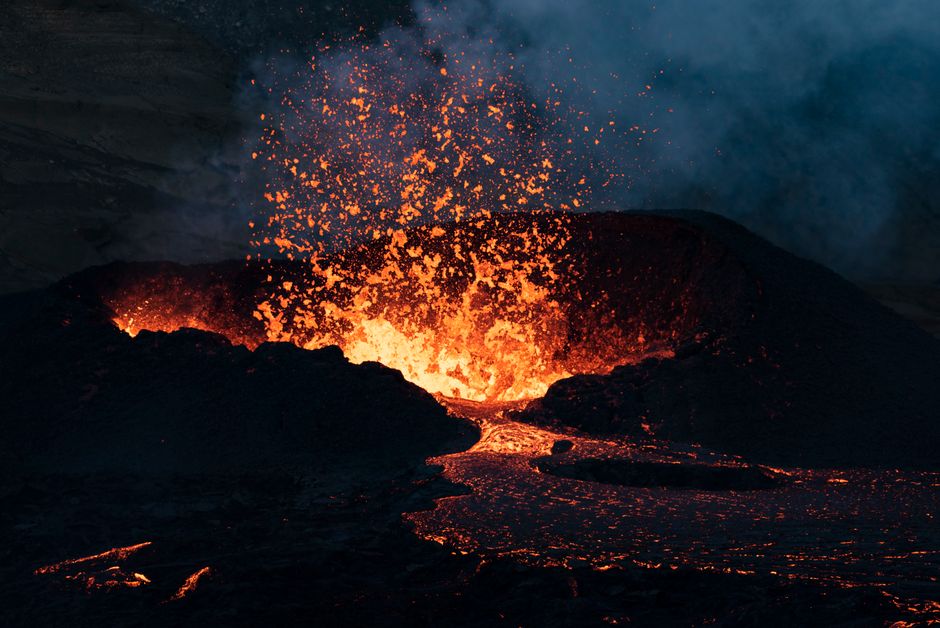
Contrary to popular belief, not all volcanic eruptions involve violent explosions. The type of eruption depends largely on the magma's viscosity, which is determined by its chemical composition and gas content. Hawaiian volcanoes, for example, typically produce effusive eruptions where relatively fluid lava flows steadily from vents or fissures, creating spectacular lava fountains and rivers but rarely causing explosive events. In contrast, volcanoes with more viscous, silica-rich magma, such as those in the Cascade Range of North America, tend to produce explosive eruptions because gases cannot easily escape from the thick magma, building up pressure until a violent release occurs.
7. Volcanoes Play a Crucial Role in Earth's Water Cycle
Volcanic activity has been fundamental in creating and maintaining Earth's hydrosphere, including our oceans and atmosphere. Throughout geological history, volcanic outgassing has released water vapor trapped within the Earth's interior, contributing to the formation of oceans billions of years ago. Even today, volcanoes continue to release significant amounts of water vapor during eruptions, along with other gases like carbon dioxide, sulfur dioxide, and nitrogen. This ongoing process represents a critical component of Earth's deep water cycle, connecting the planet's interior with its surface environments and contributing to the long-term regulation of atmospheric and oceanic composition.
8. Some Volcanoes Have Been Erupting Continuously for Decades
While many volcanoes alternate between periods of activity and dormancy, some have maintained continuous or near-continuous eruptions for extraordinary lengths of time. Mount Stromboli in Italy has been erupting almost continuously for at least 2,000 years, earning it the nickname "Lighthouse of the Mediterranean" due to its regular, visible eruptions. Kilauea in Hawaii erupted continuously from 1983 to 2018, a remarkable 35-year period during which it added approximately 500 acres of new land to Hawaii's Big Island. These persistent eruptions provide scientists with invaluable opportunities to study volcanic processes and improve eruption forecasting techniques.
9. Volcanic Lightning Is a Real and Spectacular Phenomenon
During explosive volcanic eruptions, a stunning natural phenomenon called volcanic lightning or "dirty thunderstorms" can occur. This happens when rock fragments, ash particles, and ice particles in the volcanic plume collide, generating static electricity that discharges as lightning bolts. The exact mechanisms behind volcanic lightning are still being researched, but scientists believe it involves similar charge separation processes that occur in regular thunderstorms, combined with the unique conditions within volcanic plumes. These lightning displays can be extraordinarily intense, with some eruptions producing hundreds of lightning strikes in a matter of minutes, creating an apocalyptic yet mesmerizing spectacle.
10. Volcanoes Help Scientists Understand Other Planets
Studying Earth's volcanoes provides crucial insights into volcanic processes throughout our solar system and helps scientists interpret data from other planetary bodies. Volcanic features have been identified on Venus, Mars, Jupiter's moon Io, and Saturn's moon Enceladus, among others. By understanding how terrestrial volcanoes form, erupt, and evolve, researchers can develop models to explain volcanic activity observed on these distant worlds. For instance, studying shield volcanoes in Hawaii helps scientists understand the massive volcanic structures on Mars, while observations of cryovolcanism (ice volcanism) analogs on Earth inform theories about volcanic activity on icy moons where water ice functions like molten rock does on Earth.
Conclusion
Volcanoes remain among the most powerful and fascinating natural phenomena on Earth, embodying both creative and destructive forces that have shaped our planet throughout its history. From their role in creating fertile agricultural land and new islands to their capacity to influence global climate and contribute to Earth's water systems, volcanoes are integral to understanding our dynamic planet. The ten facts presented here merely scratch the surface of volcanic science, highlighting the complexity and diversity of these geological features. As research continues and monitoring technologies advance, our knowledge of volcanoes grows, helping us better predict eruptions, protect vulnerable populations, and appreciate the profound ways these natural wonders connect Earth's interior to its surface and atmosphere.