


1 / 10 Questions
0 Points

What Was The Main Reason Pilgrims Came To America?

Gold

Religious freedom

Better weather

Adventure

Points won
0
Correct score
0%

More Articles

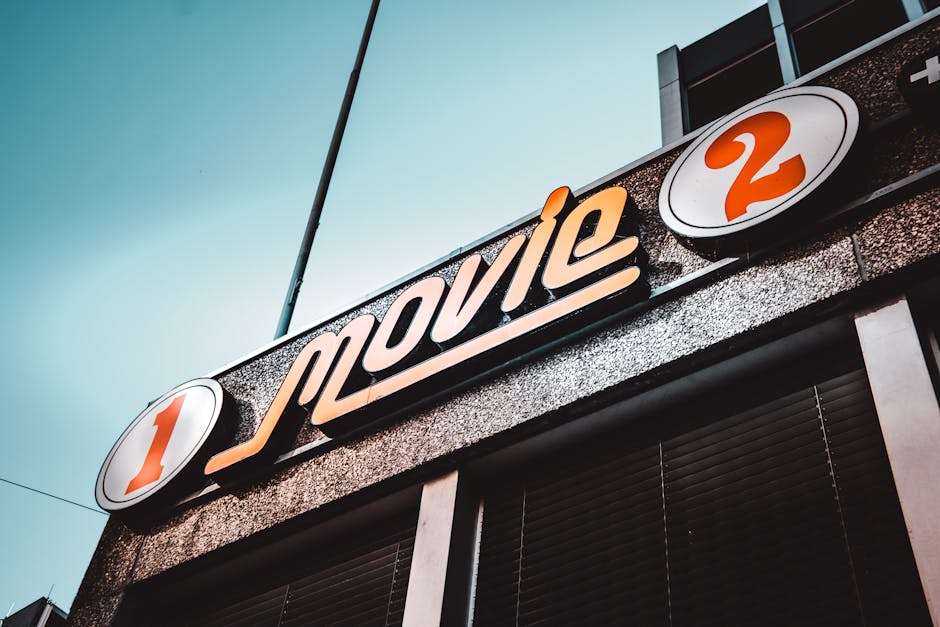
Top 10 Fun Facts About Classic Hollywood Films

Top 10 Fun Facts About Classic Hollywood Films

⏱️ 6 min read

Top 10 Fun Facts About Classic Hollywood Films

The Golden Age of Hollywood, spanning from the 1930s through the 1960s, produced some of the most iconic and beloved films in cinematic history. Behind the glamorous premieres and legendary performances lie countless fascinating stories that reveal the ingenuity, creativity, and sometimes sheer luck that went into making these timeless classics. From unexpected casting decisions to revolutionary special effects techniques, these ten fun facts about classic Hollywood films offer a glimpse into the magic and mayhem that occurred both on and off the silver screen.

1. The Wizard of Oz Originally Featured Different Ruby Slippers

One of the most iconic props in film history, Dorothy's ruby slippers from "The Wizard of Oz" (1939), were actually supposed to be silver, as they were in L. Frank Baum's original novel. MGM production designers made the brilliant decision to change them to ruby red to take full advantage of the new Technicolor technology. The vibrant red slippers popped magnificently against the Yellow Brick Road, creating one of cinema's most memorable visual elements. Several pairs were made for the production, and they remain among the most valuable movie memorabilia items in the world.

2. Casablanca's Iconic Ending Was Written During Filming

The classic 1942 film "Casablanca" began shooting without a finished script, and the legendary ending wasn't decided until well into production. Writers continued to develop the screenplay during filming, and even the actors didn't know how the story would conclude. The famous final scene at the airport, with Rick's heartbreaking decision to send Ilsa away with her husband, was written just weeks before it was shot. This uncertainty actually worked in the film's favor, as the genuine tension and unpredictability contributed to the authentic performances that made the movie a timeless masterpiece.

3. Psycho's Chocolate Syrup Blood

Alfred Hitchcock's "Psycho" (1960) featured one of the most famous scenes in cinema history: the shower scene. Because the film was shot in black and white, director Alfred Hitchcock and his team used Bosco chocolate syrup as fake blood. The chocolate syrup had the perfect consistency and opacity to look convincingly like blood on black and white film. The scene required seven days to shoot and used 70 different camera angles, creating 45 seconds of pure cinematic terror that revolutionized horror films forever.

4. Gone with the Wind's Massive Casting Search

The search for the perfect Scarlett O'Hara in "Gone with the Wind" (1939) became one of the most publicized casting calls in Hollywood history. Producer David O. Selznick interviewed over 1,400 actresses and conducted screen tests with dozens of hopefuls over two years. The role was so coveted that it became a national obsession, with the American public weighing in on their favorites. Vivien Leigh, a British actress relatively unknown in America at the time, ultimately won the role and delivered an Oscar-winning performance that defined her career.

5. The Sound of Music's Helicopter Scene Challenge

The iconic opening scene of "The Sound of Music" (1965), featuring Julie Andrews twirling in an Austrian meadow, required multiple takes due to an unexpected problem. The powerful downdraft from the helicopter filming the aerial shot repeatedly knocked Andrews to the ground. The actress gamely continued to get up and resume her position, and the footage that made it into the final film represents one of several attempts. This perseverance paid off, as the opening sequence became one of the most recognizable in cinema history.

6. Singin' in the Rain's Feverish Performance

Gene Kelly's legendary performance of the title song in "Singin' in the Rain" (1952) was filmed while the actor was suffering from a 103-degree fever. Despite feeling terrible, Kelly insisted on performing the elaborate dance number, which required him to be soaked with water for hours. The "rain" was mixed with milk to make it show up better on camera, and the street was specially lit to create the proper reflective effect. Kelly's professionalism and dedication resulted in what many consider the greatest dance sequence ever filmed.

7. King Kong's Revolutionary Special Effects

The original "King Kong" (1933) was a groundbreaking achievement in special effects, utilizing stop-motion animation combined with live-action footage in ways that had never been attempted before. The Kong model was only 18 inches tall and was constructed with a metal skeleton covered in rabbit fur. Pioneer effects artist Willis O'Brien painstakingly moved the model frame by frame to create the illusion of movement. The film's innovative techniques influenced special effects for decades and established many of the compositing methods still used in modern filmmaking.

8. Breakfast at Tiffany's Orangey the Cat

The unnamed orange cat in "Breakfast at Tiffany's" (1961) was actually a trained movie animal named Orangey, who had already won a Patsy Award (the animal equivalent of an Oscar) for his role in "Rhubarb" (1951). The famous scene where Holly Golightly puts the cat out in the rain reportedly required multiple takes because Orangey kept trying to return to the warm interior. The talented feline went on to win a second Patsy for his performance in this film, making him one of the most decorated animal actors in Hollywood history.

9. Some Like It Hot's Marilyn Monroe Line Repetitions

During the filming of "Some Like It Hot" (1959), Marilyn Monroe struggled with one particular scene where she had to say the line "Where's the bourbon?" while looking through dresser drawers. She reportedly required 59 takes to complete the scene satisfactorily, often saying "bonbon" or "whiskey" instead. Director Billy Wilder finally wrote the line on pieces of paper and placed them in each drawer. Despite these challenges, Monroe's performance in the film is considered one of her finest, showcasing her impeccable comedic timing and charisma.

10. Ben-Hur's Massive Production Scale

The 1959 epic "Ben-Hur" set records for its massive scale and expense, becoming the most expensive film made at that time with a budget of $15 million. The famous chariot race sequence alone took five weeks to film and required the construction of an arena larger than the original Roman Circus Maximus. The production employed over 10,000 extras, built more than 300 sets across 148 acres, and used 78 horses trained specifically for the chariot scenes. The film won an unprecedented 11 Academy Awards, a record that stood for nearly 40 years and demonstrated that epic filmmaking could achieve both critical and commercial success.

Conclusion

These ten fascinating facts from classic Hollywood films reveal the incredible dedication, innovation, and sometimes fortunate accidents that contributed to creating cinematic masterpieces. From chocolate syrup standing in for blood to feverish dance performances and revolutionary special effects, the Golden Age of Hollywood was built on the creativity and perseverance of countless artists and technicians. These stories remind us that behind every polished film that graces the screen lies a complex production filled with challenges, solutions, and moments of pure movie magic. The legacy of these classic films continues to influence modern cinema, and their behind-the-scenes stories remain as entertaining as the movies themselves, offering film enthusiasts endless appreciation for the artistry and craft of Hollywood's golden era.

Top 10 Fun Facts About the Vikings

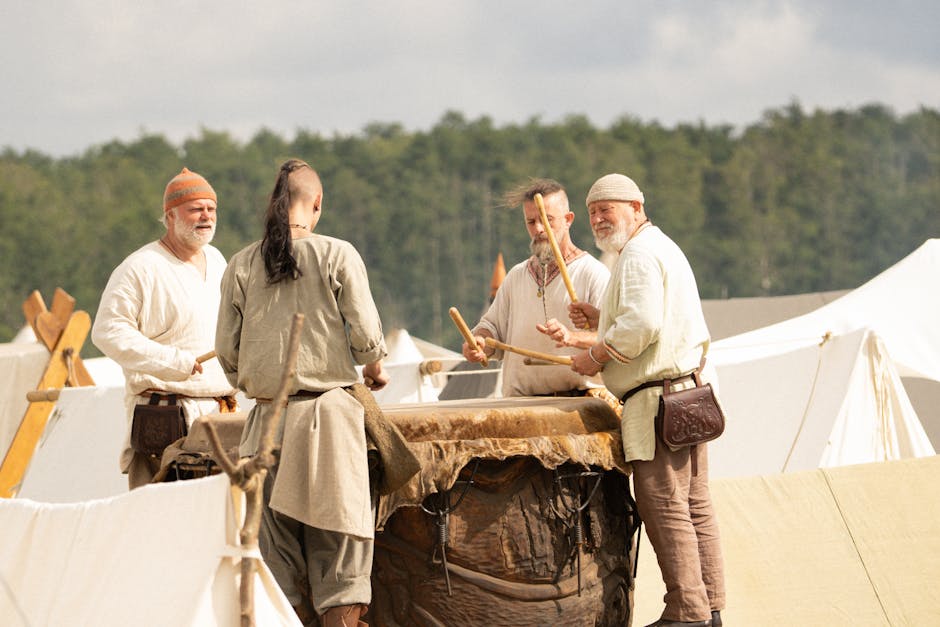
Top 10 Fun Facts About the Vikings

⏱️ 6 min read

Top 10 Fun Facts About the Vikings

The Vikings have captivated imaginations for centuries, often portrayed as fierce warriors with horned helmets sailing across treacherous seas. However, the reality of Viking culture is far more complex and fascinating than popular culture suggests. These Norse seafarers from Scandinavia left an indelible mark on European history between the 8th and 11th centuries, not just through their raids, but through their innovations, culture, and exploration. Here are ten remarkable facts about the Vikings that reveal the true nature of these legendary people.

1. Vikings Never Actually Wore Horned Helmets

Perhaps the most pervasive myth about Vikings is that they wore horned helmets into battle. In reality, there is no archaeological evidence supporting this image. The misconception originated in the 19th century, popularized by costume designer Carl Emil Doepler for Wagner's opera cycle "Der Ring des Nibelungen." Actual Viking helmets were practical, rounded iron caps, sometimes with nose guards. Horns would have been impractical in combat, providing enemies with something to grab and potentially causing injury to fellow warriors in close quarters. The few horned helmets discovered from this era were ceremonial objects from Bronze Age Scandinavia, predating the Viking Age by thousands of years.

2. They Were Master Shipbuilders and Navigators

Viking longships represent one of the greatest achievements in maritime history. These vessels were engineering marvels, featuring a shallow draft that allowed them to navigate both deep oceans and shallow rivers. The ships were clinker-built, with overlapping planks that provided flexibility in rough seas while maintaining strength. Vikings used a combination of navigation techniques including sun compasses, observations of stars, wave patterns, bird flight, and even possibly sunstones—calcite crystals that could locate the sun on cloudy days. This nautical expertise enabled them to reach Iceland, Greenland, and even North America, centuries before Columbus.

3. Vikings Reached North America 500 Years Before Columbus

Around the year 1000 CE, Viking explorer Leif Erikson established a settlement called Vinland in what is now Newfoundland, Canada. Archaeological evidence at L'Anse aux Meadows confirms Norse presence in North America approximately 500 years before Christopher Columbus's famous voyage. The settlement was likely abandoned after a few years due to conflicts with indigenous peoples and the difficulty of maintaining such a distant outpost. Norse sagas had long told of these western lands, but it wasn't until the 1960s that archaeological excavations provided concrete proof of Viking exploration across the Atlantic.

4. Viking Women Had Remarkable Rights and Freedoms

Compared to many contemporary European societies, Viking women enjoyed considerably more rights and independence. They could own property, request divorces, and reclaim their dowries if marriages ended. While men were away trading or raiding, women often managed farms and households, making crucial economic decisions. Some women even became successful traders in their own right. Archaeological evidence, including the famous Birka warrior grave in Sweden, has revealed that some women may have even held warrior status, though this remains debated among scholars. Women could also serve as religious leaders and hold significant influence in spiritual matters.

5. They Were Obsessed With Personal Hygiene

Contrary to the "dirty barbarian" stereotype, Vikings were remarkably concerned with personal cleanliness. Archaeological excavations have uncovered numerous grooming tools including tweezers, ear cleaners, combs, and razors. They bathed at least once a week—Saturday in Old Norse was called "laugardagr," meaning "washing day"—which was far more frequently than most Europeans at the time. They even used a type of lye soap and conditioned their hair. English chroniclers noted that Viking men's attention to grooming made them attractive to local women, causing some consternation among English husbands.

6. Vikings Were Democratic and Had Parliamentary Assemblies

The Vikings established some of the world's earliest democratic assemblies called "things" (from Old Norse "þing"). These gatherings served as legislative and judicial bodies where free men could voice opinions, settle disputes, and make decisions affecting their communities. The Icelandic Althing, established in 930 CE, is considered one of the world's oldest surviving parliaments. These assemblies operated on principles of collective decision-making rather than absolute monarchy, demonstrating a sophisticated approach to governance. Major decisions, including declarations of war and changes to law codes, required consensus from these gatherings.

7. They Founded Major European Cities

The Viking influence on European urbanization is substantial. They established Dublin, Ireland, as a trading post around 841 CE, which grew into one of medieval Europe's most important cities. Vikings founded or significantly developed numerous other settlements including York (Jorvik) in England, Normandy in France, and helped establish trade routes that led to the growth of cities throughout their realm. Their trading networks stretched from Baghdad to Byzantium, creating economic connections that shaped medieval commerce. These settlements weren't just military outposts but became thriving centers of trade, craft production, and cultural exchange.

8. The Word "Viking" Was Actually a Verb

Interestingly, "Viking" wasn't originally an identity but an activity. The Old Norse word "víking" meant to go on an expedition or raid. Someone would "go viking" as a seasonal activity, not as a permanent occupation. Most Norse people were farmers, traders, and craftspeople who never went raiding. The term "Viking Age" is a modern historical designation. The people we call Vikings referred to themselves by their regional origins—Danes, Norwegians, or Swedes—or simply as Northmen. This linguistic detail reveals that raiding was just one aspect of Norse culture, not its defining characteristic.

9. They Used a Unique Form of Poetry Called Skaldic Verse

Vikings had a rich oral tradition featuring complex poetic forms, particularly skaldic poetry. Skalds were poet-historians who composed intricate verses using elaborate metaphors called "kennings"—compound expressions like "whale-road" for sea or "battle-sweat" for blood. These poems weren't just entertainment; they preserved history, celebrated heroes, and transmitted cultural values across generations. The complexity of skaldic verse, with its strict meter and alliteration requirements, demanded years of training. Many of these poems were eventually recorded in Iceland during the 12th and 13th centuries, providing invaluable insights into Viking Age society, beliefs, and historical events.

10. Vikings Influenced the English Language Significantly

The Viking presence in England, particularly in the Danelaw region, left a lasting linguistic legacy. Hundreds of common English words derive from Old Norse, including "sky," "egg," "knife," "husband," "window," "anger," "ugly," and "wrong." Even the personal pronouns "they," "them," and "their" come from Norse. Many place names in northern and eastern England reveal Viking settlement: towns ending in "-by" (meaning farm or town), "-thorpe" (village), or "-thwaite" (clearing). This linguistic influence demonstrates the extent of Viking integration into English society, going far beyond mere conquest to represent genuine cultural blending.

Conclusion

These ten facts reveal that Vikings were far more than the one-dimensional raiders of popular imagination. They were skilled craftspeople, innovative shipbuilders, surprisingly democratic, hygienic, and culturally sophisticated people who left an enduring legacy across Europe and beyond. From their groundbreaking voyages to North America to their influence on modern language and governance, the Vikings shaped the medieval world in profound ways. Understanding these facts helps us appreciate the complexity of Viking society and recognize their contributions to exploration, commerce, law, and culture. The true story of the Vikings is not just about conquest and warfare, but about a dynamic culture that continues to fascinate and influence us more than a thousand years after the Viking Age ended.