







⏱️ 7 min read
12 Fun Facts About the Renaissance Era
The Renaissance, meaning "rebirth" in French, was one of the most transformative periods in European history, spanning roughly from the 14th to the 17th century. This era marked a profound shift from medieval traditions to a new age of intellectual curiosity, artistic innovation, and scientific discovery. Beginning in Italy and spreading throughout Europe, the Renaissance fundamentally changed how people viewed the world, humanity, and their place in the universe. Here are twelve fascinating facts about this remarkable period that showcase its unique character and lasting influence on modern civilization.
1. The Renaissance Started in Florence, Italy
Florence served as the birthplace of the Renaissance during the early 14th century, largely due to its thriving economy and wealthy merchant class. The powerful Medici family, particularly Lorenzo de' Medici, became legendary patrons of the arts, funding countless artists, architects, and scholars. The city's republican government, combined with its banking wealth and strategic location, created the perfect environment for cultural innovation. Florence's streets became living galleries where artists like Michelangelo, Leonardo da Vinci, and Botticelli created masterpieces that would define Western art for centuries to come.
2. Leonardo da Vinci Never Finished the Mona Lisa
Perhaps the world's most famous painting was never actually completed by its creator. Leonardo da Vinci worked on the Mona Lisa intermittently for years, continually refining and adjusting details. He carried the painting with him when he moved to France in 1516 and kept it until his death in 1519, always considering it unfinished. This perfectionist tendency was characteristic of Leonardo, who left many works incomplete throughout his career, including numerous inventions, scientific studies, and artistic projects documented in his famous notebooks.
3. The Printing Press Revolutionized Knowledge Distribution
Johannes Gutenberg's invention of the movable-type printing press around 1440 was arguably the most important technological advancement of the Renaissance. Before this innovation, books were painstakingly copied by hand, making them extremely expensive and rare. The printing press made books affordable and widely available, democratizing knowledge and literacy. By 1500, an estimated 20 million books had been printed in Europe. This explosion of printed material accelerated the spread of Renaissance ideas, scientific discoveries, and religious reformation throughout the continent.
4. Renaissance Artists Were Also Scientists and Engineers
The concept of the "Renaissance Man" emerged from this period's emphasis on well-rounded education and diverse talents. Artists didn't merely paint or sculpt; they studied anatomy, mathematics, engineering, and natural sciences. Leonardo da Vinci designed flying machines, weapons, and hydraulic systems. Michelangelo studied corpses to understand human anatomy better. This interdisciplinary approach reflected the era's belief that art, science, and humanities were interconnected fields that enriched one another, a stark contrast to the specialized education that would emerge in later centuries.
5. The Medici Family Commissioned Countless Masterpieces
The Medici banking dynasty wielded enormous influence over Renaissance culture through their artistic patronage. Over several generations, they commissioned works from Donatello, Michelangelo, Botticelli, and countless others. They established the Platonic Academy, collected ancient manuscripts, and built architectural marvels. Their support extended beyond Florence, influencing artistic development throughout Italy. Three Medici became popes, and two became queens of France, allowing them to spread Renaissance ideals across Europe while leaving an indelible mark on Western civilization.
6. Perspective Drawing Was a Revolutionary Innovation
The development of linear perspective in painting during the early Renaissance fundamentally changed visual art. Architect Filippo Brunelleschi demonstrated the mathematical principles of perspective around 1415, and artists like Masaccio quickly applied these techniques. For the first time, two-dimensional paintings could create convincing illusions of three-dimensional space. This innovation reflected the Renaissance emphasis on mathematics, observation of nature, and the desire to represent the world accurately. The technique became a cornerstone of Western art that remained dominant for centuries.
7. Shakespeare Coined Over 1,700 English Words
The Renaissance's greatest English writer, William Shakespeare, profoundly enriched the English language by inventing or first recording approximately 1,700 words and countless phrases still used today. Words like "assassination," "bedroom," "generous," and "lonely" first appeared in his works. Phrases such as "break the ice," "wild goose chase," and "heart of gold" originated in his plays. Shakespeare's linguistic creativity exemplified the Renaissance spirit of innovation and individual genius, demonstrating how the era's cultural flowering extended far beyond visual arts.
8. Michelangelo Painted the Sistine Chapel Ceiling Standing Up
Contrary to popular belief, Michelangelo didn't paint the Sistine Chapel ceiling while lying on his back. He designed special scaffolding that allowed him to stand while working, though he had to bend backward awkwardly, causing significant physical strain. The project took approximately four years (1508-1512) and covered over 5,000 square feet with scenes from Genesis. Michelangelo, who considered himself primarily a sculptor, initially resisted the commission but created what many consider the greatest artistic achievement of the Renaissance.
9. The Renaissance Rediscovered Ancient Greek and Roman Texts
A crucial catalyst for the Renaissance was the recovery and translation of classical texts from ancient Greece and Rome. Many of these works had been lost or forgotten during the Middle Ages, preserved primarily in Byzantine and Islamic libraries. The fall of Constantinople in 1453 sent Greek scholars fleeing westward with precious manuscripts. Renaissance humanists eagerly studied these texts on philosophy, science, politics, and literature, finding inspiration in classical ideals of reason, civic virtue, and human potential that contrasted sharply with medieval scholasticism.
10. Women Played Significant Roles Despite Limited Recognition
While Renaissance society was predominantly patriarchal, several women made remarkable contributions. Sofonisba Anguissola became a court painter and influenced later artists. Artemisia Gentileschi created powerful baroque paintings. Isabella d'Este was a major art patron and political leader. Women from wealthy families often received humanist educations, and some, like Christine de Pizan, became professional writers. Though their opportunities were restricted compared to men, these women challenged social constraints and demonstrated that Renaissance creativity transcended gender boundaries.
11. The Black Death Contributed to the Renaissance's Beginning
Paradoxically, the devastating plague that killed millions of Europeans between 1347 and 1351 helped create conditions favorable to the Renaissance. The massive population decline led to labor shortages, which increased wages and social mobility. Survivors inherited wealth, creating new money that funded artistic patronage. The catastrophe also prompted people to question traditional religious explanations and seek new understandings of the world. This combination of increased wealth, social change, and intellectual questioning created fertile ground for Renaissance innovation.
12. Galileo's Discoveries Challenged Traditional Worldviews
The late Renaissance saw Galileo Galilei make astronomical observations that revolutionized humanity's understanding of the cosmos. Using an improved telescope, he discovered Jupiter's moons, observed sunspots, and confirmed that Venus orbited the sun. These findings supported the Copernican heliocentric model, which placed the sun rather than Earth at the solar system's center. This challenged both Aristotelian philosophy and Church doctrine, exemplifying the Renaissance spirit of questioning authority through direct observation and reason, though it also resulted in Galileo's famous trial for heresy.
Conclusion
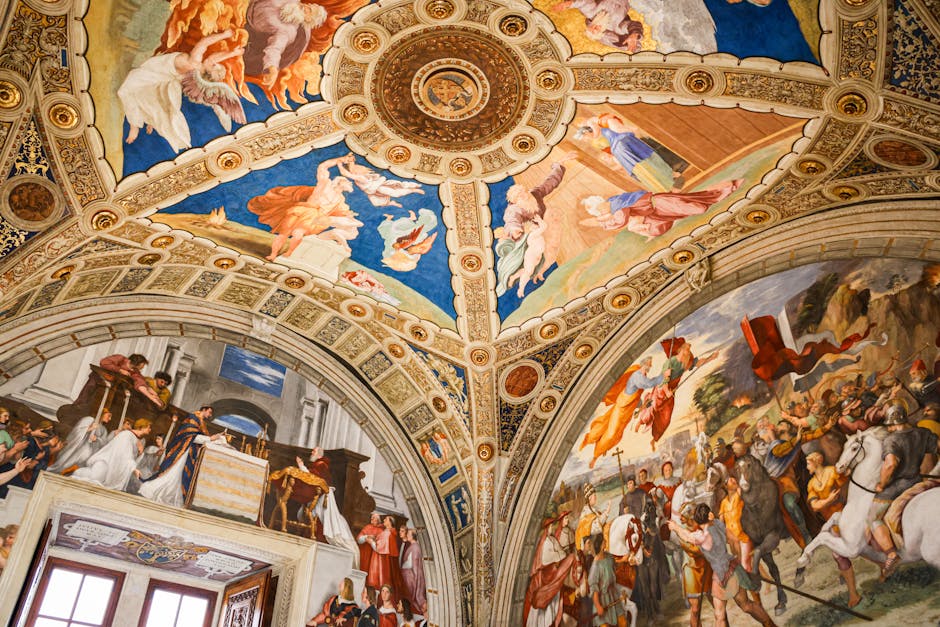
These twelve facts reveal the Renaissance as a period of extraordinary human achievement across multiple disciplines. From artistic innovations in perspective and patronage systems that supported genius, to linguistic creativity and scientific discoveries that challenged established worldviews, the Renaissance fundamentally reshaped Western civilization. The era's emphasis on human potential, classical learning, and empirical observation laid foundations for the modern world. Whether through Michelangelo's breathtaking frescoes, Shakespeare's enduring words, or Galileo's revolutionary astronomy, Renaissance achievements continue to inspire and influence contemporary culture, reminding us of humanity's capacity for creativity, innovation, and intellectual courage.