








1 / 10 Questions
0 Points

What tiny animal survived 12 days in space?

Tardigrade

Fruit fly

Roundworm

Dust mite

Points won
0
Correct score
0%

More Articles

Top 10 Fun Facts About Ancient Greece

Top 10 Fun Facts About Ancient Greece

⏱️ 6 min read

Top 10 Fun Facts About Ancient Greece

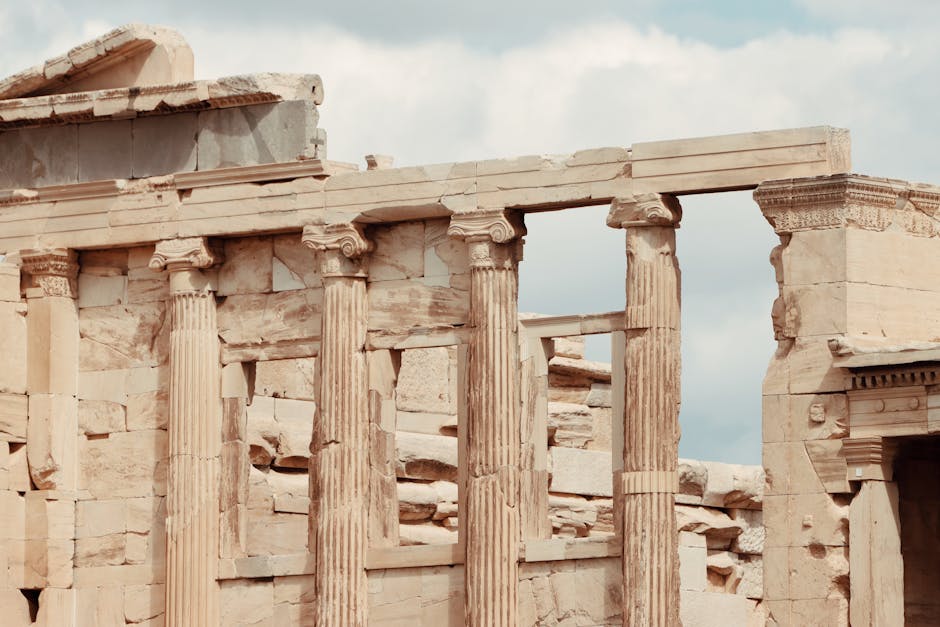
Ancient Greece stands as one of the most influential civilizations in human history, leaving an indelible mark on philosophy, politics, science, and culture that continues to shape our modern world. While many people are familiar with Greek mythology and the Olympic Games, this remarkable civilization harbored countless fascinating details that often go unnoticed. From their unexpected eating habits to their revolutionary democratic practices, the ancient Greeks were far more complex and intriguing than most history books reveal. This article explores ten captivating facts about Ancient Greece that illuminate the daily lives, beliefs, and innovations of this extraordinary society.

1. Democracy Was Born in Athens, But Not Everyone Could Vote

Ancient Athens is celebrated as the birthplace of democracy around 508 BCE, introducing a revolutionary system where citizens could participate directly in government decisions. However, this democratic ideal had significant limitations. Only free adult males born to Athenian parents could vote, excluding women, slaves, and foreigners from political participation. This meant that approximately only 10-20% of the total population actually had voting rights. Despite these restrictions, the concept was groundbreaking for its time and laid the foundation for modern democratic systems worldwide.

2. Ancient Greeks Invented the Alarm Clock

The ingenious Greek philosopher and engineer Plato created one of the world's first alarm clocks around 400 BCE. This water-based device used a complex system of vessels and siphons to measure time. When the water reached a certain level, it would force air through a whistle, creating a sound to wake people at a predetermined time. This invention demonstrates the Greeks' remarkable understanding of physics and engineering, as well as their practical approach to solving everyday problems.

3. The Olympics Were Held in Honor of Zeus

The ancient Olympic Games, which began in 776 BCE in Olympia, were not merely athletic competitions but sacred religious festivals dedicated to Zeus, the king of the Greek gods. These games were held every four years and were so important that warring city-states would declare a truce to allow athletes and spectators to travel safely. Athletes competed completely naked, which the Greeks believed honored the gods and showcased the human body in its natural form. The ancient Olympics continued for nearly 12 centuries until they were banned by the Roman Emperor Theodosius I in 393 CE.

4. Greek Theater Introduced Drama as We Know It

Ancient Greece gave birth to theatrical drama, developing both tragedy and comedy as distinct art forms. The Greeks built massive amphitheaters, some seating up to 14,000 spectators, with acoustics so sophisticated that a whisper on stage could be heard in the back rows. Actors wore elaborate masks to project their voices and display emotions, as all roles, including female characters, were played by men. The works of playwrights like Sophocles, Euripides, and Aristophanes established storytelling conventions that continue to influence modern cinema, television, and theater.

5. Ancient Greeks Had a Unique Counting System

The ancient Greeks didn't use numbers as we do today. Instead, they used letters from their alphabet to represent numerical values. Alpha represented one, beta represented two, and so on. This system, while functional for basic mathematics, made complex calculations challenging. Despite this limitation, Greek mathematicians like Pythagoras and Euclid made groundbreaking contributions to geometry and mathematical theory that remain fundamental to modern mathematics.

6. Yo-Yos Were Popular Greek Toys

Archaeological evidence suggests that yo-yos were among the most popular toys in ancient Greece, dating back to at least 500 BCE. Greek vases and artifacts depict children playing with these spinning toys made from wood, metal, or terracotta. Some yo-yos were even placed in the graves of deceased children, highlighting their cultural significance. This makes the yo-yo one of the oldest recognizable toys in human history.

7. Ancient Greeks Used Stones as Toilet Paper

Personal hygiene in ancient Greece took an interesting approach by modern standards. Greeks commonly used stones, pottery shards called pessoi, or even pieces of broken ceramic to clean themselves after using the toilet. Public latrines were social spaces where people would sit side by side and conduct business or conversations. Some wealthier individuals might use wool or rosewater-soaked sponges, but stones remained the most common option for the general population.

8. The Greeks Believed in Hundreds of Gods and Goddesses

While most people are familiar with the twelve Olympian gods, ancient Greek religion actually included hundreds of deities, each governing different aspects of life and nature. Beyond the major gods like Zeus, Athena, and Apollo, there were minor deities for rivers, trees, winds, and even specific emotions. Greeks made daily offerings and prayers to various gods depending on their needs, whether seeking good harvests, safe travels, or success in love. This polytheistic system permeated every aspect of Greek life and heavily influenced their art, literature, and social customs.

9. Ancient Greek Soldiers Fought in Phalanx Formation

Greek military innovation introduced the phalanx formation, a tactical arrangement where heavily armed infantry soldiers called hoplites stood shoulder to shoulder in tight rows, overlapping their shields to create an impenetrable wall. Each soldier carried a large round shield, a long spear, and wore bronze armor. This formation required exceptional discipline, coordination, and trust among soldiers. The phalanx proved devastatingly effective in battle and influenced military tactics for centuries, contributing significantly to Greek victories against larger Persian armies.

10. Education Varied Dramatically Between City-States

Educational philosophies differed radically across ancient Greece. In Athens, boys received well-rounded educations including reading, writing, mathematics, music, poetry, and athletics, with the goal of creating thoughtful citizens. Girls typically learned domestic skills at home. In stark contrast, Sparta focused almost exclusively on military training for boys beginning at age seven, emphasizing physical toughness, discipline, and combat skills. Spartan girls also received physical training, unusual for the time, to ensure they would become strong mothers of future warriors. These contrasting approaches reflected each city-state's values and priorities.

Conclusion

These ten fascinating facts reveal that ancient Greece was far more than marble columns and philosophical debates. From their innovative alarm clocks to their unique hygiene practices, from the birth of democracy to the discipline of the phalanx, the ancient Greeks created a civilization of remarkable complexity and contradiction. Their contributions to government, arts, science, and warfare continue to influence modern society in countless ways. Understanding these lesser-known aspects of Greek life provides a richer, more complete picture of a civilization that, despite existing thousands of years ago, remains remarkably relevant to our contemporary world. The legacy of ancient Greece reminds us that human ingenuity, creativity, and the pursuit of knowledge are timeless endeavors that connect us across millennia.

Did You Know? 10 Film Locations You Can Visit Today

Did You Know? 10 Film Locations You Can Visit Today

⏱️ 7 min read

Did You Know? 10 Film Locations You Can Visit Today

For movie enthusiasts, visiting the actual locations where beloved films were shot offers a unique opportunity to step into the worlds of their favorite characters and stories. From bustling cityscapes to remote natural wonders, these cinematic destinations have become pilgrimage sites for fans worldwide. Many of these locations have been preserved or remain remarkably unchanged since filming, allowing visitors to experience the magic of cinema in real life. Here are ten iconic film locations that you can visit today, each offering a tangible connection to movie history.

1. The Shire - Hobbiton, New Zealand

The rolling green hills of Matamata in New Zealand's North Island served as the idyllic setting for Hobbiton in Peter Jackson's "The Lord of the Rings" and "The Hobbit" trilogies. Unlike many film sets that are dismantled after production, the Hobbiton Movie Set has been preserved as a permanent attraction. Visitors can walk through the meticulously maintained hobbit holes, stand beneath the Party Tree, and enjoy a beverage at the Green Dragon Inn. The Alexander family farm, which hosts the set, offers guided tours that provide fascinating insights into the filmmaking process and the transformation of their sheep farm into Middle-earth's most charming village.

2. Platform 9¾ - King's Cross Station, London

Harry Potter fans from around the globe make their way to King's Cross Station in London to find the magical gateway to the Hogwarts Express. While the actual filming took place between platforms 4 and 5, the station has installed a permanent tribute at the departure area between platforms 9 and 10. Complete with a luggage trolley disappearing into the wall and an official Harry Potter shop, this location allows fans to capture their own moment of magical departure. The station has embraced its cinematic legacy, making it one of London's most photographed tourist attractions.

3. The Grand Budapest Hotel - Görlitz Department Store, Germany

Wes Anderson's visually stunning film "The Grand Budapest Hotel" utilized several European locations, with the Görlitz Department Store in Germany serving as the hotel's magnificent interior. Built in the Art Nouveau style in 1913, this abandoned department store provided the perfect backdrop for Anderson's symmetrical and colorful aesthetic. The building, located in the town of Görlitz on the German-Polish border, has become a popular destination for architecture enthusiasts and film buffs alike. While it's not always open to the public, special tours are occasionally available, and the exterior can be admired year-round.

4. Thelma & Louise's Final Scene - Dead Horse Point State Park, Utah

The breathtaking finale of "Thelma & Louise" was filmed at Dead Horse Point State Park in Utah, overlooking the stunning Canyonlands. This dramatic mesa stands 2,000 feet above the Colorado River and offers some of the most spectacular views in the American Southwest. Visitors can stand at the same viewpoint where the iconic final scene was filmed, taking in the vast expanse of red rock canyons and desert landscape. The park features hiking trails, a visitor center, and camping facilities, making it an ideal destination for those seeking both cinematic history and natural beauty.

5. The Shawshank Redemption - Ohio State Reformatory, Mansfield, Ohio

The imposing Ohio State Reformatory in Mansfield served as the primary filming location for the beloved drama "The Shawshank Redemption." This historic Victorian-style prison, built in 1886, has been preserved and now operates as a museum and tourist attraction. Visitors can take self-guided or guided tours through the actual cells, corridors, and offices seen in the film, including the warden's office and the tunnel through which Andy Dufresne made his famous escape. The reformatory also hosts special events throughout the year, including anniversary screenings and paranormal investigations.

6. Breakfast at Tiffany's - Tiffany & Co., Fifth Avenue, New York

The iconic opening scene of "Breakfast at Tiffany's" featuring Audrey Hepburn gazing into the windows of Tiffany & Co. on Fifth Avenue has become one of cinema's most memorable moments. The flagship store remains in its original location at the corner of Fifth Avenue and 57th Street in Manhattan. Visitors can recreate Holly Golightly's morning ritual by visiting the store's windows and enjoying breakfast from one of the nearby cafés. The store has fully embraced its cinematic heritage, and standing outside in the early morning hours offers a unique connection to classic Hollywood glamour.

7. The Sound of Music - Mirabell Gardens, Salzburg, Austria

The enchanting city of Salzburg, Austria, served as the backdrop for numerous scenes in "The Sound of Music." The Mirabell Gardens, where Maria and the von Trapp children danced around the Pegasus Fountain singing "Do-Re-Mi," remains one of the most visited locations from the film. The baroque gardens, built in 1606, are open to the public year-round and are free to visit. The gardens' perfectly manicured lawns, ornate fountains, and views of Hohensalzburg Fortress make it a stunning destination even for those who aren't film enthusiasts. Several tour companies offer Sound of Music tours that cover multiple filming locations throughout Salzburg and the surrounding areas.

8. Rocky Steps - Philadelphia Museum of Art, Pennsylvania

The 72 stone steps leading to the entrance of the Philadelphia Museum of Art have become synonymous with determination and triumph thanks to Sylvester Stallone's "Rocky" films. Visitors from around the world run up these steps daily, recreating Rocky Balboa's famous training montage and posing with raised fists at the top. A bronze statue of Rocky stands nearby, having been moved from the top of the steps to a spot at the base. The museum embraces this pop culture phenomenon, and the steps have become one of Philadelphia's most recognizable landmarks, symbolizing the underdog spirit that defines both the character and the city.

9. Jurassic Park - Kualoa Ranch, Oahu, Hawaii

The lush, prehistoric-looking landscapes of Kualoa Ranch on Oahu's windward coast provided the stunning backdrop for multiple scenes in the "Jurassic Park" franchise. This 4,000-acre private nature reserve offers movie site tours that take visitors to the exact locations where dinosaurs once roamed on screen, including the famous valley where the Gallimimus stampede occurred. The ranch has also been featured in numerous other productions, including "Lost," "Kong: Skull Island," and "Jumanji: Welcome to the Jungle." Visitors can explore the locations via ATV, horseback, or tour bus while learning about both the area's film history and Hawaiian cultural significance.

10. Notting Hill - The Blue Door, London

The charming blue door at 280 Westbourne Park Road in London's Notting Hill neighborhood became an international icon after appearing in the 1999 romantic comedy "Notting Hill" as the entrance to Hugh Grant's character's flat. While the door has since been replaced and painted black by the current homeowners, and later sold at auction, the location remains a popular stop for fans of the film. The surrounding neighborhood, with its colorful Victorian townhouses, vintage markets, and quaint bookshops, captures the romantic atmosphere portrayed in the movie. Visitors can explore Portobello Road Market and the various streets that featured in the film, experiencing the bohemian charm that made the movie so beloved.

Conclusion

These ten film locations demonstrate how cinema can transform ordinary places into extraordinary destinations that resonate with audiences long after the credits roll. From the fantastical landscapes of Middle-earth to the gritty authenticity of an Ohio prison, each location offers visitors a unique opportunity to connect with beloved stories and characters in a tangible way. Whether you're a dedicated cinephile planning a pilgrimage or a casual traveler who stumbles upon these sites, visiting these filming locations adds an enriching layer to both your movie-watching experience and your travels. As film tourism continues to grow, these destinations stand as testament to the enduring power of cinema to inspire, move, and draw people together across cultures and continents.