


















1 / 20 Questions
0 Points

What simple machine is a slide at a playground?

Lever

Wheel and axle

Pulley

Inclined plane

Points won
0
Correct score
0%

More Articles

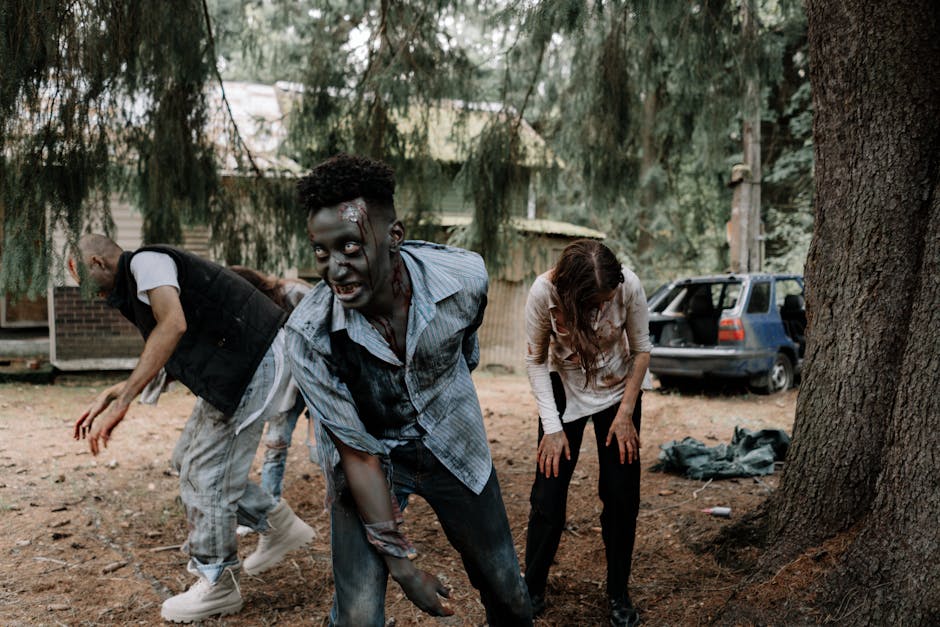
Top 10 Fun Facts About Horror Movie Classics

Top 10 Fun Facts About Horror Movie Classics

⏱️ 7 min read

Top 10 Fun Facts About Horror Movie Classics

Horror movies have captivated audiences for over a century, delivering spine-tingling scares and unforgettable moments that have become deeply embedded in popular culture. Behind the screams and terror, however, lie fascinating stories about the making of these cinematic masterpieces. From unexpected casting decisions to on-set accidents that made it into the final cut, the history of classic horror films is filled with intriguing details that even die-hard fans might not know. This article explores ten remarkable facts about some of the most iconic horror movies ever made, revealing the creativity, challenges, and sometimes bizarre circumstances that brought these terrifying tales to life.

1. The Shower Scene in Psycho Used Chocolate Syrup for Blood

Alfred Hitchcock's 1960 masterpiece "Psycho" features one of the most famous scenes in cinema history: the shower murder. What many viewers don't realize is that the "blood" swirling down the drain was actually Bosco chocolate syrup. Since the film was shot in black and white, the syrup provided the perfect viscosity and contrast on screen. The scene took seven days to shoot and used 77 different camera angles, lasting only 45 seconds in the final cut. Actress Janet Leigh was so affected by filming this sequence that she reportedly avoided showers for the rest of her life, preferring baths instead.

2. The Exorcist Caused Actual Medical Emergencies in Theaters

When "The Exorcist" premiered in 1973, it sparked unprecedented reactions from audiences. Multiple reports documented moviegoers fainting, vomiting, and suffering heart attacks during screenings. The film's impact was so intense that some theaters stationed paramedics in lobbies. Director William Friedkin had to cut certain scenes because test audiences found them too disturbing. The production itself was plagued with mysterious accidents and deaths among cast and crew members, leading some to believe the set was genuinely cursed. A priest was even brought in to bless the set after a series of unexplained incidents.

3. Halloween Was Made on an Incredibly Tiny Budget

John Carpenter's 1978 classic "Halloween" became one of the most profitable independent films ever made, yet it was produced for a mere $300,000. The iconic Michael Myers mask was actually a modified Captain Kirk mask from Star Trek, painted white and altered because the production couldn't afford to create a custom mask. The film's legendary score was composed by Carpenter himself in just three days. Despite its shoestring budget, "Halloween" grossed over $70 million worldwide and launched one of horror's most enduring franchises, proving that creativity and atmosphere matter more than expensive special effects.

4. The Blair Witch Project's Actors Didn't Know What Would Happen

The 1999 found-footage phenomenon "The Blair Witch Project" revolutionized horror filmmaking with its ultra-realistic approach. The three main actors were given handheld cameras and minimal direction, then sent into the woods where the filmmakers would leave notes with vague instructions and create scary situations without warning. The actors' genuine confusion and fear contributed to the film's authenticity. Made for approximately $60,000, it earned nearly $250 million worldwide. The innovative viral marketing campaign convinced many viewers that the footage was real, with some believing the actors had actually disappeared.

5. A Nightmare on Elm Street Drew Inspiration from Real News Stories

Writer-director Wes Craven based "A Nightmare on Elm Street" (1984) on a series of Los Angeles Times articles about young refugees from the Khmer Rouge regime who died during nightmares. These individuals, healthy young men, refused to sleep because they feared their dreams, and several died mysteriously in their sleep after finally succumbing to exhaustion. This disturbing real-world phenomenon inspired Craven to create Freddy Krueger, a villain who could kill people in their dreams. The film launched Johnny Depp's career in his feature film debut and spawned one of horror's most recognizable villains.

6. The Shining's Typewriter Scenes Required Massive Dedication

Stanley Kubrick's perfectionism during the production of "The Shining" (1980) is legendary, but one detail stands out: the pages that Wendy discovers her husband Jack has been typing were actually typed out individually. The phrase "All work and no play makes Jack a dull boy" appears hundreds of times, and for international versions, the pages were retyped in different languages with equivalent sayings. The film holds the record for most retakes of a single scene with dialogue: the baseball bat scene was shot 127 times. Kubrick's demanding directing style was so intense that actress Shelley Duvall's hair began falling out from stress during production.

7. Dracula Featured a Real Symphony Orchestra on Set

The 1931 Universal classic "Dracula" starring Bela Lugosi employed an unusual technique to create the right atmosphere during filming. Director Tod Browning had a complete symphony orchestra perform music on set during certain scenes, even though the film itself would have no musical score in most scenes. This was done to help the actors achieve the proper mood and emotional state. Lugosi's portrayal became so iconic that he was eventually buried in his Dracula cape. Interestingly, Lugosi spoke limited English when filming began and learned his lines phonetically, contributing to the character's distinctive speech pattern.

8. The Texas Chain Saw Massacre Was Inspired by Ed Gein

Tobe Hooper's 1974 horror masterpiece "The Texas Chain Saw Massacre" drew partial inspiration from Wisconsin serial killer Ed Gein, who also inspired elements of "Psycho" and "The Silence of the Lambs." Despite its title and reputation, the film contains minimal on-screen blood and gore; the horror comes from implication and atmosphere. The film was shot in scorching Texas summer heat, with temperatures often exceeding 100 degrees Fahrenheit. The dinner scene near the film's end was shot over four days in an un-air-conditioned house filled with real rotting meat as decoration, causing cast and crew to vomit between takes. The film was banned in several countries but has since been recognized as a significant work of American cinema.

9. Jaws Created the Summer Blockbuster

Steven Spielberg's 1975 thriller "Jaws" fundamentally changed Hollywood's release strategy and is credited with inventing the summer blockbuster. The film's production was notoriously difficult, plagued by malfunctioning mechanical sharks that the crew nicknamed "Bruce." These technical failures forced Spielberg to suggest the shark sparingly, which ironically made it more terrifying. The director was only 27 years old during production and believed he would be fired due to the mounting costs and delays. The famous line "You're gonna need a bigger boat" was actually an ad-lib that became one of cinema's most quoted phrases. "Jaws" earned over $470 million worldwide and made people afraid to go in the water.

10. Night of the Living Dead Entered Public Domain by Accident

George A. Romero's groundbreaking 1968 film "Night of the Living Dead" revolutionized zombie movies and social commentary in horror. However, the film accidentally entered the public domain immediately upon release due to an error by the distributor. The original title was "Night of the Flesh Eaters," but it was changed at the last minute. When the new title cards were created, they failed to include the copyright notice, which was required at the time. This mistake meant Romero and his collaborators never received royalties from the countless screenings, home video releases, and broadcasts over the decades, despite the film's enormous influence and enduring popularity.

Conclusion

These ten fascinating facts reveal that the history behind classic horror films is often as compelling as the movies themselves. From budget constraints that led to creative solutions, to real-world inspirations that make the fiction even more unsettling, these details enrich our appreciation of these cinematic landmarks. Whether it's chocolate syrup standing in for blood, actors genuinely terrified by unknown circumstances, or legal oversights that cost creators millions, each story demonstrates the unpredictable nature of filmmaking. These horror classics continue to influence modern cinema, and understanding their creation helps us recognize the artistry, innovation, and sometimes sheer luck that goes into creating movies that stand the test of time. The next time you watch one of these iconic films, you'll view it through a new lens, armed with knowledge about the remarkable circumstances that brought these terrifying visions to life.

Top 10 Fun Facts About Artificial Intelligence

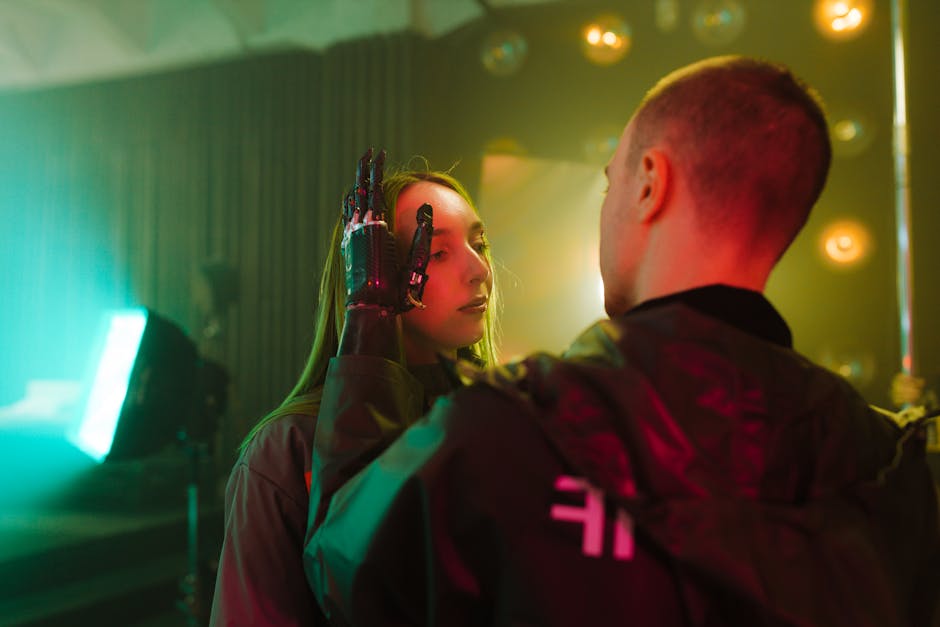
Top 10 Fun Facts About Artificial Intelligence

⏱️ 7 min read

Top 10 Fun Facts About Artificial Intelligence

Artificial Intelligence has transformed from a concept in science fiction to an integral part of our daily lives. While many people interact with AI technology regularly, there are numerous fascinating aspects of this revolutionary field that remain unknown to the general public. From its historical origins to its modern capabilities, AI continues to surprise and amaze researchers and enthusiasts alike. Here are ten compelling facts about artificial intelligence that showcase its remarkable journey and potential.

1. The Term "Artificial Intelligence" Was Coined in 1956

The phrase "Artificial Intelligence" was first introduced by computer scientist John McCarthy during the Dartmouth Conference in the summer of 1956. This historic gathering brought together leading researchers to explore the possibility of creating machines that could simulate human intelligence. McCarthy, along with Marvin Minsky, Claude Shannon, and Nathan Rochester, organized this groundbreaking event that is now considered the birth of AI as an academic discipline. The conference lasted approximately six weeks and laid the foundation for decades of AI research and development.

2. AI Can Create Original Artwork and Music

Modern AI systems have demonstrated remarkable creative capabilities, producing original paintings, compositions, and literary works. AI algorithms have been trained on vast collections of artwork and can generate new pieces in various artistic styles, from Renaissance paintings to modern abstract art. In the music industry, AI programs can compose symphonies, pop songs, and even mimic the styles of famous composers like Bach and Mozart. Some AI-generated artwork has even been sold at prestigious auction houses for significant sums, sparking debates about the nature of creativity and authorship in the digital age.

3. The First AI Program Beat a Human at Checkers in 1962

Arthur Samuel, a pioneer in machine learning, developed a checkers-playing program that achieved a significant milestone in 1962 when it defeated a human champion. This achievement demonstrated that machines could learn from experience and improve their performance over time. Samuel's work on this program introduced the concept of machine learning and showed that computers could develop strategies and make decisions without being explicitly programmed for every possible scenario. This breakthrough paved the way for future developments in game-playing AI, culminating in victories over human champions in chess, Go, and other complex games.

4. AI Systems Can Detect Diseases Earlier Than Human Doctors

Medical AI has shown extraordinary capability in diagnosing various conditions, often identifying diseases at earlier stages than traditional methods. Deep learning algorithms trained on millions of medical images can detect subtle patterns in X-rays, MRIs, and CT scans that might escape human observation. Studies have demonstrated that AI systems can identify certain types of cancer, diabetic retinopathy, and heart conditions with accuracy rates that match or exceed experienced radiologists and specialists. This technology doesn't replace doctors but serves as a powerful tool to enhance diagnostic accuracy and speed, potentially saving countless lives through early intervention.

5. Most Smartphones Contain Multiple AI Systems

The average smartphone utilizes numerous AI technologies that users interact with daily, often without realizing it. Voice assistants like Siri, Google Assistant, and Alexa rely on natural language processing and machine learning to understand and respond to queries. Camera applications use AI for facial recognition, scene detection, and image enhancement. Predictive text, autocorrect features, and personalized recommendations for apps, music, and content all depend on AI algorithms. Even battery management and performance optimization increasingly rely on machine learning to adapt to individual usage patterns and maximize device efficiency.

6. AI Has Its Own Creativity Tests

Researchers have developed specific tests to measure AI creativity, similar to how IQ tests measure human intelligence. The Lovelace Test, named after Ada Lovelace, evaluates whether an AI system can create something genuinely original that surprises its own creators. Another assessment, the Alternate Uses Test, measures how AI can generate diverse and novel uses for ordinary objects. These tests help researchers understand the boundaries of machine creativity and whether AI can truly exhibit imaginative thinking or simply recombines existing patterns in sophisticated ways. The debate continues about whether machines can possess genuine creativity or merely simulate it convincingly.

7. AI Can Learn to Play Video Games Without Instructions

DeepMind's AI systems have demonstrated the ability to master complex video games without any prior knowledge of the rules, learning purely through trial and error. In 2013, DeepMind created an AI that taught itself to play dozens of classic Atari games, achieving superhuman performance in many of them. The system received only the raw pixel data from the screen and the game score, figuring out effective strategies through millions of practice attempts. This reinforcement learning approach mirrors how humans learn through experience and has applications far beyond gaming, including robotics, autonomous vehicles, and resource management.

8. The AI Industry Consumes Enormous Amounts of Energy

Training large AI models requires substantial computational power and energy consumption. A single training session for a large language model can consume as much electricity as several American households use in an entire year. Researchers estimate that training one large AI model can generate carbon emissions equivalent to five times the lifetime emissions of an average car, including its manufacturing process. This environmental impact has prompted the AI community to seek more efficient algorithms and sustainable computing methods. Companies are increasingly focusing on "green AI" initiatives that aim to reduce the carbon footprint while maintaining performance levels.

9. AI Can Predict Earthquakes and Natural Disasters

Machine learning algorithms are being employed to analyze seismic data and identify patterns that precede earthquakes and other natural disasters. While earthquake prediction remains highly challenging, AI systems can process vast amounts of geological data much faster than human researchers and detect subtle correlations that might indicate upcoming seismic activity. Similarly, AI models help meteorologists predict hurricanes, floods, and other weather events with increasing accuracy. These systems analyze satellite imagery, atmospheric conditions, and historical data to provide earlier warnings, giving communities more time to prepare and potentially saving lives through improved disaster response planning.

10. Some AI Systems Are Learning to Explain Their Decisions

One of the biggest challenges in AI has been the "black box" problem, where even developers cannot fully explain how their systems reach specific conclusions. However, a growing field called Explainable AI focuses on creating algorithms that can articulate their reasoning processes. These systems can highlight which factors influenced their decisions and provide justifications in human-understandable terms. This transparency is particularly crucial in sensitive applications like medical diagnosis, legal judgments, and financial lending, where understanding the basis for AI recommendations is essential for trust, accountability, and regulatory compliance. As AI becomes more integrated into critical decision-making processes, explainability continues to be a priority for researchers and developers.

Conclusion

These ten fascinating facts about artificial intelligence reveal just how far the technology has progressed since its inception in the 1950s. From defeating human champions in strategic games to creating original artwork, from diagnosing diseases to predicting natural disasters, AI has proven itself as a transformative force across numerous domains. As AI systems become increasingly sophisticated and integrated into daily life, understanding their capabilities, limitations, and impact becomes ever more important. The field continues to evolve rapidly, promising even more remarkable developments in the years to come while also raising important questions about energy consumption, creativity, and transparency that researchers are actively addressing. Whether enhancing medical care, powering our smartphones, or pushing the boundaries of machine creativity, artificial intelligence stands as one of humanity's most significant technological achievements.