











1 / 10 Questions
0 Points

What Plant Snaps Shut To Trap Insects?

Rose

Oak tree

Sunflower

Venus flytrap

Points won
0
Correct score
0%

More Articles

Did You Know? 10 Fun Facts About Time Travel Theories

Did You Know? 10 Fun Facts About Time Travel Theories

⏱️ 6 min read

Did You Know? 10 Fun Facts About Time Travel Theories

Time travel has captivated human imagination for centuries, bridging the gap between science fiction and theoretical physics. While we may not yet possess the technology to journey through time, scientists have developed fascinating theories about how time travel might actually work. From Einstein's groundbreaking revelations to modern quantum mechanics, the concept of moving through time continues to intrigue researchers and dreamers alike. Here are ten remarkable facts about time travel theories that might surprise you and expand your understanding of this mind-bending concept.

1. Einstein Proved Time Travel Is Theoretically Possible

Albert Einstein's Theory of Special Relativity, published in 1905, fundamentally changed our understanding of time. According to this theory, time is not absolute but relative, depending on the observer's speed and position in space. Einstein demonstrated that time moves slower for objects traveling at speeds approaching the speed of light. This phenomenon, called time dilation, means that astronauts traveling at extremely high speeds would age more slowly than people on Earth. This isn't just theory—astronauts aboard the International Space Station actually experience time slightly slower than we do on Earth, though the difference is measured in milliseconds.

2. Wormholes Could Be Nature's Time Machines

Wormholes, also known as Einstein-Rosen bridges, are theoretical passages through space-time that could create shortcuts between distant points in the universe. Some physicists believe that if wormholes exist and could be stabilized, they might allow for time travel. The concept suggests that by connecting two different points in space-time, a traveler could potentially move not just across vast distances but also through time itself. However, keeping a wormhole open would require exotic matter with negative energy density, something we have yet to discover or create.

3. The Grandfather Paradox Challenges Time Travel Logic

One of the most famous thought experiments in time travel theory is the grandfather paradox. This paradox asks: what would happen if you traveled back in time and prevented your grandfather from meeting your grandmother? You would never be born, but if you were never born, you couldn't have traveled back in time to prevent their meeting. This logical impossibility has led physicists to propose various solutions, including the many-worlds interpretation and the Novikov self-consistency principle, which suggests that the probability of events that would create a paradox is zero.

4. Closed Timelike Curves Might Allow Circular Time Journeys

In general relativity, closed timelike curves (CTCs) are theoretical paths through space-time that loop back on themselves, potentially allowing an object to return to its own past. Mathematician Kurt Gödel discovered a solution to Einstein's field equations in 1949 that contained CTCs in a rotating universe. While our universe doesn't appear to rotate in the way Gödel's model requires, the mathematical possibility of CTCs continues to fascinate physicists studying the theoretical foundations of time travel.

5. Traveling to the Future Is Easier Than Traveling to the Past

According to current physics, traveling to the future is actually quite straightforward in principle—you simply need to move very fast or spend time near a massive gravitational field. Both scenarios cause time dilation, allowing you to effectively skip forward in time relative to the rest of the universe. Traveling to the past, however, presents far greater theoretical and practical challenges. Most solutions that allow backward time travel require exotic conditions or materials that may not exist in nature, making future travel far more feasible than visiting the past.

6. Black Holes Create Extreme Time Distortions

Black holes create such intense gravitational fields that they dramatically warp space-time around them. Near the event horizon of a black hole, time slows down significantly compared to distant observers. In the 2014 film "Interstellar," this concept was accurately portrayed when characters experienced time dilation near a massive black hole—one hour on a planet near the black hole equaled seven years back on Earth. This wasn't pure fiction; physicist Kip Thorne ensured the movie's depiction was based on real theoretical physics.

7. Quantum Mechanics Suggests Multiple Timelines

The many-worlds interpretation of quantum mechanics proposes that every quantum event creates a branching of reality into multiple parallel universes. Some physicists suggest this could resolve time travel paradoxes—when you travel back in time and change something, you're actually creating or entering a different timeline rather than altering your original one. This means you could theoretically prevent your grandfather from meeting your grandmother in an alternate timeline without creating a logical paradox in your original timeline.

8. Cosmic Strings Might Enable Time Travel

Cosmic strings are hypothetical one-dimensional topological defects in space-time that may have formed during the early universe. These incredibly dense, thin structures could stretch across vast distances. Physicist J. Richard Gott proposed in 1991 that two cosmic strings passing each other at high speeds could create closed timelike curves, potentially enabling time travel. While cosmic strings remain theoretical and have never been observed, they represent another fascinating possibility within the framework of general relativity.

9. The Arrow of Time Isn't Fundamental to Physics

Most fundamental laws of physics are time-symmetric, meaning they work equally well whether time moves forward or backward. The "arrow of time"—our experience of time flowing in one direction—appears to be connected to the second law of thermodynamics and the increase of entropy in the universe. This raises intriguing questions about whether time's direction is fundamental or emergent. Some physicists argue that understanding why we perceive time as unidirectional is crucial to understanding whether backward time travel is truly possible.

10. Time Travel Might Already Be Happening at the Quantum Level

Recent experiments in quantum mechanics have demonstrated phenomena that seem to challenge our conventional understanding of time's flow. Quantum particles can exhibit "retrocausality," where effects seem to precede their causes. In 2017, physicists successfully simulated quantum particles traveling backward in time using quantum computers. While this doesn't mean macroscopic time travel is possible, it suggests that at the quantum level, time might be more flexible than our everyday experience suggests, potentially opening new avenues for understanding time travel.

Conclusion

These ten fascinating facts about time travel theories demonstrate that what once seemed purely fictional has serious scientific foundations. From Einstein's proven time dilation to exotic possibilities like wormholes and cosmic strings, physics provides multiple theoretical pathways for temporal journeys. While practical time travel remains beyond our current capabilities, these theories continue to push the boundaries of our understanding of the universe. Whether through the extreme speeds predicted by special relativity, the warped space-time near black holes, or the quantum mysteries that challenge our perception of causality, time travel remains one of the most captivating frontiers in theoretical physics. As our technology and understanding advance, who knows what temporal possibilities might eventually become reality?
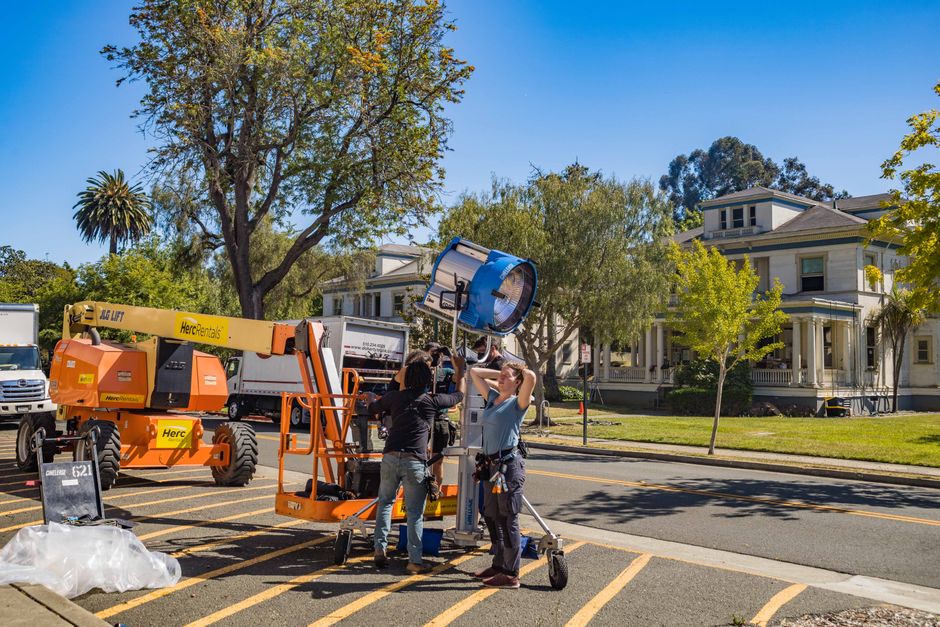

Did You Know? 10 Film Locations You Can Visit Today

Did You Know? 10 Film Locations You Can Visit Today

⏱️ 7 min read

Did You Know? 10 Film Locations You Can Visit Today

Cinema has the remarkable power to transport audiences to breathtaking locations, from bustling cityscapes to remote natural wonders. What many moviegoers don't realize is that countless iconic film locations are real places that can be visited today. These destinations offer fans the unique opportunity to step into the worlds of their favorite films, experiencing firsthand the magic that once graced the silver screen. Whether you're a casual movie enthusiast or a dedicated cinephile, these ten famous film locations provide unforgettable experiences that blend entertainment history with real-world exploration.

1. Hobbiton Movie Set - Matamata, New Zealand

Perhaps one of the most meticulously preserved film locations in the world, Hobbiton in Matamata, New Zealand, offers visitors an authentic journey into Middle-earth. Created for "The Lord of the Rings" trilogy and later enhanced for "The Hobbit" films, this 12-acre set features 44 hobbit holes built into the rolling hills of the Alexander family farm. Unlike many movie sets that are dismantled after filming, Hobbiton was reconstructed as a permanent attraction. Visitors can wander through Bag End, enjoy a drink at the Green Dragon Inn, and marvel at the attention to detail that brought J.R.R. Tolkien's vision to life. The lush pastoral setting remains virtually unchanged from what appeared on screen, making it a must-visit destination for fans of Peter Jackson's epic adaptations.

2. The Grand Budapest Hotel Filming Locations - Görlitz, Germany

Wes Anderson's visually stunning "The Grand Budapest Hotel" utilized several real locations in Görlitz, Germany, a picturesque town on the Polish border. The Görlitzer Warenhaus, a beautifully restored Art Nouveau department store, served as the hotel's lavish interior. The town's baroque and Art Nouveau architecture provided the perfect backdrop for Anderson's meticulous aesthetic. Visitors can explore the actual buildings and streets featured in the film, experiencing the same architectural charm that captivated audiences. The town has embraced its cinematic heritage, offering guided tours that showcase various filming locations throughout this remarkably well-preserved historical center.

3. Skellig Michael - County Kerry, Ireland

This dramatic, pyramid-shaped island off Ireland's southwestern coast became famous as the remote Jedi temple location in "Star Wars: The Force Awakens" and "The Last Jedi." However, Skellig Michael's significance extends far beyond cinema. This UNESCO World Heritage site features a remarkably preserved medieval monastery dating back to the 6th century. The island's 600+ stone steps lead visitors to ancient beehive huts where monks once lived in extreme isolation. Access to the island is strictly limited and weather-dependent, with only a few boats permitted to land daily during the summer months. This restriction helps preserve both the archaeological site and the island's important seabird colonies, making any visit a truly exclusive experience.

4. The Taj Mahal - Agra, India

Featured in numerous films including "Slumdog Millionaire," the Taj Mahal remains one of the world's most photographed monuments and a popular filming location for both Bollywood and international productions. This 17th-century marble mausoleum, built by Mughal Emperor Shah Jahan for his beloved wife, offers visitors an extraordinary architectural experience that has captivated filmmakers for decades. The monument's changing appearance throughout the day, from pink hues at dawn to golden tones at sunset, provides the same magical atmosphere captured in countless films. Visitors should plan their trip carefully, as the Taj Mahal is closed on Fridays and can become extremely crowded during peak tourist seasons.

5. Petra - Jordan

The ancient Nabataean city of Petra gained worldwide recognition as the location of the Holy Grail's resting place in "Indiana Jones and the Last Crusade." The Treasury, carved directly into rose-red sandstone cliffs, is one of archaeology's most impressive sites. Beyond the famous façade featured in the film, Petra encompasses a vast archaeological park with tombs, temples, and a Roman-style theater. Visitors can explore the narrow Siq canyon that leads to the Treasury, experiencing the same dramatic reveal that amazed both Indiana Jones and cinema audiences. The site requires significant walking, but the effort rewards visitors with one of the world's most spectacular ancient wonders.

6. Greystone Mansion - Beverly Hills, California

This 55-room Tudor Revival mansion has appeared in over 100 films and television shows, including "The Big Lebowski," "There Will Be Blood," and "X-Men." Built in 1928 for the Doheny family, the mansion and its 18.3-acre grounds are now a public park managed by the City of Beverly Hills. Visitors can explore the exterior and gardens free of charge, walking the same terraces and pathways featured in numerous productions. The mansion's interior is occasionally open for special events and tours. The grounds offer spectacular views of Los Angeles and provide a glimpse into the Golden Age of Hollywood glamour, making it a favorite location for filmmakers seeking Old Hollywood elegance.

7. Alnwick Castle - Northumberland, England

Harry Potter fans recognize Alnwick Castle as the filming location for many exterior Hogwarts scenes in the first two films, particularly the broomstick flying lessons in the castle's outer bailey. However, this medieval castle's history extends back over 1,000 years, serving as home to the Duke of Northumberland's family. Visitors can explore state rooms filled with art treasures, walk the battlements, and even participate in broomstick training sessions during certain times of year. The castle has also appeared in other productions including "Downton Abbey" and "Transformers: The Last Knight." Its impressive architecture and well-preserved medieval features make it a fascinating destination regardless of one's interest in film history.

8. Phang Nga Bay - Thailand

The distinctive limestone karsts rising from emerald waters made Phang Nga Bay the perfect location for the island lair in "The Man with the Golden Gun." James Bond Island, as it's now known locally, has become one of Thailand's most visited tourist destinations. While the island itself is small and can become crowded, the surrounding bay offers numerous opportunities for exploration by boat. Visitors can kayak through sea caves, visit floating villages, and discover hidden lagoons surrounded by towering cliffs. The bay's unique geological formations and pristine waters continue to attract filmmakers, making it a recurring location for international productions seeking exotic Southeast Asian settings.

9. Central Park - New York City, USA

Featured in hundreds of films from "When Harry Met Sally" to "The Avengers," Central Park serves as one of cinema's most versatile filming locations. Specific sites within the park have become iconic in their own right: Bow Bridge appeared in numerous romantic films, Bethesda Terrace featured prominently in "The Avengers," and the Mall's tree-lined pathway has graced countless opening sequences. Visitors can easily spend an entire day exploring filming locations throughout the park's 843 acres. The Central Park Film Tour offers guided experiences that highlight famous movie moments, though independent exploration with a film location map proves equally rewarding. The park's accessibility and free admission make it an ideal destination for movie location enthusiasts on any budget.

10. Fjaðrárgljúfur Canyon - Iceland

This spectacular canyon in southeast Iceland gained significant attention after appearing in "Star Wars: Rogue One" and a Justin Bieber music video, though its dramatic beauty has attracted filmmakers for years. The narrow canyon stretches approximately two kilometers long and reaches depths of 100 meters, with the Fjaðrá river winding through its bottom. Visitors can walk along the canyon's edge on designated paths, experiencing breathtaking views of the serpentine waterway below and moss-covered walls. Due to environmental concerns and increased tourism, the canyon periodically closes to allow nature to recover, so visitors should check accessibility before planning their trip. The otherworldly landscape demonstrates why Iceland has become one of the world's most sought-after filming locations for science fiction and fantasy productions.

Conclusion

These ten remarkable film locations offer more than just photo opportunities for movie fans; they provide rich cultural, historical, and natural experiences that exist independent of their cinematic fame. From ancient wonders like Petra and the Taj Mahal to purpose-built attractions like Hobbiton, each destination presents unique opportunities to connect with both film history and real-world heritage. Whether you're retracing Indiana Jones's footsteps through ancient ruins, standing where Harry Potter learned to fly, or exploring the landscapes of Middle-earth, these locations transform passive movie-watching into active exploration. As cinema continues to showcase the world's most beautiful and interesting places, the list of visitable film locations only grows, inviting travelers to experience the magic of movies in three-dimensional reality.