



















⏱️ 8 min read
12 Interesting Facts About the Great Wall of China
The Great Wall of China stands as one of humanity's most remarkable architectural achievements and endures as a powerful symbol of Chinese civilization. Stretching across mountains, deserts, and grasslands, this ancient fortification has captivated the imagination of people worldwide for centuries. While many know of its existence, the Great Wall holds numerous fascinating secrets and surprising truths that remain lesser-known. This article explores twelve intriguing facts about this magnificent structure that reveal the complexity, scale, and historical significance of one of the world's most iconic monuments.
1. The Great Wall Is Not a Single, Continuous Structure
Contrary to popular belief, the Great Wall is not one unbroken wall but rather a series of interconnected fortifications built over different dynasties. The wall system consists of multiple walls, some running parallel to each other, with watchtowers, garrison stations, and beacon towers scattered throughout. These various sections were constructed by different states and dynasties, creating a complex network rather than a singular monument. The total length of all these walls combined measures approximately 21,196 kilometers or 13,171 miles, though only about 8,850 kilometers represents the main wall structure.
2. Construction Spanned Over Two Millennia
The Great Wall's construction was not completed in a single historical period but evolved over more than 2,000 years. The earliest walls date back to the 7th century BCE, when various warring states built defensive fortifications. The most famous sections were constructed during the Ming Dynasty between 1368 and 1644 CE. This extended timeline means that the Great Wall represents the accumulated efforts of numerous generations, emperors, and Chinese dynasties, each contributing to and modifying the structure according to their defensive needs and technological capabilities.
3. Millions of Workers Participated in Its Construction
The construction of the Great Wall required an enormous workforce that included soldiers, peasants, and prisoners. Historians estimate that millions of workers participated in building the wall over the centuries, with some periods employing over one million laborers simultaneously. The work was extremely dangerous and physically demanding, particularly in mountainous terrain and harsh climates. Many workers perished during construction due to exhaustion, accidents, and disease, leading to legends that the wall became a massive burial ground, though archaeological evidence for widespread burials within the wall itself remains limited.
4. The Wall Employed Sophisticated Engineering Techniques
Ancient Chinese engineers demonstrated remarkable ingenuity in constructing the Great Wall across diverse and challenging terrain. They developed innovative techniques to ensure stability and durability, including using glutinous rice mortar as a binding agent in certain sections. The wall's design incorporated drainage systems to prevent water damage, and its width varied strategically, being wider at the base and narrower at the top. In mountainous regions, builders followed ridgelines to maximize defensive advantages while minimizing construction difficulty. These engineering achievements allowed sections of the wall to survive for centuries despite exposure to extreme weather conditions.
5. It Was Built With Diverse Materials
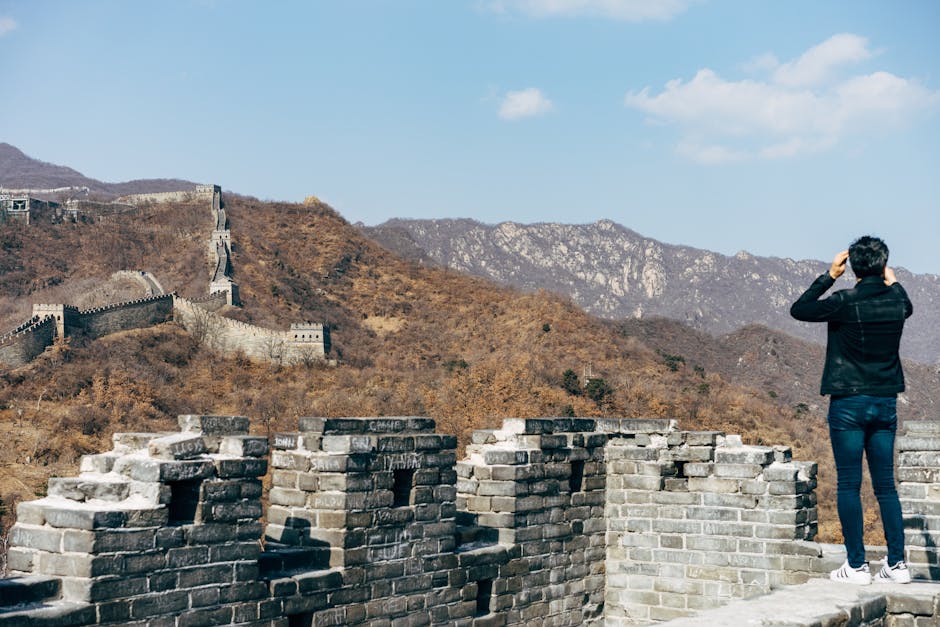
The construction materials used in the Great Wall varied significantly depending on the region and available resources. In mountainous areas, workers used stone from local quarries. In plains regions where stone was scarce, builders utilized rammed earth, compressed layers of soil and gravel. Other sections incorporated bricks, wood, and even reeds. The Ming Dynasty sections, which are the most well-preserved and visited today, predominantly feature brick and stone construction. This adaptive use of materials demonstrates the practical ingenuity of ancient Chinese builders who worked with whatever resources their environment provided.
6. The Wall Served Multiple Strategic Functions
While primarily known as a defensive fortification against northern invasions, the Great Wall served numerous strategic purposes beyond simple military defense. It functioned as a transportation corridor, enabling the rapid movement of troops and supplies along its length. The wall also regulated trade and immigration, with designated gates serving as checkpoints for the Silk Road. Additionally, the beacon tower system allowed for sophisticated long-distance communication, with smoke signals during the day and fire signals at night warning of approaching enemies. This multi-functional design made the wall an integral component of imperial administration and border control.
7. It Cannot Actually Be Seen From Space
One of the most persistent myths about the Great Wall claims it is visible from space or even from the moon with the naked eye. This assertion has been thoroughly debunked by astronauts and scientists. While the wall is indeed long, it is relatively narrow, typically measuring between 4 and 5 meters wide at the top. From low Earth orbit, it is essentially impossible to distinguish the Great Wall from the surrounding landscape without magnification. This myth likely originated from exaggerated accounts and misunderstandings about the wall's scale, but it continues to persist in popular culture despite being scientifically inaccurate.
8. Many Sections Have Disappeared or Deteriorated
Despite its reputation for grandeur, significant portions of the Great Wall have been lost to time, natural erosion, and human activity. Approximately 30 percent of the Ming Dynasty wall has disappeared entirely, with some sections reduced to mere mounds of earth. Natural weathering, earthquakes, and sandstorms have damaged many sections, particularly those constructed from rammed earth. Human factors, including vandalism, theft of bricks for construction materials, and urban development, have accelerated deterioration. Conservation efforts have intensified in recent decades, but protecting the entire sprawling structure remains an enormous challenge for Chinese authorities.
9. The Wall Featured an Effective Communication System
The Great Wall incorporated a highly sophisticated communication network using beacon towers strategically positioned along its length. Guards stationed in these towers could transmit messages across vast distances in remarkably short time periods. The system used different combinations of smoke plumes during daylight and fire signals at night to convey specific information about enemy numbers and threat levels. According to historical records, signals could travel over 500 kilometers within just a few hours, enabling rapid military responses. This communication system represented one of the most advanced information networks of the ancient world.
10. It Failed to Prevent Many Invasions
Despite its massive scale and strategic design, the Great Wall ultimately failed to prevent numerous invasions throughout Chinese history. The Mongols under Genghis Khan breached the wall in the 13th century, and the Manchus conquered Ming China by passing through the wall at Shanhai Pass in 1644. These failures occurred not necessarily because of structural weaknesses but often due to political corruption, with guards accepting bribes or commanders opening gates to invaders. The wall's effectiveness depended heavily on the strength and loyalty of the troops defending it, demonstrating that even the most impressive fortifications cannot substitute for sound military strategy and political stability.
11. The Wall Became a UNESCO World Heritage Site
In 1987, UNESCO designated the Great Wall of China as a World Heritage Site, recognizing its outstanding universal value to humanity. This designation acknowledged the wall not only as an architectural and engineering marvel but also as a cultural symbol of Chinese civilization and human perseverance. The UNESCO status has helped raise awareness about conservation needs and has supported efforts to preserve remaining sections. However, the wall's immense length and geographic diversity present unique challenges for heritage management, requiring cooperation between multiple provinces and balancing tourism development with preservation priorities.
12. It Attracts Millions of Visitors Annually
Today, the Great Wall stands as China's most popular tourist attraction, drawing approximately 10 million visitors annually to its most accessible sections near Beijing, such as Badaling and Mutianyu. Tourism has become both an economic benefit and a conservation challenge, as heavy foot traffic accelerates wear on ancient structures. The wall has evolved from a military fortification into a symbol of Chinese national identity and a must-see destination for international travelers. Its image appears in countless photographs, films, and cultural representations, cementing its status as one of the world's most recognizable landmarks and a testament to human ambition and capability.
Conclusion
The Great Wall of China encompasses far more complexity and historical significance than its popular image suggests. These twelve facts reveal a structure that evolved over millennia, employed millions of workers, served multiple strategic functions, and continues to face preservation challenges. From its sophisticated engineering and communication systems to the myths surrounding its visibility from space, the Great Wall represents both remarkable human achievement and the limitations of even the most ambitious defensive projects. Understanding these fascinating aspects provides deeper appreciation for this ancient wonder and the civilization that created it. As a UNESCO World Heritage Site and enduring cultural symbol, the Great Wall continues to inspire awe while reminding us of the ingenuity, perseverance, and sacrifice of countless generations who contributed to its construction and legacy.