










1 / 10 Questions
0 Points

What is the state motto of California?

Eureka

The Golden State

Liberty and Prosperity

In God We Trust

Points won
0
Correct score
0%

More Articles

Did You Know? 10 Secrets Hidden in Company Logos

Did You Know? 10 Secrets Hidden in Company Logos

⏱️ 5 min read

Did You Know? 10 Secrets Hidden in Company Logos

Every day, we encounter hundreds of brand logos without giving them much thought. However, beneath the surface of these seemingly simple designs lie carefully crafted messages, clever visual tricks, and meaningful symbolism that most people never notice. Companies invest considerable time and resources into creating logos that communicate their values, history, and identity in subtle yet powerful ways. The following ten examples reveal the fascinating secrets hidden within some of the world's most recognizable company logos, demonstrating that there's often much more than meets the eye in corporate branding.

1. FedEx: The Arrow of Progress

The FedEx logo appears straightforward at first glance, but look closely between the letters "E" and "x" and you'll discover a perfectly formed arrow. This hidden arrow symbolizes speed, precision, and forward movement—exactly the qualities a shipping company wants to convey. The design has won over forty awards and is considered one of the most effective uses of negative space in logo design. Once you notice this arrow, you'll never unsee it, which is precisely what makes it such a brilliant branding element.

2. Amazon: From A to Z with a Smile

Amazon's logo contains a simple orange arrow that serves dual purposes. The arrow connects the letter "a" to the letter "z," suggesting that Amazon sells everything from A to Z. Simultaneously, the arrow curves upward to form a smile, representing customer satisfaction and the positive shopping experience the company aims to deliver. This clever design communicates comprehensiveness and happiness in one simple swoosh.

3. Toblerone: The Bear in the Mountain

The iconic Toblerone chocolate bar features the Matterhorn mountain on its packaging, a tribute to the brand's Swiss heritage. However, hidden within the mountain silhouette is the outline of a bear standing on its hind legs. This references Bern, Switzerland, where Toblerone originated—a city known as the "City of Bears." The bear appears in Bern's coat of arms and has been an integral part of the city's identity for centuries.

4. Baskin-Robbins: The Number 31

Baskin-Robbins is famous for its 31 flavors, representing a different ice cream flavor for each day of the month. The company cleverly incorporated this signature number into its logo by using pink coloring for parts of the letters "B" and "R," which together form the number "31." This subtle integration reinforces the brand's core identity while maintaining an attractive and modern design aesthetic.

5. Toyota: Every Letter Spelled Out

The Toyota logo consists of three overlapping ellipses that many assume are purely decorative. In reality, these ellipses can be arranged to spell out every letter in the word "TOYOTA." The two inner ellipses also represent the heart of the customer and the heart of the company overlapping, symbolizing the mutually beneficial relationship and trust between them. Additionally, the outer ellipse represents Toyota's global expansion and limitless opportunities.

6. Hyundai: More Than Just an "H"

Most people assume the Hyundai logo is simply a stylized letter "H" for the company name. However, the symbol actually represents two figures: a customer and a company representative shaking hands. This imagery emphasizes trust, satisfaction, and the personal relationship between the automotive manufacturer and its customers. The oval surrounding the handshake represents Hyundai's global presence and expansion.

7. NBC: The Peacock's Purpose

The NBC peacock is one of the most recognizable logos in broadcasting, but its colorful design has historical significance. When NBC introduced the peacock logo in 1956, color television was just emerging. The six different colored feathers were designed to encourage viewers to purchase color television sets, effectively saying, "Look at all these colors you're missing!" The peacock faces right to suggest looking forward to the future.

8. Adidas: The Mountain of Challenges

While the three stripes have been associated with Adidas for decades, the current logo arrangement forms a triangle that resembles a mountain. This design symbolizes the challenges that athletes must overcome and the goals they strive to achieve. The three stripes themselves represent the brand's core values: performance, passion, and integrity. The upward progression of the stripes also suggests growth and achievement.

9. Wendy's: A Hidden Message in the Collar

The Wendy's logo features the friendly face of Wendy, the daughter of founder Dave Thomas. Upon closer inspection of Wendy's collar, some observers have noted that the ruffled design appears to spell out the word "Mom." While Wendy's has stated this wasn't intentional, the company acknowledges that the design subconsciously evokes feelings of home cooking and maternal warmth, which aligns perfectly with their brand message of quality, homestyle food.

10. LG: A Winking Face

The LG logo consists of the letters "L" and "G" arranged in a circle, but when viewed as a whole, the design creates a friendly, winking face. The "L" forms the nose, the "G" creates the facial outline, and the negative space within the "G" serves as a winking eye with a smile. This humanizes the technology brand and makes it appear more approachable and friendly, reinforcing LG's tagline "Life's Good."

Conclusion

These ten examples demonstrate that successful logo design extends far beyond aesthetic appeal. Each hidden element serves a strategic purpose, whether communicating company values, referencing historical roots, or creating psychological connections with consumers. From the forward-moving arrow in FedEx to the smiling face in LG, these subtle details show the incredible thought and creativity that goes into corporate branding. The next time you encounter a familiar logo, take a moment to look more closely—you might discover a secret that's been hiding in plain sight all along. These hidden messages prove that great design speaks volumes without saying a word, creating lasting impressions that contribute to brand recognition and customer loyalty.
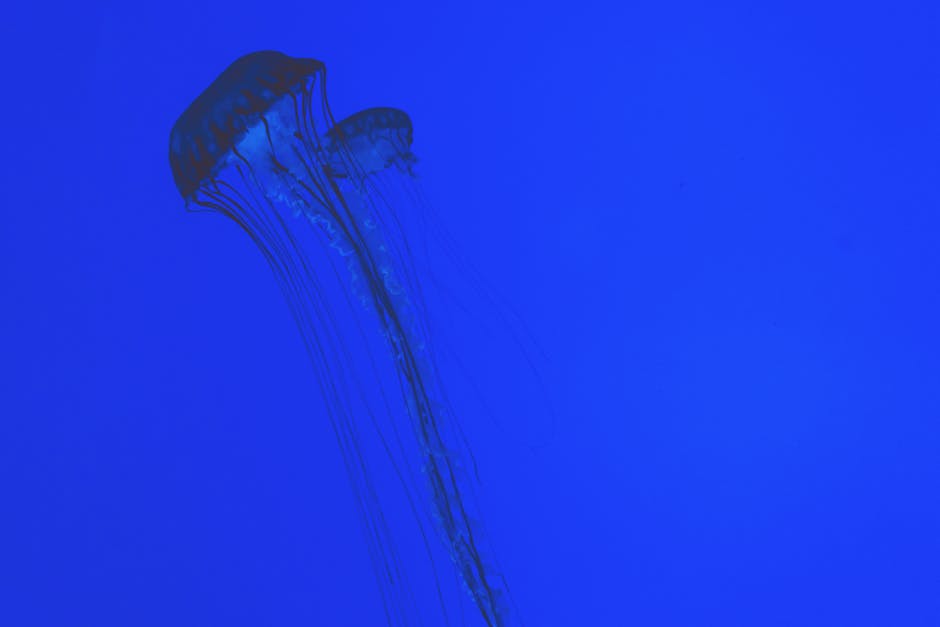

Top 10 Deep Sea Creatures You Won’t Believe Exist

Top 10 Deep Sea Creatures You Won’t Believe Exist

⏱️ 7 min read

Top 10 Deep Sea Creatures You Won't Believe Exist

The deep ocean remains one of Earth's final frontiers, a realm of perpetual darkness, crushing pressure, and bizarre life forms that seem more suited to science fiction than reality. Below 200 meters, sunlight vanishes completely, and creatures have evolved extraordinary adaptations to survive in this extreme environment. From bioluminescent predators to transparent oddities, these ten remarkable deep sea creatures demonstrate nature's incredible creativity in the face of seemingly impossible conditions.

1. The Barreleye Fish (Macropinna microstoma)

Perhaps one of the most extraordinary adaptations in the deep sea belongs to the barreleye fish, which possesses a completely transparent head. This remarkable creature features tubular eyes that point upward through its clear, fluid-filled dome, allowing it to scan for prey silhouettes above while remaining protected. The barreleye can rotate its eyes forward when feeding, and its ghost-like appearance makes it nearly invisible to both prey and predators. Living at depths between 600 and 800 meters in the Pacific Ocean, this fish represents evolution's ingenious solution to hunting in near-total darkness.

2. The Vampire Squid (Vampyroteuthis infernalis)

Despite its menacing name, which translates to "vampire squid from hell," this cephalopod is actually a gentle scavenger. The vampire squid sports a dark red to black coloration and webbing between its arms that resembles a cape. When threatened, it can turn itself inside-out, exposing rows of fleshy spines. Most impressively, it produces bioluminescent clouds from its arm tips to confuse predators. Living in oxygen-minimum zones between 600 and 900 meters deep, this living fossil has remained virtually unchanged for millions of years, feeding primarily on marine snow and detritus rather than living prey.

3. The Giant Isopod (Bathynomus giganteus)

Imagine a pill bug or roly-poly grown to terrifying proportions, and you have the giant isopod. These crustaceans can reach lengths of up to 50 centimeters and weigh up to 1.7 kilograms, making them the largest known members of the isopod family. They inhabit the cold, dark waters of the Atlantic, Pacific, and Indian Oceans at depths of 170 to 2,140 meters. Giant isopods are scavengers that feast on dead whales, fish, and squid that sink to the ocean floor. Their remarkable metabolism allows them to survive for years without food, and they can curl into a tight ball for protection when threatened.

4. The Gulper Eel (Eurypharynx pelecanoides)

The gulper eel, also known as the pelican eel, possesses one of the most disproportionately large mouths in the animal kingdom. This bizarre creature can open its massive, loosely-hinged jaws wide enough to swallow prey larger than itself. Its pouch-like lower jaw functions similarly to a pelican's beak, allowing it to engulf substantial meals in an environment where food is scarce. Despite growing up to one meter in length, most of this consists of a whip-like tail tipped with a light-producing organ. Living at depths of 500 to 3,000 meters, the gulper eel's stomach can expand dramatically to accommodate large prey items during infrequent feeding opportunities.

5. The Frilled Shark (Chlamydoselachus anguineus)

Often called a "living fossil," the frilled shark has remained essentially unchanged for 80 million years. This primitive shark species features an eel-like body, six pairs of elaborate gill slits with frilled edges, and approximately 300 needle-sharp, backward-pointing teeth arranged in 25 rows. These teeth are perfectly designed for grasping slippery prey like squid and other sharks. Reaching lengths of up to two meters, frilled sharks inhabit depths between 120 and 1,500 meters. Their hunting strategy involves lunging forward like a snake and swallowing prey whole, and they have one of the longest gestation periods of any vertebrate, lasting up to 3.5 years.

6. The Anglerfish (Melanocetus johnsonii)

The deep sea anglerfish represents one of nature's most extreme examples of sexual dimorphism and adaptation. Female anglerfish feature the iconic bioluminescent lure dangling in front of their enormous, tooth-filled mouths. This luminous appendage, called an esca, contains light-producing bacteria that attract prey in the pitch-black depths. Males, conversely, are tiny parasites that permanently fuse to females, providing sperm in exchange for nutrients from her bloodstream. Some species of anglerfish can extend their jaws and stomachs to consume prey twice their own size, an essential adaptation in the food-scarce environment between 200 and 2,000 meters deep.

7. The Giant Siphonophore (Praya dubia)

While not technically a single organism, the giant siphonophore is a colonial creature composed of thousands of specialized zooids working together. Some specimens have been recorded at lengths exceeding 40 meters, making them among the longest animals on Earth. Each zooid performs a specific function such as feeding, reproduction, or defense. These delicate, transparent creatures drift through the water at depths between 700 and 1,000 meters, trailing long tentacles equipped with stinging cells to capture small fish and crustaceans. Their bioluminescent displays create stunning underwater light shows that serve both to attract prey and communicate with other siphonophores.

8. The Dumbo Octopus (Grimpoteuthis)

Named for the ear-like fins protruding from their heads, dumbo octopuses are among the deepest-living octopuses known to science, inhabiting depths of 3,000 to 7,000 meters. These adorable cephalopods use their distinctive fins to propel themselves through the water with a grace that resembles the flying elephant from Disney's classic film. Unlike their shallow-water relatives, dumbo octopuses lack ink sacs since there's no light to obscure in their deep environment. They feed on snails, worms, and other creatures on the ocean floor, swallowing prey whole. Their soft, gelatinous bodies help them withstand the extreme pressure of the abyssal zone.

9. The Yeti Crab (Kiwa hirsuta)

Discovered in 2005 near hydrothermal vents in the South Pacific, the yeti crab earned its nickname from the silky, blonde setae covering its claws and limbs. These hairy appendages aren't just for show—they harbor colonies of bacteria that the crab carefully cultivates and potentially feeds upon. Living at depths around 2,200 meters near hydrothermal vents, where temperatures can reach extreme highs, the yeti crab has adapted to one of Earth's most hostile environments. It uses its specialized claws like garden tools, waving them in the mineral-rich water flowing from the vents to promote bacterial growth.

10. The Coffinfish (Chaunax endeavouri)

This peculiar member of the sea toad family appears to be perpetually frowning, with a compressed body shape that inspired its morbid name. The coffinfish has tiny eyes, loose, prickly skin, and modified fins that function more like feet, allowing it to "walk" along the ocean floor. Like its anglerfish relatives, it possesses a small lure on its head to attract prey, though this esca is much less pronounced. Living at depths between 400 and 2,000 meters off the coast of Australia, the coffinfish can inflate its body with water when threatened, making itself appear larger and more intimidating to potential predators. Its sedentary lifestyle and ambush hunting strategy are perfectly suited to the energy-scarce deep sea environment.

Conclusion

These ten remarkable creatures represent just a fraction of the extraordinary biodiversity thriving in Earth's deep oceans. From the transparent-headed barreleye to the fuzzy yeti crab, each species has evolved unique and often bizarre adaptations to survive in one of the planet's most challenging environments. As technology advances and exploration continues, scientists regularly discover new species that challenge our understanding of what life can endure. These deep sea creatures remind us that our planet still holds countless mysteries, and that nature's creativity extends far beyond what we encounter in our familiar, sunlit world. Protecting these fragile deep sea ecosystems becomes increasingly important as human activities reach ever deeper into the ocean's final frontier.