





















1 / 20 Questions
0 Points

What is the name of Canada's longest river?

Mackenzie River

Saskatchewan River

St. Lawrence River

Fraser River

Points won
0
Correct score
0%

More Articles

Did You Know? 12 Unexpected Facts About World War II

Did You Know? 12 Unexpected Facts About World War II

⏱️ 6 min read

Did You Know? 12 Unexpected Facts About World War II

World War II remains one of the most studied conflicts in human history, yet even after decades of research, surprising details continue to emerge. Beyond the well-known battles and political movements, the war produced countless unexpected stories, strange coincidences, and remarkable facts that often escape mainstream historical narratives. These twelve lesser-known facts reveal the complexity, irony, and sometimes bizarre nature of the global conflict that shaped the modern world.

1. The Youngest Serviceman Was Only 12 Years Old

Calvin Graham enlisted in the U.S. Navy in 1942 at just 12 years old by lying about his age. He served aboard the USS South Dakota and was wounded during the Battle of Guadalcanal. When his true age was discovered, he was dishonorably discharged, though his status was later corrected. Graham remains the youngest decorated serviceman in U.S. military history, receiving a Bronze Star and Purple Heart for his service.

2. Hitler's Nephew Fought for the United States

William Patrick Hitler, Adolf Hitler's half-nephew, actually served in the U.S. Navy during World War II. Born in Liverpool to Adolf's half-brother Alois, William emigrated to the United States in 1939. After initially being rejected due to his family connection, he was eventually allowed to enlist in 1944 and served as a pharmacist's mate, receiving a Purple Heart for injuries sustained during his service.

3. The Allies Created an Entire Ghost Army

The 23rd Headquarters Special Troops, known as the "Ghost Army," was a tactical deception unit that used inflatable tanks, sound effects, fake radio transmissions, and theatrical techniques to mislead German forces. This 1,100-man unit staged more than 20 battlefield deceptions between 1944 and 1945, often operating dangerously close to enemy lines. Their creative tactics are credited with saving thousands of Allied lives by drawing enemy attention away from actual military operations.

4. Japan Bombed the U.S. Mainland

While Pearl Harbor is well-known, few realize that Japan actually bombed the U.S. mainland. In 1942, a Japanese submarine-launched seaplane dropped incendiary bombs on an Oregon forest, making pilot Nobuo Fujita the only person to bomb the continental United States during the war. Additionally, Japan launched approximately 9,000 fire balloons carrying bombs across the Pacific, with several hundred reaching North America, causing six deaths in Oregon.

5. The Soviet Union and Japan Never Formally Ended Their War

Despite World War II ending in 1945, the Soviet Union (and later Russia) and Japan technically remained at war for decades due to a territorial dispute over the Kuril Islands. The two nations only signed a joint declaration in 1956 that restored diplomatic relations but did not include a formal peace treaty. Even today, no official peace treaty has been signed, making this one of the longest-running unresolved conflicts from World War II.

6. Polish Bear Wojtek Officially Served in the Military

The Polish II Corps formally enlisted a Syrian brown bear named Wojtek, who was adopted by soldiers in 1942. Wojtek became a recognized soldier with his own paybook, rank, and serial number. During the Battle of Monte Cassino, he helped move ammunition crates, carrying heavy artillery shells to gun positions. After the war, he retired to Edinburgh Zoo, where he lived until 1963, becoming a beloved symbol of Polish wartime resilience.

7. More Russians Died at Stalingrad Than Americans in the Entire War

The staggering scale of Soviet losses during World War II is exemplified by the Battle of Stalingrad alone. Soviet military and civilian casualties in this single battle are estimated at over 1.1 million, which exceeds the total American death toll of approximately 418,000 for the entire war across all theaters. This statistic underscores the disproportionate burden borne by the Soviet Union during the conflict.

8. The First German City Bombed by Allies Was Bombed by Accident

The first bombing of Berlin by the Royal Air Force occurred entirely by accident on August 25, 1940. A group of German bombers, lost during a nighttime raid on London, accidentally dropped their bombs on the city instead of their intended military targets. In retaliation, Hitler ordered raids on London, abandoning his strategy of attacking RAF airfields and inadvertently giving the British air force crucial time to recover.

9. The Monopoly Game Helped POWs Escape

British intelligence service MI9 smuggled escape kits to Allied prisoners of war inside specially marked Monopoly game sets sent by fake charity organizations. These modified games contained hidden maps printed on silk, real currency concealed beneath the Monopoly money, small compasses, and metal files. The innocent appearance of board games allowed them to pass inspection by German guards, aiding numerous successful escape attempts.

10. Hitler's Personal Car Had Bulletproof Windows Weighing 40 Pounds Each

Adolf Hitler's Mercedes-Benz 770K "Grosser" was one of the most heavily armored vehicles of its time. Each window was made of bulletproof glass weighing approximately 40 pounds, and the vehicle featured armor plating up to two inches thick in some areas. The car's total weight exceeded 10,000 pounds, requiring a powerful engine to move. Several of these vehicles survived the war and are now displayed in museums worldwide.

11. American and Soviet Troops Partied Together When They First Met

When American and Soviet forces first met at the Elbe River in Germany on April 25, 1945—a date now known as Elbe Day—the encounter was remarkably friendly. Soldiers from both sides celebrated together, exchanging gifts, toasts, and even firearms as souvenirs. Photographs show troops embracing and celebrating their shared victory. This camaraderie stood in stark contrast to the Cold War tensions that would emerge just months later, making these meetings a brief moment of genuine Allied unity.

12. The War Technically Started Over a Radio Station

Nazi Germany's official justification for invading Poland was the Gleiwitz incident, an alleged Polish attack on a German radio station on August 31, 1939. In reality, this was a false flag operation conducted by SS forces dressed in Polish uniforms. They broadcast anti-German messages and left bodies of concentration camp prisoners dressed as Polish saboteurs as "evidence." This manufactured incident provided Hitler with the pretext he sought to launch the invasion that began World War II.

Conclusion

These twelve unexpected facts reveal dimensions of World War II that extend far beyond conventional military history. From animal soldiers and ghost armies to accidental bombings and smuggled board games, the war's complexity produced countless remarkable stories. Understanding these lesser-known aspects provides a more complete picture of the conflict—one that encompasses not just grand strategy and major battles, but also human ingenuity, bizarre coincidences, and the countless individual stories that collectively shaped this defining moment in world history. These facts remind us that even well-documented historical events contain surprises waiting to be discovered.
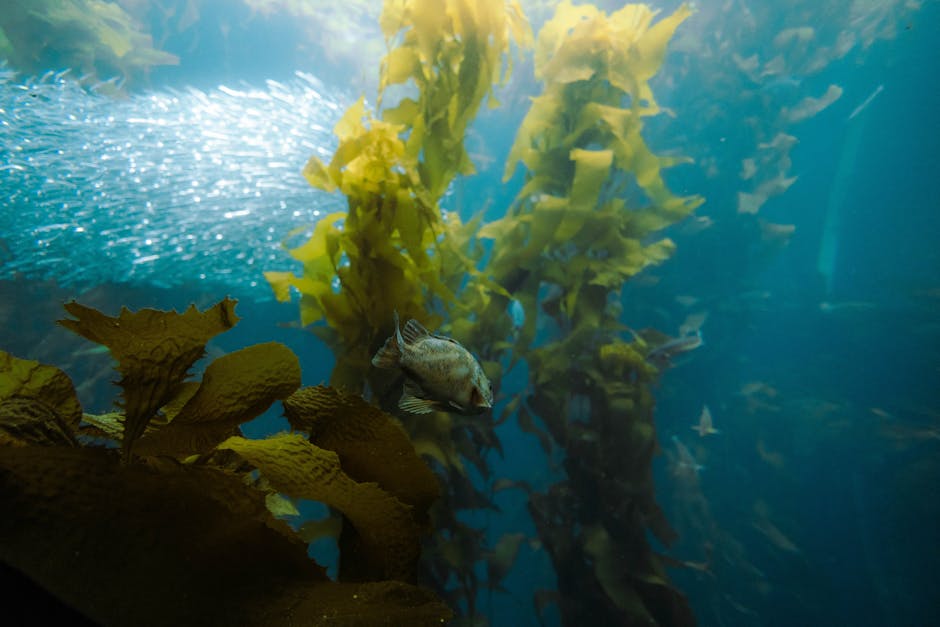

Top 10 Fun Facts About Ocean Currents

Top 10 Fun Facts About Ocean Currents

⏱️ 7 min read

Top 10 Fun Facts About Ocean Currents

Ocean currents are among nature's most powerful and essential phenomena, acting as the planet's circulatory system by moving vast quantities of water across the globe. These massive rivers within the sea regulate climate, distribute nutrients, and shape marine ecosystems in ways that affect all life on Earth. While scientists have studied ocean currents for centuries, these dynamic forces continue to reveal fascinating secrets about our planet's intricate systems. Here are ten remarkable facts about ocean currents that highlight their importance and astonishing characteristics.

1. The Global Conveyor Belt Takes 1,000 Years to Complete One Cycle

The thermohaline circulation, often called the "global conveyor belt," is a massive system of ocean currents that connects all the world's oceans. This continuous loop moves water around the entire planet, driven by differences in temperature and salinity. What makes this particularly remarkable is that a single water molecule takes approximately 1,000 years to complete one full journey through this system. The conveyor belt plays a crucial role in regulating Earth's climate by distributing heat from tropical regions toward the poles, making it one of the planet's most important climate regulation mechanisms.

2. The Gulf Stream Moves Faster Than Most Rivers

The Gulf Stream, one of the most powerful ocean currents in the world, flows at speeds reaching up to 5.6 miles per hour and transports approximately 100 times more water than all the rivers on Earth combined. This warm Atlantic current carries roughly 30 million cubic meters of water per second, creating a river within the ocean that is about 60 miles wide and 4,000 feet deep. The Gulf Stream's immense power and warmth significantly influence the climate of Western Europe, keeping countries like the United Kingdom and Norway considerably warmer than other regions at similar latitudes.

3. Ocean Currents Influence Global Weather Patterns

Ocean currents are fundamental drivers of weather patterns across the globe. They act as heat distribution systems, moving warm water from the equator toward the poles and cold water from polar regions toward the tropics. This heat exchange directly affects atmospheric conditions, influencing precipitation patterns, storm formation, and temperature variations worldwide. The El Niño and La Niña phenomena, which result from changes in Pacific Ocean currents and temperatures, demonstrate this connection by causing dramatic weather shifts across continents, affecting everything from rainfall in South America to drought conditions in Australia.

4. Deep Ocean Currents Are Colder and Slower Than Surface Currents

Ocean currents exist at multiple depths, with distinct characteristics separating surface currents from deep ocean currents. While surface currents are primarily driven by wind and can move relatively quickly, deep ocean currents are driven by density differences caused by variations in temperature and salinity. These deep currents move much more slowly, sometimes at rates of only a few centimeters per second, and carry extremely cold water, often just above freezing. Despite their slow pace, deep ocean currents are crucial for distributing oxygen and nutrients throughout the ocean depths, supporting life in even the darkest parts of the sea.

5. The Antarctic Circumpolar Current Is the Largest Current on Earth

Flowing continuously around Antarctica, the Antarctic Circumpolar Current (ACC) is the world's largest ocean current by volume. This mighty current transports approximately 135 million cubic meters of water per second, making it significantly more powerful than any other current system. The ACC is unique because it flows completely around the globe without being interrupted by land masses, connecting the Atlantic, Pacific, and Indian Oceans. This current plays a vital role in isolating Antarctica's cold waters from warmer waters to the north, helping maintain the continent's frozen state and influencing global ocean circulation patterns.

6. Ocean Currents Create Marine Highways for Wildlife

Marine animals have evolved to use ocean currents as natural highways for migration and dispersal. Sea turtles, for instance, use currents to travel thousands of miles during their life cycles, with young turtles riding the North Atlantic Gyre to feeding grounds and back to nesting beaches. Whales follow current systems during their annual migrations, taking advantage of nutrient-rich upwelling zones where currents bring deep, nutrient-laden water to the surface. Even tiny plankton and fish larvae drift along currents, which help distribute marine species across vast ocean distances and maintain genetic diversity in populations.

7. Upwelling Currents Create the Richest Fishing Grounds

Upwelling occurs when winds and ocean circulation patterns cause deep, cold, nutrient-rich water to rise toward the surface. These upwelling zones, though they cover less than one percent of the ocean's surface, are responsible for producing more than 50 percent of the world's fish catch. The nutrients brought up from the deep ocean fuel explosive growth of phytoplankton, which forms the base of the marine food web. Famous upwelling regions like those off the coasts of Peru, California, and West Africa support some of the most productive fisheries on Earth, demonstrating the critical connection between ocean currents and human food security.

8. The Coriolis Effect Shapes Current Direction

Ocean currents don't flow in straight lines due to the Coriolis effect, a phenomenon caused by Earth's rotation. This effect causes currents to curve to the right in the Northern Hemisphere and to the left in the Southern Hemisphere. The Coriolis effect is responsible for the circular patterns of major ocean gyres and influences the formation of boundary currents along continental coastlines. This deflection becomes more pronounced at higher latitudes, which is why polar currents exhibit particularly strong curvature. Understanding the Coriolis effect was crucial for developing accurate models of ocean circulation and improving navigation across the seas.

9. Ocean Currents Can Change Over Time With Serious Consequences

Ocean currents are not static; they can change in response to climate variations, and such changes can have profound impacts on global systems. Scientific evidence suggests that the Atlantic Meridional Overturning Circulation, which includes the Gulf Stream, has weakened by approximately 15 percent since the mid-20th century. This weakening is linked to climate change and the influx of freshwater from melting ice sheets, which affects the density-driven circulation. Significant changes to major current systems could dramatically alter regional climates, affect marine ecosystems, and impact weather patterns worldwide, making the monitoring of ocean currents crucial for understanding future climate scenarios.

10. Plastic Pollution Accumulates in Current Convergence Zones

Ocean currents have an unfortunate tendency to concentrate floating debris, particularly plastic pollution, in specific areas where currents converge. The Great Pacific Garbage Patch, located in the North Pacific Gyre, is the most infamous example of this phenomenon. These convergence zones act like slow-moving whirlpools, trapping plastic and other debris in areas that can span thousands of miles. Understanding ocean current patterns is essential for addressing marine pollution, as it helps scientists predict where debris will accumulate and develop strategies for cleanup and prevention. This sobering fact reminds us that ocean currents connect all parts of the global ocean, carrying both natural materials and human-generated pollution across vast distances.

Conclusion

Ocean currents represent one of nature's most powerful and complex systems, influencing everything from global climate patterns to the distribution of marine life. These ten fascinating facts only scratch the surface of what makes ocean currents so remarkable. From the millennia-long journey of the global conveyor belt to the wildlife highways created by current systems, from the productive upwelling zones that feed billions of people to the concerning accumulation of plastic in convergence areas, ocean currents demonstrate the interconnected nature of our planet's systems. As climate change continues to affect ocean temperatures and circulation patterns, understanding these magnificent currents becomes increasingly important for predicting future environmental conditions and protecting the delicate balance of Earth's climate system. The more we learn about ocean currents, the more we appreciate their fundamental role in making our blue planet habitable and vibrant with life.