






1 / 10 Questions
0 Points

What is the main ingredient in French fries?

Carrots

Chicken

Apples

Potatoes

Points won
0
Correct score
0%

More Articles

Did You Know? 12 Crazy Behind-the-Scenes Stories from Film Sets

Did You Know? 12 Crazy Behind-the-Scenes Stories from Film Sets

⏱️ 6 min read

Did You Know? 12 Crazy Behind-the-Scenes Stories from Film Sets

The magic of cinema often comes with a hefty dose of chaos, creativity, and unexpected events that audiences never see. While viewers enjoy the polished final product on screen, the journey to get there is frequently filled with bizarre incidents, near-disasters, and fascinating moments that become legendary in Hollywood lore. From method acting gone too far to budget-saving improvisations that became iconic, these twelve behind-the-scenes stories reveal the unpredictable nature of filmmaking and the dedication of those who bring stories to life.

1. The Chocolate Syrup Blood in Psycho

Alfred Hitchcock's iconic shower scene in "Psycho" used an unexpected substitute for blood: Chocolate syrup. Since the film was shot in black and white, the thick consistency and dark color of Bosco chocolate syrup proved to be the perfect stand-in for blood. The famous scene required seven days of shooting and used 70 camera setups, with the chocolate syrup creating the visceral effect that made this sequence one of cinema's most memorable moments.

2. The Wizard of Oz's Deadly Snow

The poppy field scene in "The Wizard of Oz" featured what appeared to be gentle snowfall, but the substance used was actually asbestos. In the 1930s, asbestos was commonly used in filmmaking for snow effects, and the cast members were covered in this now-known carcinogenic material. This dangerous practice was standard in Hollywood at the time, highlighting how far safety regulations have evolved in the film industry.

3. Viggo Mortensen's Real Broken Toe

During the filming of "The Lord of the Rings: The Two Towers," Viggo Mortensen kicked a steel helmet in frustration after believing Merry and Pippin were dead. The anguished scream that followed was genuine—Mortensen had actually broken two toes during the take. Director Peter Jackson kept this take in the final film, turning a real injury into one of the most emotionally powerful moments in the trilogy.

4. The Shining's Destroyed Door

The terrifying "Here's Johnny!" scene in "The Shining" required Jack Nicholson to break through a bathroom door with an axe. However, the prop doors initially used were too easy to break through. Since Nicholson had previously worked as a volunteer fire marshal and knew how to properly break down doors, the crew had to replace them with real doors to create the properly frightening sequence that took three days to film.

5. Jaws' Malfunctioning Mechanical Shark

Steven Spielberg's mechanical shark, nicknamed "Bruce," malfunctioned so frequently during the production of "Jaws" that it forced the director to get creative. The constant breakdowns led Spielberg to suggest the shark's presence through point-of-view shots, music, and glimpses rather than showing it fully. This technical limitation inadvertently created more suspense and tension, transforming the film into a masterpiece of psychological horror.

6. Django Unchained's Real Blood Handprint

During a scene in "Django Unchained," Leonardo DiCaprio accidentally cut his hand on broken glass but continued performing the scene in character. The actor then improvised by smearing his real blood on Kerry Washington's face, creating an intensely disturbing moment. Quentin Tarantino was so impressed with DiCaprio's commitment that he kept the take, though the blood smeared on Washington's face was later replaced with fake blood using special effects.

7. The Abyss's Underwater Ordeal

James Cameron's "The Abyss" featured grueling underwater filming that pushed the cast and crew to their limits. Ed Harris performed so many underwater scenes that he reportedly broke down crying after one particularly difficult take. The production required actors to learn diving skills and spend hours submerged in a massive tank, with some scenes taking place 40 feet underwater. The psychological strain became so intense that several crew members allegedly quit.

8. Mad Max: Fury Road's Practical Effects Marathon

George Miller's "Mad Max: Fury Road" famously used practical effects over CGI whenever possible, resulting in some death-defying stunts. The production employed over 150 stunt performers and used real vehicles in high-speed chase sequences. Stunt performers dangled from poles attached to moving trucks, crashed vehicles at high speeds, and performed elaborate fight choreography—all captured in-camera to create the film's visceral, raw aesthetic.

9. Apocalypse Now's Real Heart Attack

Francis Ford Coppola's production of "Apocalypse Now" was plagued with disasters, including Martin Sheen suffering a genuine heart attack during filming in the Philippines. The actor crawled a significant distance to reach help, and the incident was so serious that Coppola feared Sheen might die. The production shut down for several weeks while Sheen recovered, adding to the already troubled shoot that saw typhoons destroy sets and massive budget overruns.

10. The Blair Witch Project's Hidden Directors

To maintain authenticity, the directors of "The Blair Witch Project" remained hidden from the actors during most of the filming. The cast was given minimal direction and GPS coordinates to find equipment and instructions. The directors would leave notes and occasionally frighten the actors at night to capture genuine reactions of fear and confusion, blurring the line between performance and reality.

11. Blade Runner's Hostile Set Environment

The production of "Blade Runner" was famously tense, with Harrison Ford and director Ridley Scott frequently clashing. The challenging night shoots and extensive use of smoke and atmospheric effects created difficult working conditions. Ford was so frustrated with the excessive takes and Scott's perfectionism that he reportedly referred to the director as "that British guy" and showed visible displeasure. Despite the hostile atmosphere, the collaboration produced one of science fiction's greatest films.

12. Toy Story's Near-Cancellation

Pixar's groundbreaking "Toy Story" was nearly cancelled mid-production when Disney executives watched an early version and deemed it unwatchable. The problem stemmed from executive notes that made Woody's character too cynical and unlikeable. Pixar convinced Disney to give them one more chance, and the team completely reworked the script in a weekend, softening Woody's personality and refocusing the story. This desperate revision saved the film and launched Pixar's incredible legacy.

The Unpredictable Nature of Filmmaking

These twelve behind-the-scenes stories demonstrate that filmmaking is far from the glamorous process audiences might imagine. From dangerous working conditions and malfunctioning equipment to actor injuries and creative improvisation born from necessity, the path to creating memorable cinema is often paved with chaos and challenges. These incidents reveal the dedication, creativity, and sometimes sheer luck required to bring films to completion. While modern safety standards and technology have made filmmaking safer and more predictable, the human element ensures that unexpected moments will always contribute to the art of cinema. These stories have become part of Hollywood legend, reminding us that sometimes the greatest movie magic happens when everything goes wrong.

Top 10 Fun Facts About Volcanoes and Eruptions

Top 10 Fun Facts About Volcanoes and Eruptions

⏱️ 6 min read

Top 10 Fun Facts About Volcanoes and Eruptions

Volcanoes are among nature's most spectacular and powerful phenomena, capable of reshaping landscapes and influencing global climates. These magnificent geological features have fascinated humanity for millennia, combining beauty with raw destructive power. From the depths of the ocean floor to the highest peaks on land, volcanoes play a crucial role in our planet's ongoing evolution. This article explores ten fascinating facts about volcanoes and their eruptions that reveal just how remarkable these natural wonders truly are.

1. Earth Is Home to More Than 1,500 Active Volcanoes

The planet currently hosts approximately 1,500 potentially active volcanoes on land, with many more hidden beneath the ocean's surface. Scientists define an active volcano as one that has erupted within the last 10,000 years or shows signs of unrest. The majority of these volcanoes are concentrated along the Pacific Ring of Fire, a horseshoe-shaped zone that encompasses the Pacific Ocean's perimeter. This region accounts for about 75 percent of the world's active and dormant volcanoes, making it the most volcanically active area on Earth.

2. Volcanic Lightning Creates Spectacular Displays

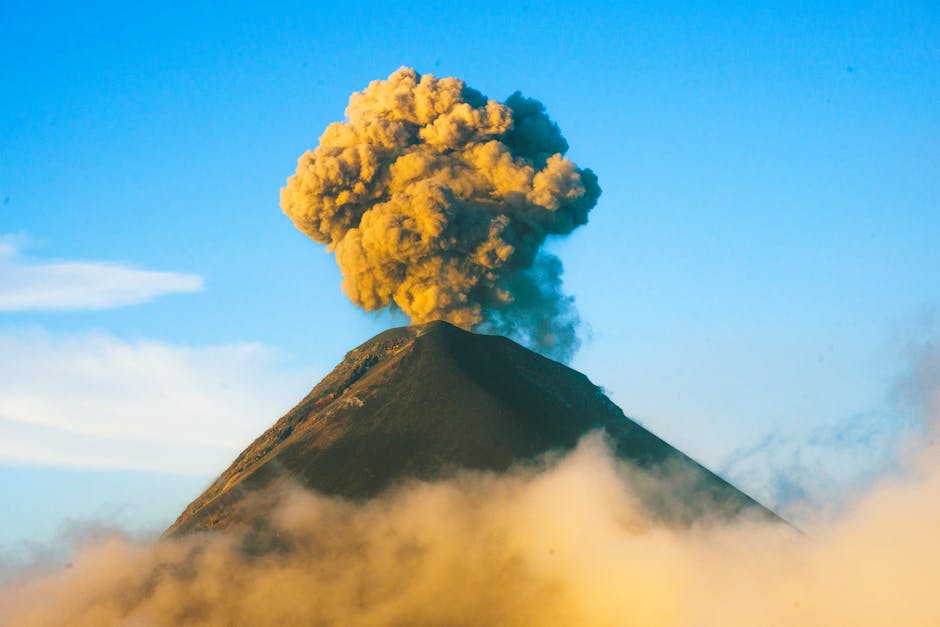
One of the most mesmerizing phenomena associated with volcanic eruptions is volcanic lightning, also known as a "dirty thunderstorm." This spectacular event occurs when rock fragments, ash particles, and ice particles within the volcanic plume collide, generating static electricity. The resulting electrical charges eventually discharge as lightning bolts that illuminate the ash cloud in brilliant flashes. This rare phenomenon has been documented during major eruptions, including Mount Vesuvius, Mount St. Helens, and Iceland's Eyjafjallajökull volcano.

3. Volcanoes Exist on Other Planets and Moons

Earth isn't the only celestial body with volcanic activity. Mars boasts Olympus Mons, the largest known volcano in our solar system, standing at approximately 13.6 miles high—nearly three times the height of Mount Everest. Jupiter's moon Io is the most volcanically active body in the solar system, with hundreds of active volcanoes that spew sulfur and sulfur dioxide hundreds of miles into space. Venus also has more volcanoes than any other planet in our solar system, with estimates suggesting over 1,600 major volcanoes or volcanic features on its surface.

4. Volcanic Eruptions Can Lower Global Temperatures

Major volcanic eruptions can have significant impacts on Earth's climate by injecting massive amounts of sulfur dioxide and ash into the stratosphere. These particles reflect sunlight back into space, effectively cooling the planet's surface. The 1815 eruption of Mount Tambora in Indonesia caused the "Year Without a Summer" in 1816, resulting in widespread crop failures and food shortages across the Northern Hemisphere. Similarly, the 1991 eruption of Mount Pinatubo in the Philippines lowered global temperatures by approximately 0.5 degrees Celsius for nearly two years.

5. Not All Lava Is the Same Color or Temperature

Contrary to popular belief, lava doesn't always appear as the bright orange-red flow depicted in movies. Lava color and temperature vary depending on its chemical composition and silica content. Fresh lava can reach temperatures between 1,300 and 2,200 degrees Fahrenheit. Basaltic lava, which is low in silica, appears bright orange to red and flows more freely. In contrast, rhyolitic lava, which is high in silica, appears darker and is much more viscous. As lava cools, it transitions from yellow-white to orange, red, and eventually dark brown or black.

6. Volcanic Soil Is Incredibly Fertile

Despite their destructive nature, volcanoes provide significant benefits to surrounding ecosystems through the creation of exceptionally fertile soil. Volcanic ash and weathered volcanic rock contain abundant minerals and nutrients essential for plant growth, including potassium, phosphorus, calcium, and magnesium. This explains why communities have historically settled near volcanoes despite the risks. Some of the world's most productive agricultural regions, including parts of Italy, Indonesia, and Hawaii, owe their fertility to volcanic activity.

7. The Largest Recorded Eruption Nearly Ended Human Civilization

Approximately 74,000 years ago, the Toba supervolcano in Indonesia produced the largest volcanic eruption in the past two million years. This catastrophic event ejected an estimated 670 cubic miles of material into the atmosphere, creating a volcanic winter that may have lasted six to ten years. Some scientists believe this eruption caused a severe population bottleneck in human evolution, potentially reducing the global human population to between 3,000 and 10,000 individuals. Genetic evidence suggests that all modern humans descended from this small surviving population.

8. Underwater Volcanoes Outnumber Those on Land

While terrestrial volcanoes capture most of our attention, the vast majority of volcanic activity occurs beneath the ocean's surface. Scientists estimate that up to 75 percent of annual volcanic activity takes place underwater along mid-ocean ridges. These submarine volcanoes, numbering potentially over one million, continuously create new oceanic crust through seafloor spreading. Some underwater eruptions create volcanic islands when the buildup eventually breaches the ocean surface, as seen in the formation of Hawaii, Iceland, and the Galápagos Islands.

9. Volcanoes Can Erupt for Decades or Even Centuries

Not all volcanic eruptions are brief, explosive events. Some volcanoes maintain continuous or near-continuous eruptive activity for extended periods. Mount Stromboli in Italy has been erupting almost continuously for over 2,000 years, earning it the nickname "Lighthouse of the Mediterranean." Kilauea in Hawaii erupted continuously from 1983 to 2018, creating 500 acres of new land before pausing. This persistent activity demonstrates that volcanic eruptions exist on a spectrum from brief explosive events to long-duration effusive eruptions.

10. Volcanic Eruptions Created Earth's Atmosphere and Oceans

During Earth's formation approximately 4.5 billion years ago, intense volcanic activity played a fundamental role in creating the conditions necessary for life. Volcanic outgassing released water vapor, carbon dioxide, nitrogen, and other gases that formed our planet's early atmosphere. As Earth cooled, the water vapor condensed and fell as rain, eventually filling the ocean basins. In essence, the air we breathe and the water we drink originated from ancient volcanic eruptions, making volcanoes essential architects of our habitable planet.

Conclusion

These ten fascinating facts reveal that volcanoes are far more than simple geological features—they are dynamic systems that have fundamentally shaped our planet and continue to influence life on Earth. From creating fertile agricultural land to potentially affecting the course of human evolution, from generating spectacular lightning displays to building entire islands, volcanoes demonstrate nature's incredible power and complexity. Understanding these remarkable features helps us appreciate both the dangers they pose and the essential roles they play in Earth's ongoing geological processes. As we continue studying volcanoes, we gain deeper insights into our planet's past, present, and future.