








⏱️ 6 min read
10 Facts About the Discovery of America
The discovery of America represents one of the most significant events in world history, marking the beginning of sustained contact between the Old World and the New World. While Christopher Columbus is often credited with this momentous achievement, the true story of America's discovery is far more complex and fascinating than commonly understood. This article explores ten essential facts about the discovery of America that illuminate the historical, cultural, and geographical dimensions of this pivotal moment in human civilization.
1. Christopher Columbus Never Set Foot on Mainland North America
Despite being celebrated as the discoverer of America, Christopher Columbus never actually landed on the North American mainland during any of his four voyages. His expeditions between 1492 and 1504 brought him to various Caribbean islands, including the Bahamas, Cuba, and Hispaniola, as well as parts of Central and South America. The closest he came to North America was his exploration of Central American coastlines. This fact challenges the popular narrative and highlights the complexity of the discovery's historical timeline.
2. The Vikings Arrived in North America Nearly 500 Years Earlier
Archaeological evidence confirms that Norse Vikings, led by Leif Erikson, established a settlement at L'Anse aux Meadows in Newfoundland, Canada, around 1000 CE—approximately 500 years before Columbus's voyage. These Viking explorers called the region "Vinland" and maintained a presence there for several years before abandoning the settlement. However, their discovery did not lead to permanent colonization or widespread knowledge of the continent in Europe, which is why Columbus's later voyage had far greater historical impact.
3. Columbus Was Searching for a Route to Asia, Not a New Continent
Christopher Columbus's primary objective was not to discover new lands but to find a western sea route to Asia, specifically to reach the lucrative spice markets of India, China, and Japan. He believed he could reach Asia more quickly by sailing west across the Atlantic rather than taking the traditional eastern route around Africa. Columbus died in 1506 still believing he had reached the outlying islands of Asia, never fully realizing he had encountered an entirely unknown continent to Europeans.
4. America Was Named After Amerigo Vespucci, Not Columbus
The continents of North and South America derive their name from Amerigo Vespucci, an Italian explorer and cartographer who made several voyages to the New World between 1497 and 1504. Vespucci was among the first to propose that the lands discovered by Columbus constituted a new continent separate from Asia. German cartographer Martin Waldseemüller was so impressed by Vespucci's accounts that he labeled the new continent "America" on his 1507 world map, and the name eventually gained universal acceptance.
5. Indigenous Peoples Had "Discovered" America Thousands of Years Earlier
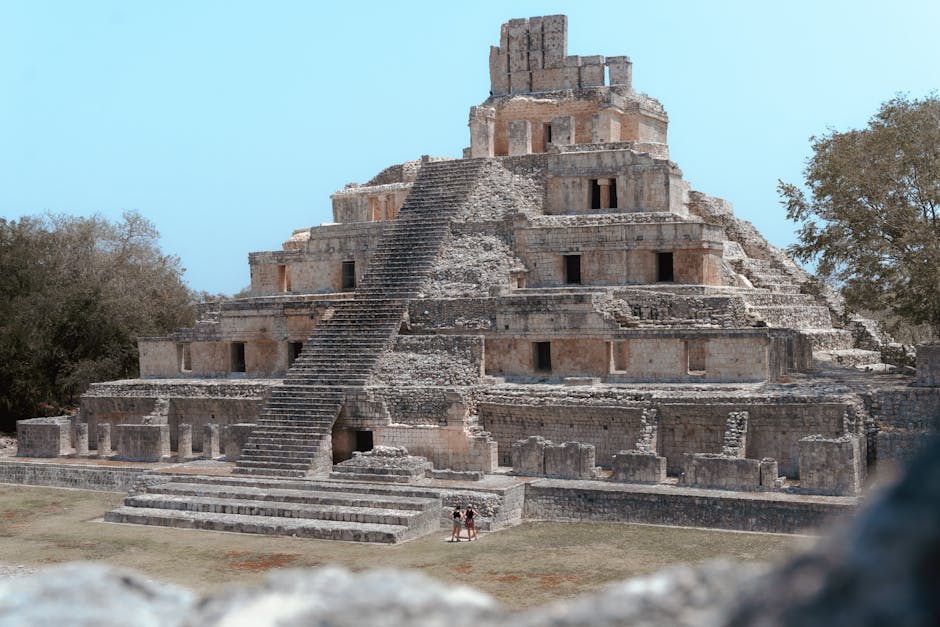
The most accurate perspective recognizes that America was already inhabited by millions of indigenous people when European explorers arrived. Archaeological evidence suggests that humans first reached the Americas between 15,000 and 20,000 years ago, crossing a land bridge called Beringia that connected Siberia to Alaska during the last Ice Age. These first Americans gradually spread throughout both continents, developing diverse civilizations including the Maya, Aztec, and Inca empires, long before any European contact.
6. Columbus's First Voyage Was Financed by Spanish Monarchs After Multiple Rejections
Before Queen Isabella and King Ferdinand of Spain agreed to finance his expedition, Columbus spent years seeking support for his voyage. He was rejected by the Portuguese crown, and his proposals were initially turned down by the Spanish monarchs as well. Only after the completion of the Reconquista with the fall of Granada in 1492 did the Spanish rulers agree to fund Columbus's venture. The expedition consisted of three ships—the Niña, the Pinta, and the Santa María—with a crew of approximately 90 men.
7. The Columbian Exchange Transformed Both Hemispheres
The discovery of America initiated what historians call the Columbian Exchange, an unprecedented transfer of plants, animals, diseases, culture, and ideas between the Old World and the New World. Europeans introduced horses, cattle, wheat, and sugarcane to the Americas, while crops like potatoes, tomatoes, corn, and tobacco traveled to Europe. Unfortunately, this exchange also brought devastating diseases such as smallpox, measles, and influenza to indigenous populations who had no immunity, resulting in catastrophic population declines estimated at up to 90 percent in some regions.
8. John Cabot Claimed North America for England in 1497
While Columbus sailed under the Spanish flag, the English claim to North America began with John Cabot (born Giovanni Caboto), an Italian explorer who sailed for England. In 1497, just five years after Columbus's first voyage, Cabot reached the coast of what is now Newfoundland or Cape Breton Island. His voyage established England's initial claim to North American territories and laid the foundation for future English colonization efforts that would eventually lead to the establishment of the Thirteen Colonies.
9. The Treaty of Tordesillas Divided the New World Between Spain and Portugal
Following Columbus's discovery, Spain and Portugal—the era's dominant maritime powers—needed to resolve competing territorial claims. In 1494, with papal mediation, they signed the Treaty of Tordesillas, which drew an imaginary line through the Atlantic Ocean. Spain received rights to all newly discovered lands west of the line, while Portugal gained rights to territories east of it. This agreement gave Spain claim to most of the Americas, while Portugal received Brazil (which extends east of the line) and maintained its African and Asian trade routes.
10. Columbus Made Four Voyages to the New World
Christopher Columbus did not make just one historic voyage but returned to the Americas three more times. His second voyage in 1493 was much larger, with 17 ships and over 1,200 men, aimed at establishing permanent colonies. His third voyage in 1498 brought him to the South American mainland for the first time. His fourth and final voyage from 1502 to 1504 explored the Central American coast. During these subsequent expeditions, Columbus established settlements, encountered more indigenous peoples, and continued his unsuccessful search for a passage to Asia, all while dealing with challenges including shipwrecks, conflicts with colonists, and deteriorating health.
Conclusion
These ten facts reveal that the discovery of America was neither a single event nor attributable to one person alone. From the indigenous peoples who arrived millennia ago to the Norse Vikings who established temporary settlements, and from Columbus's voyages to the subsequent European explorations, the discovery of America involved multiple discoveries across different time periods. Understanding these complexities provides a more accurate and nuanced appreciation of this watershed moment in history. The discovery initiated profound changes that shaped the modern world, including cultural exchanges, colonial empires, and the eventual development of new nations. By examining these facts, we gain insight into not only what happened but also the lasting consequences that continue to influence our world today.