










1 / 10 Questions
0 Points

What did Nintendo originally sell before video games?

Playing cards

Wooden toys

Board games

Comic books

Points won
0
Correct score
0%

More Articles

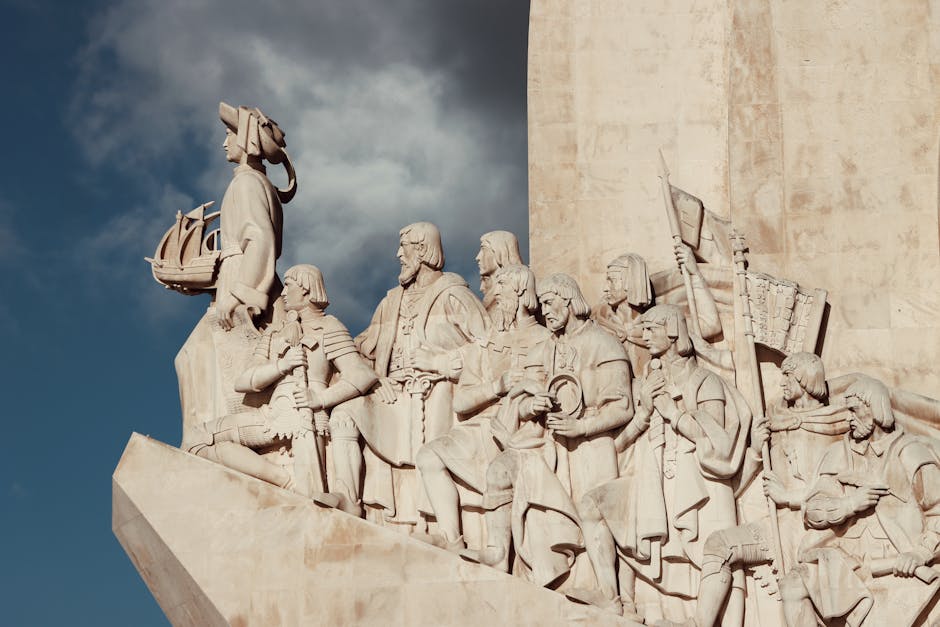
Top 10 Famous Explorers and Their Discoveries

Top 10 Famous Explorers and Their Discoveries

⏱️ 6 min read

Top 10 Famous Explorers and Their Discoveries

Throughout history, brave explorers have ventured into the unknown, risking their lives to map uncharted territories, discover new lands, and connect distant civilizations. These remarkable individuals pushed the boundaries of human knowledge and forever changed our understanding of the world. Their journeys not only expanded geographical awareness but also facilitated cultural exchange, trade, and scientific advancement. This article examines ten of the most famous explorers in history and the significant discoveries that secured their place in the annals of exploration.

1. Christopher Columbus (1451-1506)

Perhaps the most well-known explorer in Western history, Christopher Columbus set sail from Spain in 1492 with the goal of finding a western route to Asia. Instead, he landed in the Bahamas, marking the beginning of sustained European contact with the Americas. Though Columbus never realized he had discovered a continent previously unknown to Europeans, his four voyages across the Atlantic Ocean opened the door to European exploration and colonization of the New World. His expeditions fundamentally altered the course of world history, initiating the Columbian Exchange of goods, cultures, and unfortunately, diseases between the Eastern and Western hemispheres.

2. Ferdinand Magellan (1480-1521)

Ferdinand Magellan, a Portuguese explorer sailing under the Spanish flag, led the first expedition to circumnavigate the globe. Departing in 1519 with five ships, Magellan navigated through the strait at South America's southern tip, now known as the Strait of Magellan, and crossed the Pacific Ocean. Although Magellan himself was killed in the Philippines in 1521, one of his ships, commanded by Juan Sebastián Elcano, completed the journey in 1522. This monumental voyage proved that the Earth was round and provided valuable information about the planet's true size and the distribution of land and water across its surface.

3. Marco Polo (1254-1324)

The Venetian merchant and explorer Marco Polo embarked on an epic journey to Asia that lasted 24 years. Traveling along the Silk Road, Polo reached the court of Kublai Khan in China, where he served the Mongol emperor for 17 years. His detailed accounts of Asian culture, geography, and commerce, recorded in "The Travels of Marco Polo," introduced Europeans to the riches and wonders of the East. His vivid descriptions of paper money, coal, and exotic spices inspired future generations of explorers, including Christopher Columbus, and helped establish crucial trade routes between Europe and Asia.

4. Vasco da Gama (1460-1524)

Portuguese explorer Vasco da Gama achieved what many before him had attempted but failed to accomplish: finding a sea route from Europe to India. In 1498, after navigating around the Cape of Good Hope at the southern tip of Africa, da Gama reached Calicut on India's western coast. This discovery was monumentally important as it established a direct maritime trade route between Europe and Asia, breaking the monopoly that Arab and Venetian merchants held over the lucrative spice trade. Da Gama's successful voyage initiated Portugal's era of global maritime dominance and commercial prosperity.

5. James Cook (1728-1779)

British Royal Navy captain James Cook conducted three major voyages of exploration in the Pacific Ocean. His expeditions resulted in the first European contact with the eastern coast of Australia and the Hawaiian Islands. Cook also circumnavigated New Zealand, proving it consisted of two main islands, and explored vast portions of the Pacific, mapping numerous islands with unprecedented accuracy. His meticulous cartographic work and scientific observations advanced European knowledge of the Pacific region dramatically. Cook's use of scientific methods and his efforts to prevent scurvy among his crew members also contributed significantly to maritime exploration practices.

6. Zheng He (1371-1433)

Chinese admiral Zheng He commanded seven epic maritime expeditions during the Ming Dynasty, decades before European explorers ventured across the oceans. His massive treasure fleets, consisting of hundreds of ships and thousands of crew members, sailed throughout Southeast Asia, India, the Middle East, and East Africa. These voyages demonstrated China's naval superiority and extended Chinese diplomatic and trade relations across the Indian Ocean. Zheng He's ships were among the largest wooden vessels ever built, and his expeditions remain some of the most ambitious maritime endeavors in human history.

7. Roald Amundsen (1872-1928)

Norwegian explorer Roald Amundsen was the first person to reach the South Pole, achieving this feat on December 14, 1911, beating British explorer Robert Falcon Scott by just over a month. Amundsen's meticulous planning, use of sled dogs, and expertise in polar survival techniques proved crucial to his success. He was also the first explorer to successfully navigate the Northwest Passage, a sea route through the Arctic Ocean connecting the Atlantic and Pacific oceans. Amundsen's achievements in both polar regions established him as one of the greatest explorers of the Heroic Age of Antarctic Exploration.

8. David Livingstone (1813-1873)

Scottish missionary and explorer David Livingstone dedicated much of his life to exploring the interior of Africa. He was the first European to see the magnificent waterfall on the Zambezi River, which he named Victoria Falls. Livingstone's extensive travels across central and southern Africa resulted in detailed maps and valuable geographical information about previously unexplored regions. His passionate opposition to the slave trade and his writings about African peoples and cultures drew international attention to the continent. His presumed disappearance led to the famous expedition by journalist Henry Morton Stanley, who greeted him with the legendary phrase, "Dr. Livingstone, I presume?"

9. Amerigo Vespucci (1454-1512)

Italian explorer and cartographer Amerigo Vespucci participated in several voyages to the New World in the late 15th and early 16th centuries. His significant contribution was recognizing that the lands Columbus had reached were not part of Asia but rather an entirely separate continent. Vespucci's detailed letters and accounts of his voyages provided valuable geographical information about South America's eastern coast. His assertion that this was a "New World" was so influential that the continents were eventually named "America" in his honor by German cartographer Martin Waldseemüller in 1507.

10. Ibn Battuta (1304-1368)

Moroccan scholar Ibn Battuta was one of history's most traveled individuals, journeying approximately 75,000 miles over 30 years throughout the Islamic world and beyond. His travels took him across North Africa, the Middle East, India, Southeast Asia, and China. Ibn Battuta's detailed accounts, compiled in his "Rihla" (The Journey), provide invaluable historical and geographical information about medieval Islamic civilization, trade networks, and cultural practices across three continents. His observations offer unique insights into 14th-century societies and remain important primary sources for historians studying this period.

Conclusion

These ten remarkable explorers transformed humanity's understanding of the world through their courage, determination, and curiosity. From Columbus's accidental discovery of the Americas to Ibn Battuta's extensive documentation of medieval Islamic civilization, each explorer contributed unique and lasting knowledge to human history. Their discoveries facilitated global trade, enabled cultural exchanges, and expanded the boundaries of geographical knowledge. While some of their legacies are complex and include negative consequences such as colonization and exploitation, their contributions to exploration and discovery remain undeniable. These adventurers remind us that human curiosity and the desire to explore the unknown continue to drive progress and understanding across all frontiers, whether on Earth or beyond.

Did You Know? 10 Facts About Luck and Superstitions

Did You Know? 10 Facts About Luck and Superstitions

⏱️ 6 min read

Did You Know? 10 Facts About Luck and Superstitions

Throughout human history, luck and superstitions have played a fascinating role in shaping cultures, behaviors, and beliefs across the globe. From avoiding black cats to knocking on wood, these practices persist even in our modern, scientifically-driven world. While some dismiss them as irrational, superstitions reveal intriguing insights into human psychology, cultural evolution, and our eternal quest to control uncertainty. Here are ten remarkable facts about luck and superstitions that might surprise you.

1. The Number 13 Phobia Has a Medical Name

Fear of the number thirteen is so widespread that it has its own clinical term: triskaidekaphobia. This superstition is so prevalent that many buildings skip the thirteenth floor entirely, jumping from the twelfth to the fourteenth floor. Airlines often omit row 13, and some streets lack a house numbered thirteen. The origins of this fear are debated, but some scholars point to the Last Supper, where thirteen people were present before Jesus's crucifixion. Others trace it to Norse mythology, where the god Loki was the thirteenth guest at a divine dinner party that ended in tragedy.

2. Different Cultures Have Opposite Superstitions About the Same Things

What brings good luck in one culture can spell disaster in another. In Western cultures, black cats are traditionally considered unlucky, but in Japan and the United Kingdom, they're symbols of good fortune. Similarly, the number four is considered extremely unlucky in China, Japan, and Korea because the word for "four" sounds similar to the word for "death" in these languages. Meanwhile, the number seven is lucky in Western cultures but has no special significance in many Asian societies. These contradictions highlight how superstitions are culturally constructed rather than universal truths.

3. Athletes Are Among the Most Superstitious People

Professional athletes often engage in elaborate superstitious rituals before competitions. Basketball legend Michael Jordan wore his college practice shorts under his NBA uniform for good luck throughout his entire career. Tennis star Serena Williams reportedly bounces the ball exactly five times before her first serve and wears the same unwashed socks during winning streaks. Baseball players are notorious for their superstitions, including refusing to step on the foul line when entering or leaving the field. These behaviors stem from the high-stakes, uncertain nature of competitive sports, where athletes seek any psychological edge to improve performance.

4. Knocking on Wood Has Ancient Pagan Origins

The common practice of knocking on wood after making a hopeful statement dates back to ancient pagan beliefs. Pre-Christian Europeans believed that spirits and gods resided in trees, particularly oak trees. By knocking on wood, people could call upon these benevolent spirits for protection or to express gratitude while preventing evil spirits from hearing their boasts and jinxing their good fortune. The practice survived the spread of Christianity and remains one of the most widespread superstitions in the Western world today.

5. Broken Mirror Superstition Relates to Ancient Beliefs About Reflections

The belief that breaking a mirror brings seven years of bad luck has roots in ancient Roman culture. Romans believed that mirrors reflected not just physical appearance but also the soul. Breaking a mirror was thought to harm the soul, and since Romans believed the body renewed itself every seven years, it would take that long for the soul to fully heal. Ancient Greeks also practiced mirror divination, using reflective surfaces to predict the future, which reinforced the mystical significance of mirrors across cultures.

6. Good Luck Charms Exist in Nearly Every Culture

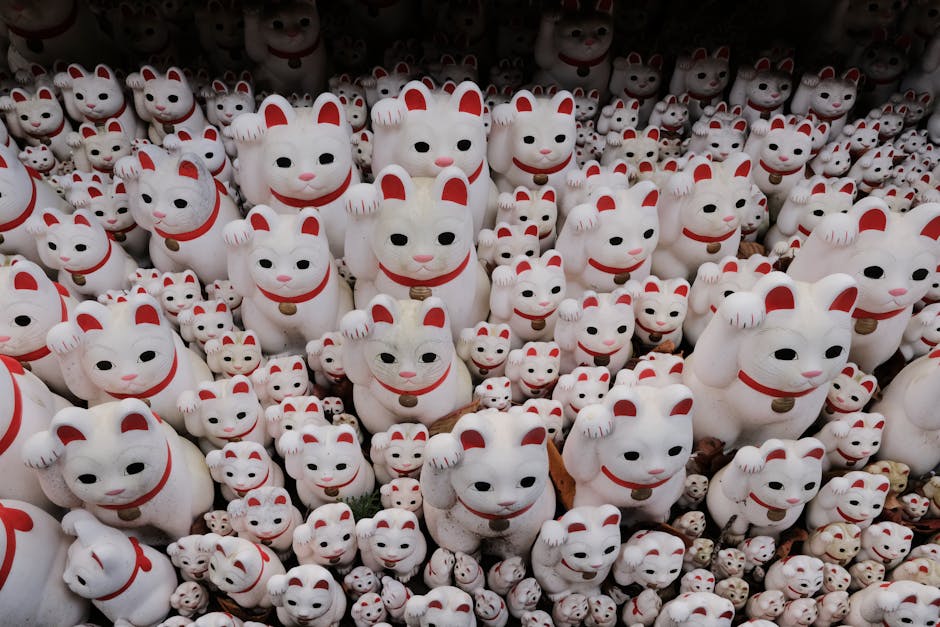
Almost every society has developed objects believed to attract good fortune. Four-leaf clovers are cherished in Irish tradition, with each leaf representing faith, hope, love, and luck. In Turkey and Greece, the evil eye amulet protects against envious glares. Horseshoes are considered lucky in many Western cultures, supposedly because their crescent shape resembles the moon and they're made of protective iron. In Asian cultures, the maneki-neko or "beckoning cat" figurine is believed to bring prosperity to businesses. These talismans serve psychological functions, providing comfort and confidence in uncertain situations.

7. Friday the 13th Costs the Economy Millions

The superstition surrounding Friday the 13th has measurable economic impact. Studies estimate that businesses in the United States lose between $800 million and $900 million on this day because people avoid traveling, making major purchases, or conducting important business transactions. The fear is so significant that some people refuse to get out of bed on Friday the 13th. This superstition combines two separate unlucky elements: the number thirteen and Friday, which was considered unlucky in medieval times because it was the day of Jesus's crucifixion.

8. Superstitions Can Actually Improve Performance

Scientific research has demonstrated that superstitious beliefs can genuinely enhance performance through psychological mechanisms. A study published in Psychological Science found that participants who brought their lucky charms performed better on memory and problem-solving tasks than those without them. The researchers concluded that superstitions boost confidence and self-efficacy, leading to improved persistence and performance. This explains why superstitious rituals persist even among educated, rational individuals—they work, not through magic, but through enhanced psychological states.

9. The Origins of "Bless You" After Sneezing

The custom of saying "bless you" after someone sneezes has multiple proposed origins, all rooted in superstition. One theory traces it to the sixth-century plague epidemic under Pope Gregory I, who ordered prayers and blessings for sneezers as sneezing was an early symptom. Another explanation comes from the ancient belief that sneezing could expel the soul from the body, leaving it vulnerable to evil spirits entering. The blessing was meant to protect the sneezer during this moment of vulnerability. Some cultures believed the heart momentarily stopped during a sneeze, making a blessing appropriate for such a dangerous moment.

10. Beginner's Luck Has a Psychological Explanation

The phenomenon of beginner's luck—where novices seemingly perform better than expected—has roots in both probability and psychology. Beginners often approach tasks without the anxiety or overthinking that can hinder experienced individuals. They're also more likely to take risks without understanding the potential dangers, which can occasionally pay off spectacularly. Additionally, confirmation bias plays a role; people remember and retell stories of beginners succeeding while forgetting the many instances where beginners performed poorly. This selective memory reinforces the superstition that luck favors the inexperienced.

Conclusion

These ten facts about luck and superstitions reveal how deeply these beliefs are woven into human culture and psychology. From the economic impact of Friday the 13th to the performance-enhancing effects of lucky charms, superstitions continue to influence behavior in measurable ways. While science may not support the magical thinking behind these practices, their persistence across millennia and cultures demonstrates their psychological value in helping humans cope with uncertainty and maintain a sense of control in an unpredictable world. Whether you knock on wood, carry a lucky charm, or dismiss superstitions entirely, understanding their origins and effects provides fascinating insights into the human experience.