
⏱️ 6 min read
Top 10 Fun Facts About Volcanoes and Eruptions
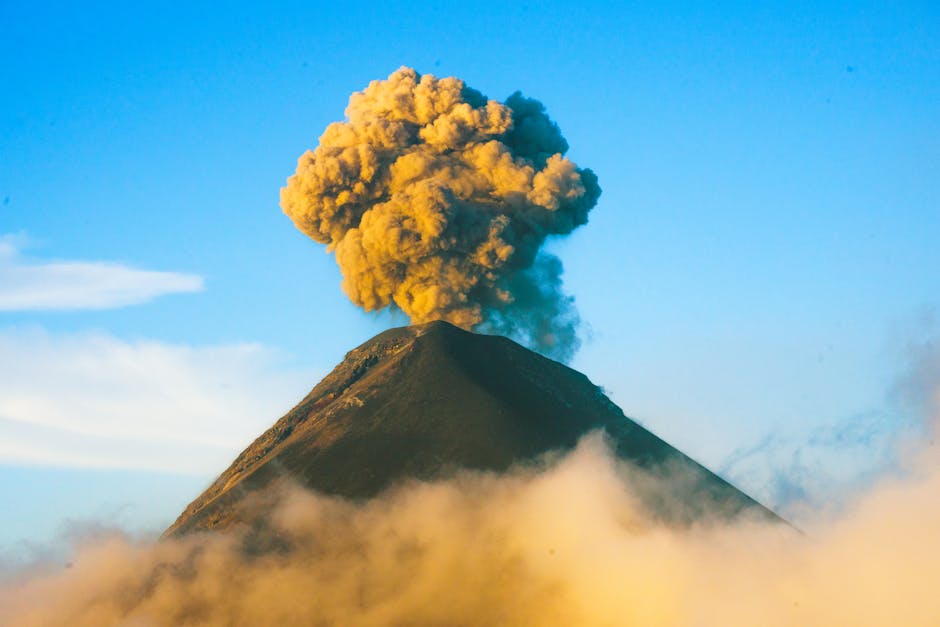
Volcanoes are among nature’s most spectacular and powerful phenomena, capable of creating new land while simultaneously destroying everything in their path. These geological wonders have fascinated humans for millennia, inspiring both terror and awe. From the fiery depths of the Earth to the clouds of ash that can circle the globe, volcanoes play a crucial role in shaping our planet’s landscape and atmosphere. Here are ten fascinating facts about volcanoes and their eruptions that reveal just how extraordinary these natural features truly are.
1. The Ring of Fire Contains 75% of the World’s Active Volcanoes
The Pacific Ring of Fire is a horseshoe-shaped zone spanning approximately 40,000 kilometers around the Pacific Ocean. This region is home to about 450 volcanoes, representing roughly 75% of all active and dormant volcanoes on Earth. The concentration of volcanic activity occurs because the Ring of Fire marks the boundaries of several tectonic plates, where subduction zones create ideal conditions for magma formation. Countries including Japan, Indonesia, the Philippines, Chile, and the United States all experience volcanic activity due to their location along this volatile boundary.
2. Volcanoes Can Create Lightning
One of the most visually stunning phenomena associated with volcanic eruptions is volcanic lightning, also known as a “dirty thunderstorm.” During explosive eruptions, ash particles, rock fragments, and ice particles collide within the volcanic plume at high speeds. These collisions generate static electricity, similar to how lightning forms in regular thunderstorms. The result is spectacular electrical discharges that fork through the ash cloud, creating an otherworldly display of nature’s power. This phenomenon has been documented in eruptions around the world, from Iceland’s Eyjafjallajökull to Chile’s Puyehue-Cordón Caulle.
3. The Loudest Sound in Recorded History Was a Volcanic Eruption
The 1883 eruption of Krakatoa in Indonesia produced the loudest sound ever recorded in human history. The catastrophic explosion was heard approximately 4,800 kilometers away on the island of Rodrigues near Mauritius, and reports suggest the sound traveled around the globe multiple times. The explosion was so powerful that it ruptured the eardrums of sailors 64 kilometers away and generated pressure waves that were detected by barographs worldwide. The eruption killed more than 36,000 people and ejected approximately 25 cubic kilometers of rock, ash, and pumice into the atmosphere.
4. Some Volcanoes Erupt Blue Lava
While most volcanic lava glows red or orange, the Kawah Ijen volcano in Indonesia produces an eerie blue glow that appears to be blue lava. However, this phenomenon is not actually blue lava but rather the combustion of sulfuric gases. The volcano emits extremely high concentrations of sulfuric gas at temperatures up to 600 degrees Celsius. When these gases emerge and come into contact with oxygen, they ignite, producing blue and violet flames that can reach up to five meters high. Some of the sulfur condenses into liquid form and continues burning as it flows, creating the illusion of glowing blue lava flowing down the mountainside.
5. Volcanoes Exist on Other Planets and Moons
Earth is not the only celestial body in our solar system with volcanic activity. Mars hosts Olympus Mons, the largest volcano in the solar system, standing approximately 22 kilometers high and 600 kilometers in diameter. Jupiter’s moon Io is the most volcanically active body in the solar system, with hundreds of active volcanoes. Venus has more volcanoes than any other planet in our solar system, with over 1,600 major volcanoes identified on its surface. Even Saturn’s moon Enceladus exhibits cryovolcanism, erupting water and ice instead of molten rock.
6. Volcanic Eruptions Can Change Global Climate
Major volcanic eruptions can significantly impact global climate patterns by injecting massive amounts of sulfur dioxide and ash into the stratosphere. The 1815 eruption of Mount Tambora in Indonesia was so severe that it caused “the year without a summer” in 1816, leading to widespread crop failures and food shortages across the Northern Hemisphere. The volcanic aerosols reflect sunlight back into space, causing temporary global cooling. Even smaller eruptions can cause measurable temperature drops lasting several years, demonstrating the powerful influence volcanoes have on Earth’s climate system.
7. Pompeii Was Preserved by Volcanic Ash
The eruption of Mount Vesuvius in 79 AD buried the Roman city of Pompeii under approximately six meters of volcanic ash and pumice. Rather than destroying all evidence of the city, the volcanic material created an oxygen-free environment that remarkably preserved buildings, artifacts, and even the remains of victims. The pyroclastic surge was so hot that it instantly vaporized the soft tissues of people and animals, while the subsequent ash fall created molds around their bodies. These ash molds have provided archaeologists with extraordinarily detailed information about daily life in ancient Rome, making Pompeii one of the most valuable archaeological sites in the world.
8. There Are More Than 1,500 Active Volcanoes on Earth
Scientists estimate there are approximately 1,500 potentially active volcanoes on Earth’s land surface, with an average of 50 to 70 erupting each year. However, this number only accounts for terrestrial volcanoes. When including submarine volcanoes on the ocean floor, the total number increases dramatically. Mid-ocean ridges alone contain thousands of volcanic vents and seamounts. Many of these underwater volcanoes remain unstudied and unmonitored, making the true total number of Earth’s volcanoes difficult to determine precisely. Some estimates suggest there could be more than one million submarine volcanoes.
9. Volcanic Soil Is Incredibly Fertile
Despite the destructive nature of volcanic eruptions, volcanic soil is among the most fertile on Earth. Weathered volcanic rock releases minerals including potassium, phosphorus, and nitrogen, which are essential nutrients for plant growth. This explains why many ancient civilizations developed in volcanic regions and why farmers today continue to cultivate land on the slopes of active volcanoes. Countries like Indonesia, the Philippines, and regions of Italy have thriving agricultural economies partly due to their volcanic soils. The exceptional fertility often outweighs the risks, leading to dense population centers near active volcanoes.
10. A Supervolcano Lies Beneath Yellowstone National Park
Beneath the scenic beauty of Yellowstone National Park lies one of the world’s largest active volcanic systems, known as the Yellowstone Caldera or supervolcano. This massive magma chamber measures approximately 55 by 72 kilometers and has erupted catastrophically three times in the past 2.1 million years. While the probability of another supereruption in our lifetime is extremely low, such an event would be catastrophic, potentially affecting global climate and covering much of North America in ash. Scientists continuously monitor the volcano through an extensive network of seismographs and GPS stations, tracking ground deformation and earthquake activity to better understand this sleeping giant.
Conclusion
These ten remarkable facts demonstrate that volcanoes are far more than simple mountains that occasionally erupt. They are complex geological systems that influence global climate, create new land, support fertile ecosystems, and exist throughout our solar system. From producing the loudest sound in history to preserving ancient cities for future generations to study, volcanoes continue to shape our world in profound ways. Whether creating spectacular light shows through volcanic lightning or enriching soil for agriculture, these geological features remind us of the dynamic and ever-changing nature of our planet. Understanding volcanoes not only satisfies our curiosity about the natural world but also helps us better prepare for and coexist with these powerful forces of nature.
