
⏱️ 6 min read
Top 10 Fun Facts About the Film Editing Process
Film editing is often described as the “invisible art” of cinema—when done well, audiences never notice it, yet it fundamentally shapes their entire viewing experience. From the earliest days of silent films to today’s digital productions, editors have wielded immense creative power, transforming raw footage into compelling narratives. The editing room is where films are truly made, where performances are refined, pacing is perfected, and stories come alive. Here are ten fascinating facts about the film editing process that reveal just how crucial and creative this behind-the-scenes work really is.
1. Film Editing Was Invented by a Woman
While many aspects of early cinema were dominated by men, film editing was actually pioneered by a woman. Alice Guy-Blaché, one of cinema’s first directors, is credited with developing many editing techniques in the 1890s and early 1900s. She experimented with narrative structure, special effects, and continuity editing that would become standard practice. The role of editor was predominantly filled by women throughout the early Hollywood era, as studio executives mistakenly believed it was similar to sewing or other “domestic” work—a sexist assumption that inadvertently gave women access to one of filmmaking’s most powerful creative positions.
2. Some Classic Films Were Saved in the Editing Room
Many beloved movies that audiences consider masterpieces were actually troubled productions that were rescued by skilled editors. “Star Wars” (1977) is perhaps the most famous example. George Lucas’s original cut was reportedly a confusing mess, and it was his then-wife Marcia Lucas, along with editors Paul Hirsch and Richard Chew, who restructured the film into the classic we know today. They won an Academy Award for their work. Similarly, films like “Apocalypse Now” and “Raging Bull” underwent extensive editing transformations that completely changed their narrative structure and pacing.
3. The “Kuleshov Effect” Proves Editing Creates Meaning
In the 1910s, Soviet filmmaker Lev Kuleshov conducted a famous experiment that demonstrated editing’s power to create meaning. He showed audiences the same expressionless shot of an actor’s face, but juxtaposed it with different images: a bowl of soup, a child in a coffin, and a woman on a couch. Viewers praised the actor’s nuanced performance, seeing hunger, grief, and desire respectively—even though the facial expression never changed. This “Kuleshov Effect” proved that editing doesn’t just connect scenes; it generates emotion and meaning through the relationship between shots.
4. Editors Often Work with Hundreds of Hours of Footage
For a typical two-hour feature film, editors may receive anywhere from 200 to 500 hours of raw footage to work with. Documentary filmmakers often shoot even higher ratios. The editor must review all this material, select the best takes, and assemble them into a coherent narrative. This means that for every minute of screen time, there might be dozens of minutes of unused footage. David Fincher, known for shooting numerous takes, provided his editors with over 1,500 hours of footage for “Gone Girl.” The selection process is as much an art as the assembly itself.
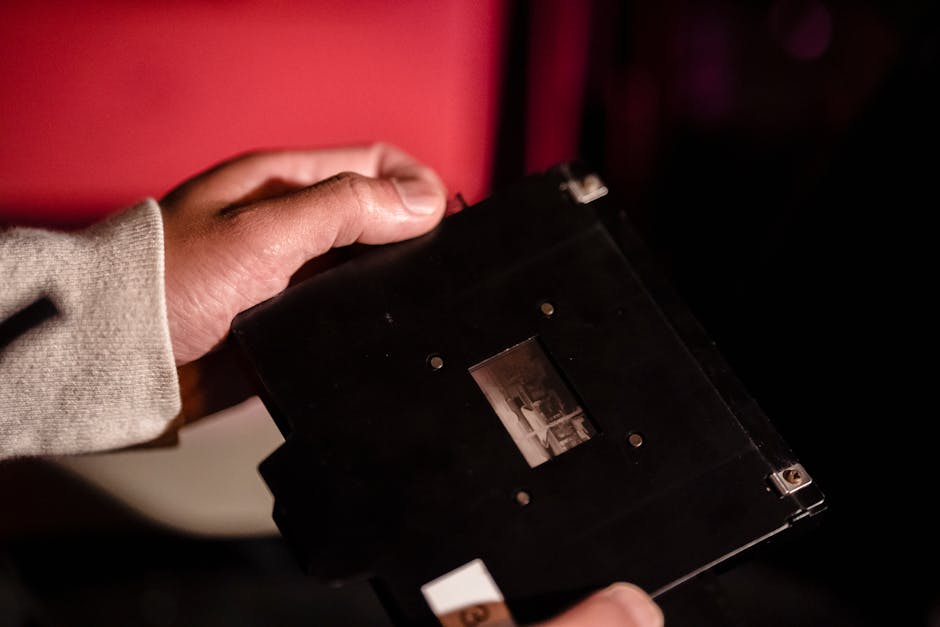
5. Film Editing Used to Be Literal Cutting and Pasting
Before digital technology revolutionized the industry in the 1990s, film editors physically cut strips of film with scissors or razor blades and joined them together with tape or cement. They worked with large machines called flatbed editors, such as the Moviola or Steenbeck, and hung strips of film on pins or racks around the editing room. This tactile process required immense precision, as a mistake could mean ruining expensive film stock. Some editors still prefer the deliberate, thoughtful pace of physical film editing over the infinite undo options of digital systems.
6. The First Cut Is Usually Much Longer Than the Final Film
An editor’s first assembly of a film, which includes all the scenes as scripted, is typically much longer than the intended final runtime. These “rough cuts” can run three, four, or even five hours long. The editing process then involves gradually trimming, tightening, and sometimes eliminating entire scenes or subplots. Francis Ford Coppola’s first assembly of “The Godfather” was over four hours long. The challenge isn’t just removing bad material—it’s often about cutting good scenes that don’t serve the overall narrative flow.
7. Sound Editing Is a Separate Specialty
While picture editors shape the visual narrative, sound editors work on the audio landscape, and these are distinct specializations requiring different skill sets. Sound editors create and place every sound effect, ambient noise, and audio element except for dialogue and music, which have their own editors. A single scene might have hundreds of separate sound elements layered together. The Academy Awards recognizes this distinction with separate categories for Film Editing and Sound Editing, acknowledging that both are crucial to the cinematic experience.
8. Editing Determines a Film’s Rhythm and Pace
The length of individual shots and the timing of cuts create a film’s rhythm, which editors control entirely. Action sequences typically use rapid cuts—sometimes changing shots multiple times per second—to create excitement and energy. Dramatic scenes might hold on shots much longer to build tension or allow emotional moments to breathe. Editor Thelma Schoonmaker, who has worked on nearly all of Martin Scorsese’s films, is famous for her rhythmic editing style that often synchronizes cuts to music, creating an almost musical flow to the narrative.
9. Editors Often Influence the Script and Story Structure
Though editors work in post-production, they frequently reshape a film’s story in ways that go far beyond the original script. They might reorder scenes, move flashbacks, eliminate characters, or change a film’s entire structure. The opening sequence might become the ending, or vice versa. Some editors are present during filming, providing feedback that influences what gets shot. In television, editors have become increasingly important in the writers’ room, as the boundaries between writing and editing blur in the streaming era.
10. Modern Editors Are Also Visual Effects Coordinators
In contemporary filmmaking, especially in big-budget productions, editors increasingly work with temporary visual effects and must coordinate with VFX teams. They edit scenes using rough CGI previews or “pre-viz” animations, making creative decisions about shots that don’t fully exist yet. This requires editors to visualize the final product while working with incomplete material. They must also create detailed notes about what effects are needed for each shot, essentially serving as liaisons between the director’s vision and the technical teams who will realize it.
Conclusion
These ten facts reveal that film editing is far more than simply arranging shots in sequence—it’s a complex, creative art form that shapes every aspect of the viewing experience. From its origins with pioneering women filmmakers to the sophisticated digital workflows of today, editing remains the stage where films are truly crafted. Editors control pacing, create meaning through juxtaposition, rescue troubled productions, and sometimes completely restructure stories to find their true form. Whether working with physical film strips or digital timelines, with two hours or five hundred hours of footage, editors are the unsung architects of cinema, transforming raw material into the powerful, emotional experiences that define great filmmaking. The next time you watch a film, pay attention to the cuts, the rhythm, and the flow—you’ll be witnessing the invisible art of editing at work.
