
⏱️ 6 min read
Top 10 Fun Facts About Ancient Writing Systems
Ancient writing systems represent one of humanity’s most transformative inventions, revolutionizing how civilizations communicated, preserved knowledge, and organized society. From the earliest pictographs carved into clay tablets to sophisticated alphabets, these systems reveal fascinating insights into how our ancestors thought, lived, and expressed themselves. The development of writing marked the transition from prehistory to recorded history, allowing cultures to transcend the limitations of oral tradition. Here are ten captivating facts about ancient writing systems that illuminate the ingenuity and diversity of early human communication.
1. Cuneiform Is Among the Oldest Writing Systems
Cuneiform, developed by the ancient Sumerians around 3400 BCE in Mesopotamia, stands as one of the world’s earliest writing systems. The name derives from the Latin word “cuneus,” meaning wedge, referring to the distinctive wedge-shaped marks created by pressing a reed stylus into soft clay tablets. Initially used for accounting and administrative purposes, cuneiform evolved to record literature, laws, and scientific knowledge. The system comprised hundreds of characters representing syllables, words, and concepts, requiring years of training to master. Remarkably, cuneiform was adapted by multiple civilizations including the Babylonians, Assyrians, and Persians, remaining in use for over three millennia.
2. Egyptian Hieroglyphs Weren’t Just Pictures
While Egyptian hieroglyphs appear purely pictorial, they functioned as a complex writing system combining logographic, syllabic, and alphabetic elements. Developed around 3200 BCE, hieroglyphs could represent complete words, sounds, or serve as determinatives that clarified meaning. The ancient Egyptians used different scripts for different purposes: hieroglyphs for monumental inscriptions, hieratic for religious texts, and demotic for everyday documents. Contrary to popular belief, hieroglyphs were read from multiple directions—left to right, right to left, or top to bottom—with human and animal figures facing the beginning of the line to indicate reading direction.
3. The Rosetta Stone Unlocked Lost Languages
Discovered in 1799, the Rosetta Stone proved instrumental in deciphering Egyptian hieroglyphs after they had been unreadable for nearly 1,400 years. The stone contains the same decree written in three scripts: hieroglyphic, demotic, and ancient Greek. Since scholars could read ancient Greek, they used it as the key to unlock the other two Egyptian scripts. French scholar Jean-François Champollion made the breakthrough in 1822, revealing that hieroglyphs represented both sounds and ideas. This discovery opened entire libraries of ancient Egyptian texts to modern understanding, transforming our knowledge of this ancient civilization.
4. Chinese Characters Have Remained Remarkably Consistent
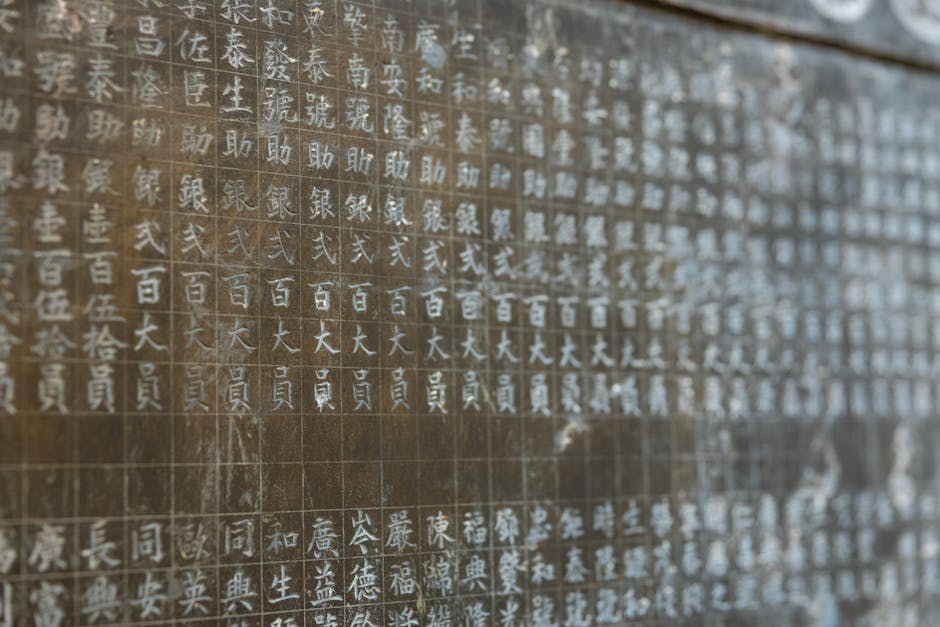
Chinese writing, originating around 1200 BCE during the Shang Dynasty, represents the oldest continuously used writing system in the world. The earliest examples appear as oracle bone script—inscriptions on turtle shells and animal bones used for divination. Remarkably, many modern Chinese characters still resemble their ancient predecessors, allowing contemporary scholars to read texts thousands of years old. The system contains tens of thousands of characters, though only a few thousand are needed for basic literacy. Unlike alphabetic systems, Chinese characters represent morphemes or words rather than sounds, making the system accessible across different spoken dialects.
5. The Phoenician Alphabet Revolutionized Writing
Around 1050 BCE, the Phoenicians developed an alphabet that would become the ancestor of most modern writing systems, including Greek, Latin, Arabic, and Hebrew scripts. This revolutionary system contained just 22 consonant symbols, drastically reducing the number of characters needed compared to earlier syllabic and logographic systems. The Phoenicians, skilled maritime traders, spread their alphabet throughout the Mediterranean world. Its simplicity democratized literacy, as learning 22 letters proved far easier than memorizing hundreds or thousands of symbols. This efficiency helped accelerate the spread of knowledge and commerce across ancient civilizations.
6. Linear B Revealed Mycenaean Greek
Linear B, used by the Mycenaean civilization from approximately 1450 to 1200 BCE, remained undeciphered until 1952 when British architect Michael Ventris demonstrated it represented an early form of Greek. Found primarily on clay tablets from Crete and mainland Greece, Linear B consisted of about 90 syllabic signs and over 100 ideographic symbols. The tablets mostly recorded palace inventories and administrative records, providing invaluable insights into Bronze Age Greek civilization. The decipherment pushed back the documented history of the Greek language by several centuries and revealed previously unknown aspects of Mycenaean society.
7. The Indus Script Remains Undeciphered
The Indus Valley Civilization, flourishing from approximately 3300 to 1300 BCE in present-day Pakistan and northwestern India, left behind thousands of inscriptions that continue to baffle scholars. These brief texts, found on seals, pottery, and other objects, typically contain only five signs and have never been conclusively deciphered. The absence of lengthy texts or bilingual inscriptions similar to the Rosetta Stone has hindered decipherment efforts. Researchers debate whether the symbols represent a complete writing system, a proto-writing system, or non-linguistic symbols. Cracking this code remains one of archaeology’s greatest unsolved mysteries.
8. Mayan Glyphs Recorded Complex Ideas
The Maya developed Mesoamerica’s most sophisticated writing system, combining logographic and syllabic elements to record their language fully. Emerging around 300 BCE, Mayan script could express any spoken utterance, making it a complete writing system. The glyphs adorned monuments, pottery, and bark-paper books called codices. Spanish conquistadors tragically destroyed most Mayan books, but surviving inscriptions on stone monuments have been largely deciphered since the mid-20th century. The script reveals detailed historical records, astronomical calculations, and mythological narratives, demonstrating the Maya’s advanced intellectual achievements.
9. Runes Were More Than Viking Letters
Runes, used by Germanic peoples from approximately 150 CE, served not only as a writing system but also held magical and religious significance. The oldest runic alphabet, the Elder Futhark, contained 24 characters, each with a name and associated meaning. Vikings and other Germanic tribes carved runes into wood, stone, metal, and bone to record everything from mundane transactions to epic poetry. The angular shapes of runic letters facilitated carving into hard materials. Beyond practical communication, runes were believed to possess mystical powers, used in divination and protective charms throughout medieval Scandinavia.
10. Alphabetic Writing Emerged Only Once
Unlike writing itself, which developed independently in multiple locations including Mesopotamia, Egypt, China, and Mesoamerica, the alphabet appears to have been invented only once. All alphabetic writing systems trace their ancestry back to a single source: Proto-Sinaitic script developed by Semitic-speaking people in the Sinai Peninsula around 1850 BCE. These workers, familiar with Egyptian hieroglyphs, created a simplified system using symbols to represent individual consonant sounds. This innovation spread and evolved into various branches including Phoenician, Aramaic, Hebrew, Greek, and eventually Latin and Cyrillic alphabets. This singular origin makes the alphabet’s global dominance even more remarkable.
Conclusion
These ten fascinating facts about ancient writing systems demonstrate the incredible diversity and ingenuity of human communication methods throughout history. From cuneiform’s wedge-shaped impressions to the still-mysterious Indus script, from the Rosetta Stone’s breakthrough to the single origin of alphabetic writing, each system reflects the unique needs and brilliance of its creators. Ancient writing systems not only preserved knowledge across generations but also shaped how civilizations organized society, conducted commerce, expressed creativity, and understood their world. The legacy of these early scripts continues today, as billions of people worldwide use writing systems descended from these ancient innovations, maintaining an unbroken connection to humanity’s earliest writers.
