
⏱️ 7 min read
Top 10 Fascinating Facts About Volcanoes
Volcanoes stand as some of nature’s most powerful and awe-inspiring geological features. These dynamic vents in Earth’s crust have shaped continents, influenced climate patterns, and created some of the planet’s most fertile soils. From their role in creating new land to their devastating eruptions that have altered human history, volcanoes continue to fascinate scientists and laypeople alike. Understanding these magnificent natural phenomena helps us appreciate the dynamic processes that shape our planet. Here are ten fascinating facts about volcanoes that reveal the incredible power and complexity of these geological wonders.
1. There Are More Than 1,500 Active Volcanoes on Earth
While many people might imagine volcanoes as rare geological features, Earth is actually home to more than 1,500 potentially active volcanoes above sea level. An active volcano is defined as one that has erupted within the last 10,000 years or shows signs of potential activity. These volcanoes are distributed unevenly across the globe, with the majority concentrated along tectonic plate boundaries. The “Ring of Fire,” a horseshoe-shaped belt encircling the Pacific Ocean, contains approximately 75% of the world’s active volcanoes. This concentration exists because the Ring of Fire marks the boundaries of several major tectonic plates, where volcanic activity is most prevalent.
2. Most Volcanoes Are Actually Underwater
Despite the prominence of terrestrial volcanoes, the vast majority of volcanic activity occurs beneath the ocean’s surface. Scientists estimate that up to 75% of all volcanic eruptions happen underwater along mid-ocean ridges. These underwater volcanic systems create new oceanic crust as magma rises from Earth’s mantle and solidifies. The Mid-Atlantic Ridge, for example, features a continuous chain of underwater volcanoes stretching thousands of kilometers. Some submarine volcanoes grow tall enough to breach the ocean’s surface, forming new islands. Iceland itself is a prime example of a landmass created by volcanic activity along the Mid-Atlantic Ridge.
3. Volcanic Eruptions Can Affect Global Climate
Large volcanic eruptions have the power to influence global climate patterns for years following an event. When volcanoes erupt explosively, they inject massive amounts of ash, gases, and sulfur dioxide into the stratosphere. These particles can spread across the globe, reflecting sunlight back into space and causing temporary cooling of Earth’s surface. The 1815 eruption of Mount Tambora in Indonesia was so powerful that it led to 1816 being called “the year without a summer” in many parts of the world. Crops failed across Europe and North America due to unseasonably cold temperatures and persistent frosts, leading to widespread food shortages.
4. Volcanoes Create the Most Fertile Soil on Earth
Despite their destructive potential, volcanoes provide an invaluable benefit to agriculture by creating exceptionally fertile soil. Volcanic ash and rock break down over time to release minerals such as potassium, phosphorus, and nitrogen—all essential nutrients for plant growth. This explains why some of the world’s most densely populated agricultural regions are found near active volcanoes. The slopes of Mount Vesuvius in Italy, Mount Merapi in Indonesia, and various volcanoes in Central America support thriving farming communities. Farmers in these regions have historically accepted the volcanic risk in exchange for the agricultural bounty that volcanic soils provide.
5. Not All Volcanoes Are Mountain-Shaped
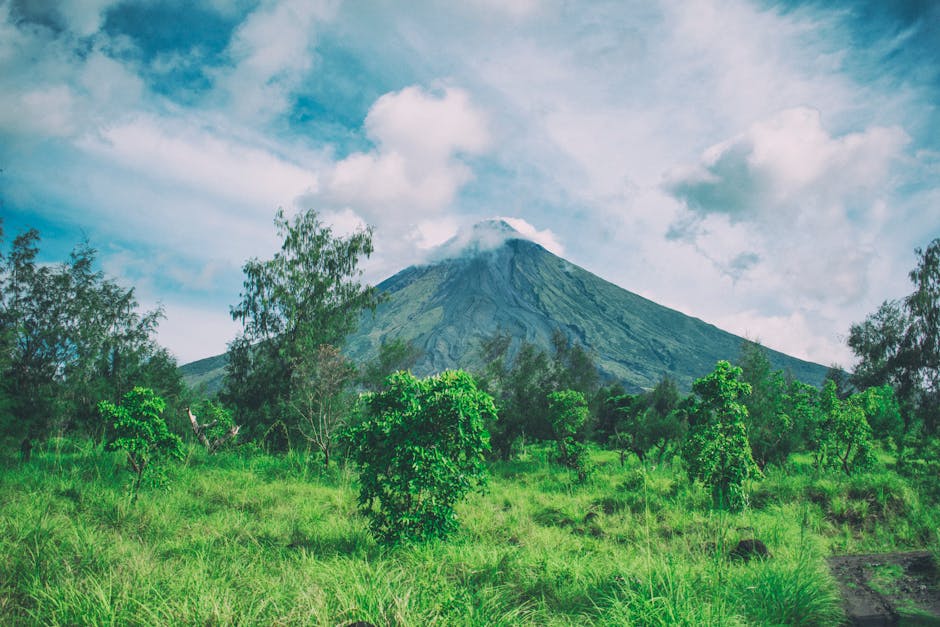
The classic cone-shaped volcano, or stratovolcano, represents just one type of volcanic formation. Volcanoes actually come in several distinct forms, each reflecting different eruption styles and magma compositions. Shield volcanoes, like those in Hawaii, feature broad, gentle slopes built up by fluid lava flows. Cinder cones are smaller, steep-sided volcanoes formed by explosive eruptions of gas-charged lava. Calderas are massive depression features created when a volcano’s magma chamber empties and the summit collapses. Yellowstone National Park sits atop one of the world’s largest calderas, measuring approximately 55 kilometers by 72 kilometers.
6. The Longest Volcanic Eruption Lasted Over 2,000 Years
While many volcanic eruptions are brief, violent events, some volcanoes maintain continuous activity for extended periods. Mount Stromboli in Italy has been erupting almost continuously for at least 2,000 years, earning it the nickname “Lighthouse of the Mediterranean.” The volcano produces regular, mild explosions every 15 to 20 minutes, launching incandescent lava fragments into the air. This consistent activity makes Stromboli one of the world’s most active volcanoes and a popular destination for volcanologists and tourists. Such long-duration eruptions demonstrate that volcanic activity exists on a spectrum from brief, catastrophic events to prolonged, relatively gentle outpourings.
7. Volcanic Lightning Is a Real Phenomenon
One of the most spectacular and mysterious volcanic phenomena is volcanic lightning, also called a “dirty thunderstorm.” This occurs when ash particles, rock fragments, and ice crystals within a volcanic plume collide with each other, generating static electricity. When the electrical charge becomes strong enough, it discharges as lightning within or around the eruption column. These electrical storms can be incredibly intense, with hundreds of lightning strikes occurring during a single eruption. Scientists continue to study volcanic lightning to better understand eruption dynamics and potentially use electrical activity as a monitoring tool for predicting volcanic behavior.
8. Supervolcanoes Pose Catastrophic Global Threats
Supervolcanoes represent a category of volcanic systems capable of producing eruptions at least 1,000 times larger than Mount St. Helens’ 1980 eruption. These geological features don’t always form obvious mountain peaks; instead, they often exist as calderas—large depressions formed by previous massive eruptions. The Yellowstone Caldera, Toba in Indonesia, and Taupo in New Zealand are examples of supervolcanoes. A supervolcano eruption would have devastating global consequences, including widespread ash fall, climate disruption, and potential mass extinctions. Fortunately, such eruptions are extremely rare, occurring on timescales of hundreds of thousands of years.
9. Volcanoes Exist on Other Planets and Moons
Volcanic activity is not unique to Earth; scientists have discovered volcanoes throughout our solar system. Mars hosts Olympus Mons, the largest known volcano in the solar system, standing approximately 25 kilometers high—nearly three times the height of Mount Everest. Jupiter’s moon Io is the most volcanically active body in the solar system, with hundreds of active volcanoes covering its surface. Venus has more volcanoes than any other planet in our solar system, with over 1,600 major volcanic features identified. Even Saturn’s moon Enceladus displays cryovolcanism, where water and ice erupt instead of molten rock, creating spectacular geysers visible from space.
10. Volcanic Gases Helped Create Earth’s Atmosphere and Oceans
Billions of years ago, volcanic outgassing played a crucial role in forming Earth’s atmosphere and oceans. During the planet’s early history, intense volcanic activity released water vapor, carbon dioxide, nitrogen, and other gases trapped within Earth’s interior. As the planet cooled, water vapor condensed to form the oceans, while other gases accumulated to create the atmosphere. This process, called outgassing, fundamentally transformed Earth from a barren rock into a planet capable of supporting life. Even today, volcanoes continue to release gases from Earth’s interior, though at a much reduced rate compared to the planet’s early history. This ongoing exchange between Earth’s interior and exterior remains essential to maintaining geological and atmospheric cycles.
Conclusion
These ten fascinating facts about volcanoes reveal the profound impact these geological features have on our planet and beyond. From their role in creating fertile agricultural lands and shaping Earth’s early atmosphere to their potential for causing global climate disruption, volcanoes demonstrate nature’s capacity for both creation and destruction. The existence of over 1,500 active volcanoes on land, countless more beneath the oceans, and volcanic features throughout our solar system underscores the fundamental importance of volcanic processes in planetary geology. Whether erupting continuously for millennia or lying dormant for thousands of years, volcanoes remain dynamic reminders of the powerful forces constantly reshaping our world. Understanding these magnificent geological phenomena not only satisfies scientific curiosity but also helps communities living near active volcanoes prepare for and coexist with these awe-inspiring natural wonders.
