
⏱️ 7 min read
Did You Know? 15 Facts About Extinct Animals
Throughout Earth’s history, countless species have vanished forever, leaving behind only fossils, stories, and scientific records. Extinction is a natural part of evolutionary history, but understanding these lost creatures provides valuable insights into biodiversity, ecosystem dynamics, and the impact of environmental changes. From massive prehistoric reptiles to recently extinct birds and mammals, these animals once played crucial roles in their ecosystems. Here are 15 fascinating facts about extinct animals that reveal the incredible diversity of life that once inhabited our planet.
1. The Dodo Bird Was Not Actually Stupid
Contrary to popular belief, the dodo bird was not unintelligent. This flightless bird from Mauritius evolved without natural predators, making it fearless rather than foolish. Dutch sailors discovered the species in 1598, and within less than a century, it was extinct due to hunting and invasive species introduced by humans. Recent studies of dodo skull fossion suggest these birds had proportionally normal brain sizes for their body mass.
2. Woolly Mammoths Survived Until the Age of Pyramids
While most woolly mammoths died out around 10,000 years ago, a small population survived on Wrangel Island in the Arctic Ocean until approximately 4,000 years ago. This means these massive Ice Age creatures were still alive when the ancient Egyptians were building the pyramids, demonstrating that extinction events don’t always happen uniformly across all populations of a species.
3. The Tasmanian Tiger Was Actually a Marsupial
Despite its common name and striped appearance, the Tasmanian tiger, or thylacine, was not related to tigers or dogs. This carnivorous marsupial carried its young in a pouch like a kangaroo. The last known thylacine died in captivity in 1936 at Hobart Zoo in Tasmania. This species represents one of the most striking examples of convergent evolution, having evolved to fill a similar ecological niche to canine predators despite being more closely related to kangaroos.
4. Giant Ground Sloths Were Enormous
Megatherium, the giant ground sloth, stood up to 6 meters tall on its hind legs and weighed approximately 4 tons, making it comparable in size to modern elephants. These massive herbivores roamed South and North America until about 10,000 years ago. Unlike their small, slow-moving modern relatives, these giants could rear up to feed on tree leaves and likely had few natural predators due to their immense size and powerful claws.
5. The Passenger Pigeon Went From Billions to Zero
The passenger pigeon was once the most abundant bird in North America, with populations estimated between 3 and 5 billion individuals. Flocks were so massive they could darken the sky for hours during migration. Despite these staggering numbers, intensive hunting and habitat destruction drove the species to extinction, with the last individual, Martha, dying in the Cincinnati Zoo in 1914. This dramatic decline occurred in less than a century.
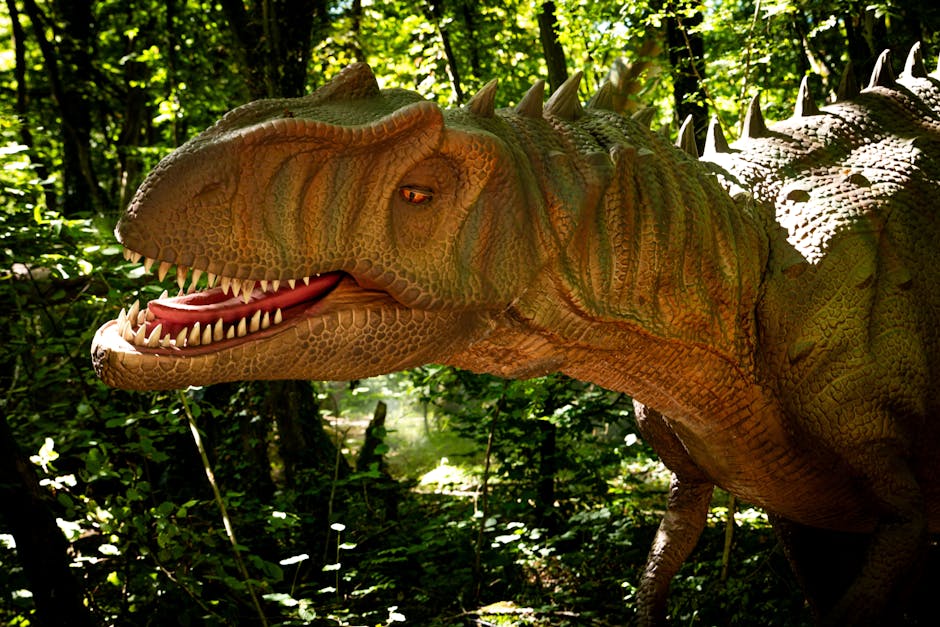
6. Dinosaurs Dominated Earth for 165 Million Years
Non-avian dinosaurs ruled the planet for an extraordinarily long period, from approximately 230 to 65 million years ago. This is far longer than mammals have dominated Earth. Their reign ended abruptly when an asteroid impact created global environmental catastrophe. However, birds are technically dinosaurs that survived this extinction event, meaning dinosaurs haven’t entirely disappeared.
7. The Irish Elk Had the Largest Antlers of Any Known Deer
Megaloceros giganteus, commonly known as the Irish elk, possessed antlers spanning up to 3.65 meters from tip to tip and weighing up to 40 kilograms. Despite its name, this creature was neither exclusively Irish nor an elk, but rather a giant deer species found across Europe and Asia. It became extinct about 7,700 years ago, likely due to climate change and hunting pressure following the last Ice Age.
8. The Quagga Was Half Zebra, Half Horse in Appearance
The quagga was a unique subspecies of plains zebra with distinctive coloring: stripes on the front half of its body that gradually faded to solid brown on the hindquarters. Native to South Africa, it was hunted to extinction by 1883. Modern scientists have used selective breeding programs with plains zebras to recreate the quagga’s appearance, though these animals are genetically distinct from the original quagga.
9. Saber-Toothed Cats Had 28-Centimeter Canines
Smilodon, the famous saber-toothed cat, possessed remarkable canine teeth that could grow up to 28 centimeters long. These predators didn’t use their impressive teeth for biting through bone; instead, they likely used them to deliver precise, deep wounds to prey animals’ soft tissue. Multiple species of saber-toothed cats existed, with the last populations dying out around 10,000 years ago at the end of the Pleistocene epoch.
10. The Great Auk Was the Original Penguin
Before Europeans encountered Antarctic penguins, they knew the great auk, a large flightless seabird of the North Atlantic. When explorers later saw similar black-and-white birds in the Southern Hemisphere, they called them penguins after the great auk, whose scientific name included “pinguinus.” The great auk was hunted to extinction by 1844, primarily for its feathers, meat, and fat. The last confirmed pair was killed on Eldey Island, Iceland.
11. Moa Birds Were Hunted by Humans They’d Never Encountered Before
Nine species of moa, giant flightless birds from New Zealand, evolved for millions of years without any mammalian predators. The largest species stood over 3.6 meters tall and weighed approximately 230 kilograms. When Polynesian settlers arrived in New Zealand around 1300 CE, moa had no behavioral defenses against human hunters. Within 200 years, all moa species were extinct, making this one of the fastest human-caused extinctions of a megafauna group.
12. The Steller’s Sea Cow Was Discovered and Extinct Within 27 Years
This massive marine mammal, measuring up to 9 meters long and weighing up to 10 tons, was first documented by Europeans in 1741 near the Commander Islands in the Bering Sea. Gentle, slow-moving, and tasty, Steller’s sea cows were easy prey for hunters provisioning ships. By 1768, just 27 years after scientific documentation, the species was extinct, representing one of the fastest extinctions following discovery.
13. Cave Bears Were Massive Ice Age Herbivores
Despite their fearsome size—males could weigh up to 1,000 kilograms—cave bears were primarily herbivorous, feeding on plants, roots, and berries. They inhabited caves across Europe during the Pleistocene and often competed with early humans for cave shelter. These bears went extinct approximately 24,000 years ago, likely due to a combination of climate change, habitat loss, and competition with humans and other predators.
14. The Baiji Dolphin Was Declared Functionally Extinct in 2006
The Yangtze River dolphin, or baiji, survived for approximately 20 million years before becoming the first cetacean driven to extinction by human activity in modern times. These freshwater dolphins were declared functionally extinct after an extensive 2006 survey found no individuals in their native Chinese river. Their extinction resulted from pollution, boat traffic, overfishing, and dam construction that degraded their habitat beyond recovery.
15. Pyrenean Ibex Was Briefly “Unextinct”
The Pyrenean ibex, a subspecies of Spanish ibex, went extinct in 2000 when the last individual, a female named Celia, was found dead. Scientists had previously collected tissue samples from Celia and used them to create a clone in 2003, making this the first “de-extinction” of an animal. However, the cloned kid died minutes after birth due to lung defects, making the Pyrenean ibex extinct once again and highlighting the challenges of de-extinction technology.
Conclusion
These 15 facts about extinct animals reveal the incredible diversity of life that once flourished on Earth and the various factors that can lead to extinction. From the gradual environmental changes that ended the reign of dinosaurs to the rapid human-caused extinctions of species like the passenger pigeon and dodo, these stories serve as powerful reminders of life’s fragility. Understanding the causes and circumstances of past extinctions provides crucial lessons for conservation efforts today. As we face an accelerating biodiversity crisis, the fate of these lost species underscores the importance of protecting remaining wildlife and their habitats. While extinction is a natural evolutionary process, the current rate of species loss far exceeds natural background rates, making conservation action more critical than ever to prevent more animals from joining this list of vanished creatures.
