
⏱️ 5 min read
Did You Know? 15 Amazing Facts About the Silk Road
The Silk Road stands as one of history’s most significant networks of trade routes, connecting the East and West for over 1,500 years. This legendary path facilitated not only the exchange of goods but also the spread of ideas, religions, technologies, and cultures across continents. While many people have heard of the Silk Road, numerous fascinating aspects of this ancient highway remain largely unknown. Here are 15 amazing facts that reveal the true scope and impact of this remarkable network.
1. It Wasn’t Actually a Single Road
Contrary to popular belief, the Silk Road was not one continuous road but rather an extensive network of interconnected trade routes spanning over 4,000 miles. These routes stretched from China through Central Asia, the Middle East, and eventually reached Europe and Africa. Merchants rarely traveled the entire distance; instead, goods passed through many hands along various routes.
2. The Name Is Relatively Modern
The term “Silk Road” was coined by German geographer Ferdinand von Richthofen in 1877, more than 1,000 years after the routes had declined in importance. Ancient traders and travelers never used this romantic name; they simply knew these as trade routes connecting different regions of the known world.
3. Silk Wasn’t the Only Commodity
While silk gave the route its modern name, countless other goods traveled along these paths. Spices, precious metals, gems, glass, ceramics, tea, paper, gunpowder, and exotic animals all moved between continents. Westbound caravans carried silk, porcelain, and spices, while eastbound traders brought gold, silver, wool, and horses.
4. The Routes Were Active for Over 1,500 Years
The Silk Road network began developing around the 2nd century BCE during China’s Han Dynasty and remained active until the 15th century CE. This remarkable longevity demonstrates the routes’ crucial importance to global commerce and cultural exchange throughout antiquity and the medieval period.
5. Buddhism Spread Along These Routes
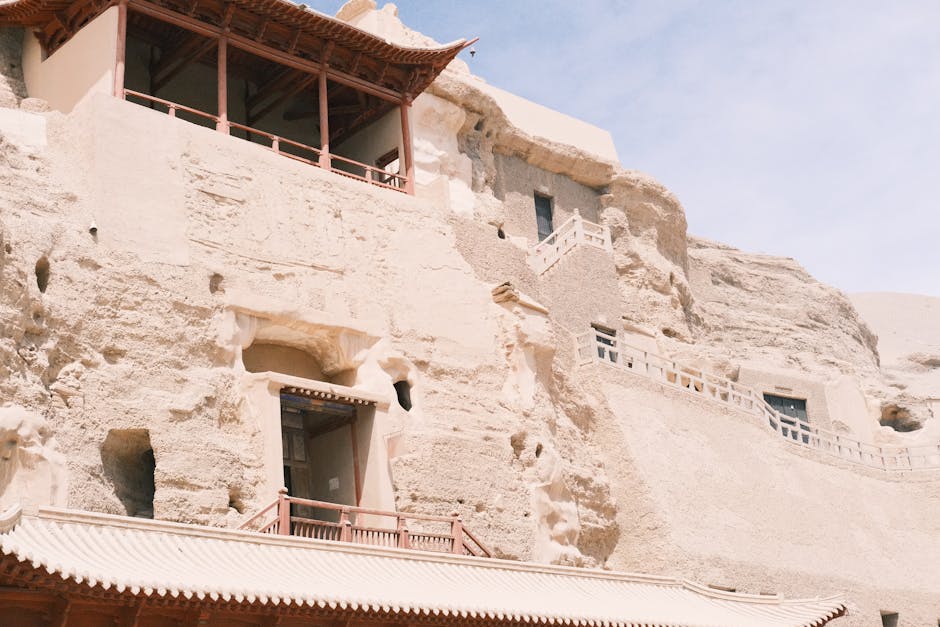
The Silk Road served as the primary corridor for Buddhism’s spread from India to Central Asia, China, Korea, and Japan. Monks traveled alongside merchants, establishing monasteries along the routes that served as rest stops, libraries, and centers of learning. Many famous Buddhist caves and temples were constructed along these paths.
6. Paper and Printing Technology Traveled West
Chinese innovations like paper-making and printing technology reached the Islamic world and eventually Europe through the Silk Road. This transfer of knowledge revolutionized education, record-keeping, and communication in the West, contributing significantly to cultural and scientific advancement.
7. The Black Death Spread Through These Routes
The same networks that facilitated cultural exchange also enabled the devastating spread of the bubonic plague in the 14th century. The Black Death traveled from Central Asia to Europe along Silk Road trade routes, carried by infected fleas on rats that accompanied merchant caravans.
8. Marco Polo’s Journey May Have Been Exaggerated
While Marco Polo’s accounts popularized knowledge of the Silk Road in Europe, historians debate whether he actually completed all the journeys described in his writings. Some scholars suggest he may have compiled information from other travelers, though his influence on European interest in Asian trade remains undeniable.
9. Caravanserais Served as Ancient Highway Stops
Along the Silk Road, caravanserais functioned as roadside inns where traveling merchants could rest, trade information, and secure their goods. These fortified structures, spaced roughly a day’s journey apart, provided safety, accommodation, and facilities for both traders and their animals.
10. Musical Instruments Crossed Continents
The Silk Road facilitated the exchange of musical traditions and instruments. The pipa, a Chinese lute, originated from Central Asian instruments, while Persian and Arabic musical elements influenced Chinese court music. This cultural exchange enriched musical traditions across multiple civilizations.
11. The Routes Connected Over 100 Cities
Major urban centers like Chang’an (modern-day Xi’an), Samarkand, Baghdad, Constantinople, and Venice thrived as Silk Road hubs. These cosmopolitan cities became melting pots where diverse peoples, languages, and cultures intermingled, driving innovation and prosperity.
12. Advanced Astronomical Knowledge Was Shared
Scientific knowledge, particularly in astronomy and mathematics, traveled both eastward and westward. Chinese astronomical observations reached Islamic scholars, while Arabic numerals and algebra eventually made their way to China and Europe, advancing scientific understanding across continents.
13. Maritime Routes Complemented Land Paths
The Silk Road included extensive maritime routes connecting China, India, Arabia, and East Africa. These sea routes, sometimes called the Maritime Silk Road, allowed for the transport of heavier goods and became increasingly important over time, especially for spice trade.
14. Diplomatic Relations Were Established
The Silk Road wasn’t merely commercial; it served crucial diplomatic functions. Imperial courts exchanged ambassadors, gifts, and political marriages. These diplomatic missions often included hundreds of people and demonstrated the power and wealth of various empires.
15. The Routes Declined Due to Multiple Factors
The Silk Road’s importance gradually diminished due to several factors: the Mongol Empire’s collapse, the rise of maritime trade routes around Africa, political instability in Central Asia, and the Ottoman Empire’s control of western terminals. By the 16th century, European sea routes to Asia had largely replaced overland trade.
Conclusion
These 15 remarkable facts illustrate that the Silk Road was far more than a simple trade route for luxury goods. It represented humanity’s earliest large-scale globalization effort, connecting diverse civilizations and enabling the exchange of commodities, technologies, philosophies, and cultures. The legacy of the Silk Road continues to influence modern culture, religion, cuisine, and technology across the regions it once connected. Understanding these fascinating aspects of the Silk Road helps us appreciate how interconnected human societies have been throughout history and reminds us that cultural exchange has always been a driving force in human progress and innovation.
