
⏱️ 5 min read
Did You Know? 12 Amazing Facts About Space Exploration
Space exploration has captivated humanity’s imagination for decades, pushing the boundaries of science, technology, and human achievement. From the first satellite launch to landing rovers on distant planets, our journey into the cosmos has been filled with remarkable milestones and surprising discoveries. The following twelve facts showcase some of the most amazing aspects of space exploration that demonstrate human ingenuity, perseverance, and the endless mysteries that await us beyond Earth’s atmosphere.
1. The First Human-Made Object in Space Was a Manhole Cover
During a 1957 underground nuclear test in Nevada, a steel manhole cover weighing several hundred pounds was launched into the air at an estimated speed of 150,000 miles per hour. Scientists believe it may have been the first human-made object to leave Earth’s atmosphere, possibly vaporizing in the process or escaping into space. This accidental achievement predated the official space age, which began with Sputnik 1 later that same year.
2. Astronauts Grow Taller in Space
Without the constant pull of gravity compressing their spines, astronauts can grow up to two inches taller during extended stays in space. The fluid-filled discs between vertebrae expand in the microgravity environment, causing this temporary height increase. However, astronauts return to their normal height shortly after returning to Earth’s gravitational pull. This phenomenon is one of many physical changes the human body experiences in space.
3. The International Space Station Travels at 17,500 Miles Per Hour
The International Space Station orbits Earth at an incredible speed of approximately 17,500 miles per hour, completing one full orbit around the planet every 90 minutes. This means astronauts aboard the ISS experience 16 sunrises and sunsets every 24 hours. At this velocity, the station covers the distance equivalent to traveling from Earth to the Moon and back in just one day.
4. Venus Has the Longest Day in Our Solar System
While not exclusively a space exploration fact, missions to Venus have revealed that one day on the planet lasts longer than its year. Venus takes 243 Earth days to complete one rotation on its axis but only 225 Earth days to orbit the Sun. Additionally, Venus rotates in the opposite direction to most planets in our solar system, meaning the Sun rises in the west and sets in the east.
5. Footprints on the Moon Will Last Millions of Years
The footprints left by Apollo astronauts on the lunar surface will remain virtually unchanged for millions of years. Unlike Earth, the Moon has no atmosphere, wind, or water to erode these marks. The only factors that might eventually disturb them are moonquakes and micrometeorite impacts. This means the legacy of human exploration is literally preserved in the lunar dust.
6. Space Suits Cost More Than Luxury Homes
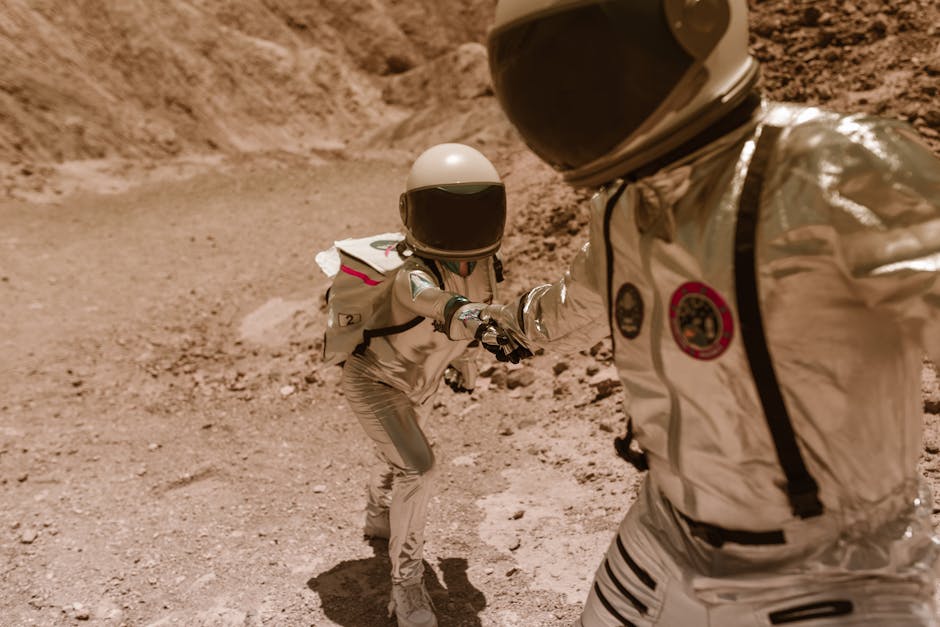
A single NASA space suit, officially called an Extravehicular Mobility Unit, costs approximately 12 million dollars to manufacture. These complex garments are essentially personalized spacecraft, providing oxygen, temperature regulation, radiation protection, and communication systems. The suits must withstand extreme temperature variations ranging from minus 250 to plus 250 degrees Fahrenheit.
7. The Largest Footprint of Human Exploration Extends Beyond Pluto
Voyager 1, launched in 1977, has traveled farther than any other human-made object, entering interstellar space in 2012. As of now, it is more than 14 billion miles from Earth and continues to send data back to scientists. The spacecraft carries a golden record containing sounds and images from Earth, serving as a message to any potential extraterrestrial life forms that might encounter it.
8. Astronauts Cannot Cry in Space
While astronauts can produce tears in space, they cannot cry the way we do on Earth. In microgravity, tears do not fall down the cheeks but instead form bubbles around the eyes due to surface tension. This can actually become uncomfortable and even slightly painful, as the tears simply accumulate around the eyeball until wiped away manually.
9. The Hubble Space Telescope Has Never Been Touched by Human Hands Since Launch
Although astronauts have performed five servicing missions to the Hubble Space Telescope since its 1990 launch, they never actually touched the telescope with their bare hands. All maintenance and repairs were conducted using tools and while wearing pressurized gloves. The telescope has observed over 40,000 celestial objects and has traveled more than 4 billion miles while orbiting Earth.
10. Space Smells Like Burnt Metal and Barbecue
Astronauts who have performed spacewalks report that space has a distinctive odor that clings to their suits and equipment. The smell is often described as a combination of burnt metal, welding fumes, and barbecued meat. This odor is likely caused by high-energy particles called polycyclic aromatic hydrocarbons, which are byproducts of dying stars.
11. Mars Rovers Sing Happy Birthday to Themselves
NASA’s Curiosity rover is programmed to play “Happy Birthday” to itself once per Earth year on August 5th, the anniversary of its landing on Mars in 2012. The rover uses its sample analysis instrument to vibrate at different frequencies, creating the tune. This quirky tradition highlights the human touch in robotic space exploration and serves as a systems check for the instrument.
12. There Are More Stars in the Universe Than Grains of Sand on Earth
Space exploration and observation have revealed the staggering scale of the cosmos. Scientists estimate there are more stars in the observable universe than all the grains of sand on all the beaches and deserts on Earth. Current estimates suggest there are at least 100 billion galaxies, each containing hundreds of billions of stars, totaling approximately 10 trillion trillion stars.
Conclusion
These twelve amazing facts about space exploration represent just a fraction of the incredible discoveries and achievements humanity has accomplished beyond our planet. From the accidental launch of a manhole cover to sophisticated rovers singing on Mars, space exploration continues to surprise, inspire, and challenge our understanding of the universe. As technology advances and our reach extends further into the cosmos, countless more fascinating discoveries await. The journey of space exploration reminds us of human curiosity’s boundless nature and our species’ determination to explore the unknown, ensuring that the future holds even more remarkable facts yet to be discovered.
