
⏱️ 7 min read
Did You Know? 10 Facts About Luck and Superstitions
Luck and superstitions have been an integral part of human culture for thousands of years, transcending geographical boundaries, religions, and social classes. From knocking on wood to avoiding black cats, these beliefs shape behaviors and influence decisions in ways that often defy logical explanation. Whether viewed as cultural traditions, psychological comfort mechanisms, or genuine forces that affect outcomes, superstitions continue to fascinate and perplex us. This article explores ten remarkable facts about luck and superstitions that reveal just how deeply these beliefs are woven into the fabric of human society.
1. The Number 13 Phobia Has Its Own Medical Term
The fear of the number 13, known as triskaidekaphobia, is so widespread that it has been officially recognized in psychological literature. This superstition affects architecture, aviation, and business practices worldwide. Many hotels skip the 13th floor in their numbering system, jumping from 12 to 14. Similarly, some airlines omit row 13 from their seating charts. The origin of this fear is debated, with theories ranging from the Last Supper having 13 attendees to Norse mythology where the 13th guest at a dinner party caused chaos. The economic impact is substantial, with an estimated $800 million lost in business on Friday the 13th alone due to people avoiding travel and major purchases.
2. Knocking on Wood Has Ancient Pagan Origins
The common practice of knocking on wood after making a positive statement or to ward off bad luck dates back to ancient pagan cultures. Early Europeans believed that protective spirits lived in trees, and by knocking on wood, people could call upon these spirits for protection or thank them for good fortune. When Christianity spread through Europe, the practice was adapted to represent the wood of the cross. Today, this superstition remains one of the most widely practiced rituals across cultures, demonstrating remarkable staying power despite its ancient and pre-Christian roots.
3. Lucky Charms Improve Performance Through Psychology
Scientific research has demonstrated that lucky charms actually work, though not through supernatural means. A 2010 study published in Psychological Science found that participants who brought their lucky charms to tasks performed significantly better than those without them. The reason is psychological: believing in luck increases confidence, which in turn improves focus, persistence, and performance. This phenomenon, known as the placebo effect of superstition, shows that the belief in luck can create real, measurable improvements in outcomes, even if the mechanism is purely psychological rather than magical.
4. Different Cultures Have Opposite Superstitions About the Same Things
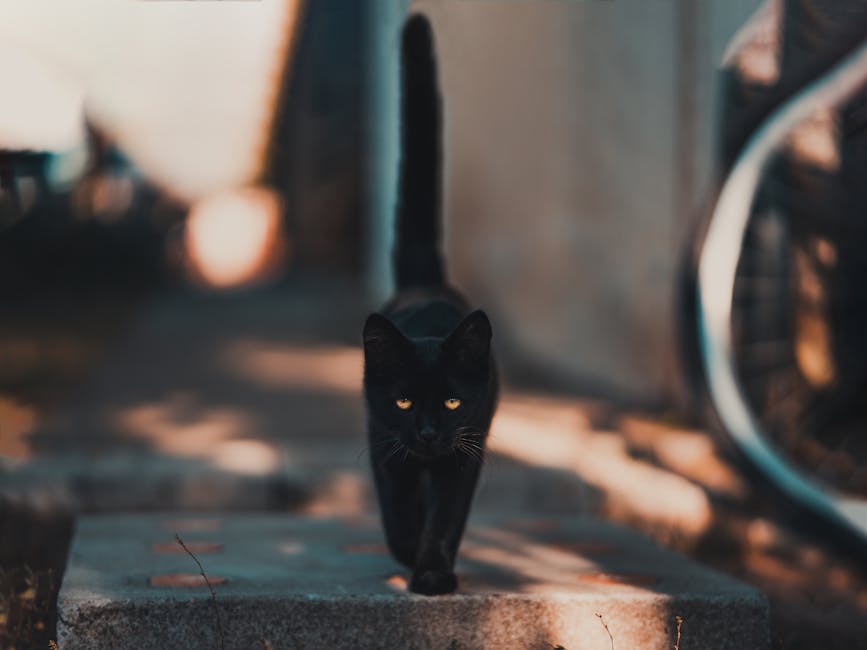
What brings good luck in one culture may signal misfortune in another. For instance, while Western cultures often consider black cats unlucky, Japanese and British cultures view them as symbols of good fortune. In China, the number 8 is extremely auspicious because it sounds like the word for prosperity, while the number 4 is avoided as it sounds like the word for death. Meanwhile, in Western numerology, 7 is considered the luckiest number. These contradictions highlight how superstitions are cultural constructs rather than universal truths, shaped by language, history, and tradition specific to each society.
5. Breaking a Mirror Brings Seven Years of Bad Luck for a Reason
The belief that breaking a mirror causes seven years of bad luck originated in ancient Rome. Romans believed that life renewed itself every seven years and that mirrors reflected not just physical appearance but also the soul. Breaking a mirror was thought to damage the soul, requiring seven years for complete renewal and recovery. Before glass mirrors became common, reflective surfaces were rare and expensive, so this superstition may have also served the practical purpose of encouraging people to handle valuable mirrors carefully.
6. Athletes Are Among the Most Superstitious People
Professional athletes are remarkably superstitious, with studies showing that sports competitors engage in ritualistic behaviors more than almost any other professional group. Baseball players might eat the same meal before every game, basketball players may wear the same unwashed socks during winning streaks, and tennis players often bounce the ball a specific number of times before serving. These rituals provide psychological comfort and a sense of control in high-pressure situations where outcomes are uncertain. The superstitions help athletes manage anxiety and maintain focus, demonstrating how superstitious behavior can be a coping mechanism in competitive environments.
7. Beginner’s Luck Has a Statistical Explanation
Beginner’s luck, the phenomenon where newcomers often succeed at activities on their first attempt, has both psychological and statistical explanations. Beginners approach tasks without the anxiety and overthinking that can hinder experienced participants. They are also more likely to take risks because they do not fully understand the consequences or difficulties involved. From a statistical perspective, we tend to remember and talk about instances of beginner’s luck while forgetting the many times beginners fail, creating a confirmation bias that reinforces the belief in this form of luck.
8. Superstitions Can Be Created in Minutes Through Conditioning
Psychologist B.F. Skinner demonstrated that superstitious behavior could be created quickly through random reinforcement. In his famous experiment with pigeons, he provided food at random intervals regardless of the birds’ behavior. The pigeons developed elaborate rituals, repeating whatever action they happened to be doing when the food appeared. This conditioning occurs in humans too. If someone wears a particular item of clothing and has a good day, they may develop a superstition about that item, even though the positive outcome was coincidental. This shows how quickly and easily superstitions can form through accidental associations.
9. The Evil Eye Belief Spans Thousands of Years and Continents
The belief in the evil eye—that certain people can curse others simply by looking at them with envy or malice—appears in cultures across Europe, Asia, Africa, and the Americas. Protective talismans against the evil eye, such as the Turkish nazar or the Italian cornicello, are worn by millions worldwide. Archaeological evidence shows that evil eye amulets were used in ancient Mesopotamia 5,000 years ago. This superstition addresses the universal human experience of feeling vulnerable to others’ jealousy and ill will, explaining its remarkable persistence and geographic spread throughout human history.
10. Superstitions Increase During Times of Uncertainty and Stress
Research consistently shows that superstitious behavior intensifies during periods of uncertainty, stress, or lack of control. During economic recessions, wars, or pandemics, people become more likely to engage in superstitious rituals and seek lucky charms. A study examining German citizens found that superstitious beliefs increased significantly during World War II and economic hardship. This pattern reveals that superstitions serve an important psychological function, providing a sense of control and predictability when the world feels chaotic and unmanageable. The need for this psychological comfort appears to be a fundamental aspect of human nature.
Conclusion
These ten facts about luck and superstitions reveal that these beliefs are far more than simple ignorance or irrationality. They represent complex cultural traditions, psychological coping mechanisms, and social bonding practices that have served humanity for millennia. Whether through the widespread fear of the number 13, the performance-enhancing effects of lucky charms, or the comfort provided during uncertain times, superstitions continue to play meaningful roles in modern life. Understanding the origins, variations, and functions of these beliefs helps us appreciate both the diversity of human culture and the universal psychological needs that unite us all. While skeptics may dismiss superstitions as mere illusions, the facts demonstrate that their impact on human behavior and psychology is undeniably real and continues to shape our world in fascinating ways.
