

















1 / 20 Questions
0 Points

What year was Coca-Cola invented?

1886

1892

1901

1915

Points won
0
Correct score
0%

More Articles

20 Amazing Facts About the Olympic Games

20 Amazing Facts About the Olympic Games

⏱️ 6 min read

20 Amazing Facts About the Olympic Games

The Olympic Games represent the pinnacle of athletic achievement and global unity, bringing together nations from around the world in a celebration of human potential and sporting excellence. Since their inception in ancient Greece and their modern revival in 1896, the Olympics have accumulated a fascinating history filled with remarkable stories, unexpected trivia, and inspiring moments. This article explores twenty amazing facts about the Olympic Games that showcase the depth, complexity, and wonder of this extraordinary sporting event.

The 20 Fascinating Olympic Facts

1. Ancient Origins Spanning Over a Millennium

The ancient Olympic Games were held in Olympia, Greece, from 776 BCE to 393 CE, spanning an impressive 1,170 years. These games were held every four years as part of a religious festival honoring Zeus, the king of the Greek gods. The tradition was so revered that wars would be suspended during the games to allow safe passage for athletes and spectators.

2. The Modern Olympics Were Revived by a French Baron

Baron Pierre de Coubertin, a French educator and historian, founded the International Olympic Committee in 1894 and organized the first modern Olympic Games in Athens in 1896. His vision was to promote peace and understanding between nations through sport, creating a legacy that continues today.

3. Women Were Initially Banned

The first modern Olympics in 1896 did not include any female competitors. Women were first allowed to compete in the 1900 Paris Games, but only in tennis and golf. It wasn't until the 2012 London Olympics that women competed in every sport on the program, marking a significant milestone in Olympic history.

4. The Olympic Rings Represent Continental Unity

The five interlocking Olympic rings, designed by Baron de Coubertin in 1913, represent the five inhabited continents: Africa, the Americas, Asia, Europe, and Oceania. The six colors (including the white background) were chosen because at least one appears on every national flag in the world.

5. Gold Medals Aren't Pure Gold

Despite their name, Olympic gold medals haven't been made of solid gold since 1912. Modern gold medals are actually made of silver and plated with at least six grams of gold. The last solid gold medals were awarded at the Stockholm 1912 Games, and they would be worth approximately $25,000 today based on current gold prices.

6. The Olympic Torch Relay Is a Modern Addition

Contrary to popular belief, the Olympic torch relay was not part of the ancient Games. This tradition was introduced at the 1936 Berlin Olympics. The flame is still lit in Olympia, Greece, using a parabolic mirror to focus the sun's rays, maintaining a connection to the ancient origins.

7. Three Continents Have Never Hosted

Despite the Olympics' global reach, three continents have never hosted the Games: Africa, South America (until Rio 2016), and Antarctica. The high costs and infrastructure requirements have made it challenging for many nations in these regions to bid successfully.

8. The Youngest Competitor Was Only Ten Years Old

The youngest Olympian ever was Greek gymnast Dimitrios Loundras, who competed in the 1896 Athens Games at just ten years old, winning a bronze medal. Modern age restrictions now prevent such young athletes from competing in most Olympic sports.

9. An Artist Named Medals Were Once Awarded

From 1912 to 1948, the Olympics included competitions in arts, including architecture, literature, music, painting, and sculpture. Artists competed for gold, silver, and bronze medals just like athletes, with all works required to be Olympic-themed.

10. The Olympics Have Been Cancelled Three Times

The modern Olympics have been cancelled only three times, all due to world wars: 1916 (Berlin), 1940 (Tokyo then Helsinki), and 1944 (London). The 2020 Tokyo Olympics were postponed to 2021 due to the COVID-19 pandemic but were not cancelled.

11. One Athlete Competed for Three Different Countries

Athlete Christos Mantecas holds the unique distinction of representing Greece, Cyprus, and Australia at different Olympic Games in water polo and swimming competitions, showcasing the complex nationality rules that have evolved over Olympic history.

12. The Olympic Village Concept Began in 1924

The first Olympic Village was created for the 1924 Paris Games, providing dedicated accommodation for athletes. This innovation fostered camaraderie among competitors from different nations and has become a cherished tradition, often leading to lasting friendships and cultural exchanges.

13. Tug-of-War Was Once an Olympic Sport

Tug-of-war was an official Olympic sport from 1900 to 1920. Other discontinued Olympic sports include rope climbing, standing high jump, and live pigeon shooting, which appeared only once at the 1900 Paris Games.

14. The Same National Anthem Has Played Most Often

The United States national anthem has been played more than any other at Olympic medal ceremonies, reflecting the country's dominant performance across multiple Games, particularly in swimming, athletics, and basketball.

15. Olympic Medals Have Been Stripped for Doping

Over 140 Olympic medals have been stripped from athletes due to doping violations. The fight against performance-enhancing drugs remains one of the Olympics' biggest challenges, with testing procedures becoming increasingly sophisticated over time.

16. The Opening Ceremony Has Strict Protocols

Olympic opening ceremonies must follow specific protocols established by the International Olympic Committee, including the parade of nations (always led by Greece and concluded by the host nation), the lighting of the Olympic flame, and the release of doves symbolizing peace.

17. One Country Has Attended Every Modern Olympics

Greece, Australia, France, Great Britain, and Switzerland have competed at every Summer Olympic Games since 1896. Greece holds a special place as the birthplace of the Olympics and leads the parade of nations at every opening ceremony.

18. The Winter Olympics Started in 1924

The first Winter Olympic Games were held in Chamonix, France, in 1924, initially called "International Winter Sports Week." The success of this event led to the establishment of separate Winter Olympics, held in the same year as the Summer Games until 1992.

19. Olympic Records Can Stand for Decades

Some Olympic records have proven remarkably durable. Bob Beamon's long jump record of 8.90 meters, set at the 1968 Mexico City Olympics, stood for 23 years. Such performances demonstrate the extraordinary nature of Olympic competition and achievement.

20. The Paralympics Grew from the Olympics

The Paralympic Games began in 1960 in Rome, evolving from the Stoke Mandeville Games organized by Dr. Ludwig Guttmann for World War II veterans with spinal cord injuries. Today, the Paralympics showcase elite athletes with disabilities and are held shortly after each Olympic Games in the same host city.

Conclusion

These twenty amazing facts about the Olympic Games reveal the rich tapestry of history, tradition, and human achievement that defines this global sporting phenomenon. From ancient religious festivals to modern displays of athletic excellence, from controversial moments to inspiring triumphs, the Olympics have evolved into much more than a sporting competition. They represent humanity's aspirations for peace, unity, and the pursuit of excellence. As the Games continue to evolve, incorporating new sports and adapting to contemporary challenges, they maintain their power to inspire billions of people worldwide. Understanding these fascinating facts deepens our appreciation for the Olympics and reminds us why these Games continue to captivate global audiences every two years, alternating between Summer and Winter editions.

10 Incredible Facts About Antarctica

10 Incredible Facts About Antarctica

⏱️ 7 min read

10 Incredible Facts About Antarctica

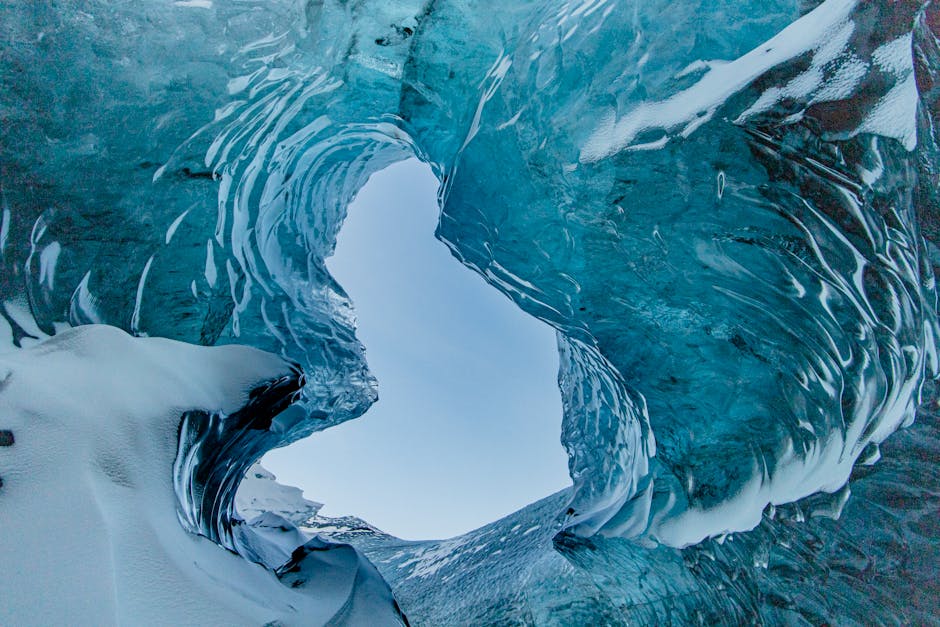
Antarctica, the southernmost continent on Earth, remains one of the most mysterious and fascinating places on our planet. This frozen wilderness, larger than Europe and almost entirely covered in ice, holds secrets that continue to captivate scientists, explorers, and curious minds worldwide. From its extreme climate conditions to its unique wildlife and scientific significance, Antarctica offers a wealth of remarkable characteristics that set it apart from every other continent. Here are ten incredible facts about this extraordinary frozen frontier that showcase why it remains one of Earth's most intriguing regions.

1. Antarctica Is the Driest Place on Earth

While covered in ice, Antarctica is technically classified as a desert—in fact, it's the driest continent on the planet. The interior regions, particularly the McMurdo Dry Valleys, receive less than two inches of precipitation annually, making them among the driest places on Earth. Some areas haven't seen rain for nearly two million years. The extreme cold temperatures mean that the air holds very little moisture, resulting in minimal snowfall despite the continent being covered in ice that has accumulated over millions of years. This paradox of being both the largest reservoir of freshwater and a desert simultaneously makes Antarctica truly unique.

2. It Contains 70% of the World's Fresh Water

Antarctica holds approximately 70% of Earth's freshwater resources, locked away in its massive ice sheets. The Antarctic ice sheet contains about 26.5 million cubic kilometers of ice, and if all this ice were to melt, global sea levels would rise by approximately 58 to 60 meters (190 to 200 feet). This enormous frozen reservoir has been accumulating for millions of years, with some ice cores revealing atmospheric conditions from over 800,000 years ago. The sheer volume of water stored in Antarctica makes it critically important to global sea levels and climate patterns.

3. The Coldest Temperature Ever Recorded Was in Antarctica

Antarctica holds the record for the coldest temperature ever recorded on Earth. In July 1983, the Soviet Union's Vostok Station registered a bone-chilling temperature of -89.2°C (-128.6°F). More recently, satellite measurements in 2013 detected even colder temperatures of -93.2°C (-135.8°F) in a high ridge between Dome Argus and Dome Fuji. During winter, temperatures regularly drop below -80°C (-112°F) in the interior regions. These extreme conditions make Antarctica not only the coldest continent but also one of the most challenging environments for human survival and scientific research.

4. Antarctica Has No Permanent Human Residents

Unlike every other continent, Antarctica has no indigenous human population or permanent residents. The only people who live there are scientists and support staff at research stations, and their stays are temporary. During summer months, the population swells to approximately 5,000 people across various research stations, but this number drops to around 1,000 during the harsh winter months. The Antarctic Treaty, signed in 1959, designates the continent as a scientific preserve and prohibits military activity, ensuring that Antarctica remains dedicated to peaceful scientific research rather than permanent settlement or commercial exploitation.

5. The Antarctic Ice Sheet Is Up to 4.8 Kilometers Thick

The ice covering Antarctica is staggeringly thick, averaging about 2 kilometers (1.2 miles) in depth. At its thickest point, the ice sheet reaches depths of approximately 4.8 kilometers (3 miles). This massive ice sheet is so heavy that it actually depresses the continental bedrock beneath it. In some areas, the land surface has been pushed as much as 2,500 feet below sea level due to the weight of the ice. If the ice sheet were removed, it would take thousands of years for the land to rebound to its original elevation—a geological process called isostatic rebound.

6. Antarctica Is Home to the World's Largest Desert

Beyond being the driest continent, Antarctica qualifies as the world's largest desert, covering approximately 14 million square kilometers (5.5 million square miles). A desert is defined by its low precipitation levels rather than its temperature, and Antarctica certainly meets this criterion. The McMurdo Dry Valleys, in particular, are so arid and the conditions so harsh that they're considered the closest earthly equivalent to the surface of Mars. NASA has used these valleys to test equipment and conduct research for Mars missions, making Antarctica not just an earthly desert but a terrestrial analog for extraterrestrial exploration.

7. The Continent Has Active Volcanoes

Contrary to popular perception of Antarctica as a static frozen wasteland, the continent actually hosts several volcanoes, some of which are still active. Mount Erebus, standing at 3,794 meters (12,448 feet), is the southernmost active volcano on Earth and features a permanent lava lake in its summit crater. This remarkable volcano continuously emits gas plumes and occasionally ejects rock bombs. Antarctica contains at least 138 volcanoes, with many buried beneath the ice sheet. Volcanic activity beneath the ice can create subglacial lakes and may influence ice sheet dynamics, adding another layer of complexity to understanding Antarctic geology and climate systems.

8. Antarctica Experiences Six Months of Daylight and Six Months of Darkness

Due to Earth's axial tilt, Antarctica experiences extreme variations in daylight throughout the year. During summer (December to February), the sun never sets in many areas, creating a phenomenon known as the midnight sun. Conversely, during winter (June to August), the sun never rises, plunging the continent into months of continuous darkness called polar night. This dramatic light cycle has profound effects on the ecosystem, wildlife behavior, and the psychological well-being of researchers stationed there. The transition periods of sunrise and sunset can last for weeks, creating spectacular displays of twilight colors across the frozen landscape.

9. The Antarctic Treaty Makes It a Continent for Science

Antarctica is governed by the Antarctic Treaty System, one of the most successful international agreements in history. Signed in 1959 by 12 countries and now adhered to by 54 nations, the treaty designates Antarctica as a scientific preserve, establishes freedom of scientific investigation, and bans military activity on the continent. It also prohibits nuclear testing, radioactive waste disposal, and mineral mining, while promoting international scientific cooperation. This unique governance structure has kept Antarctica free from territorial disputes and commercial exploitation, preserving it as a natural laboratory for studying climate change, astronomy, glaciology, and numerous other scientific disciplines.

10. Antarctica Is Moving Approximately 1 Centimeter Per Year

Like all continents, Antarctica sits on a tectonic plate that is constantly moving. The Antarctic Plate is moving at approximately one centimeter per year in a generally northward direction. While this movement seems insignificant in human timescales, over millions of years it has had dramatic effects. Antarctica was once part of the supercontinent Gondwana and was positioned much farther north with a temperate climate. Fossil evidence shows that Antarctica once supported forests and dinosaurs. The continent's journey to its current polar position took millions of years, transforming it from a green, habitable landmass to the frozen wilderness we know today.

Conclusion

Antarctica stands as a testament to Earth's extremes and natural wonders. From being the coldest, driest, and windiest continent to hosting unique volcanic activity beneath its ice and serving as a model for international scientific cooperation, Antarctica continues to reveal incredible facts that challenge our understanding of our planet. These ten remarkable characteristics only scratch the surface of what makes this frozen continent so extraordinary. As climate change increasingly affects Antarctic ice sheets and ecosystems, understanding these incredible facts becomes ever more crucial for comprehending global environmental systems. Antarctica remains not just a frozen wilderness at the end of the Earth, but a vital component of our planet's climate system and a unique natural laboratory that offers insights into Earth's past, present, and future.