








⏱️ 6 min read
Did You Know? 15 Secrets About the Great Pyramids
The Great Pyramids of Giza stand as one of humanity's most remarkable architectural achievements, captivating visitors and scholars for millennia. While these ancient structures are widely recognized, numerous fascinating secrets and lesser-known facts continue to emerge from ongoing research and archaeological discoveries. This article unveils fifteen extraordinary secrets about the Great Pyramids that illuminate the ingenuity, precision, and mystery surrounding these ancient wonders.
1. They Were Originally Covered in Polished White Limestone
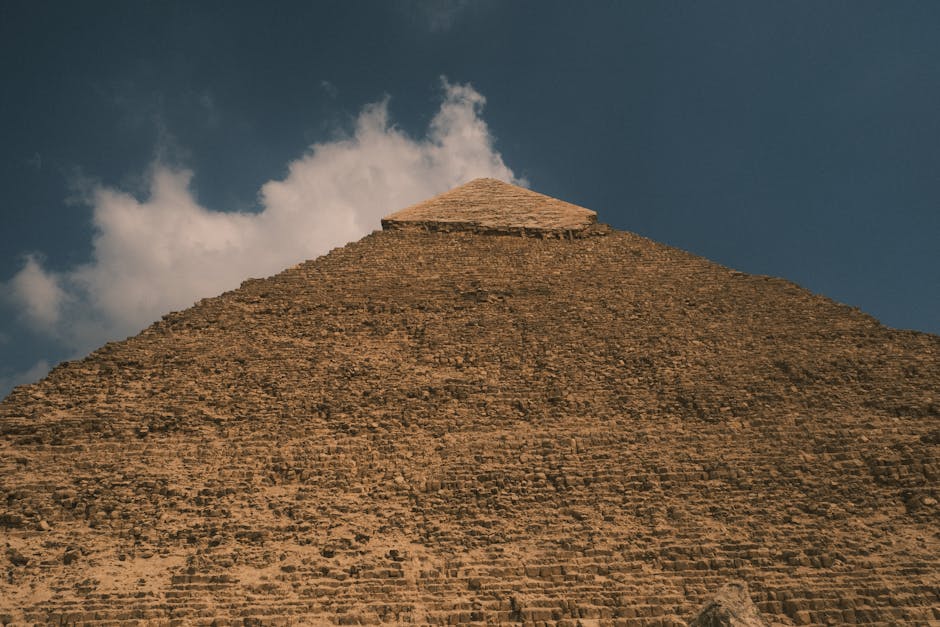
The pyramids we see today are merely the core structures. Originally, they were covered in polished white Tura limestone casing stones that reflected the sun's rays, making them shine brilliantly and visible from miles away. These casing stones were so precisely cut that the joints between them were nearly invisible, creating a smooth, gleaming surface. Most of these stones were removed over the centuries to build other structures in Cairo.
2. The Great Pyramid Was the Tallest Structure for Nearly 4,000 Years
The Great Pyramid of Khufu held the record as the world's tallest man-made structure at approximately 481 feet for almost 3,800 years. This record remained unbroken until the construction of Lincoln Cathedral in England around 1300 CE. The pyramid's height is a testament to the extraordinary engineering capabilities of ancient Egypt.
3. They Were Built by Paid Workers, Not Slaves
Contrary to popular belief, archaeological evidence suggests the pyramids were constructed by skilled paid laborers rather than slaves. Excavations have uncovered workers' villages, including bakeries, breweries, and medical facilities. Workers received compensation in the form of food, clothing, and shelter, and were likely considered honored to participate in building the pharaoh's eternal resting place.
4. The Construction Alignment Is Astronomically Precise
The Great Pyramid is aligned to true north with remarkable accuracy, deviating by only 3/60th of a single degree. This precision suggests the ancient Egyptians possessed sophisticated astronomical knowledge and surveying techniques. The alignment may have been achieved by tracking the stars or using the sun's shadow.
5. Mortar Stronger Than the Stone Itself
The mortar used in constructing the pyramids has been analyzed and found to be incredibly durable—in many cases, stronger than the limestone blocks themselves. Despite extensive study, modern scientists have struggled to replicate the exact chemical composition of this ancient mortar, which has withstood thousands of years of weathering.
6. The Pyramids Contain Approximately 2.3 Million Stone Blocks
The Great Pyramid alone contains an estimated 2.3 million limestone blocks, each weighing between 2.5 and 15 tons. Some granite blocks in the King's Chamber weigh up to 80 tons. The logistics of quarrying, transporting, and precisely placing such massive stones remain a subject of ongoing research and debate.
7. Eight Sides, Not Four
While appearing to have four sides, the Great Pyramid actually has eight sides—a concave indentation runs down the middle of each face. This feature is only visible from the air under specific lighting conditions during the spring and autumn equinoxes. The purpose of this design element remains unknown, though theories suggest it may have been intentional for structural or symbolic reasons.
8. The Temperature Inside Remains Constant
The interior chambers of the Great Pyramid maintain a constant temperature of approximately 20 degrees Celsius (68 degrees Fahrenheit), which equals the average temperature of the Earth. This remarkable climate control occurs naturally due to the pyramid's mass and design, demonstrating an understanding of thermal dynamics.
9. They Contain Mysterious Shafts With Unknown Purposes
The Great Pyramid features four narrow shafts extending from the King's and Queen's chambers. While some theories suggest they served as air shafts or had religious significance related to the stars, their true purpose remains debated. Recent robotic explorations have revealed that some shafts contain mysterious copper handles and blocked passages.
10. Construction Speed Was Remarkable
Estimates suggest the Great Pyramid was completed in approximately 20 years. This means workers would have had to set a block roughly every two and a half minutes during a 10-hour workday, every day, for two decades. This feat required not just physical labor but exceptional organizational and logistical planning.
11. The Pyramids Were Part of a Larger Complex
The pyramids were not standalone structures but part of extensive complexes including temples, causeways, smaller satellite pyramids, and vast necropolises. These complexes served religious, ceremonial, and administrative functions, representing entire cities dedicated to the cult of the deceased pharaoh.
12. Mathematical Constants Encoded in the Design
The Great Pyramid's dimensions encode mathematical relationships, including pi. The ratio of the pyramid's perimeter to its height is remarkably close to 2π. Whether this was intentional or coincidental remains debated, but it demonstrates the mathematical sophistication of ancient Egyptian architects.
13. Original Entrances Were Hidden and Sealed
The true entrance to the Great Pyramid was located on the north face, approximately 17 meters above ground level, and was carefully concealed. The entrance tourists use today was actually created by Caliph Al-Ma'mun in the 9th century CE when he attempted to find treasure inside, not realizing the pyramid had already been robbed in antiquity.
14. Seismic Activity Protection Built Into Design
The pyramids were engineered to withstand earthquakes. The blocks were laid without rigid mortar in many areas, allowing slight movement during seismic activity without structural collapse. This flexibility, combined with the pyramid's shape distributing weight efficiently, has helped these structures survive numerous earthquakes over millennia.
15. They Served as Ancient Landmarks and Reference Points
Beyond their function as tombs, the pyramids served as astronomical observation points and geographic markers. Their massive size and prominent location made them visible landmarks for navigation and surveying. Ancient texts suggest they were used to mark seasonal changes and helped coordinate the agricultural calendar tied to the Nile's flooding.
Conclusion
These fifteen secrets reveal that the Great Pyramids were far more sophisticated than simple stone monuments. They represent the culmination of centuries of architectural evolution, mathematical understanding, astronomical knowledge, and social organization. From their hidden eight-sided design to their earthquake-resistant construction, from the mysterious shafts to the remarkable precision of their alignment, the pyramids continue to challenge our understanding of ancient capabilities. Modern technology and ongoing archaeological work continue to unveil new secrets, ensuring these ancient wonders remain subjects of fascination and study. The Great Pyramids stand not merely as tombs for ancient pharaohs, but as enduring testaments to human ingenuity, ambition, and the timeless desire to create something that transcends mortality itself.