








⏱️ 5 min read
Did You Know The Amazon Rainforest Produces 20% of Our Oxygen?
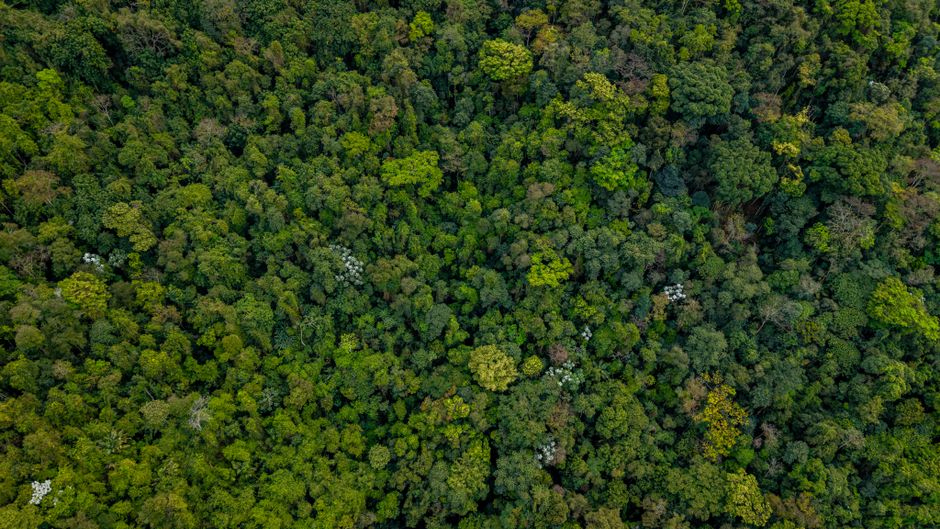
The Amazon rainforest has long been celebrated as the "lungs of the Earth," with a commonly cited claim that it produces 20% of the world's oxygen. While this particular statistic has been debunked by scientists, the Amazon remains one of the most critical ecosystems on our planet. The reality is far more nuanced and fascinating than a single percentage can convey. This article explores 20 essential facts about the Amazon rainforest, its role in oxygen production, and its true importance to our global ecosystem.
1. The Oxygen Production Myth
Scientists have clarified that the Amazon rainforest does not actually produce 20% of Earth's oxygen. In fact, as a mature forest, the Amazon consumes nearly as much oxygen as it produces through respiration and decomposition. The net oxygen contribution to the atmosphere is close to zero, as the ecosystem operates in a balanced cycle.
2. The Real Oxygen Producers
Approximately 50-80% of Earth's oxygen actually comes from ocean phytoplankton, microscopic marine plants that perform photosynthesis. These tiny organisms are the true lungs of our planet, making the oceans far more critical for oxygen production than terrestrial forests.
3. Carbon Storage Champion
The Amazon's real superpower lies in carbon storage, not oxygen production. The rainforest stores between 150-200 billion tons of carbon in its trees, soil, and vegetation, helping to regulate global climate patterns and mitigate climate change effects.
4. Massive Geographic Scale
The Amazon rainforest covers approximately 5.5 million square kilometers across nine South American countries: Brazil, Peru, Colombia, Venezuela, Ecuador, Bolivia, Guyana, Suriname, and French Guiana. Brazil contains about 60% of the total forest area.
5. Incredible Biodiversity
The Amazon is home to roughly 10% of all species on Earth, including approximately 390 billion individual trees representing 16,000 different species. This makes it the most biodiverse terrestrial ecosystem on the planet.
6. The Water Cycle Engine
The Amazon releases approximately 20 billion tons of water into the atmosphere daily through transpiration. This process creates "flying rivers" that influence rainfall patterns across South America and beyond, making the forest crucial for regional climate regulation.
7. Ancient Origins
The Amazon rainforest has existed for at least 55 million years, surviving dramatic climate changes and geological shifts. Its age and stability have allowed for the evolution of its remarkable biodiversity.
8. Indigenous Guardians
Approximately 400-500 indigenous tribes call the Amazon home, with about 50 tribes having no contact with the outside world. These communities have stewarded the forest sustainably for thousands of years.
9. Deforestation Crisis
Since 1970, approximately 17% of the Amazon rainforest has been destroyed, primarily due to cattle ranching, agriculture, logging, and infrastructure development. This deforestation releases stored carbon back into the atmosphere, accelerating climate change.
10. Medicine Cabinet of the World
Over 25% of modern pharmaceutical drugs are derived from rainforest plants, yet less than 1% of Amazon plant species have been studied for their medicinal properties. The forest represents an enormous untapped resource for future medical discoveries.
11. River System Magnitude
The Amazon River system contains approximately 20% of the world's fresh water. The main river is over 6,400 kilometers long and discharges more water than the next seven largest rivers combined.
12. Temperature Regulation
The Amazon's dense vegetation helps regulate global temperatures by absorbing solar radiation and releasing water vapor, which cools the atmosphere. This cooling effect extends far beyond South America's borders.
13. Soil Paradox
Despite supporting lush vegetation, most Amazon soils are surprisingly nutrient-poor. The forest thrives through rapid nutrient cycling, where decomposing organic matter is quickly absorbed by plants before nutrients leach away.
14. Canopy Ecosystem
The Amazon's canopy layer, reaching heights of 30-45 meters, hosts a distinct ecosystem where many species spend their entire lives without touching the ground. This three-dimensional habitat dramatically increases biodiversity.
15. Tipping Point Threat
Scientists warn that if deforestation reaches 20-25% of the original forest area, the Amazon could reach a tipping point where it transforms from rainforest to savanna, a change that would be catastrophic and potentially irreversible.
16. Economic Value
The Amazon provides ecosystem services worth an estimated $8.2 billion annually through carbon storage, water cycling, and other functions. This value far exceeds the short-term economic gains from deforestation activities.
17. Wildlife Abundance
The Amazon houses approximately 2.5 million insect species, 40,000 plant species, 3,000 fish species, 1,300 bird species, 430 mammal species, and 370 reptile species. New species are discovered regularly, with scientists identifying an average of one new species every two days.
18. Fire Vulnerability
Although naturally fire-resistant due to its humidity, deforestation and climate change have made the Amazon increasingly vulnerable to wildfires. The devastating 2019 fires burned over 900,000 hectares, releasing massive amounts of stored carbon.
19. Interconnected Ecosystems
The Amazon doesn't exist in isolation—it influences and is influenced by ecosystems worldwide. Dust from the Sahara Desert, for example, fertilizes the Amazon by providing essential nutrients that blow across the Atlantic Ocean.
20. Conservation Efforts
Protected areas now cover approximately 50% of the Amazon, including national parks, indigenous territories, and sustainable use reserves. These conservation efforts are crucial for preserving the forest, though enforcement and funding remain significant challenges.
Conclusion
While the Amazon rainforest may not produce 20% of our oxygen as commonly believed, these 20 facts reveal that its true importance to our planet is far more complex and profound. From carbon storage and water cycling to biodiversity preservation and climate regulation, the Amazon performs irreplaceable functions that affect every corner of the globe. Understanding the forest's actual role helps us appreciate why its protection is crucial—not because we breathe its oxygen directly, but because it stabilizes the intricate web of systems that make Earth habitable. The Amazon's survival is intimately connected to humanity's future, making its conservation one of the most pressing environmental challenges of our time.