








⏱️ 6 min read
12 Shocking Facts About Boxing History
Boxing, often called "the sweet science," has captivated audiences for centuries with its raw display of skill, courage, and determination. Behind the glamour of championship belts and legendary rivalries lies a fascinating history filled with surprising stories, bizarre rules, and shocking moments that have shaped the sport into what it is today. From marathon matches that lasted hours to fighters who competed well into their golden years, boxing's past is far more extraordinary than many realize. Here are twelve shocking facts about boxing history that reveal the incredible evolution of this combat sport.
1. The Longest Boxing Match Lasted Over Seven Hours
In 1893, Andy Bowen and Jack Burke engaged in the longest boxing match in recorded history in New Orleans, Louisiana. The bout lasted an astonishing 110 rounds over seven hours and nineteen minutes. The fight finally ended when both fighters were too exhausted to continue, resulting in a no-contest decision. This marathon match took place under different rules than modern boxing, with rounds continuing until a knockdown occurred, which explains its extraordinary duration.
2. Boxing Was Illegal in Most of America for Decades
Throughout much of the 19th and early 20th centuries, boxing was actually illegal in most American states. Prizefighting was considered immoral and barbaric by many civic leaders. Matches often took place in secret locations, on barges in international waters, or in remote areas to avoid police intervention. New York didn't legalize boxing until 1896, and even then, fights were heavily restricted. It wasn't until the 1920s that boxing gained widespread legal acceptance across the United States.
3. Bare-Knuckle Boxing Was the Original Standard
Before padded gloves became mandatory, fighters competed with bare knuckles for centuries. The last bare-knuckle heavyweight championship took place in 1889 between John L. Sullivan and Jake Kilrain, lasting 75 rounds. Ironically, while bare-knuckle fighting seems more brutal, the introduction of gloves actually led to more head injuries because fighters could punch harder without breaking their hands, resulting in increased brain trauma over time.
4. A Pope Was Once an Accomplished Boxer
Pope Clement VII, who reigned from 1523 to 1534, was reportedly an accomplished boxer in his youth. While this might seem shocking given the Church's usual stance on violence, boxing during the Renaissance was considered a gentleman's sport and part of a well-rounded education. This remains one of the most unusual footnotes in both boxing and papal history.
5. The First Heavyweight Champion Fought Until Age 60
James J. Corbett, who became heavyweight champion in 1892 by defeating the legendary John L. Sullivan, continued fighting exhibition matches well into his later years. However, even more shocking is that several early boxing pioneers competed professionally into their 50s and even 60s when safety regulations were virtually non-existent. The lack of medical oversight and retirement standards meant fighters often continued competing far beyond what would be considered safe by today's standards.
6. Women's Boxing Has Ancient Origins
While women's boxing was only added to the Olympics in 2012, women have been boxing for centuries. Ancient artifacts and writings suggest women participated in combat sports in ancient civilizations. In the 18th century, matches between women were documented in London. However, women's boxing was banned in most places by the early 1900s and didn't experience a significant revival until the 1970s, representing a nearly 200-year setback for female fighters.
7. The Million Dollar Gate Happened Nearly a Century Ago
In 1921, the Jack Dempsey versus Georges Carpentier fight became the first sporting event ever to generate over one million dollars in gate receipts. Held in Jersey City, New Jersey, the bout attracted 80,000 spectators and generated $1,789,238 in ticket sales—an astronomical figure for that era. This proved that boxing could be big business and paved the way for the sport's commercial explosion.
8. A Fighter Once Held a Title for Over 11 Years Without Defending It
Marvin Hagler held the middleweight title and defended it successfully, but earlier in boxing history, title reigns were often inactive. Some champions would avoid defending their titles for years due to lack of worthy contenders, contractual disputes, or simply because governing bodies had less power to enforce mandatory defenses. This led to periods where championship boxing was in limbo, frustrating fans and other contenders.
9. Boxing Rounds Used to Be Unlimited in Duration
Under the original London Prize Ring Rules, which governed boxing from 1838 to 1889, rounds didn't have a time limit. A round only ended when a fighter was knocked down or went down from exhaustion. After a knockdown, fighters had 30 seconds to rest and then had to "come to scratch" (return to the center line) within eight seconds. This system led to fights with over 100 rounds and explains why matches could last all day.
10. The First Black Heavyweight Champion Faced a "Color Barrier" for Years
Jack Johnson became the first African American heavyweight champion in 1908, but his path to the title was blocked for years by the "color line"—an unwritten rule that prevented black fighters from competing for the heavyweight championship. After Johnson won the title, he faced intense racism and persecution, including laws passed specifically to target his lifestyle. The next black heavyweight champion, Joe Louis, wouldn't win the title until 1937, nearly three decades later.
11. Ancient Olympic Boxing Had No Weight Classes and Few Rules
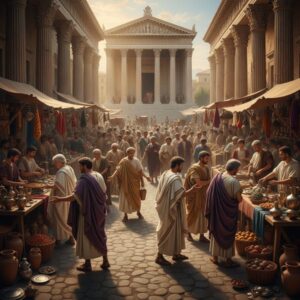
Boxing was introduced to the ancient Olympic Games in 688 BCE, but it bore little resemblance to modern boxing. There were no weight divisions, meaning smaller fighters faced larger opponents. Fighters wore leather straps called "himantes" around their hands, and matches continued until one fighter admitted defeat or was knocked unconscious. There were no rounds, no ring, and the only rules prohibited biting and gouging. Some matches reportedly lasted for hours under the brutal Mediterranean sun.
12. A Mathematical Theorem Was Named After a Boxer
The "Boxer Theorem" in mathematics isn't directly named after the sport, but boxer-turned-mathematician Richard Dedekind made significant contributions to mathematical theory in the 19th century. More directly connected to boxing, the sport has contributed various terms to mathematics and statistics, particularly in probability theory and game theory, where boxing scenarios are often used to illustrate strategic decision-making and risk assessment concepts. The sport's clear win-loss outcomes and strategic depth have made it a favorite subject for mathematical analysis.
Conclusion
These twelve shocking facts reveal that boxing's history is far richer and more complex than what we see in modern championship bouts. From seven-hour marathons to papal participants, from illegal underground fights to million-dollar spectacles, boxing has undergone remarkable transformations over the centuries. The sport has evolved from bare-knuckle battles with virtually no rules to the highly regulated, multi-billion dollar industry we know today. Understanding these historical facts not only deepens our appreciation for boxing's current state but also reminds us of the courage, determination, and sometimes shocking circumstances that have defined this ancient sport. As boxing continues to evolve with new safety measures, technology, and global reach, these historical curiosities serve as important reminders of how far the sweet science has come and the extraordinary characters who shaped its journey.