











1 / 10 Questions
0 Points
Points won
0
Correct score
0%

More Articles

Did You Know Elvis Presley Never Wrote His Own Songs?

Did You Know Elvis Presley Never Wrote His Own Songs?

⏱️ 5 min read

Did You Know Elvis Presley Never Wrote His Own Songs?

Elvis Presley, widely known as the "King of Rock and Roll," remains one of the most iconic and influential figures in music history. His powerful voice, charismatic stage presence, and revolutionary impact on popular culture have cemented his legacy for generations. However, one surprising fact that often catches fans off guard is that Elvis Presley never wrote any of his hit songs. This revelation challenges the common assumption that great performers are also great songwriters, and opens up an intriguing discussion about the nature of artistry in the music industry.

The Truth Behind Elvis's Songwriting Credits

While Elvis Presley's name appears as a co-writer on several songs in his extensive catalog, music historians and industry experts have long confirmed that he did not actually compose the music or lyrics for these tracks. The songwriting credits attached to his name were typically the result of business arrangements rather than creative contributions. This practice was common in the music industry during Elvis's era, where artists and their management teams would negotiate for songwriting credits as part of the deal to record a particular song.

Colonel Tom Parker, Elvis's legendary manager, was known for his shrewd business tactics. He often required songwriters to give up a portion of their publishing rights and songwriting credits to Elvis as a condition for having the King record their material. Given Elvis's enormous commercial success and his ability to transform any song into a hit, many songwriters willingly accepted these terms, understanding that an Elvis Presley recording could mean substantial financial rewards even with reduced royalties.

The Songwriters Behind the Hits

Elvis's greatest hits were penned by some of the most talented songwriters of the twentieth century. Understanding who actually wrote these songs provides insight into the collaborative nature of his success:

Legendary Composers and Writing Teams

  • Jerry Leiber and Mike Stoller: This prolific songwriting duo created several of Elvis's most memorable tracks, including "Hound Dog," "Jailhouse Rock," and "Love Me."
  • Otis Blackwell: A remarkably talented composer who wrote "Don't Be Cruel," "All Shook Up," and "Return to Sender."
  • Doc Pomus and Mort Shuman: Together they crafted hits like "A Mess of Blues," "Little Sister," and "Viva Las Vegas."
  • Mae Boren Axton: Co-wrote "Heartbreak Hotel," one of Elvis's most iconic songs.

Why Elvis Didn't Write His Own Material

Several factors contributed to Elvis's role as an interpreter rather than a creator of songs. First and foremost, Elvis himself never claimed to be a songwriter. He recognized his strengths lay in performance and interpretation. His extraordinary ability was taking existing material and transforming it through his unique vocal style, emotional delivery, and magnetic personality.

Additionally, Elvis's career took off at an incredibly rapid pace. From his first recordings at Sun Records in 1954 to his explosion into national consciousness in 1956, he was constantly recording, performing, and filming. The demands on his time were enormous, leaving little opportunity to develop songwriting skills even if he had been inclined to do so.

Elvis's musical background also played a role. While he was an intuitive musician with a remarkable ear for melody and rhythm, he never received formal training in music composition or theory. His genius was in his instinctive understanding of how to deliver a song with maximum emotional impact.

The Art of Interpretation

Elvis's lack of songwriting credits does not diminish his artistic contributions to music. In fact, his role as an interpreter represents a vital and often underappreciated aspect of musical artistry. Elvis possessed an uncanny ability to take songs from various genres—blues, country, gospel, and pop—and reimagine them in ways that resonated with massive audiences.

Consider "Hound Dog," originally recorded by Big Mama Thornton as a blues song. Elvis transformed it into a rock and roll anthem that became one of the best-selling singles of all time. His version of "Blue Suede Shoes," written and originally recorded by Carl Perkins, brought the song to a much wider audience. These interpretations weren't mere covers; they were reinventions that often surpassed the original versions in popularity and cultural impact.

A Common Practice in Music History

Elvis was far from alone in building a career on performing rather than writing songs. Many of music's greatest voices have relied primarily or entirely on material written by others:

  • Frank Sinatra rarely wrote his own songs but is considered one of the greatest vocalists of all time.
  • Whitney Houston built her legendary career almost entirely on songs written by professional composers.
  • Patsy Cline, another country music icon, did not write her most famous recordings.

The Legacy of Elvis's Musical Choices

Elvis's approach to music—focusing on interpretation and performance rather than songwriting—helped establish a model that continues in popular music today. His success demonstrated that an artist's value doesn't solely rest on original composition but also on the ability to connect with audiences through powerful performance.

Furthermore, Elvis's recordings provided crucial financial support and exposure for numerous songwriters. Many composers achieved fame and fortune specifically because Elvis chose to record their material. His versions of songs created a ripple effect, inspiring countless cover versions by other artists and ensuring these compositions became part of the permanent American songbook.

Conclusion

While Elvis Presley may not have written his own songs, his contribution to music remains immeasurable. He was a transformative interpreter who bridged musical genres, broke down cultural barriers, and changed the landscape of popular music forever. His legacy serves as a reminder that artistic greatness can manifest in many forms, and that the power of performance and interpretation is just as valuable as the act of creation itself. The King of Rock and Roll earned his crown not through songwriting, but through his unparalleled ability to bring songs to life in ways that continue to captivate audiences more than four decades after his death.
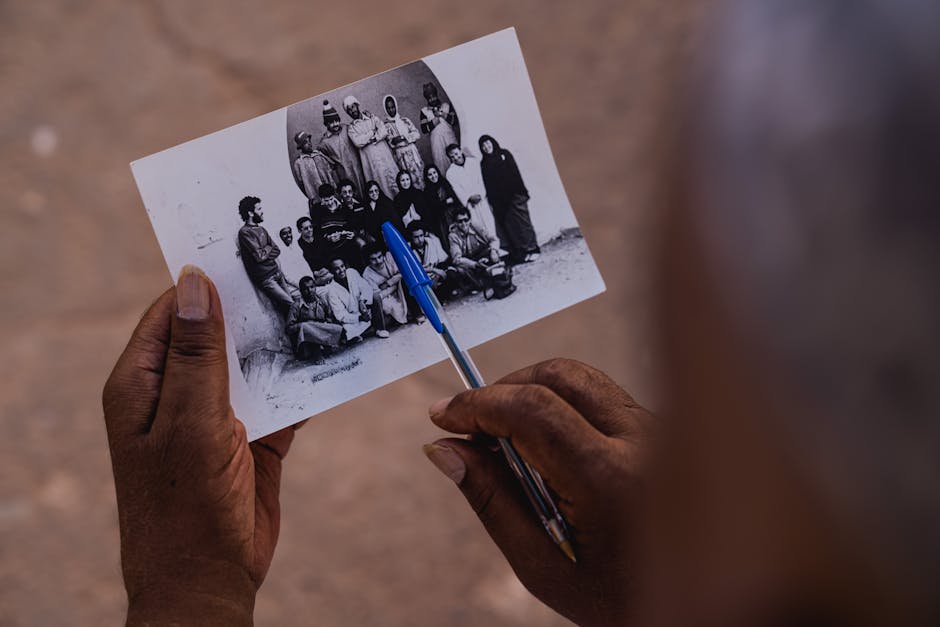

Top 10 Darkest Moments in Human History

Top 10 Darkest Moments in Human History

⏱️ 6 min read

Top 10 Darkest Moments in Human History

Throughout human civilization, there have been numerous periods marked by unimaginable suffering, cruelty, and tragedy. These dark chapters serve as sobering reminders of humanity's capacity for destruction and the importance of learning from our past mistakes. Understanding these events helps us recognize warning signs and work toward preventing similar atrocities in the future. This article examines ten of the darkest moments in recorded human history, events that forever changed the course of civilization and left indelible scars on collective human consciousness.

1. The Holocaust (1941-1945)

The systematic genocide orchestrated by Nazi Germany remains one of history's most horrific atrocities. Under Adolf Hitler's regime, approximately six million Jews were murdered in concentration camps, ghettos, and mass shootings across Europe. The Holocaust also claimed millions of other victims, including Roma people, disabled individuals, political dissidents, homosexuals, and prisoners of war. The industrialized nature of this genocide, with its gas chambers, death camps like Auschwitz-Birkenau, and meticulous record-keeping of human destruction, represents an unprecedented level of organized evil. The Holocaust fundamentally changed international law, leading to the establishment of the Genocide Convention and reshaping global consciousness about human rights.

2. The Transatlantic Slave Trade (1501-1867)

For over three centuries, the transatlantic slave trade forcibly transported an estimated 12 to 15 million Africans to the Americas under brutal conditions. Millions more died during capture, the infamous Middle Passage across the Atlantic, or shortly after arrival. This systematic dehumanization and exploitation created generational trauma and established racial hierarchies whose effects persist today. Enslaved people endured unimaginable cruelty, family separations, and complete denial of basic human dignity. The economic foundations built on this institution shaped the modern world while leaving deep wounds in societies across multiple continents.

3. The Mongol Conquests (1206-1368)

Under Genghis Khan and his successors, the Mongol Empire's expansion resulted in the deaths of an estimated 30 to 40 million people, representing roughly 11 percent of the world's population at the time. Entire cities were razed when they resisted, with populations massacred as warnings to others. The Mongol invasions devastated civilizations across Asia, the Middle East, and Eastern Europe. While the Mongol Empire ultimately facilitated cultural exchange and trade, the path to its creation was paved with unprecedented destruction and bloodshed that reshaped the demographic landscape of the medieval world.

4. World War II (1939-1945)

The deadliest conflict in human history claimed between 70 and 85 million lives, approximately 3 percent of the global population. Beyond battlefield casualties, World War II brought civilian bombing campaigns, nuclear weapons used against Hiroshima and Nagasaki, widespread famine, and numerous war crimes. The war introduced total warfare on a global scale, where entire societies mobilized for conflict and civilians became legitimate targets. The systematic destruction of cities, displacement of populations, and revelation of concentration camps exposed depths of human cruelty that shocked the world and fundamentally altered international relations.

5. Stalin's Great Purge and Forced Collectivization (1929-1953)

Joseph Stalin's reign over the Soviet Union resulted in millions of deaths through execution, forced labor camps (gulags), and deliberately engineered famines. The Great Purge of 1936-1938 alone eliminated hundreds of thousands through show trials and secret executions. The forced collectivization of agriculture in Ukraine created the Holodomor famine of 1932-1933, killing an estimated 3 to 5 million people. Stalin's paranoid elimination of perceived enemies, from political rivals to ordinary citizens, created a climate of terror that permeated Soviet society for decades.

6. The Cambodian Genocide (1975-1979)

Under Pol Pot and the Khmer Rouge regime, Cambodia experienced one of the twentieth century's most concentrated genocides. In just four years, approximately 1.7 to 2 million people—nearly a quarter of Cambodia's population—died through execution, forced labor, starvation, and disease. The regime targeted intellectuals, urban dwellers, ethnic minorities, and anyone perceived as counter-revolutionary. The Khmer Rouge's attempt to create an agrarian utopia transformed the country into a massive labor camp, separating families and erasing cultural heritage in a horrifying social experiment.

7. The Rwandan Genocide (1994)

In approximately 100 days, extremist Hutu militia and government forces murdered an estimated 800,000 to 1,000,000 Tutsi and moderate Hutu people in Rwanda. The speed and brutality of this genocide shocked the international community, which largely failed to intervene despite clear warnings. Neighbors killed neighbors with machetes and agricultural tools in massacres that occurred in churches, schools, and homes. The Rwandan Genocide demonstrated how quickly ordinary people could be mobilized for mass murder and highlighted the international community's inadequate response to humanitarian crises.

8. The Black Death (1347-1353)

While a natural pandemic rather than human-caused atrocity, the Black Death's devastation fundamentally altered human civilization. This bubonic plague killed an estimated 75 to 200 million people across Eurasia and North Africa, wiping out 30 to 60 percent of Europe's population. The plague's darkness extended beyond death tolls to include the social breakdown, persecution of minorities blamed for the disease, collapse of economic systems, and psychological trauma of watching communities disappear. The pandemic's aftermath reshaped European society, economy, and culture for centuries.

9. The Bombing of Hiroshima and Nagasaki (1945)

The atomic bombings of these Japanese cities on August 6 and 9, 1945, marked humanity's entry into the nuclear age with devastating immediacy. The initial blasts killed an estimated 200,000 people, most of them civilians, with thousands more dying subsequently from radiation exposure. These events demonstrated humanity's newfound capability for instantaneous mass destruction and ushered in the nuclear age's existential threat. The ethical debates surrounding these bombings continue today, representing humanity's struggle with the moral implications of weapons capable of ending civilization.

10. The Armenian Genocide (1915-1923)

During World War I and its aftermath, the Ottoman Empire systematically murdered an estimated 1.5 million Armenians through death marches, massacres, and deliberate starvation. Intellectuals and community leaders were arrested and executed first, followed by deportations of the general population into the Syrian desert without food or water. Women and children were abducted, and entire communities were erased. This genocide, often called the first genocide of the twentieth century, established patterns of state-sponsored ethnic cleansing that would tragically recur throughout the century.

Conclusion

These ten dark moments in human history represent profound failures of humanity, moral collapses that resulted in unimaginable suffering for millions. From systematic genocides to pandemic devastation, from slavery's generational trauma to the dawn of nuclear warfare, these events shaped our world in fundamental ways. Remembering these tragedies is not merely an exercise in acknowledging past horrors—it is essential for recognizing warning signs, promoting human rights, and building systems that prevent such atrocities from recurring. As we study these darkest chapters, we honor the victims by committing ourselves to creating a more just, compassionate world where such darkness cannot take root again.