
⏱️ 5 min read
Did You Know? 15 Secrets About the Great Pyramids
The Great Pyramids of Giza stand as enduring monuments to ancient Egyptian civilization, captivating humanity for millennia. While these architectural marvels are among the most studied structures in the world, they continue to harbor surprising secrets that challenge our understanding of ancient technology, culture, and ambition. From construction techniques to astronomical alignments, here are 15 fascinating secrets about the Great Pyramids that reveal just how extraordinary these ancient wonders truly are.
1. They Were Originally Covered in White Limestone
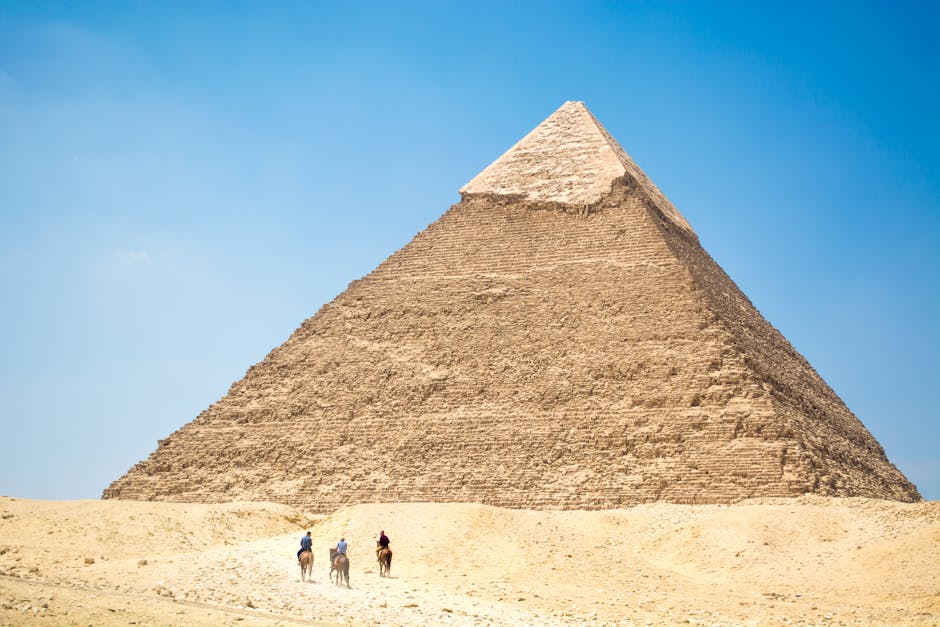
The pyramids once gleamed brilliantly in the desert sun, covered entirely in polished white Tura limestone. This reflective casing made them shine like jewels and could be seen from miles away. Most of this casing was stripped away over centuries and repurposed for building projects in Cairo, leaving only the rough inner core we see today.
2. The Great Pyramid Was the Tallest Man-Made Structure for Nearly 4,000 Years
Standing at an original height of 481 feet, the Great Pyramid of Khufu held the record as the world’s tallest man-made structure until the Lincoln Cathedral was completed in England in 1311 CE. This remarkable achievement in engineering remained unsurpassed for approximately 3,800 years.
3. The Pyramids Are Precisely Aligned With Cardinal Directions
The Great Pyramid’s sides are aligned to true north, south, east, and west with remarkable accuracy, deviating by only 3/60th of a single degree. This precision suggests the ancient Egyptians possessed sophisticated astronomical knowledge and surveying techniques that continue to impress modern engineers.
4. No Slaves Built the Pyramids
Contrary to popular belief perpetuated by Hollywood films, archaeological evidence strongly suggests that skilled laborers and paid workers, not slaves, built the pyramids. Worker villages discovered near the pyramids show that these builders were well-fed, received medical care, and were given proper burials, indicating they were valued members of society.
5. The Temperature Inside Remains Constant
Regardless of external desert temperature fluctuations, the interior of the Great Pyramid maintains a constant temperature of approximately 68 degrees Fahrenheit (20 degrees Celsius), equal to the average temperature of the Earth. This natural climate control is a result of the pyramid’s massive thermal mass and design.
6. The Pyramids Were Built With Approximately 2.3 Million Stone Blocks
The Great Pyramid alone contains an estimated 2.3 million limestone blocks, each weighing between 2.5 and 15 tons. Some granite blocks in the King’s Chamber weigh as much as 80 tons. Transporting and precisely placing these massive stones remains an impressive feat of ancient engineering.
7. They Used a Sophisticated Ramp System
While the exact construction method remains debated, evidence suggests the Egyptians used a combination of straight and spiral ramps to move the massive blocks into place. Recent discoveries of ramp remnants at other pyramid sites have provided clues about these ingenious construction techniques.
8. The Pyramids Contain Hidden Chambers
Modern scanning technology has revealed previously unknown voids and chambers within the Great Pyramid. In 2017, scientists announced the discovery of a large void above the Grand Gallery, demonstrating that these ancient structures still hold secrets waiting to be uncovered.
9. Mortar Stronger Than the Stone Itself
The mortar used between the pyramid blocks is incredibly strong and durable. Chemical analysis has identified its composition, but scientists still cannot fully replicate its exact formula. In many places, this ancient mortar remains stronger than the limestone blocks it binds together.
10. The Pyramids Were Built During Egypt’s Flood Season
Construction likely occurred primarily during the Nile’s annual flood season when agricultural work was impossible and farmers were available for labor. The flooding also facilitated transportation of heavy stone blocks via boat closer to the construction site.
11. They Function as Astronomical Observatories
The pyramid complex aligns with various astronomical phenomena. The southern shaft in the King’s Chamber pointed toward the belt of Orion, which the Egyptians associated with Osiris, god of the afterlife. This celestial alignment held deep religious significance.
12. The Pyramids Sit on Remarkably Level Foundations
Despite covering 13 acres, the Great Pyramid’s base is level to within just 2.1 centimeters. This incredible precision was achieved without modern surveying equipment and demonstrates the ancient Egyptians’ exceptional engineering capabilities and attention to detail.
13. Eight Sides, Not Four
The Great Pyramid actually has eight sides, not four. Each face is slightly indented at the center, creating a subtle concavity visible only from the air and during specific lighting conditions at dawn and sunset during the spring and autumn equinoxes. The purpose of this feature remains mysterious.
14. Construction Took Only About 20 Years
Despite their massive scale, the Great Pyramid was likely completed in approximately 20 years during Pharaoh Khufu’s reign. This timeline would have required placing roughly one block every two minutes during a ten-hour workday, indicating a highly organized and efficient workforce.
15. They Were Part of a Vast Complex
The pyramids were not standalone structures but rather central components of extensive funerary complexes. These included temples, causeways, smaller subsidiary pyramids, and elaborate burial sites for nobles and officials. The entire Giza plateau functioned as a massive necropolis dedicated to the afterlife.
Conclusion
These 15 secrets about the Great Pyramids reveal that there is far more to these ancient wonders than meets the eye. From their hidden chambers and astronomical alignments to their sophisticated construction techniques and surprising eight-sided design, the pyramids continue to challenge and expand our understanding of ancient Egyptian civilization. Despite millennia of study, these magnificent structures still guard mysteries that inspire awe and curiosity. They stand not merely as tombs for ancient pharaohs, but as testaments to human ingenuity, determination, and the timeless desire to create something that transcends mortality itself. As modern technology unveils new discoveries, we can be certain that the Great Pyramids will continue to reveal secrets for generations to come.
