
⏱️ 6 min read
Did You Know? 10 Fun Facts About Quantum Physics
Quantum physics, the branch of science that explores the behavior of matter and energy at the smallest scales, is filled with mind-bending concepts that challenge our everyday understanding of reality. From particles that exist in multiple places at once to the strange connections that transcend space and time, the quantum world operates by rules that seem more like science fiction than science fact. Yet these phenomena have been repeatedly confirmed through rigorous experimentation and form the foundation of many modern technologies. Here are ten fascinating facts about quantum physics that reveal just how strange and wonderful our universe truly is at its most fundamental level.
1. Particles Can Be in Two Places at Once
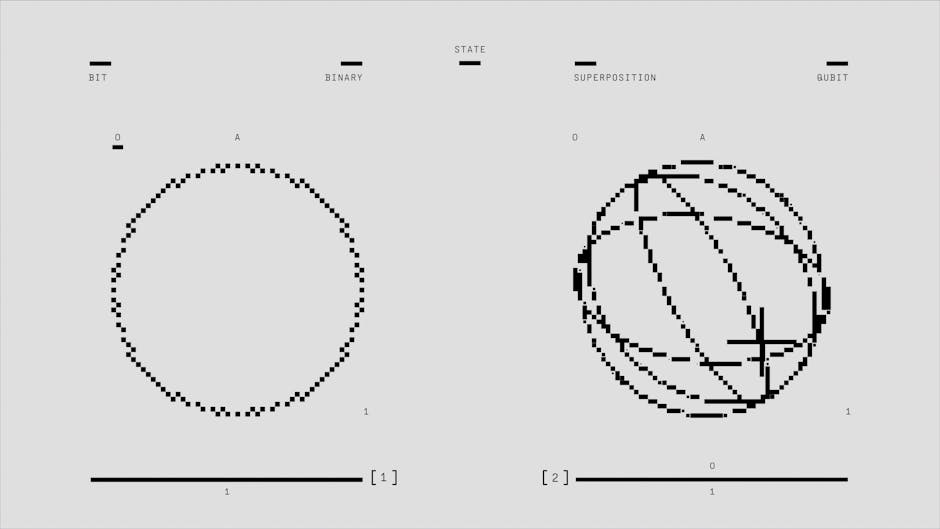
One of the most counterintuitive aspects of quantum mechanics is superposition, the principle that quantum particles can exist in multiple states or locations simultaneously until they are measured. An electron, for example, doesn’t occupy a single definite position until someone observes it. Instead, it exists in a probability cloud of all possible positions at once. This isn’t simply a lack of knowledge about where the particle is—the particle genuinely exists in all these states simultaneously. Only when a measurement is made does the particle “choose” a specific state, a phenomenon known as wave function collapse.
2. Quantum Entanglement Connects Particles Across Any Distance
When two particles become entangled, they form a connection that persists regardless of how far apart they are separated. Measuring the state of one entangled particle instantly determines the state of its partner, even if they’re on opposite sides of the universe. Einstein famously called this “spooky action at a distance” because it seemed to violate the principle that nothing can travel faster than light. However, experiments have consistently confirmed that entanglement is real, though it cannot be used to transmit information faster than light. This phenomenon is now being harnessed for quantum computing and quantum cryptography.
3. Observing Something Changes It
The observer effect in quantum mechanics states that the mere act of measuring a quantum system fundamentally alters it. This isn’t about clumsy experimental equipment disturbing delicate particles—it’s a fundamental feature of quantum reality. Before measurement, particles exist in superposition of multiple states. The act of observation forces the system to “collapse” into one definite state. This has profound philosophical implications about the role of consciousness and observation in shaping physical reality, though physicists continue to debate the exact interpretation of what this means.
4. Particles Can Tunnel Through Solid Barriers
Quantum tunneling allows particles to pass through barriers that classical physics says should be impenetrable. If you throw a ball at a wall, it bounces back. But in the quantum world, there’s a probability that a particle can simply appear on the other side of a barrier without actually passing through it in the conventional sense. This isn’t science fiction—it’s the principle behind many technologies, including the scanning tunneling microscope and is essential to nuclear fusion in the sun. Without quantum tunneling, stars wouldn’t shine and life as we know it wouldn’t exist.
5. Uncertainty Is Built Into the Universe
Heisenberg’s Uncertainty Principle establishes that there are fundamental limits to what we can know about a particle. Specifically, the more precisely you know a particle’s position, the less precisely you can know its momentum, and vice versa. This isn’t a limitation of our measuring instruments—it’s a fundamental property of nature itself. The universe has intrinsic uncertainty built into its very fabric. Particles don’t have definite values for all their properties at the same time; instead, these properties are genuinely indeterminate until measured.
6. Empty Space Isn’t Actually Empty
According to quantum field theory, what we think of as empty space is actually teeming with activity. Virtual particles constantly pop into and out of existence in a quantum foam of energy fluctuations. These aren’t just theoretical constructs—they have measurable effects. The Casimir effect, where two metal plates placed very close together in a vacuum experience an attractive force, is direct evidence of these quantum vacuum fluctuations. This means that nothingness itself has energy and structure, fundamentally changing our understanding of what “nothing” means.
7. Particles Are Also Waves
Wave-particle duality is the concept that all particles exhibit both wave-like and particle-like properties. Light can behave as a wave (showing interference patterns) or as particles called photons, depending on how you measure it. Surprisingly, this duality extends to matter as well. Electrons, atoms, and even large molecules can create interference patterns just like waves. This dual nature isn’t about particles sometimes being waves and sometimes being particles—quantum objects are fundamentally something that doesn’t fit neatly into either classical category, exhibiting properties of both depending on the experimental context.
8. Quantum Physics Powers Modern Technology
Far from being purely theoretical, quantum mechanics is the foundation of numerous everyday technologies. Semiconductors, which make all modern electronics possible, operate on quantum principles. Lasers, MRI machines, LED lights, solar panels, and computer chips all rely on quantum effects. GPS satellites must account for quantum mechanical effects to maintain accuracy. The emerging field of quantum computing promises to revolutionize information processing by harnessing superposition and entanglement. Understanding quantum mechanics has been essential to virtually every major technological advance of the past century.
9. Quantum Particles Have No Definite Properties Until Measured
In classical physics, objects have definite properties whether or not anyone is looking at them. A coin is either heads or tails, even if it’s in your pocket. But quantum particles don’t work this way. A quantum particle doesn’t have a definite spin, position, or momentum until these properties are measured. Before measurement, the particle exists in a superposition of all possible values. This isn’t ignorance about pre-existing properties—experiments using Bell’s theorem have proven that particles genuinely don’t possess definite values for all their properties simultaneously. Reality at the quantum level is fundamentally probabilistic.
10. Schrödinger’s Cat Illustrates Quantum Absurdity
The famous thought experiment of Schrödinger’s cat was designed to show how absurd quantum mechanics seems when applied to everyday objects. In this scenario, a cat in a box is simultaneously alive and dead until someone opens the box and observes it. While this seems ridiculous for cats, it accurately describes how quantum particles behave. The thought experiment highlights the measurement problem: how does the quantum world of superposition transition into the classical world of definite outcomes? While we don’t actually believe cats exist in alive-dead superpositions, the experiment raises profound questions about where quantum behavior ends and classical behavior begins.
Conclusion
These ten facts barely scratch the surface of the strange and fascinating world of quantum physics. From superposition and entanglement to tunneling and uncertainty, quantum mechanics reveals a universe that operates in ways that defy common sense yet are supported by overwhelming experimental evidence. While quantum phenomena seem abstract and removed from daily life, they underpin the very structure of matter and energy, govern the behavior of atoms and subatomic particles, and enable the technologies that define modern civilization. As research continues and quantum technologies advance, our understanding of these bizarre quantum effects will only deepen, potentially unlocking new capabilities and revealing even more surprising aspects of physical reality. The quantum world remains one of the most active and exciting frontiers in scientific research, promising discoveries that may once again revolutionize our understanding of the universe.
