





1 / 10 Questions
0 Points

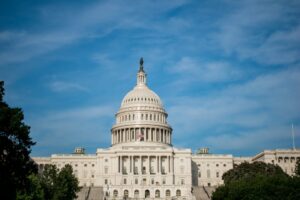
Which president had a pet alligator that lived in the White House?

John Quincy Adams

Abraham Lincoln

Theodore Roosevelt

Thomas Jefferson

Points won
0
Correct score
0%

More Articles

Top 10 Fun Facts About Street Murals

Top 10 Fun Facts About Street Murals

⏱️ 6 min read

Top 10 Fun Facts About Street Murals

Street murals have transformed urban landscapes around the world, turning blank walls into vibrant canvases that tell stories, provoke thought, and bring communities together. These large-scale artworks have evolved from acts of rebellion to celebrated forms of public art that attract tourists and enhance neighborhood pride. Whether you're an art enthusiast or simply curious about the colorful walls you pass every day, these ten fascinating facts about street murals will deepen your appreciation for this dynamic art form.

1. Ancient Origins Dating Back Thousands of Years

While street murals may seem like a modern phenomenon, the practice of painting on walls actually dates back over 30,000 years. Cave paintings in locations like Lascaux, France, and Altamira, Spain, represent humanity's earliest attempts at mural art. The term "mural" itself comes from the Latin word "murus," meaning wall. Ancient civilizations including the Egyptians, Greeks, and Romans created elaborate wall paintings in temples, public buildings, and private homes. The famous frescoes of Pompeii, preserved by volcanic ash in 79 AD, demonstrate the sophisticated techniques and vibrant colors ancient artists achieved. This historical lineage connects today's street muralists to a tradition spanning millennia.

2. The Mexican Muralism Movement Revolutionized Public Art

The modern street mural movement owes much to the Mexican Muralism movement of the 1920s and 1930s. Artists like Diego Rivera, José Clemente Orozco, and David Alfaro Siqueiros created massive public murals that depicted Mexican history, culture, and social struggles. These artists believed art should be accessible to everyone, not confined to galleries and museums. Their work influenced generations of muralists worldwide and established the concept that public walls could serve as platforms for social commentary and cultural expression. The movement proved that murals could be both aesthetically powerful and politically significant.

3. Street Murals Can Significantly Reduce Crime Rates

Research has shown that street murals can have measurable positive effects on community safety. Studies conducted in various cities have found that neighborhoods with murals experience reduced vandalism, graffiti, and even violent crime. The reasoning is multifaceted: murals demonstrate community investment and care, create territorial markers that residents take pride in, and transform previously neglected spaces into valued public areas. Philadelphia's Mural Arts Program, one of the largest public art programs in the United States, has documented these benefits extensively, showing that murals contribute to safer, more cohesive neighborhoods.

4. The World's Largest Mural Covers Over 100,000 Square Feet

The quest to create the world's largest mural has led to some truly impressive achievements. Currently, one of the largest murals is "Ethnikis Antistaseos" in Athens, Greece, covering approximately 26,910 square feet. However, various projects worldwide compete for this title depending on how murals are measured and defined. Some sprawling mural projects cover entire building complexes or multiple connected walls. These massive undertakings require teams of artists, extensive planning, specialized equipment like scissor lifts and scaffolding, and sometimes months or even years to complete. The scale of these projects demonstrates how street murals have evolved into major artistic and logistical accomplishments.

5. Special Paints and Techniques Ensure Longevity

Creating a mural that withstands weather, pollution, and time requires specialized materials and techniques. Professional muralists use exterior-grade acrylic paints formulated to resist UV rays, moisture, and temperature fluctuations. Many murals receive protective clear coats or anti-graffiti sealants that allow for easy cleaning without damaging the artwork. Some artists use techniques borrowed from traditional fresco painting, applying pigments to wet plaster so the paint becomes integral to the wall surface. Others employ modern innovations like elastomeric paints that flex with building movement. These technical considerations ensure that murals can last decades rather than months.

6. Street Murals Boost Local Economies and Tourism

Cities worldwide have discovered that street murals can be powerful economic engines. Neighborhoods known for their murals attract tourists, photographers, and art lovers who spend money at local businesses. The Wynwood Walls in Miami, Florida, transformed a formerly neglected warehouse district into a internationally recognized arts destination, sparking commercial development and dramatically increasing property values. Similar mural districts in cities like Melbourne, Australia, and Valparaíso, Chile, have become must-see attractions. Some cities now offer guided mural tours, creating jobs and generating revenue while celebrating local artists and culture.

7. Technology Has Revolutionized Mural Creation

Modern technology has dramatically changed how muralists work. Many artists now use projectors to transfer complex designs onto walls with precision, replacing the traditional grid method. Digital design software allows for detailed planning and client approval before any paint touches the wall. Some muralists employ augmented reality apps that let viewers see proposed designs in situ before execution. Scissor lifts and aerial platforms have made painting tall buildings safer and more efficient. Additionally, social media has transformed how murals reach audiences, with Instagram and other platforms allowing street art to achieve global visibility instantly.

8. Street Murals Serve as Community Time Capsules

Murals often capture specific moments in community history, serving as visual time capsules that document social movements, local heroes, cultural heritage, and neighborhood transformation. They commemorate historical events, celebrate cultural diversity, and honor community members. Unlike museum art, which remains static in controlled environments, street murals exist within the living fabric of neighborhoods, accumulating meaning and memories over time. They become landmarks that help residents navigate their communities and provide continuity as neighborhoods evolve. This documentary function makes murals invaluable cultural artifacts that preserve collective memory.

9. Legal Distinctions Separate Murals from Graffiti

While both murals and graffiti involve painting on walls, important legal and cultural distinctions exist between them. Murals are typically commissioned or approved by property owners and local authorities, while graffiti is unauthorized. This legal status affects how the art is perceived and protected. Many cities have ordinances specifically supporting murals while prohibiting graffiti. However, the boundary between these categories can blur, as many respected muralists began as graffiti artists, and some graffiti possesses undeniable artistic merit. This ongoing dialogue about authorization, artistic freedom, and public space continues to shape urban art policies worldwide.

10. Climate Change Is Becoming a Major Mural Theme

Contemporary muralists increasingly address environmental issues, particularly climate change, through their work. Large-scale murals depicting endangered species, melting glaciers, rising seas, and environmental destruction have appeared in cities worldwide. These works serve educational purposes while inspiring action and raising awareness. Some projects incorporate environmentally friendly materials, including paints made from natural pigments and murals created on sustainable surfaces. Artists are also creating murals that literally combat climate change, using special photocatalytic paints that break down air pollutants when exposed to sunlight. This intersection of art and environmental activism demonstrates how murals continue evolving to address contemporary challenges.

Conclusion

Street murals represent far more than decorated walls—they embody human creativity, community values, and cultural expression. From their ancient origins to their modern technological innovations, from crime reduction benefits to economic impacts, these ten facts reveal the multifaceted significance of mural art. As cities worldwide continue embracing murals as vital components of urban planning and cultural identity, these public artworks will undoubtedly continue evolving, reflecting our changing world while maintaining their fundamental purpose: bringing art to the people. Whether transforming neglected neighborhoods, preserving cultural heritage, or addressing global challenges like climate change, street murals remain powerful tools for communication, beautification, and social change in our shared public spaces.

Top 10 Famous Battles That Changed the World

Top 10 Famous Battles That Changed the World

⏱️ 7 min read

Top 10 Famous Battles That Changed the World

Throughout human history, certain military conflicts have served as pivotal turning points that fundamentally altered the course of civilizations, reshaped political boundaries, and influenced the cultural and social development of nations. These battles were not merely military engagements; they were watershed moments that determined the rise and fall of empires, the spread of ideologies, and the future of entire continents. The following ten battles stand out as among the most consequential in world history, each leaving an indelible mark on the trajectory of human civilization.

1. The Battle of Marathon (490 BCE)

The Battle of Marathon marked a defining moment in the Greco-Persian Wars and ultimately preserved Western civilization as we know it. When the Persian Empire under Darius I attempted to subjugate the Greek city-states, the Athenians, though significantly outnumbered, achieved a remarkable victory on the plains of Marathon. This battle demonstrated that the Persian military juggernaut could be defeated and inspired Greek unity. The victory preserved Greek independence and allowed Athens to flourish, leading to the Golden Age that gave birth to democracy, philosophy, and Western culture. Had the Persians won, the intellectual and political foundations of Western civilization might never have developed.

2. The Battle of Gaugamela (331 BCE)

Alexander the Great's decisive victory over the Persian Empire at Gaugamela represented one of history's most brilliant tactical achievements and changed the ancient world forever. Despite facing a massive Persian army led by Darius III, Alexander's strategic genius and the discipline of his Macedonian forces secured a complete victory. This battle effectively ended the Achaemenid Persian Empire and opened the door for Alexander's conquest of the known world. The resulting Hellenistic period spread Greek culture, language, and ideas throughout the Middle East, North Africa, and Central Asia, creating a cultural synthesis that influenced civilization for centuries.

3. The Battle of Tours (732 CE)

The Battle of Tours, also known as the Battle of Poitiers, halted the Islamic expansion into Western Europe and preserved Christianity as the dominant religion of the continent. Charles Martel led Frankish forces against the Umayyad Caliphate's army, which had swept through Spain and into France. The Frankish victory stopped the northward advance of Islamic forces and ensured that Europe would develop along Christian rather than Islamic cultural lines. This battle shaped the religious, political, and cultural identity of Europe for the next millennium and influenced the balance of power between Christian and Islamic civilizations.

4. The Battle of Hastings (1066)

The Norman conquest of England at the Battle of Hastings fundamentally transformed English society, language, and governance. William the Conqueror's victory over King Harold II ended Anglo-Saxon rule and introduced Norman French culture and feudalism to England. This battle initiated profound changes in English language, law, architecture, and social structure. The Norman influence integrated England more closely with continental Europe and set the stage for England's future development as a major European power. The legal and governmental systems established after Hastings still influence English-speaking nations today.

5. The Siege of Constantinople (1453)

The fall of Constantinople to the Ottoman Empire under Sultan Mehmed II marked the end of the Byzantine Empire and the medieval period, ushering in the Renaissance and the Age of Exploration. The city's fall prompted Greek scholars to flee westward, bringing classical texts and knowledge that fueled the European Renaissance. The Ottoman control of traditional trade routes to Asia forced European nations to seek alternative sea routes, leading to the Age of Discovery and the eventual European colonization of the Americas. This battle redrew the map of Europe and Asia and shifted the balance of power for centuries.

6. The Battle of Waterloo (1815)

Napoleon Bonaparte's final defeat at Waterloo ended over two decades of revolutionary and Napoleonic wars that had engulfed Europe. The combined forces of the Duke of Wellington and Prussian Field Marshal Blücher decisively defeated Napoleon, leading to his permanent exile and the restoration of the European balance of power. The Congress of Vienna that followed established a diplomatic framework that maintained relative peace in Europe for nearly a century. Waterloo ended French dominance of continental Europe and initiated the Pax Britannica, during which Britain became the world's preeminent power.

7. The Battle of Gettysburg (1863)

The Battle of Gettysburg represented the turning point of the American Civil War and determined the future of the United States as a unified nation. General Robert E. Lee's Army of Northern Virginia suffered a crushing defeat after three days of intense fighting against Union forces under General George Meade. This Confederate loss ended Southern hopes of gaining European recognition and support, shifted momentum irreversibly to the Union, and ensured the eventual abolition of slavery. The battle preserved the United States as a single nation that would become a global superpower in the twentieth century.

8. The Battle of Stalingrad (1942-1943)

The Battle of Stalingrad stands as the bloodiest battle in human history and the decisive turning point of World War II on the Eastern Front. The Soviet victory over Nazi Germany's Sixth Army ended Hitler's offensive capabilities in the East and began the long German retreat that would end in Berlin. This battle demonstrated that the Wehrmacht could be defeated in sustained combat and shattered the myth of German invincibility. The Soviet triumph at Stalingrad shifted the momentum of the entire war, ultimately leading to Nazi Germany's defeat and the emergence of the Soviet Union as a superpower, shaping the Cold War world order.

9. The Battle of Midway (1942)

The Battle of Midway decisively shifted the balance of naval power in the Pacific Theater during World War II. American forces, aided by superior intelligence, destroyed four Japanese aircraft carriers while losing only one of their own. This battle ended Japanese expansion in the Pacific and gave the United States strategic initiative for the remainder of the war. The victory at Midway ensured American dominance in the Pacific, protected Australia from invasion, and set the stage for the island-hopping campaign that eventually led to Japan's defeat and America's emergence as the world's leading military and economic power.

10. The Battle of Dien Bien Phu (1954)

The Battle of Dien Bien Phu marked the end of French colonial rule in Indochina and signaled the beginning of the end for European colonialism worldwide. Vietnamese forces under General Vo Nguyen Giap besieged and defeated French colonial troops, demonstrating that determined nationalist movements could defeat European powers. This battle led directly to Vietnamese independence and influenced decolonization movements across Africa and Asia. The psychological impact of Dien Bien Phu showed that colonial empires were no longer sustainable, accelerating the dismantling of European colonial systems and reshaping the geopolitical landscape of the post-World War II era.

Conclusion

These ten battles represent crucial junctures where military conflict determined the fate of civilizations and altered the trajectory of world history. From Marathon's preservation of Greek democracy to Dien Bien Phu's role in ending colonialism, each engagement demonstrates how warfare has served as a catalyst for profound political, social, and cultural change. Understanding these pivotal moments provides essential context for comprehending the modern world and reminds us that individual battles, though confined in time and space, can have consequences that echo across centuries. These conflicts shaped not only the immediate political landscape but also influenced language, culture, religion, and the fundamental organization of human societies, making them truly battles that changed the world.