
⏱️ 6 min read
Did You Know? 10 Fun Facts About Quantum Physics
Quantum physics, the branch of science that explores the behavior of matter and energy at the smallest scales, is filled with phenomena that challenge our everyday understanding of reality. From particles that can be in two places at once to cats that are simultaneously alive and dead, the quantum world operates by rules that seem utterly bizarre compared to our macroscopic experience. Yet these strange principles form the foundation of modern technology and our understanding of the universe. Here are ten fascinating facts about quantum physics that will change the way you think about reality.
1. Particles Can Be in Two Places at Once
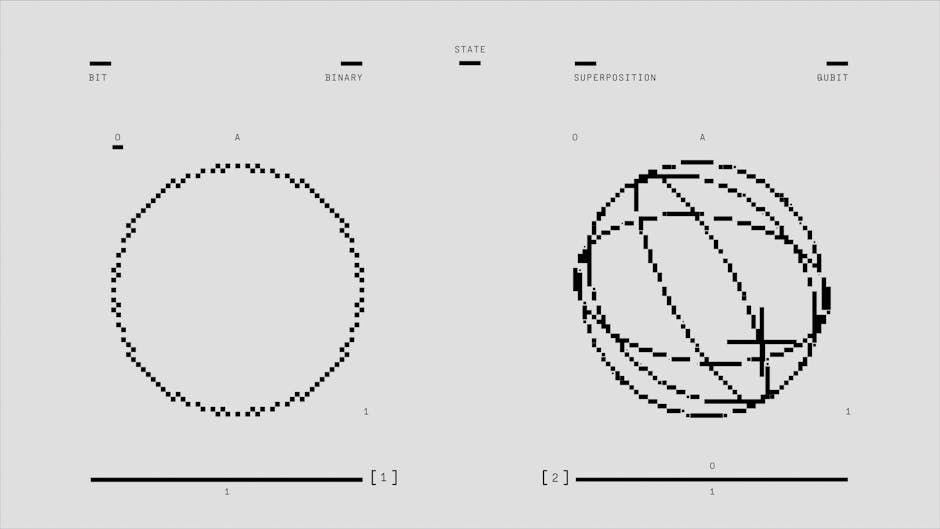
One of the most mind-bending principles in quantum physics is superposition. Unlike everyday objects that exist in one definite location, quantum particles can exist in multiple states or locations simultaneously until they are measured. This isn’t just theoretical speculation—experiments have repeatedly demonstrated that electrons, photons, and even larger molecules can occupy multiple positions at the same time. The famous double-slit experiment shows that a single particle can pass through two separate openings simultaneously, creating an interference pattern that only makes sense if the particle traveled both paths at once.
2. Observation Changes Reality
Perhaps the most unsettling aspect of quantum mechanics is that the act of observation fundamentally alters what is being observed. When a quantum system exists in superposition, measuring it forces the system to “collapse” into one definite state. Before measurement, a particle doesn’t have a specific position or momentum—it exists in a probability cloud of all possible states. The measurement itself creates the reality we observe. This observer effect has profound implications for our understanding of reality and has sparked decades of philosophical debate about the nature of consciousness and existence.
3. Quantum Entanglement: “Spooky Action at a Distance”
When two particles become entangled, they remain connected regardless of the distance separating them. Measuring a property of one particle instantaneously affects its entangled partner, even if they’re on opposite sides of the universe. Albert Einstein famously called this phenomenon “spooky action at a distance” because it seemed to violate the principle that nothing can travel faster than light. However, numerous experiments have confirmed that quantum entanglement is real, and it’s now being harnessed for quantum computing and quantum cryptography applications.
4. Electrons Can Tunnel Through Barriers
In the quantum world, particles can pass through barriers that should be impossible to penetrate according to classical physics. This phenomenon, called quantum tunneling, occurs because particles exist as probability waves. Even when a particle doesn’t have enough energy to overcome a barrier, there’s a non-zero probability that it will appear on the other side. Quantum tunneling is essential for nuclear fusion in stars, allowing hydrogen atoms to overcome their electromagnetic repulsion and fuse together. It’s also the principle behind the tunnel diode and scanning tunneling microscopes.
5. You’re Mostly Empty Space
Although matter feels solid, atoms are actually more than 99.9999% empty space. The nucleus of an atom is incredibly tiny compared to the overall atomic size, and electrons exist as probability clouds rather than solid particles orbiting at fixed distances. If an atom were enlarged to the size of a football stadium, the nucleus would be smaller than a pea at the center. What we perceive as solid matter is actually electromagnetic forces between atoms preventing them from passing through each other, combined with the quantum mechanical principle that prevents electrons from occupying the same space.
6. Heisenberg’s Uncertainty Principle Limits What We Can Know
Werner Heisenberg discovered that there are fundamental limits to what we can simultaneously know about a particle. The more precisely you measure a particle’s position, the less precisely you can know its momentum, and vice versa. This isn’t due to limitations in measurement technology—it’s a fundamental property of nature. The uncertainty principle arises from the wave-particle duality of quantum objects. This principle has profound implications, ensuring that electrons don’t spiral into the nucleus and establishing a fundamental graininess to reality at the quantum scale.
7. Quantum Physics Enables Modern Technology
While quantum mechanics may seem abstract, it underlies much of modern technology. Lasers operate on quantum principles of stimulated emission. Transistors, which form the basis of all computer chips and electronic devices, rely on quantum tunneling and the quantum behavior of electrons in semiconductors. MRI machines use quantum properties of atomic nuclei, and solar panels convert light to electricity through quantum processes. The next generation of quantum computers promises to revolutionize computing by harnessing superposition and entanglement to perform calculations impossible for classical computers.
8. Schrödinger’s Cat Illustrates Quantum Absurdity
Erwin Schrödinger proposed a thought experiment to highlight the apparent absurdity of quantum mechanics when applied to everyday objects. In this scenario, a cat is placed in a sealed box with a radioactive atom, a Geiger counter, and a poison mechanism. If the atom decays, the poison is released and the cat dies. According to quantum mechanics, until the box is opened and observed, the atom exists in superposition of both decayed and not-decayed states, meaning the cat would be simultaneously alive and dead. While no one seriously believes macroscopic cats exist in superposition, this paradox illustrates the mysterious boundary between quantum and classical worlds.
9. Virtual Particles Pop In and Out of Existence
Even in what we consider empty space, quantum mechanics reveals constant activity. The uncertainty principle allows particle-antiparticle pairs to spontaneously appear and annihilate within incredibly brief moments. These “virtual particles” aren’t just theoretical—they have measurable effects. The Casimir effect demonstrates that two metal plates placed very close together in a vacuum experience an attractive force caused by virtual particles. These quantum fluctuations also contribute to the Lamb shift in atomic spectra and play crucial roles in quantum field theory calculations.
10. Quantum Mechanics Is Incompatible with General Relativity
One of the greatest unsolved problems in physics is that quantum mechanics and Einstein’s general relativity—our best theory of gravity—are fundamentally incompatible. Quantum mechanics describes the universe at the smallest scales with remarkable precision, while general relativity accurately describes gravity and the largest cosmic structures. However, attempts to merge these theories into a unified quantum theory of gravity have so far failed. Situations requiring both theories, such as black hole singularities or the moment of the Big Bang, remain poorly understood. Solving this puzzle through approaches like string theory or loop quantum gravity represents one of the holy grails of modern physics.
Conclusion
These ten facts merely scratch the surface of the strange and wonderful world of quantum physics. From superposition and entanglement to tunneling and uncertainty, quantum mechanics reveals a universe far stranger than our everyday experience suggests. While these phenomena may seem bizarre and counterintuitive, they have been verified through countless experiments and form the foundation of much modern technology. As research continues and quantum technologies advance, our understanding and application of these principles will only deepen, potentially revolutionizing computing, communication, and our fundamental understanding of reality itself. The quantum world reminds us that the universe is far more mysterious and fascinating than it appears at first glance.
