
⏱️ 6 min read
Top 10 Fun Facts About the Film Editing Process
Film editing is often called the “invisible art” of cinema—when done well, audiences never notice it, yet it’s fundamental to storytelling. The editing process transforms raw footage into compelling narratives, manipulates time and space, and creates emotional resonance that captivates viewers. Behind every memorable movie moment lies countless hours of meticulous work by talented editors who shape the final product audiences see on screen. Here are ten fascinating facts about the film editing process that reveal the magic, innovation, and artistry behind this crucial cinematic craft.
1. The First Film Editors Were Women
In the early days of cinema, film editing was considered clerical work similar to sewing or weaving, which led studio executives to assign it primarily to women. Pioneers like Margaret Booth, who began editing in 1915 and worked into the 1980s, and Anne Bauchens, who won an Academy Award for editing “The Ten Commandments” in 1940, helped establish editing as an art form. These early editors developed many fundamental techniques still used today, proving that some of cinema’s most important innovations came from women working behind the scenes when few other opportunities existed for them in the industry.
2. Editors Often Work with Hundreds of Hours of Footage
For a typical feature film running approximately two hours, editors might sift through 200 to 400 hours of raw footage. Documentary filmmakers often shoot even higher ratios, sometimes reaching 1,000 hours of material for a single project. The editor’s job involves not only selecting the best takes but also understanding the story’s rhythm, pacing, and emotional beats. This monumental task requires exceptional organizational skills, creative vision, and the ability to see the forest through the trees, identifying the compelling narrative hidden within an ocean of footage.
3. The “Kuleshov Effect” Revolutionized Editing Theory
Soviet filmmaker Lev Kuleshov conducted a famous experiment in the 1910s that demonstrated how editing creates meaning. He intercut the same expressionless shot of an actor’s face with different images: a bowl of soup, a child in a coffin, and a woman on a couch. Audiences praised the actor’s subtle performance, interpreting his expression differently based on the preceding shot—hunger, grief, or desire—even though his facial expression never changed. This discovery proved that meaning in film comes not from individual shots but from their juxtaposition, fundamentally shaping how editors approach their craft.
4. Some Directors Edit Their Own Films
While most directors collaborate with professional editors, several renowned filmmakers handle editing themselves. The Coen Brothers credit their editing alter-ego “Roderick Jaynes” (a fictional person who’s been nominated for Academy Awards), while directors like David Fincher, James Cameron, and Robert Rodriguez maintain intense involvement in or complete control over the editing process. This hands-on approach allows these directors to maintain their precise vision from shooting through final cut, though it requires additional time and technical expertise that extends production schedules considerably.
5. The “180-Degree Rule” Keeps Viewers Oriented
Film editors follow the 180-degree rule to maintain spatial consistency and prevent audience disorientation. This principle involves drawing an imaginary line between two characters or along the axis of action, then keeping the camera on one side of that line throughout a scene. When editors cut between angles that respect this rule, viewers instinctively understand where characters are positioned relative to each other. Breaking this rule—called “crossing the line”—can confuse audiences unless done intentionally for dramatic effect, making it one of editing’s most fundamental guidelines.
6. Digital Editing Changed Everything in the 1990s
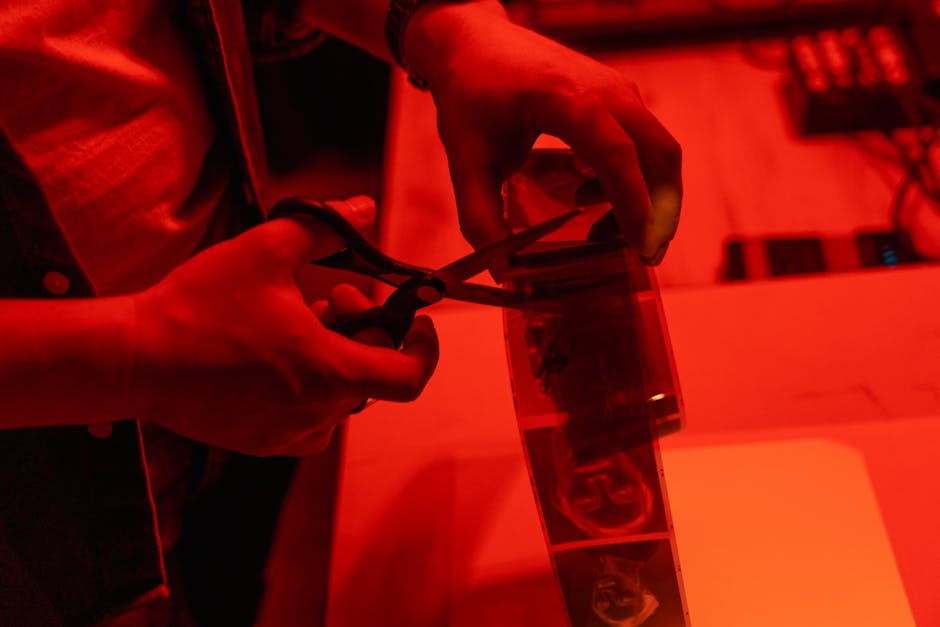
Before digital technology, editors physically cut and spliced film strips together, hanging them on racks and manually assembling sequences. The introduction of non-linear editing systems like Avid in the late 1980s and Adobe Premiere and Final Cut Pro in the 1990s revolutionized the industry. Digital editing allows instant experimentation, unlimited undo options, and the ability to try multiple versions without destroying original footage. What once took days of physical labor can now be accomplished in hours, though the creative decision-making process remains as challenging as ever.
7. Sound Editing Is a Separate, Equally Complex Process
While picture editors shape visual storytelling, sound editors create the entire auditory landscape of a film. This includes dialogue editing, sound effects, foley (recreated everyday sounds), and ambience. Major films employ teams of sound editors working simultaneously with picture editors, and the Academy Awards recognize sound editing as a distinct category from picture editing. A single scene might contain hundreds of individual sound elements layered together, from footsteps and clothing rustles to environmental sounds and atmospheric tones that viewers consciously never notice but subconsciously absorb.
8. The “Rough Cut” Often Runs Much Longer Than the Final Film
An editor’s first assembly, called the rough cut, typically runs significantly longer than the intended final runtime—sometimes by an hour or more. This initial version includes all potentially useful footage organized into scene order, giving the director and editor a foundation for refinement. Through successive cuts, the film gradually tightens as scenes are trimmed, restructured, or eliminated entirely. Many beloved films underwent dramatic transformations between rough cut and final cut, with entire subplots removed or scenes radically reordered to improve pacing and narrative clarity.
9. Editors Manipulate Time in Ways Viewers Rarely Notice
Film editors routinely compress, expand, or eliminate time to serve the story. A character might walk through a door in a single continuous action that actually combines footage shot hours or days apart. Conversely, a brief moment might be extended through slow motion or repeated coverage from multiple angles. Match cuts—where one image transitions into a similar image, possibly jumping across vast time periods—create seamless connections that transport viewers through time. These temporal manipulations feel natural because editors understand human perception and create visual rhythms that match how we experience reality.
10. Test Screenings Often Lead to Re-Editing
Major studio films typically undergo test screenings where audiences watch rough or near-final versions and provide feedback. Editor responses to this data can result in significant changes: reordering sequences, cutting characters or subplots, adding explanatory scenes, or even filming entirely new footage. Some films have been saved by re-editing based on test screening reactions, while others have been compromised by changes that diluted the filmmakers’ vision. This process highlights how editing continues evolving until shortly before release, with editors making crucial adjustments based on how actual audiences respond to their work.
Conclusion
The film editing process represents a unique combination of technical skill, artistic vision, and psychological understanding of audience perception. From the pioneering women who established editing as an art form to modern digital tools that provide unprecedented creative flexibility, editors have continuously shaped how stories are told through cinema. Whether manipulating time, creating meaning through juxtaposition, or refining a film through countless iterations, editors serve as the final storytellers who determine what audiences ultimately experience. These ten facts barely scratch the surface of this complex craft, but they reveal how editing transforms raw footage into the powerful, emotionally resonant films that captivate audiences worldwide. The next time you watch a movie, consider the invisible artistry of the editor whose countless decisions created the seamless narrative unfolding before your eyes.
