
⏱️ 6 min read
Did You Know? 10 Unsolved Mysteries from History
Throughout human history, countless enigmas have puzzled scholars, archaeologists, and investigators alike. Despite advances in technology and research methods, some mysteries remain tantalizingly unsolved, continuing to captivate our imagination and challenge our understanding of the past. These historical puzzles remind us that even in our modern age of information, there are still secrets waiting to be uncovered. Here are ten of the most compelling unsolved mysteries from history that continue to baffle experts and enthusiasts around the world.
1. The Disappearance of the Roanoke Colony
In 1587, a group of English settlers established a colony on Roanoke Island in present-day North Carolina. When supply ships returned three years later, the entire colony had vanished without a trace. The only clue left behind was the word “CROATOAN” carved into a wooden post. Despite numerous theories ranging from assimilation with local Native American tribes to Spanish attacks or disease, the fate of the approximately 115 colonists remains unknown. This mystery has endured for over four centuries, making it one of America’s oldest unsolved disappearances.
2. The Identity of Jack the Ripper
Between August and November 1888, a serial killer terrorized the Whitechapel district of London, murdering at least five women in brutal fashion. Despite extensive police investigations and modern forensic analysis, the identity of Jack the Ripper has never been definitively established. Over the years, more than 100 suspects have been proposed, including members of the royal family, physicians, and local butchers. The case remains one of the most famous unsolved criminal mysteries in history, spawning countless books, films, and theories.
3. The Voynich Manuscript
This mysterious illustrated codex, carbon-dated to the early 15th century, contains approximately 240 pages written in an unknown script that has defied all attempts at translation. The manuscript includes strange botanical illustrations, astronomical diagrams, and what appear to be pharmaceutical recipes, yet the text remains completely unintelligible. Professional cryptographers, linguists, and computer scientists have all failed to decode it. Whether it represents a lost language, an elaborate hoax, or an encrypted message continues to be debated among scholars worldwide.
4. The Lost City of Atlantis
First described by the ancient Greek philosopher Plato around 360 BCE, Atlantis was supposedly an advanced civilization that sank into the ocean in a single day and night. Scholars debate whether Plato intended the story as a philosophical allegory or based it on a real location. Numerous locations have been proposed, from the Mediterranean to the Caribbean, and from Antarctica to the North Sea. Despite countless expeditions and investigations, no concrete evidence of Atlantis has ever been found, leaving its existence firmly in the realm of mystery.
5. The Fate of the Amber Room
Often called the “Eighth Wonder of the World,” the Amber Room was an ornate chamber decorated with amber panels, gold leaf, and mirrors, originally constructed in Prussia in the early 18th century. During World War II, Nazi forces dismantled and transported the room from the Catherine Palace near St. Petersburg. After 1945, the Amber Room disappeared completely. Despite extensive searches and numerous theories about its location—from secret bunkers to sunken ships—its whereabouts remain unknown. A recreation now exists in the Catherine Palace, but the original panels have never been recovered.
6. The Zodiac Killer’s Identity
Between 1968 and 1969, a serial killer operating in Northern California murdered at least five people and claimed to have killed as many as 37. The Zodiac Killer taunted police and newspapers with cryptic letters and ciphers, some of which have been decoded while others remain unsolved. Despite one of the most intensive manhunts in California history and continued investigation using modern DNA technology, the killer was never caught and their identity remains unknown. The case continues to generate new theories and suspects more than fifty years later.
7. The Nazca Lines’ Purpose
Etched into the arid plains of southern Peru, the Nazca Lines are enormous geoglyphs created by the ancient Nazca culture between 500 BCE and 500 CE. These designs, ranging from simple lines to elaborate figures of animals and plants, can only be fully appreciated from the air—a perspective seemingly impossible for their creators. While theories abound regarding their purpose, from astronomical calendars to religious pathways or water-finding rituals, no consensus has been reached. The mystery of why an ancient civilization would create massive artworks they could never fully see themselves continues to puzzle archaeologists.
8. The Princes in the Tower
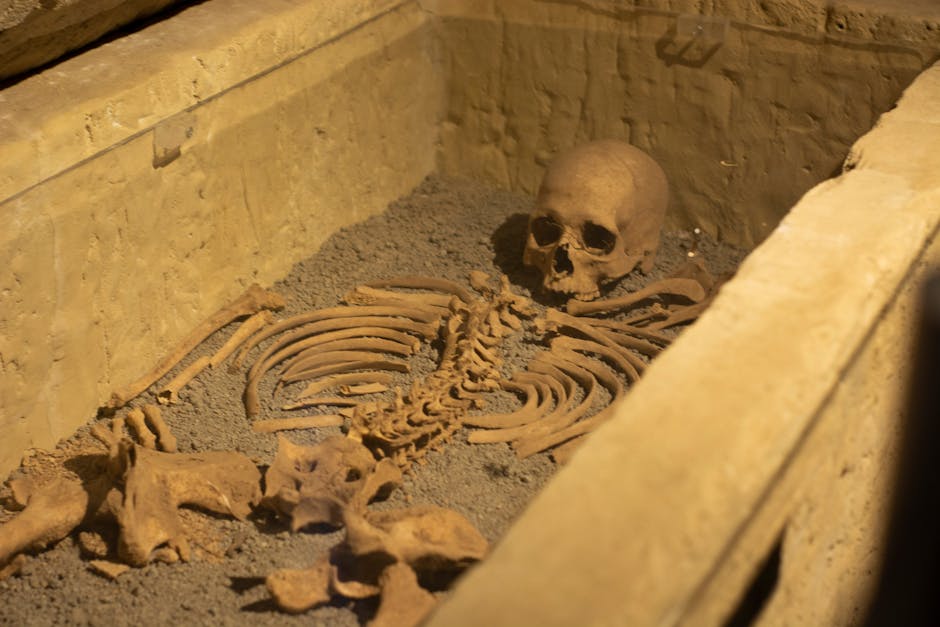
In 1483, two young princes—Edward V and his brother Richard, Duke of York—were placed in the Tower of London by their uncle, Richard III, and subsequently disappeared from public view. Their fate has been debated for over 500 years. While most historians believe they were murdered to secure Richard’s claim to the throne, definitive proof has never been established. Two skeletons discovered in the Tower in 1674 are believed to be the princes, but the remains have never been conclusively identified through modern scientific methods, and the exact circumstances of their deaths remain mysterious.
9. The Shroud of Turin’s Authenticity
This linen cloth bearing the image of a man who appears to have suffered crucifixion has been both venerated as Jesus Christ’s burial shroud and dismissed as a medieval forgery. Carbon dating conducted in 1988 suggested the shroud originated from the 13th or 14th century, but critics argue the samples may have been contaminated or taken from medieval repairs. The method by which the image was created on the fabric remains unexplained by modern science, adding another layer to the mystery. Whether the shroud is a genuine first-century artifact or a later creation continues to spark intense debate among scientists, historians, and theologians.
10. The Tunguska Event
On June 30, 1908, a massive explosion occurred near the Tunguska River in Siberia, flattening approximately 800 square miles of forest and generating seismic waves detected across Europe and Asia. The blast, estimated to be 1,000 times more powerful than the atomic bomb dropped on Hiroshima, left no impact crater. While the most widely accepted theory suggests a meteor or comet exploded in the atmosphere before impact, no fragments have ever been definitively identified. Alternative explanations have ranged from natural gas explosions to black holes or even UFO crashes, but the exact nature of the Tunguska event remains officially unexplained.
Conclusion
These ten unsolved mysteries demonstrate that history still holds many secrets beyond our current understanding. From vanished civilizations and unidentified killers to unexplained phenomena and cryptic artifacts, each mystery represents a gap in our historical knowledge that continues to inspire investigation and speculation. While modern technology and scientific methods have solved many historical puzzles, these enduring enigmas remind us of the limits of our knowledge and the endless fascination of the unknown. As research techniques continue to advance, perhaps future generations will finally unlock the answers to these captivating historical mysteries, though some may remain forever shrouded in the mists of time.
